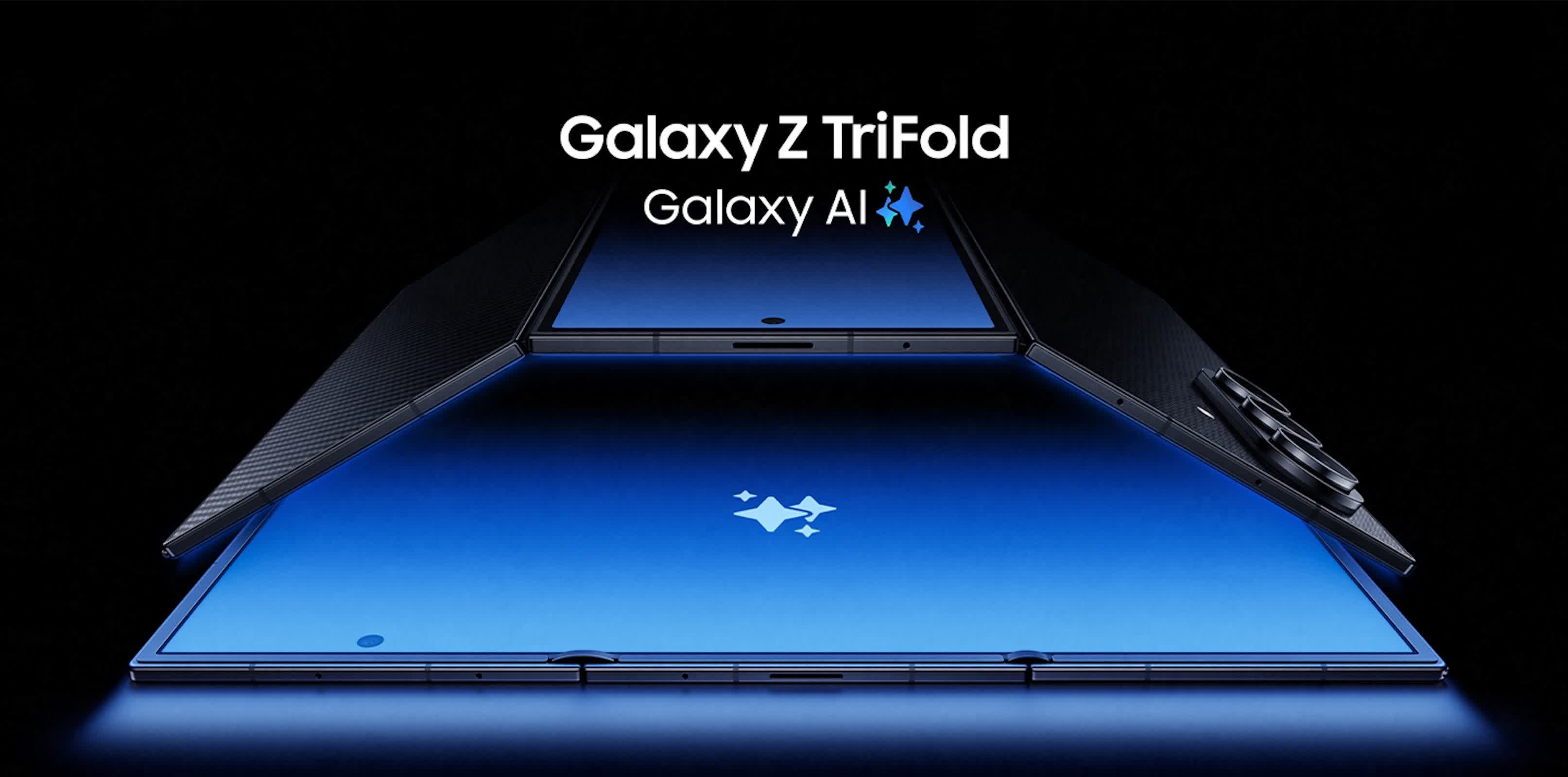
Looking ahead: Samsung's most experimental foldable phone may be approaching the end of its run almost as quickly as it arrived, despite selling out every time it went on sale in limited batches. The Galaxy Z TriFold – a triple-fold device with two hinges that unfolds into a tablet-sized display – launched first in South Korea in December before reaching the US in January at a price of $2,899. According to Korean daily Donga, the company plans to halt domestic sales around March 17, with one final restock expected in its home market. In the US, remaining units will reportedly be sold only until the current production volume is exhausted.
From the outset, Samsung positioned the TriFold as an experimental, tightly controlled product rather than a mass-market flagship. Early batches in Korea were limited to around 3,000 units per release, each selling out within minutes on Samsung's online store.
The same pattern repeated after the US debut, with the device frequently showing as out of stock on Samsung's website and difficult to find in retail stores, despite being officially listed as available.
While its commercial lifespan appears brief, the underlying technology sets the TriFold apart from conventional foldables. The hardware links three display segments using two hinges and a flexible OLED stack, allowing the device to transform from a standard smartphone footprint into a roughly 10-inch canvas when fully unfolded.
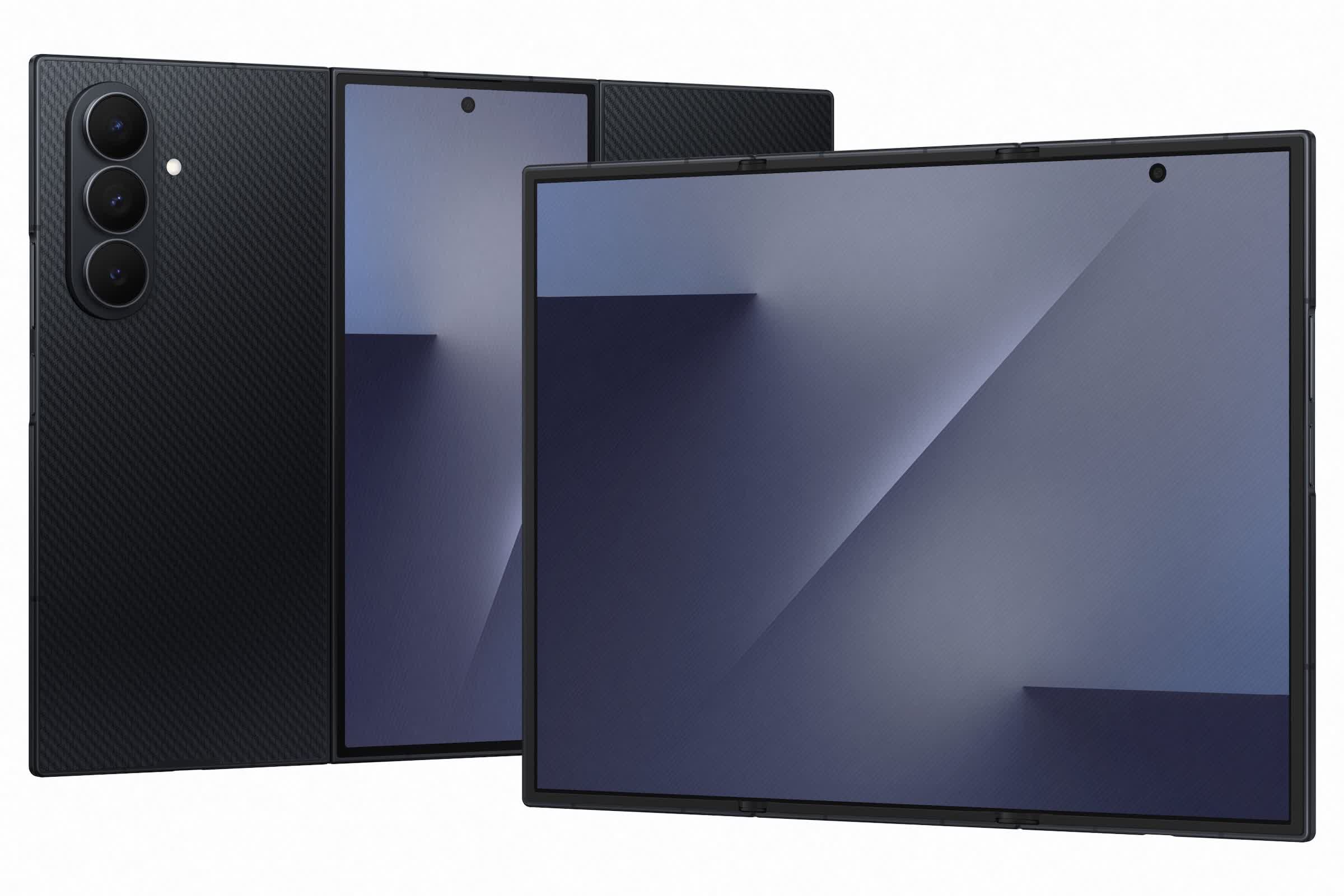
On the software side, Samsung's One UI supports three apps running concurrently, distributing them across the unfolded display while a taskbar at the bottom provides quick access to pinned and recent apps in a PC-like fashion. Window management lets users resize and reposition apps across panels – a step beyond the split-screen and floating-window modes typical of single-hinge foldables.
The challenge has been economics rather than demand. At roughly $2,900 in the US, and a similar premium in Korea, insiders say high production costs and rising component prices have made it difficult to continue selling the TriFold. The complex flexible OLED assembly, dual-hinge mechanism, and reinforced chassis are likely expensive to produce, and these costs have collided with a broader surge in component pricing.
In that environment, a low-volume, high-complexity device like the TriFold leaves little margin, especially when the design demands generous RAM and storage to deliver a credible multitasking experience.

Those pressures help explain why Samsung never positioned the TriFold as a mainstream extension of the Galaxy Z line. The company restricted the rollout to a small number of regions, limited quantities per release, and did not prioritize broad marketing or review sampling in the way it does for its Fold and Flip series.

For foldable enthusiasts and engineers, the TriFold's likely sunset highlights the current state of the technology stack. Triple-panel OLEDs, complex hinge systems, and software tuned for multi-window workflows are mature enough for limited deployment, but not yet at a cost structure that supports scaling beyond niche runs. With memory and other key components still in short supply and expected to remain constrained into the latter half of the decade, device makers are under pressure to reserve those parts for higher-volume models with clearer profit potential.