Oops: When a game is released through Steam's Early Access channel, players can expect to encounter some rough patches while the developers continue working on their code. However, a newly released piracy-themed RPG drew attention this week for doing some very wicked (and potentially damaging) things to players' storage hardware – thankfully, the developer has already shipped a fix.
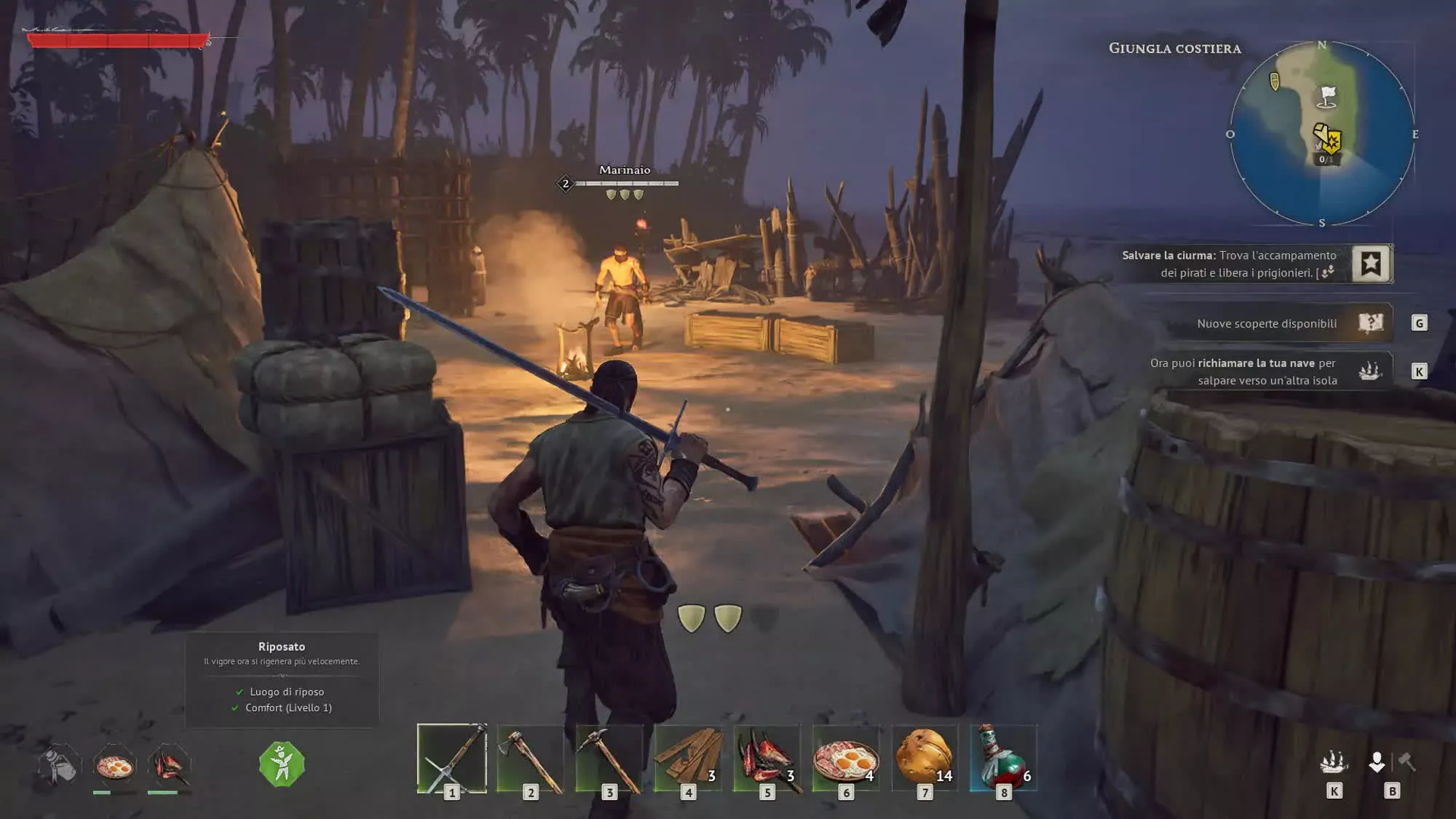
Developer Kraken Express introduced Windrose as a survival adventure set in the age of piracy, featuring a procedurally generated world where players can gather, build, and craft alongside the usual piracy activities such as fighting and looting. Released in Early Access in April, the game has since made headlines for the wrong reason: its dangerous behavior toward users' storage hardware.
According to reports, Windrose players were experiencing unusually high I/O workloads in specific in-game situations. The game was reading and writing large amounts of data to disk, with spikes of up to 30MB/s when the player's character was roaming around a base. I/O operations would slow down when the character was standing still, but could worsen when the player was steering a corsair ship.
During normal game sessions, Windrose was writing around 108GB of data per hour. Traditional HDDs likely had no trouble handling that throughput, but SSDs are a different story. NAND Flash chips can only be written a limited number of times, and modern QLC drives are even more vulnerable to sustained I/O workloads in typical consumer setups.
Some users investigated Windrose's abnormal storage behavior further. The issue apparently stemmed from the RocksDB database system Kraken Express chose for saving player progression. Windrose was running three separate RocksDB databases with a very small cache budget, which was quickly exhausted, forcing frequent write operations to disk.
As highlighted by Pixel Operative, the YouTuber who provided video evidence of Windrose's SSD-punishing behavior, no other modern open-world games are known to stress storage drives this heavily. A deeper technical analysis by storage expert NewMaxx/BoreCraft traced the problem to the Worlds database operating with an extremely small WAL budget, which forced constant memtable flushes and compactions that turned modest in-game state changes into far larger physical write traffic.
Kraken Express responded quickly. Days later, on April 30, the studio pushed out a "housekeeping" update addressing SSD and CPU usage, connectivity issues, missing building blocks, and various bugs.
The results were dramatic: pre-patch, RocksDB was generating roughly 90,000 - 130,000 writes per second, while post-patch testing during sailing (one of the heavier write scenarios) showed an average of just 20 – 30 writes per second, with peaks never exceeding 60 writes/sec. Players with the game installed are advised to update as soon as possible.
Considering the sad state of things the hardware industry is currently going through (for consumers anyway), the developers' swift response is welcome news for anyone mindful of their hardware's longevity.