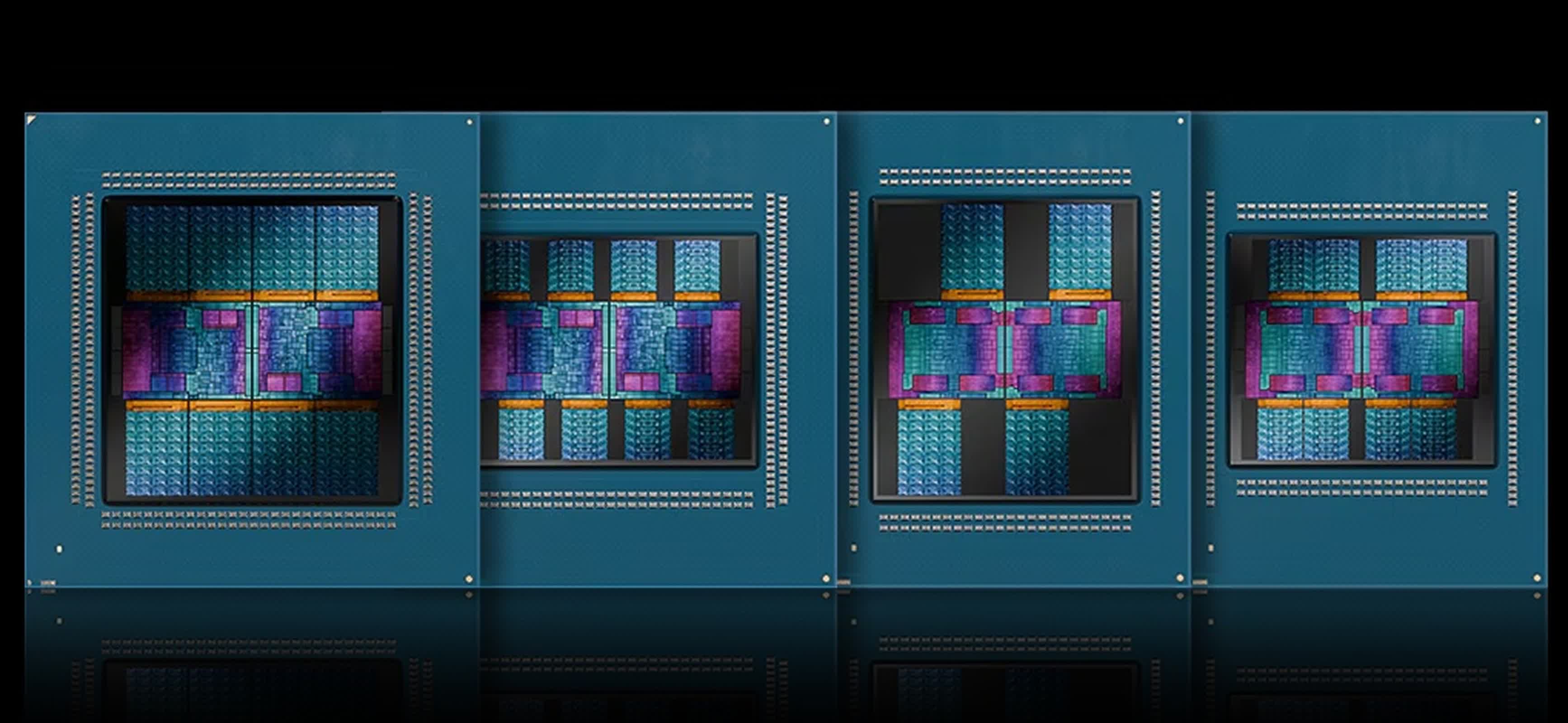
First look: AMD is pricing its upcoming Epyc 9006 Venice server processors from $700 to $14,904, covering systems from small single-socket servers to dual-socket machines with 512 Zen 6 CPU cores. The lineup is built around two platforms with different priorities: SP7 for maximum memory bandwidth and capacity, and SP8 for systems that need more PCIe connectivity. The pricing list includes 31 processors ranging from the eight-core Epyc 9106 to the 256-core Epyc 9996.
AMD has not finalized the prices, but the list offers a clearer view of how it intends to position Venice in the data center.
The Epyc 9996 is the top model in the lineup. It has 256 cores and a list price of $14,904. Two installed in a dual-socket SP7 server would provide 512 Zen 6 cores, though the processors alone would cost $29,808 before memory, storage, networking and accelerators are added.
At that level, the price is not far from the previous-generation 192-core Epyc 9965, which launched at about $14,800. Venice changes the value calculation, however. The 256-core chip works out to about $58.21 per core. The 64-core Epyc 9556, priced at $8,008, costs about $125.12 per core. That makes the largest parts more attractive for customers trying to consolidate workloads or increase compute density in a limited number of servers.
SP7 is AMD's high-end Venice platform. It supports up to 16 memory channels and can use DDR5 RDIMMs or MRDIMMs at speeds up to DDR5-12800. It also provides up to 96 PCIe 6.0 lanes. The processors designed for the socket have thermal design power ratings from 400W to 600W.
The platform is meant for workloads that need a large pool of memory and high memory throughput, including virtualization, databases and analytics. It supports both one- and two-socket systems.
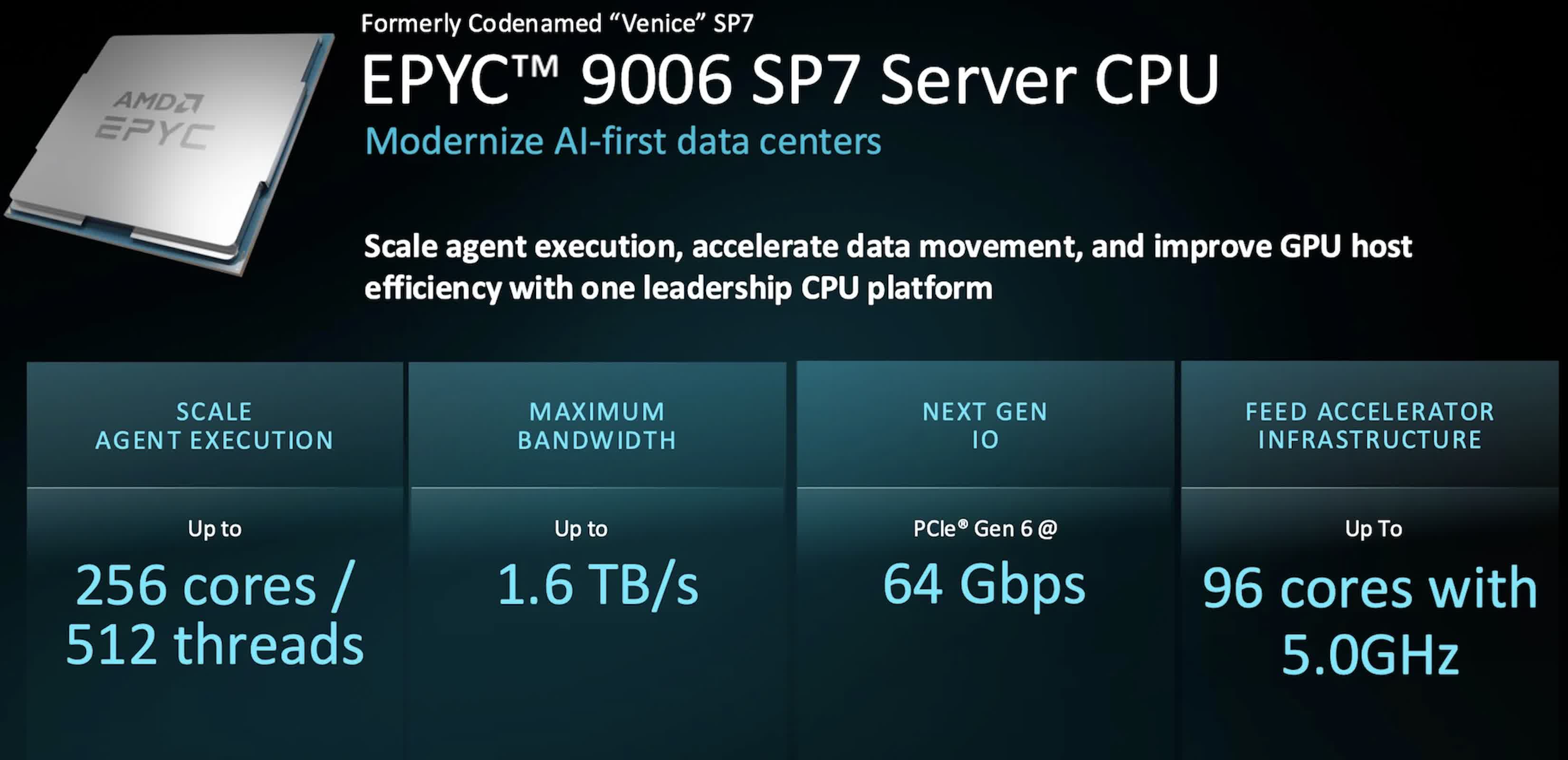
AMD is also offering high-frequency models for workloads that benefit more from clock speed than from very high core counts. The 64-core Epyc 9586F and the 96-core Epyc 9686F can boost to 5 GHz. The trade-off is price and power use. The 64-core 9586F is priced close to the 96-core Epyc 9656 even though it has fewer cores, and its TDP is 100W higher.
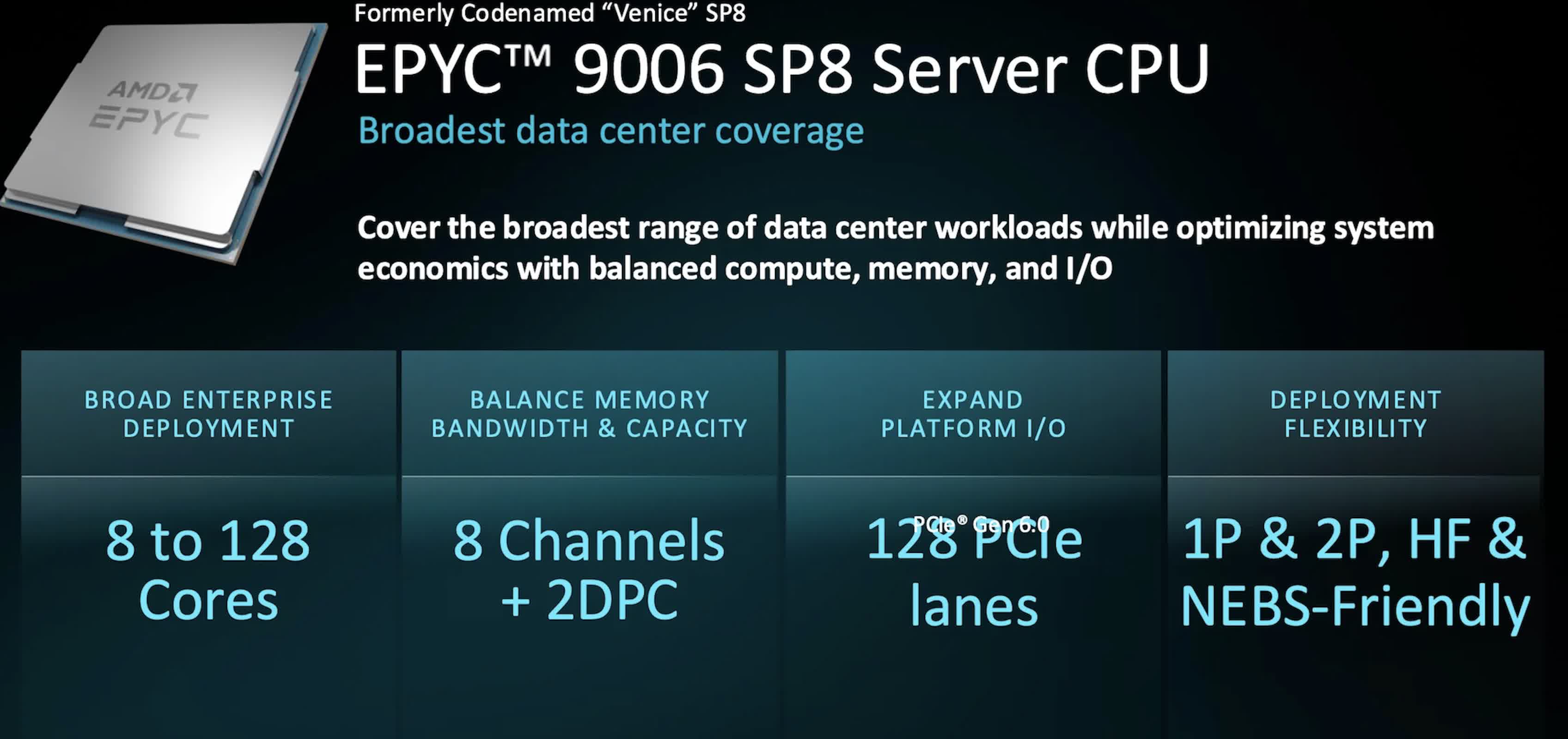
The lower-cost SP8 platform takes a different route. It has eight memory channels and does not support MRDIMMs, so it cannot match SP7's peak memory capacity or bandwidth. It does, however, offer 128 PCIe 6.0 lanes, compared with 96 on SP7.
That extra I/O could matter in servers built around GPUs, AI accelerators, high-speed networking cards or dense NVMe storage. SP8 parts are also rated from 130W to 400W, giving system builders more options for lower-power configurations.
The SP8 lineup begins with the $700 eight-core Epyc 9106 and tops out with the 128-core Epyc 9746 at $11,679. It also includes "P" models limited to single-socket systems. Those parts offer the same CPU performance as comparable standard versions at a lower price because they do not support two-socket configurations. AMD lists the 128-core Epyc 9736P at a price 6% lower than the regular Epyc 9736, while the 32-core Epyc 9356P is 26% cheaper than its non-P counterpart.
One of the more specialized chips is the 16-core Epyc 9176F. It has a 5 GHz boost clock and 192MB of L3 cache, or 12MB per core. That's four times the cache of the 16-core Epyc 9116. It also costs more than three times as much. The design appears aimed at customers that need strong per-core performance and large cache capacity while keeping core counts low, which can be important for software licensed by the core.
AMD expects SP7 Venice systems to arrive in the fourth quarter, with SP8 systems due in the first half of 2027. A Venice-X family using AMD's 3D V-Cache technology is expected later in 2027, with up to 96 cores and 1,152MB of cache.