Bottom line: Steam is on course to generate more than $20 billion in gross revenue in 2026, a first for the platform, after posting record results for September and the third quarter, according to estimates from Alinea Analytics. The gains came from a mix of new releases, established franchises and free-to-play games that keep drawing spending long after launch. With one quarter left, Valve's PC gaming platform needs roughly $3.5 billion to reach the milestone.
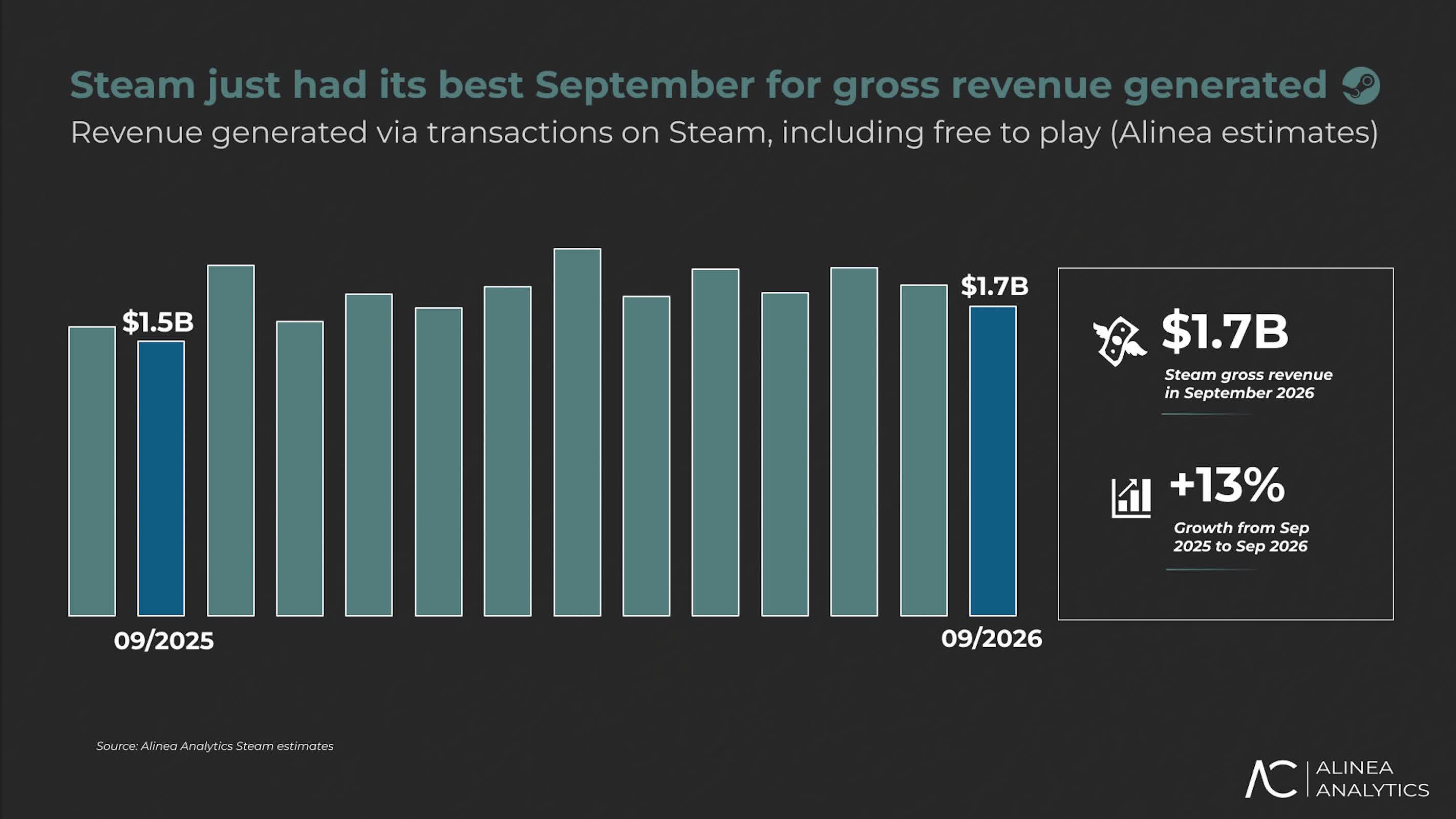
Steam took in an estimated $1.7 billion in September, 13% more than the previous September record, set in 2025. Its estimated third-quarter revenue reached $5.5 billion, up 12% from the same period last year.
The September result came from a familiar mix: big paid releases, durable franchises and free-to-play titles built around in-game purchases. The numbers suggest Steam no longer depends on a single kind of game sale to drive revenue.
New releases can produce a sharp burst of revenue, while games such as Counter-Strike 2 and Dota 2 keep earning money through active player communities and digital-item sales.
Through the first nine months of 2026, Steam generated an estimated $16.5 billion, compared with $14.5 billion over the same stretch of 2025. At that pace, the platform needs about $3.5 billion in the final quarter to clear $20 billion for the year.
New games played a meaningful role in September. Among Steam's 500 top-grossing titles that month, games released in 2026 accounted for about 33.6% of revenue, according to Alinea, and new intellectual property made up 20.5% of that.
That doesn't mean newer games displaced the industry's biggest brands. Established franchises, which include remakes and remasters, accounted for almost 80% of revenue among the top 500. The two figures overlap because they slice the data differently, by release year and by franchise, so a 2026 sequel counts in both. Steam's strongest performers still tend to be games with recognizable names, built-in audiences and frequent content updates.
Free-to-play games remained a major source of revenue as well. Counter-Strike 2, Apex Legends, PUBG and Dota 2 together generated almost $168 million in September, per Alinea's estimates, or nearly 10% of Steam's estimated monthly revenue.
Those games show why PC platforms can't be judged by unit sales alone. Free-to-play titles may cost nothing to download, but they can drive steady spending on cosmetic items, battle passes and other digital content. For Steam, those transactions turn a large player base into recurring revenue.
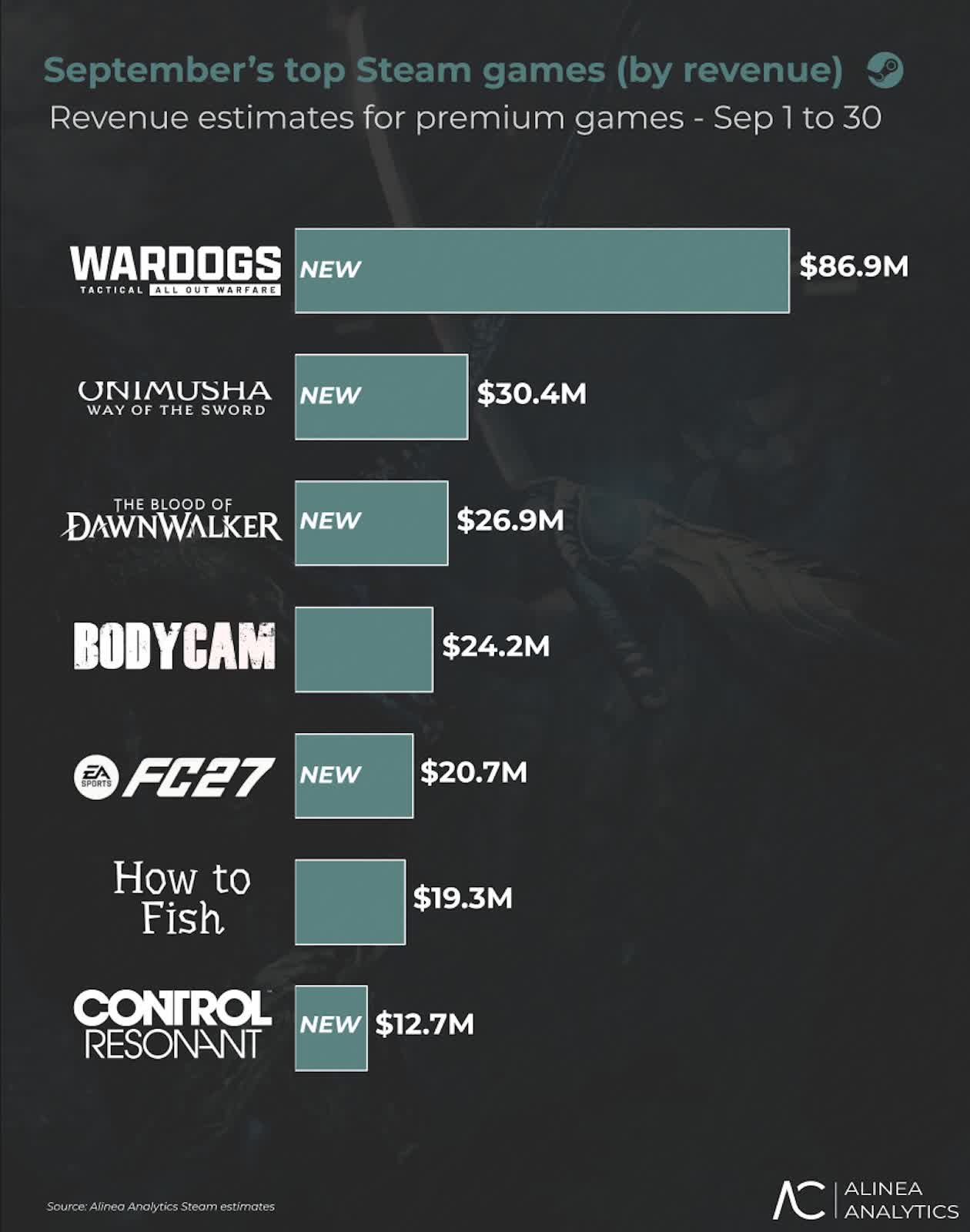
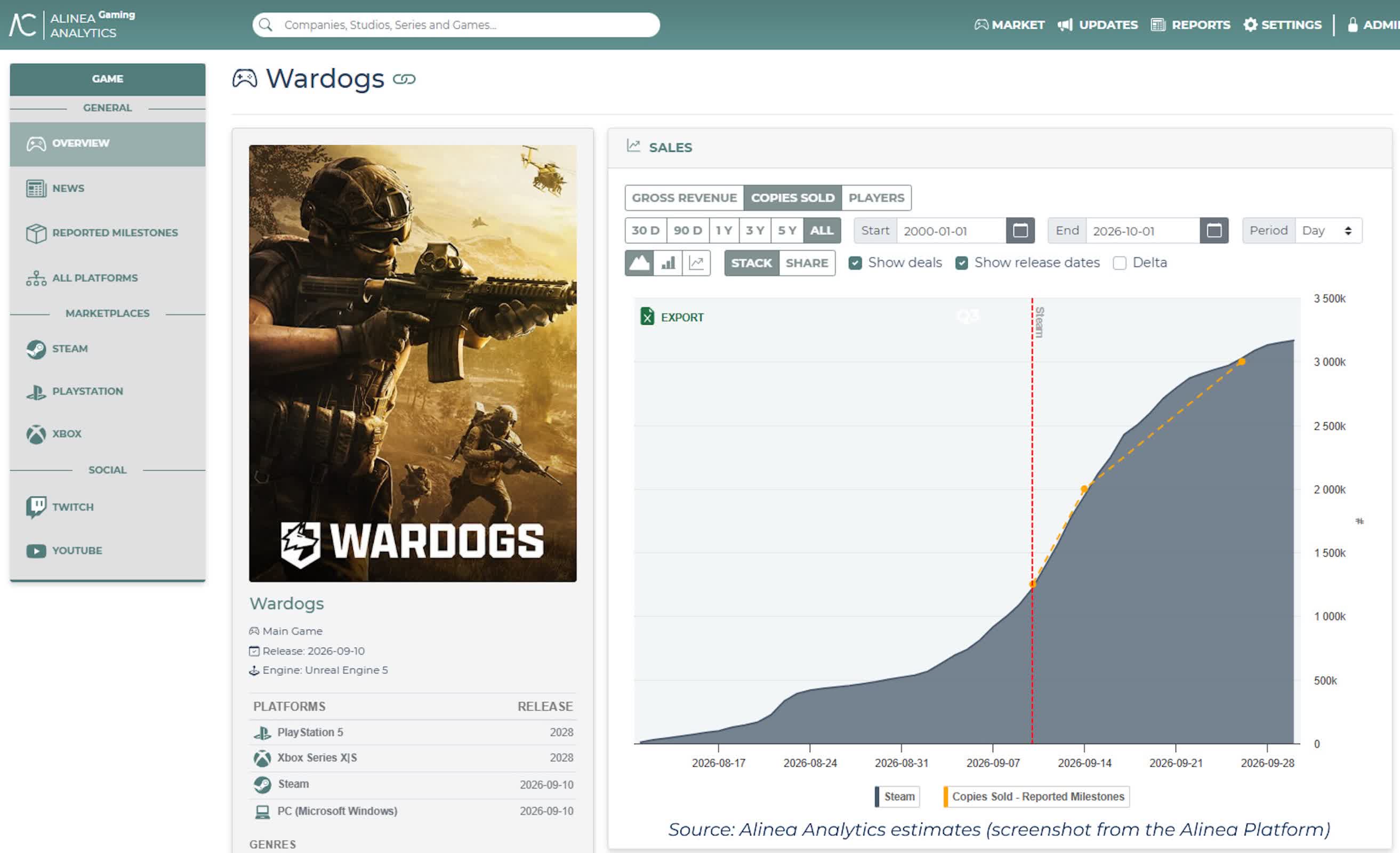
Paid games accounted for several of the month's biggest individual performances. PvP shooter Wardogs brought in an estimated $86.9 million in the roughly three weeks after it entered Early Access on September 10. Onimusha: Way of the Sword generated $30.4 million during the month, and The Blood of Dawnwalker added $26.9 million.
EA Sports FC 27 contributed another $20.7 million from Steam copies, though most of its sales were on consoles.
Wardogs' Early Access performance is notable because it shows how large a role the model now plays on Steam. Developers can release a game before it's finished, collect revenue early and use player feedback to shape updates. For multiplayer games, that can also help build a community before a full launch.