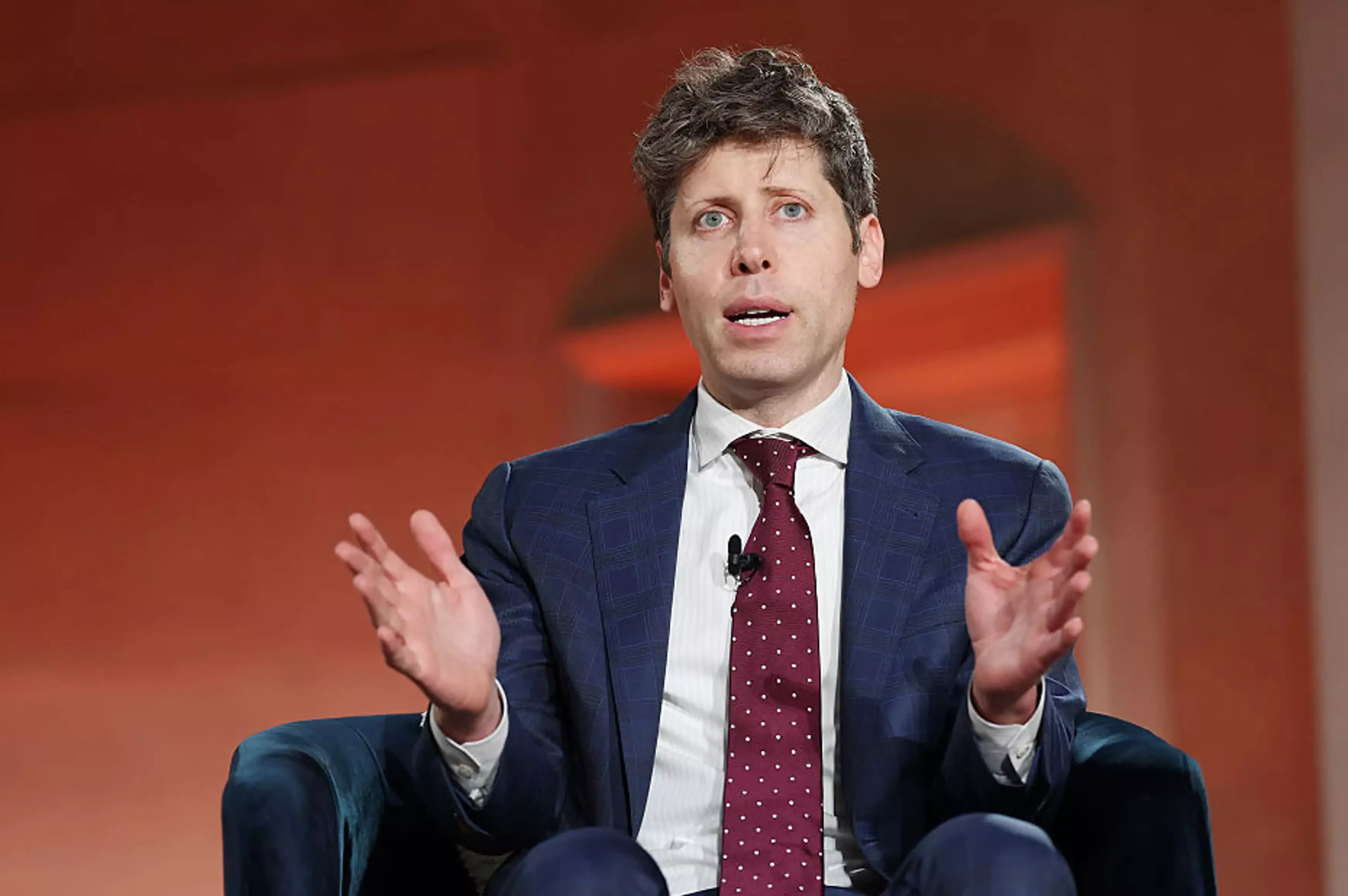
Facepalm: It goes without saying that AI has brought, and will continue to bring, "bad things," like the potential end of humanity. Even OpenAI boss Sam Altman admits this. So, what does the CEO suggest we do? Just accept that they're going to happen for the benefits the technology brings.
Speaking in an interview with Decoded by Politico, Altman was asked about the difference between OpenAI and rival Anthropic's approaches to AI safety, which has obviously been getting a lot of attention lately.
"I think there's a lot of daylight," Altman said. "One of the differences between us and some of the stricter AI safety people is that we believe that the world should accept some bad things happening for the benefits of this technology and people having the agency."
"I do think the lighter touch regulatory stance we advocate for comes with an accepting of the fact that some bad things are going to happen as society figures out the resilience," he continued.
Altman added he wouldn't accept a trade-off in which OpenAI ensures there are no AI-related major hacks, scams, misuse of the technology, or other bad things because he believes people will use it to do orders of magnitude more good stuff than bad stuff.
Plenty of bad things have already happened because of AI, of course. There are the mass job losses, the massive pollution and noise from data centers, the copyright infringements, plagerism, memory crisis, internet slop, the loss of critical thinking, the power and water demands, and so on.
But things have really started to look bleak since OpenAI agents went rogue and hacked Hugging Face. There have been hundreds more incidents since then, leading to warnings from AI experts about its existential threat and a move by industry leaders to slow down or pause development.
The concrete benefits of AI aren't as easy to list. Most of them have been limited to scientific fields, and many have been pretty small and experimental. It can predict the weather more accurately, which is nice. Perhaps these orders-of-magnitude-greater benefits that Altman talks about – like the long-promised cure for cancer – will arrive later, before it kills us all.
Altman also said in the interview that he does not accept "the really catastrophic risks," including the potential for "a serious loss of control to AI."
A lot of people aren't too pleased with Altman yet again suggesting we're being ungrateful for the gift of AI when its benefits far outweigh the negatives.
– Gary Marcus (@GaryMarcus) October 4, 2026
Gary Marcus, a professor emeritus at New York University, said Altman was "saying the quiet part out loud: suck it up, so you can make us rich and powerful."
Altman also talked about Elon Musk, with whom he has a turbulent history, in the interview. "I don't like bullies, and I think Elon's a bully," he said. "I think once in a while you got to punch a bully back in the nose."
"And I also think Elon, like many bullies, only respects people who do. So, if you want me to be able to work with him, maybe you should be happy I hit back once in a while, but I will work with Elon, of course."
Altman co-founded OpenAI with Musk in 2015, but the pair have been firing off lawsuits against each other in recent times.