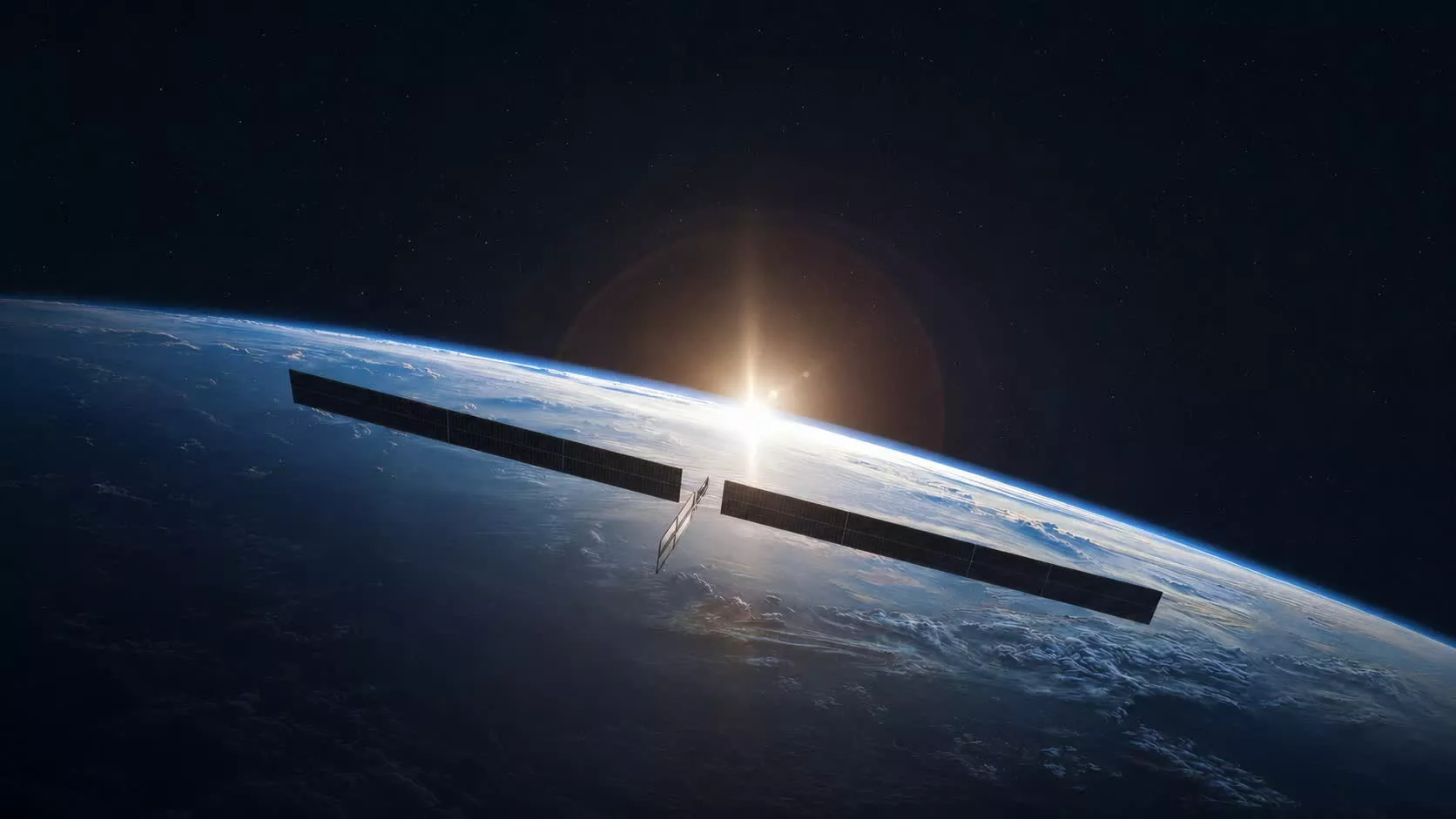
What just happened? The vision of millions of data-center satellites orbiting Earth has seemed like a far-off concept, but the FCC has just given SpaceX approval to launch up to one million of these structures into Earth orbit, and the company says the first could be launched as early as 2028 Chairman Brendan Carr said the satellites will use solar power to extend America's lead in AI, or "Super Intelligence," as US executive agencies must now call it in most official communications.
SpaceX filed its application back in January, giving the FCC a little under ten months to sign off on the first constellation of its kind in the US. The Starmind satellites will process data in low Earth orbit and use lasers to communicate with one another and with Starlink satellites. Radio links will serve as a backup.
The FCC statement makes the bold claim that the system will "bring the human race closer to a Kardashev II civilisation – one that can harness the full power of the sun." Proposed in 1964 by astrophysicist Nikolai Kardashev, a Kardashev Type II civilisation is a hypothetical advanced society capable of capturing and using the entire energy output of its host star.
– Brendan Carr (@BrendanCarrFCC) November 25, 2026
Musk kept his response to Carr's announcement on X short but sweet. "Much appreciated. This will be a great asset to America and the world," the SpaceX CEO wrote.
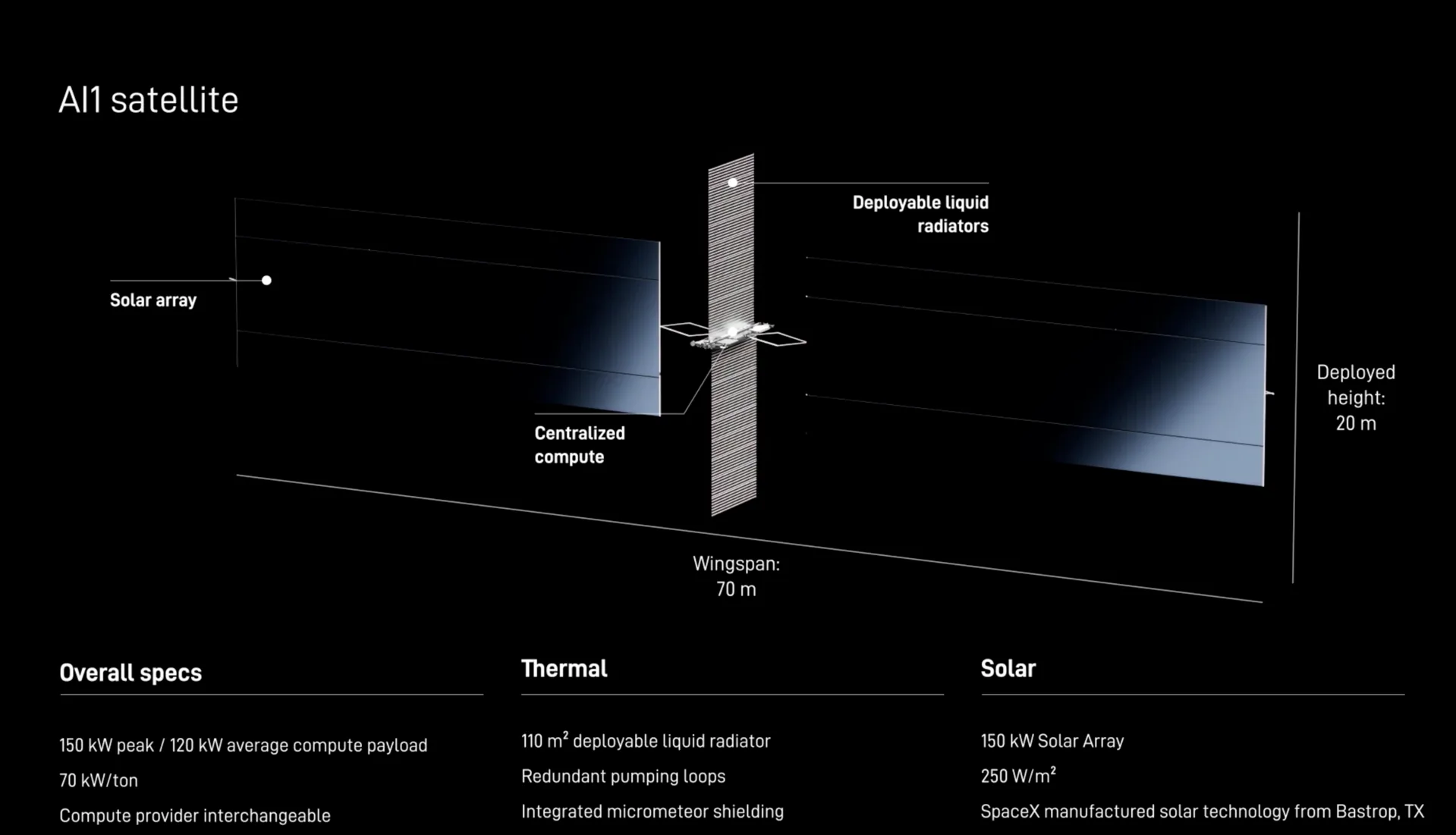
We got a look at what SpaceX plans to put up there back in June, when Musk showed off the first-generation AI1 satellite. With its wings fully deployed, the thing measures almost 230 feet across, making it wider than a Boeing 747-8. SpaceX says it can deliver 120 kilowatts of sustained power to its computing hardware, peaking at 150 kW. For comparison, a single Nvidia GB300 rack is rated at 140 kW.
Getting the first satellite into orbit should be the easy part, at least by SpaceX's standards. Under the FCC licence, the company has until November 25, 2033, to get a single satellite up and running, though SpaceX told investors it could start deploying them as early as 2028. The deadlines get considerably more demanding from there. SpaceX needs 100,000 operational by November 2035, half a million by November 2038, and the full million by November 2040.
Unsurprisingly, astronomers aren't quite as enthusiastic about the prospect as Musk. The American Astronomical Society, which asked the FCC to reject the application, warned that satellites this large would appear brighter and remain visible for longer, making it harder for ground-based telescopes to observe the night sky.
There's also the question of what happens to all that hardware when it stops working. SpaceX wants the option of sending retired satellites into orbit around the sun. The FCC says it needs more detail before it will sign off on that idea. SpaceX must also submit a final debris plan before deploying any Starmind satellites that will operate above 600 kilometers (373 miles).
"Any serious attempt at this is going to further pollute the night sky and runs a serious risk of a cascading chain reaction of space junk collisions, which would be a disaster for all of humanity," astrophysicist and author Adam Becker told CNBC. "Musk and Carr are either profoundly stupid themselves, or hoping the rest of us are too stupid to notice this is nonsense."
SpaceX is far from alone in its plans for deploying data-centers in space. Google's Project Suncatcher sent its first prototype into orbit aboard a SpaceX rocket in October. Google switched on the satellite's Tensor Processing Unit, sent it a prompt, and got a haiku back. For a bigger test, Google has booked a ride with one of Musk's rivals. Blue Origin's New Glenn is scheduled to carry several Google computing satellites into orbit in early 2029.
Jeff Bezos' company has orbital data center ambitions of its own, having asked the FCC for permission to deploy up to 51,600 satellites under the name Project Sunrise.
Then there's Washington startup Starcloud, which sent an Nvidia H100 GPU into space last year. The company used it to run one of Google's Gemma models and train a small language model on the complete works of Shakespeare. Its plans for a second satellite include something a little less literary: Starcloud wants to see if it can mine Bitcoin in orbit.