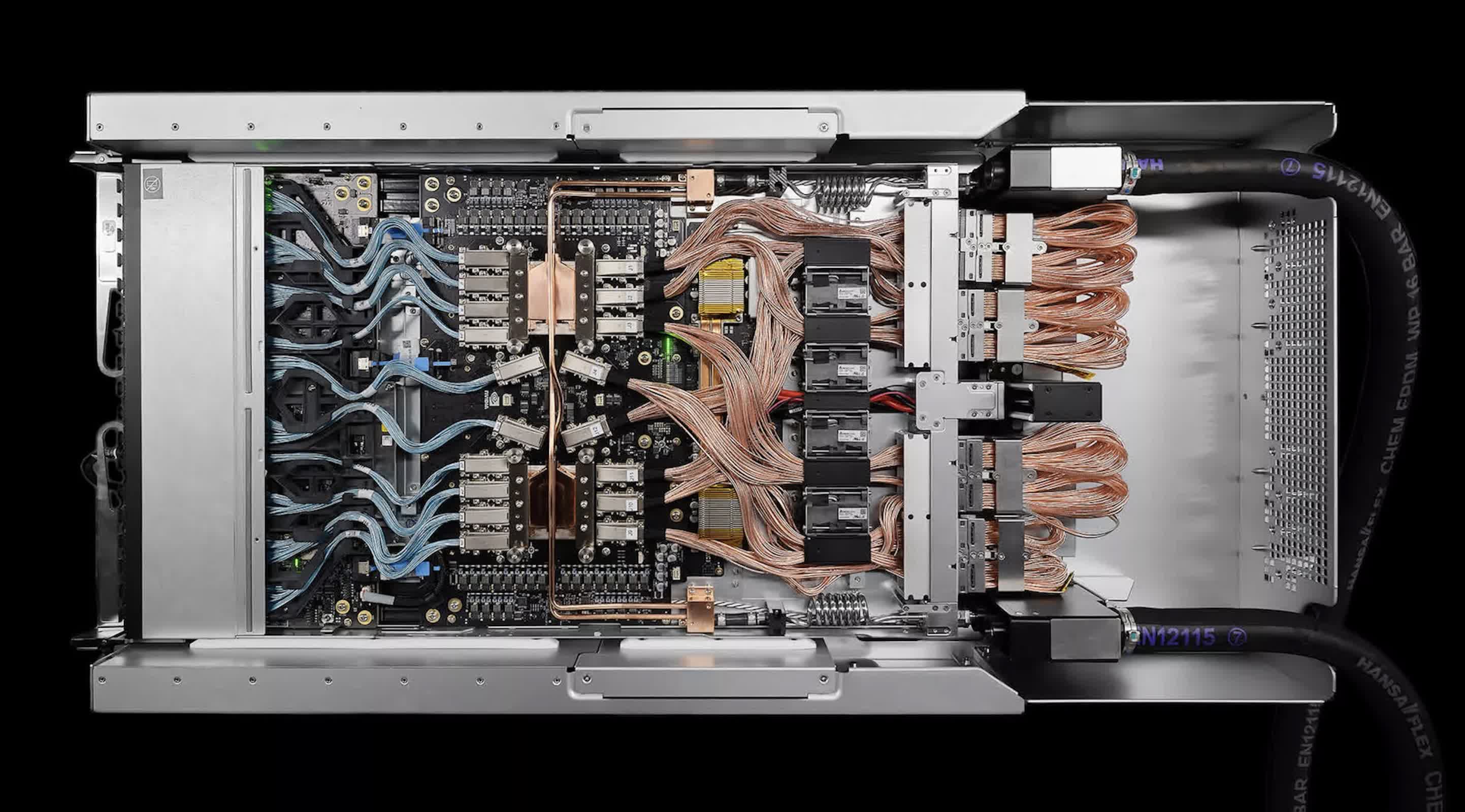
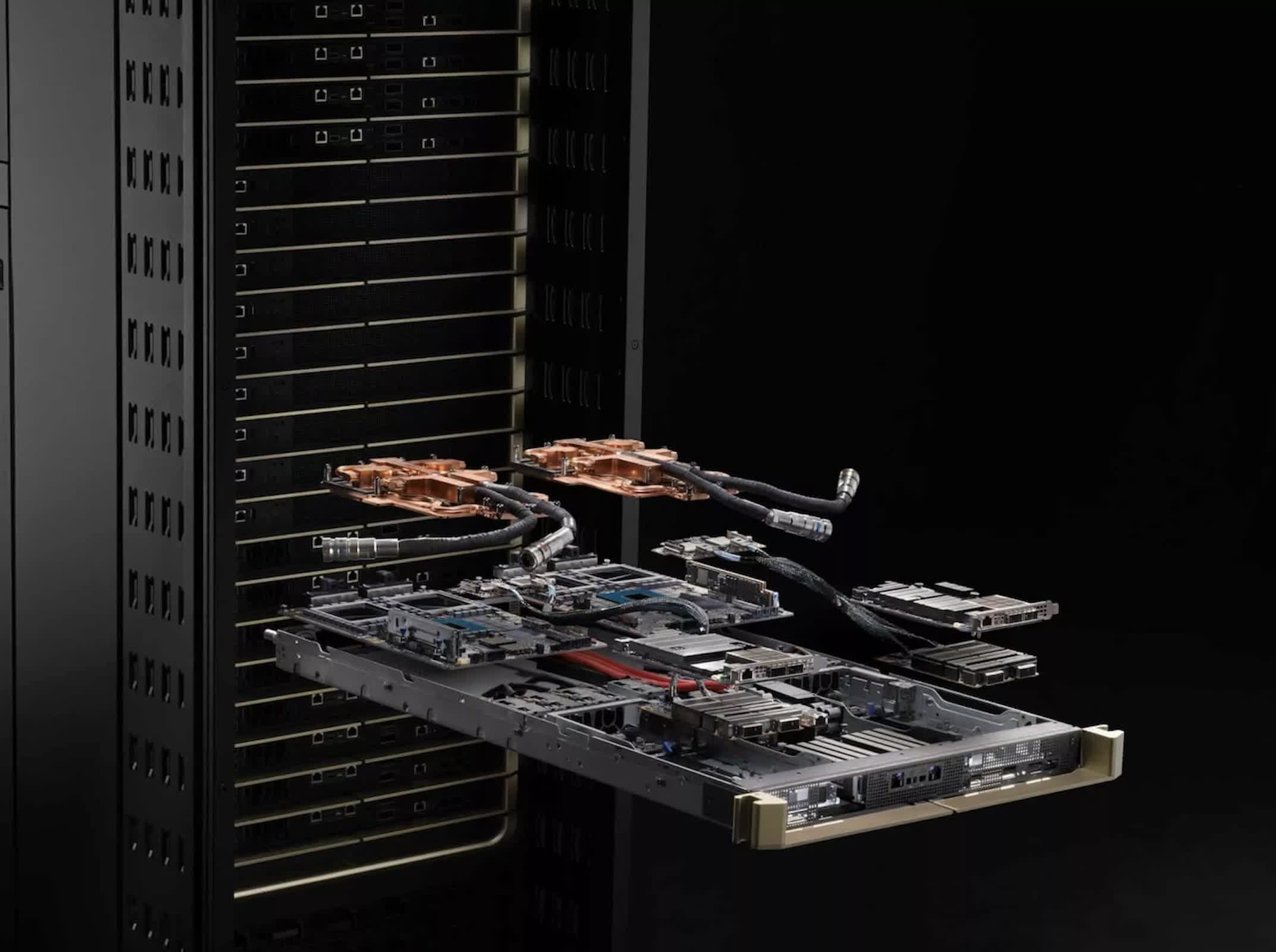
TL;DR: Nvidia's most advanced AI server hardware has turned up in a Shanghai data center, in records tied to a businesswoman now at the center of a US chip-smuggling controversy. Loan filings submitted to Chinese regulators list a GB300 NVL72 rack and a GB200 server as collateral at the Yangtze River Delta Project, a site linked to Alice Huang, who founded the Singapore-based cloud firm Megaspeed.
Both systems are built on Nvidia's Blackwell chips, which cannot be shipped to China without a US license, and the filings are the first public evidence that such processors reached the site.
Shanghai Shuoyao offered the GB300 rack as collateral for a 96 million yuan ($14 million) loan from Shanghai Innovation Bank. It gave a serial number for the rack in documents filed in November. A second company, Shanghai Kezhan, described the GB200 server in paperwork for a 90 million yuan loan it obtained in late 2025 from a finance-leasing firm. That lender is wholly owned by a Shanghai government agency.
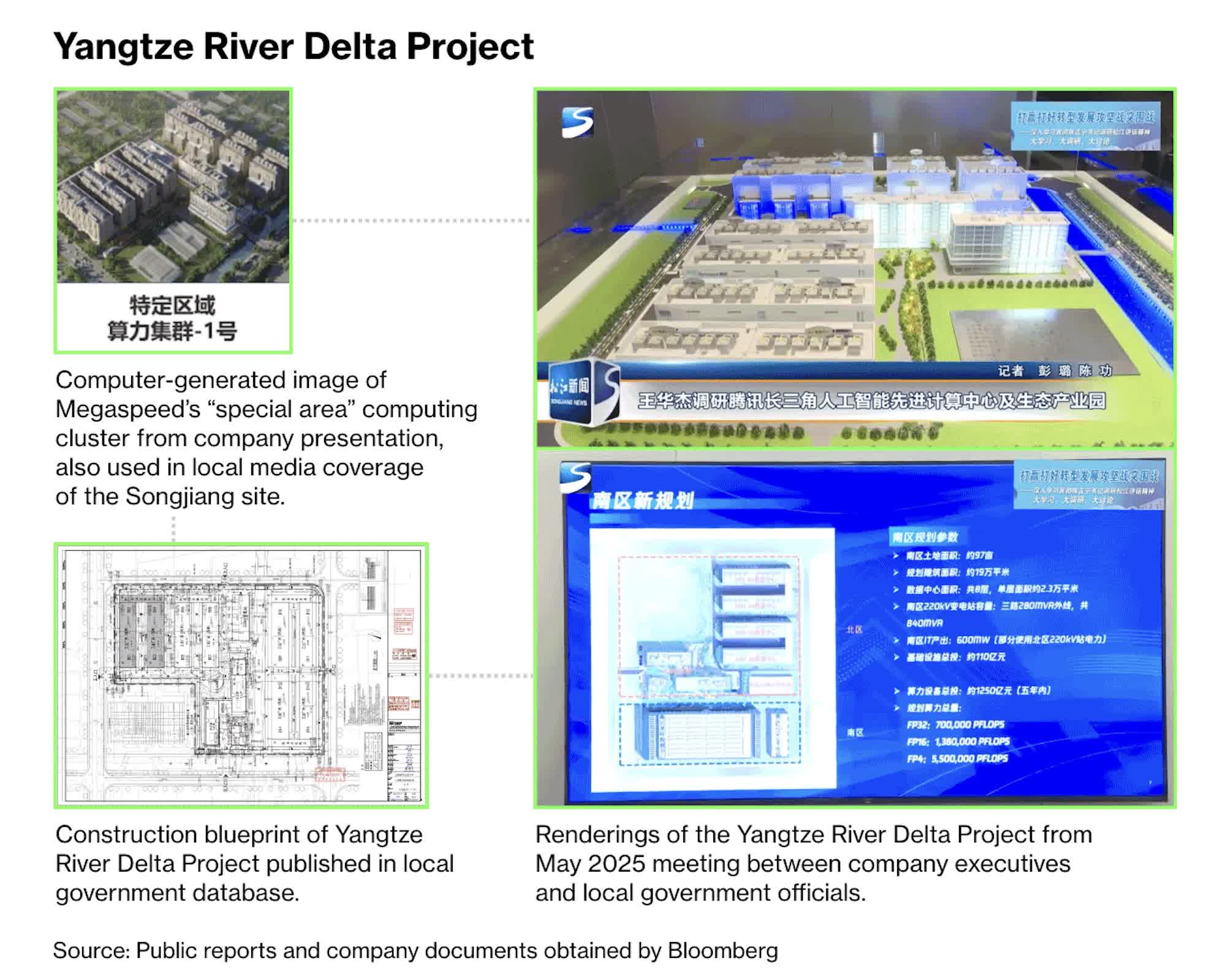
Local media have described the Yangtze River Delta Project as a facility meant to house as many as 800,000 servers. That would put it on par with the largest hyperscale sites.
Alice Huang founded Megaspeed in 2023, and Nvidia gave the company a coveted stamp of approval within four days. It became Nvidia's largest customer in Southeast Asia. The US government is now investigating whether Megaspeed smuggled Nvidia chips to China, and the Trump administration put the company on a trade blacklist this month, citing a significant risk of involvement in chip diversion.
Megaspeed has denied wrongdoing and has not answered questions about the Yangtze River Delta Project. In 2024 it used a rendering of the project to describe its largest data center to investors, calling it a "specific area" facility in an unnamed country. There is no evidence that Megaspeed itself sent Nvidia hardware to the site. Nvidia did not respond to questions.
Shanghai Shuoyao has significant overlap with Megaspeed and is active at the site. It had not responded to repeated requests for comment for a year. This month it made a rare public statement confirming that it is one of Megaspeed's service providers and describing the relationship as "limited to ordinary commercial cooperation."
Currently it is unknown how the rack got to China. A public warranty database shows that the GB300 was made by Gigabyte Technology, the Taiwanese company that assembles Nvidia chips into servers. Gigabyte was given the serial number and asked whom it originally sold the rack to and when. It declined to say, citing company policy. A spokesperson said the company "conducts all business in compliance with applicable laws and regulations."
Hardware like this often passes through several hands, including local distributors, before it reaches a data center. Many smuggled products were first sold to buyers in places without export restrictions.
Nvidia chief executive Jensen Huang said in 2025 that he saw no evidence of AI chip diversion into China, and has argued the systems are too big to smuggle.
Blackwell is not the only restricted hardware in the filings. Shanghai Longjie, which shares a parent with Shuoyao, reported servers with Hopper-generation chips from Super Micro Computer and Dell Technologies. It used them to secure a 200 million yuan loan from Shanghai Innovation Bank.
Credit: Bloomberg
It is unclear whether those shipments had US approval. Kezhan also disclosed 32 servers with H200 chips at the site. Their model names carried a Gigabyte prefix, but the documents gave no serial numbers, so they are harder to trace.
Customs data points to one possible route. In May 2025, Kezhan received an $11 million shipment flown from Malaysia to Shanghai Pudong International Airport. The paperwork called the goods "storage chassis." The shipment carried product code 847150, which covers computing servers. Its unit price of $264,108 was far too high for a storage chassis but fits servers built on Hopper chips.
Kezhan is headquartered about half a kilometer from the project. Its ownership links back to Megaspeed's origins. A subsidiary of the Chinese gaming company 7Road, Megaspeed's original parent, holds 16.7% of Kezhan. The rest is ultimately owned by NeXPower Japan, a Tokyo firm that Caixin reported is controlled by Alice Huang. The company could not be reached for comment.
The collateral records cover only equipment pledged for loans, so they show a small part of what a site of that size would need. It is unclear how far along the operators are toward the 800,000-server goal or what mix of servers they plan to use. Construction plans for the project set targets for total processing power against energy input. Those targets would be extremely difficult to meet with chips from Chinese companies such as Huawei. The filings also show that Chinese lenders, including some with government ties, accepted restricted hardware as collateral.