2027 BMW 7 Series gets new battery with increased range and super-fast DC charging

DragonSlayer101

Posts: 979   +14
Staff
What just happened? BMW unveiled the 2027 7 Series sedan this week, featuring updated exterior styling inspired by the company's existing EV lineup and a fully overhauled interior with the latest cockpit technologies. The new 7 Series also includes updated powertrain options, with electric variants receiving more powerful motors paired with larger high-voltage batteries, offering extended range and faster charging.

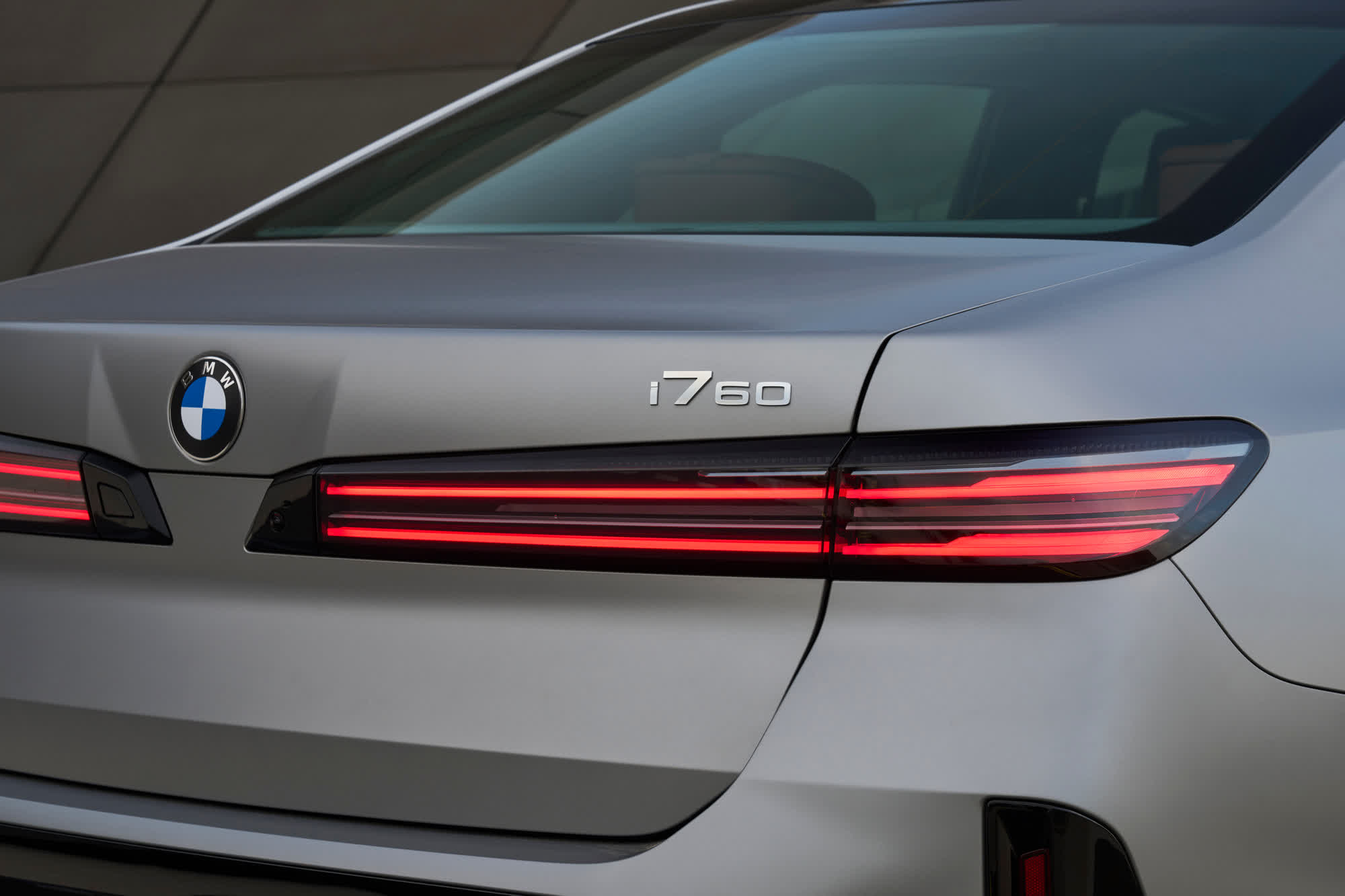
The two new all-electric models include the BMW i7 50 xDrive and BMW i7 60 xDrive, each featuring a dual-motor, all-wheel-drive powertrain. The former is powered by a 449 hp motor producing 487 lb-ft of torque, while the latter features a 536 hp motor delivering 549 lb-ft of torque.

BMW claims the i7 50 xDrive can accelerate from 0 – 60 mph in 5.3 seconds with a top speed of 130 mph, while the i7 60 xDrive is quicker, reaching 0 – 60 mph in 4.6 seconds and has a top speed of 149 mph.
The new BMW i7 60 xDrive features a 112.5 kWh battery with an EPA-estimated range of 350 miles. This represents an improvement over the current i7 eDrive's 314-mile range, but it still trails BMW's own BMW iX3 electric crossover and the BMW i3 electric sedan, both of which deliver well over 400 miles of range on a single charge.

The new battery packs were developed in collaboration with Croatian supercar specialist Rimac Technology. They use BMW's Gen5 module-based architecture and are built around Gen6 4695 cylindrical lithium-ion cells, offering 10% more capacity and 20% higher energy density compared to the older Gen5 prismatic units, despite maintaining the same overall size.
The new batteries not only deliver significant gains in range but also improve charging performance, with maximum DC fast-charging increasing from 195 kW to 250 kW. This allows the vehicles to charge from 10% to 80% in just 28 minutes at compatible stations. Maximum electrical current has also increased to 630 amps, which BMW claims is best-in-class. Every new BMW i7 EV also comes with an NACS charge port as standard, ensuring compatibility with Tesla's Supercharger network.

On the design front, the new i7 adopts the company's "Neue Klasse" styling language, including the large twin-kidney grille design first seen on the BMW iX3 and BMW i3.

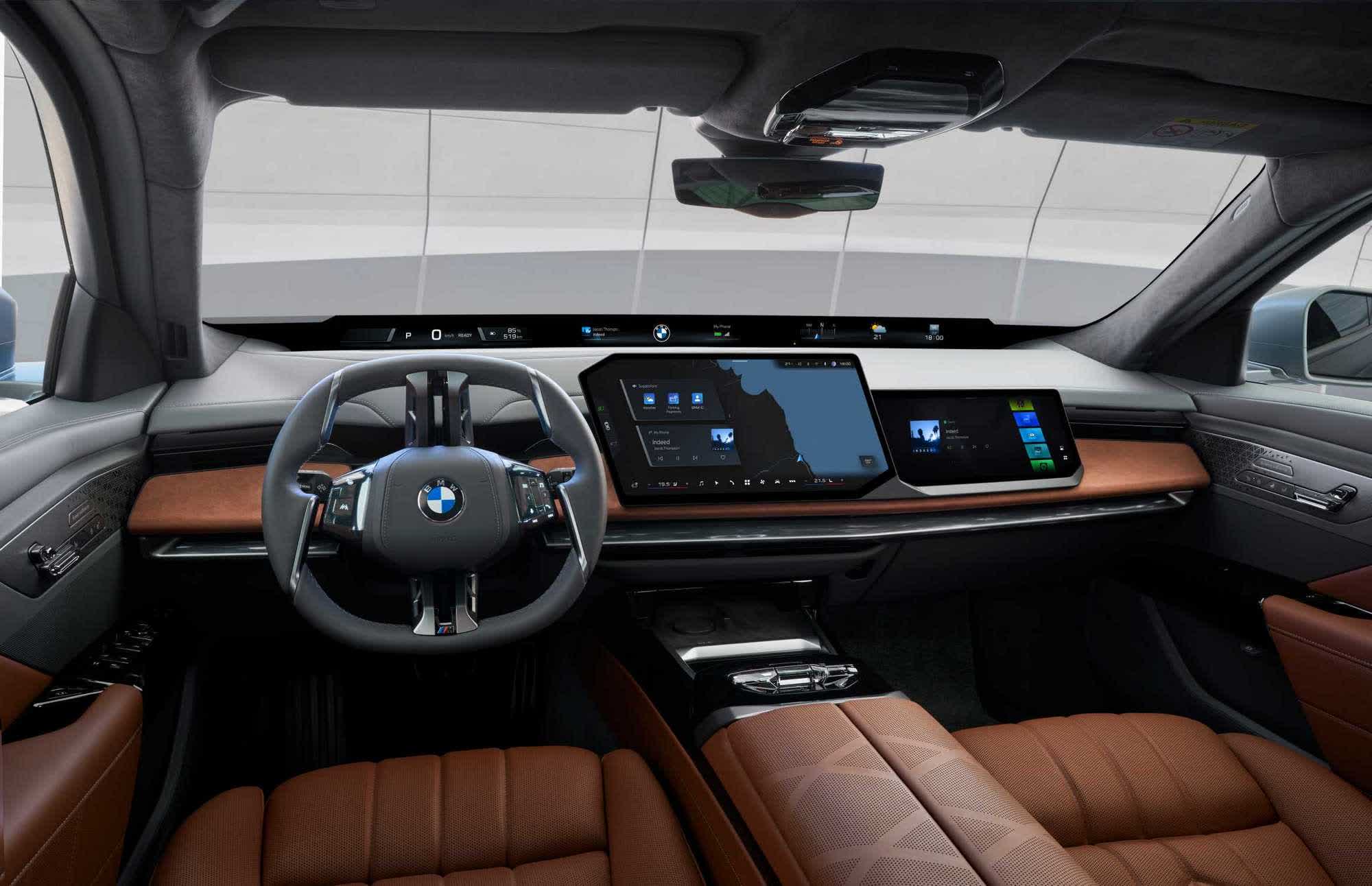
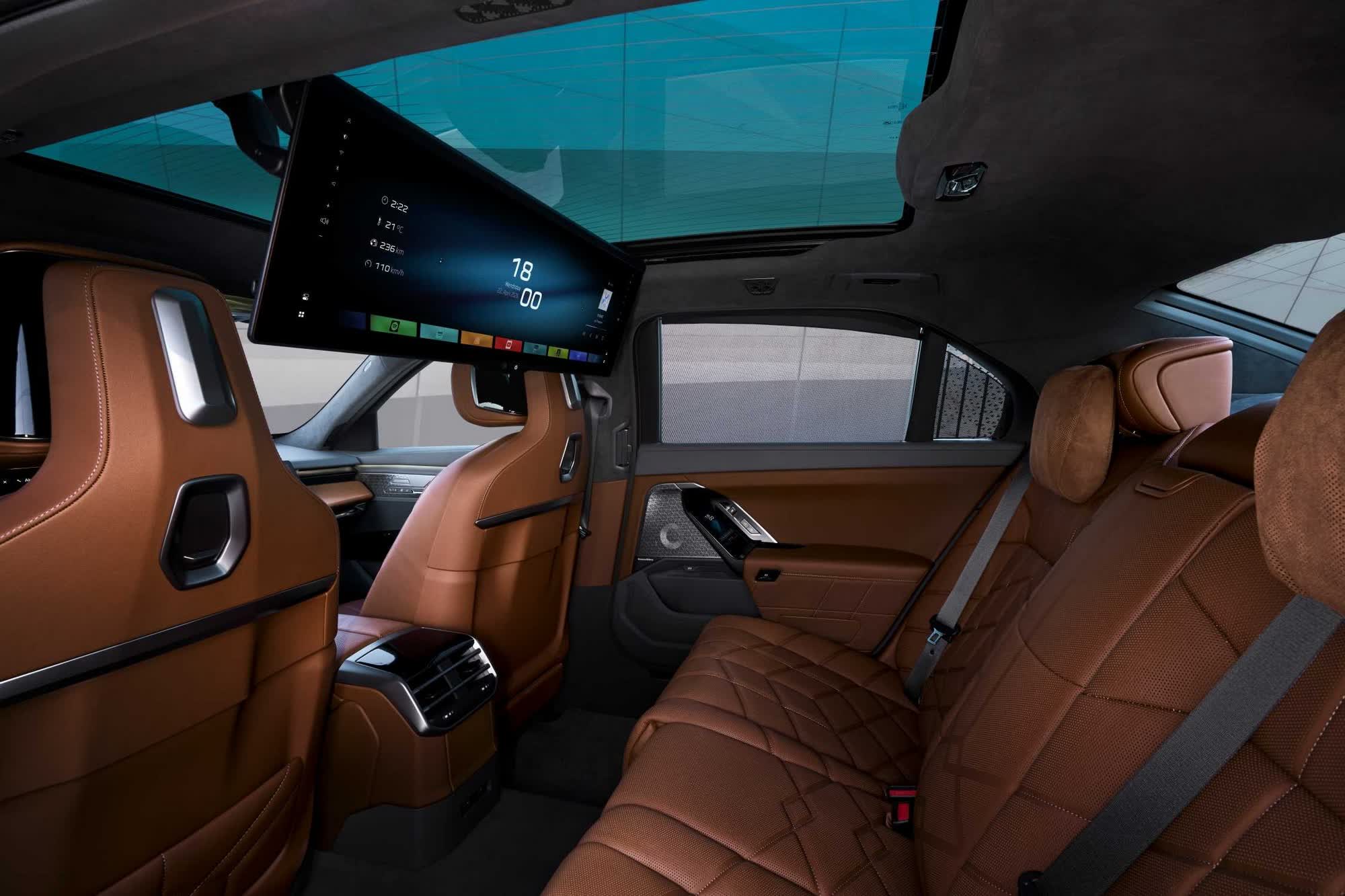
Inside, the new i7 features a pillar-to-pillar panoramic iDrive display showing range, charging, media, and navigation information. The cabin also includes a 17.9-inch central display and a 14.6-inch front passenger screen. In the rear, an optional 31.3-inch Theatre Screen supports features such as Zoom video calls.
The seventh-generation BMW 7 Series is priced starting at $99,800 for the gasoline models, while the EV variants start at $106,200 for the 50 xDrive and $124,700 for the 60 xDrive. Production of both the gasoline and electric models is scheduled to begin in July in Dingolfing, Germany, while the 750e xDrive plug-in hybrid will enter production in the fourth quarter of this year.

Permalink to story:

 
with maximum DC fast-charging increasing from 195 kW to 250 kW. This allows the vehicles to charge from 10% to 80% in just 28 minutes
I don't think this qualifies as "Superfast DC Charging" as the article title proclaims. Aside from beating the Nissan Leaf and Chevy Bolt's charge rate, this is a run of the mill average charge rate and has been so for many years now. Modern day "Superfast" I would say is more along the lines of 400kW+ rates (max rates, not sustained obviously)
 
I don't think this qualifies as "Superfast DC Charging" as the article title proclaims. Aside from beating the Nissan Leaf and Chevy Bolt's charge rate, this is a run of the mill average charge rate and has been so for many years now. Modern day "Superfast" I would say is more along the lines of 400kW+ rates (max rates, not sustained obviously)
kW is not the whole story. What voltage is it at?

The kia EV6 only does 230kW but charges from 10-80 in just 16 minutes, less then half the time of th emodel 3, which does 250kW. This is because the EV6 is an 800v architecture car, whereas the tesla is 400, so the kia can maintain full speed much longer.

That being said, BMW appears to still be using a 400v battery with significantly higher amperage, which isnt going to work well. This thing is gonna get HOT quick and throttle within minutes.
 
kW is not the whole story. What voltage is it at?

The kia EV6 only does 230kW but charges from 10-80 in just 16 minutes, less then half the time of th emodel 3, which does 250kW. This is because the EV6 is an 800v architecture car, whereas the tesla is 400, so the kia can maintain full speed much longer.
Err, what? This conflates the roles of power, energy, and voltage. Charging rate is measured in units of power (kW) , period. Total range is a function of battery energy (and vehicle weight/aerodynamics, etc)

A higher voltage architecture allows for theoretical higher charging rates (and a weight savings due to less wiring) -- but that doesn't translate automatically into longer range or higher speeds.

PS. The Kia EV6 charges at 350 kW max, not 230 kW. AND it has a smaller battery. That's why it charges so much faster.
 
The i7 interior is a mishmash of shapes. I generally prefer my S580's interior.

The backseat of the i7 is all gimmick. It's the type of thing you'd see in a Chinese-made concept. A fold down bigscreen display controlled by small displays on the doors. It's cool, but it's useless. You can't drive with it down as it interferes with the seat headrest. My S-class interior's headrest monitors don't look as cool, but make way more sense.
 
kW is not the whole story. What voltage is it at?

The kia EV6 only does 230kW but charges from 10-80 in just 16 minutes, less then half the time of th emodel 3, which does 250kW. This is because the EV6 is an 800v architecture car, whereas the tesla is 400, so the kia can maintain full speed much longer.

That being said, BMW appears to still be using a 400v battery with significantly higher amperage, which isnt going to work well. This thing is gonna get HOT quick and throttle within minutes.
kW is THE whole story. Volts are half. Since P = U*I.

The rest of your comment is just random assumptions, like BMW engineers have only been building EVs for 2 decades now, surely they never thought about heat dissipation in their battery chargers, but NOW thankfully you shed some light on this matter with your expertise.

In any case, NK uses 800V, so there's no reason to assume these NK batteries are charged only with 400V.
 
Last edited:
The i7 interior is a mishmash of shapes. I generally prefer my S580's interior.

The backseat of the i7 is all gimmick. It's the type of thing you'd see in a Chinese-made concept. A fold down bigscreen display controlled by small displays on the doors. It's cool, but it's useless. You can't drive with it down as it interferes with the seat headrest. My S-class interior's headrest monitors don't look as cool, but make way more sense.
Funny you complain about the i7 and then bring up the S class.

I, for one, think that hyperscreen is the text book definition of "gimmick".

In any case, that theater screen is indeed gimmicky, but not because of the looks, but because it's way too high, you need to stare upwards, your eyes dry very quickly, causing eyestrain. Nonsense.
 
Funny you complain about the i7 and then bring up the S class.

I, for one, think that hyperscreen is the text book definition of "gimmick".

In any case, that theater screen is indeed gimmicky, but not because of the looks, but because it's way too high, you need to stare upwards, your eyes dry very quickly, causing eyestrain. Nonsense.

They want you to recline in the rear seat to watch the theater screen. Again: not enough space for that.

Feel how you will about the hyperscreen but when you have a passenger who wants to watch TV on it and that keeps her mouth shut so you can drive in peace - it is worth every penny.
 
Better battery is good, but the interior still looks like a low rent BYD. Where is the design one expects of expensive cars?
To be honest, over the years, I have usually found German cars to be quite spartan in comparison to other manufacturers. The one pictured on here however, actually looks quite plush for a BMW. IMHO.

I have to admit, I couldn't be bothered reading the full article, but I wouldn't be surprised if the fast-charge is paywalled....LOL.
 
kW is not the whole story. What voltage is it at?

The kia EV6 only does 230kW but charges from 10-80 in just 16 minutes, less then half the time of th emodel 3, which does 250kW. This is because the EV6 is an 800v architecture car, whereas the tesla is 400, so the kia can maintain full speed much longer.

That being said, BMW appears to still be using a 400v battery with significantly higher amperage, which isnt going to work well. This thing is gonna get HOT quick and throttle within minutes.
I also agree. Charging seems still to be a problem.
 
You wonder if they show these designs to focus groups? Obviously it's always a personal opinion but it's an awful looking vehicle on the outside, uninspiring sitting in the front and just bizarre in the back. I suppose if you have 2 kids with ADHD in the back then the screen might keep them quite for a moment.
 
Wow that's an ugly motorcar... Uses same aggressive (ugly, poor aerodynamically, inefficient) slab front that they love put on all the awful 4x4s, Trucks and SUV's the sheep are all buying these days.
 
Man, BMW seems to be following some strange rule with the 7 series, which is:

The newer the generation, the uglier the exterior.

And here I was, hoping things were changing for the better, after the G20 3 series, g42 2 series, etc.
 
Last edited:
I don't like that interior! I like a proper driver side instrument cluster. It also looks like the car is devoid of physical controls for normal functions. I don't want to have to be fumbling going through menus while I'm driving. Don't get me wrong, I actually like my car to have great technology and a good infotainment system, but I also like my car to look like a car.
 
Back