Recap: Fifty years after its debut, the Am9080 remains an inflection point in AMD's evolution into a semiconductor manufacturer. It wasn't AMD's architecture and it wasn't yet innovation in the sense the industry remembers AMD for today – but it was proof that the company could build a cutting-edge CPU end-to-end, from silicon layout to packaging to military-grade qualification.

The Am9080 arrived in mass production in 1975 as AMD's version of Intel's 8080 – an instruction-set-compatible implementation built on AMD's own n-channel MOS process rather than a carbon-copy fabrication. That detail matters: the Am9080 wasn't a rebadged Intel part.
AMD re-implemented the layout internally, tuned its design to its fab rules, and qualified it to reliability standards that made it attractive to aerospace and defense buyers. While the Am9080's roots trace back to Intel's 8080, its story highlights how reverse engineering, shrewd licensing, and second-source manufacturing agreements defined the early dynamics of the microprocessor market.
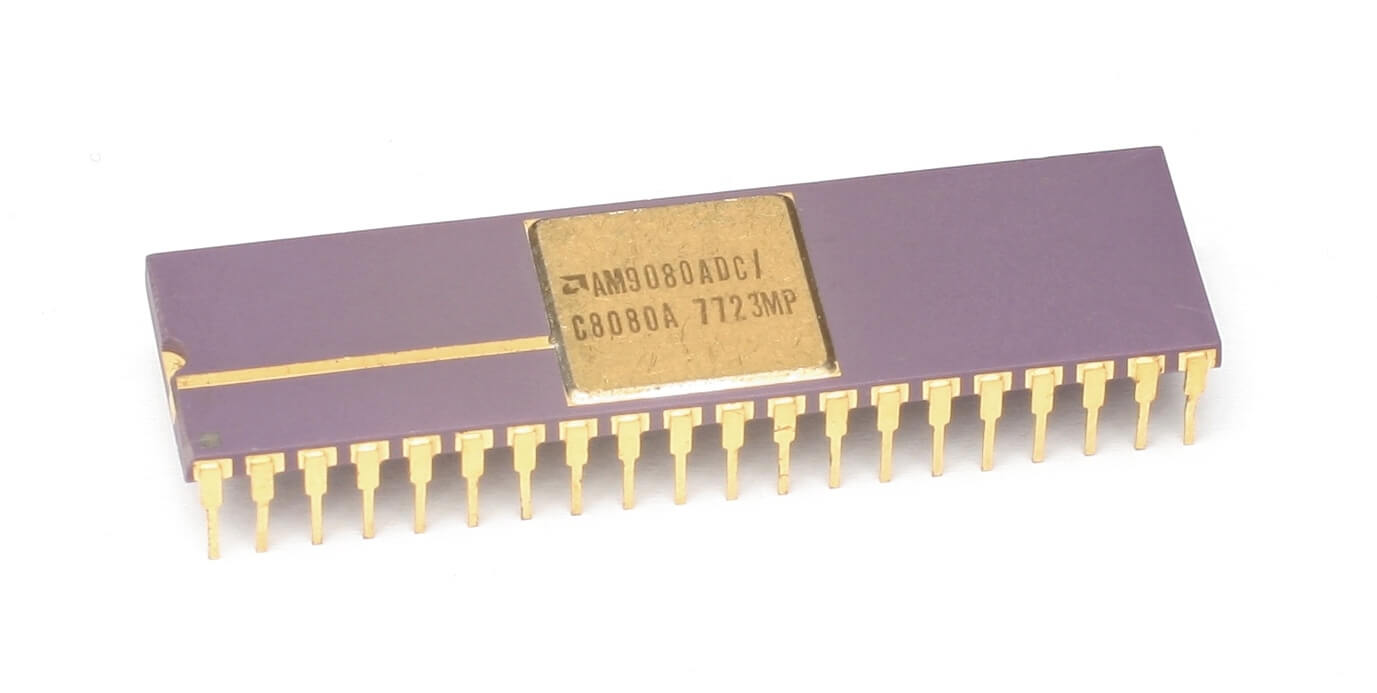
AMD's first copycat CPU
With those diagrams in hand, they approached several Silicon Valley companies to gauge interest. Advanced Micro Devices, then a young semiconductor firm with ambitions to expand beyond logic and memory components, recognized a strategic opportunity. The company had recently developed an n-channel MOS manufacturing process, and saw a way to adapt the cloned design to its own production line while yielding a notably smaller, denser die than Intel's original.
AMD produced engineering runs in 1974 and entered volume production in 1975, marking AMD's entry into the microprocessor business. The chip matched Intel's instruction set and performance and, in higher speed bins, exceeded Intel's top frequency, reaching up to 4.0 MHz versus Intel's fastest 3.125 MHz. AMD's layout on its own process also resulted in a smaller die.
While based on Intel's 8080 instruction set and microarchitecture, AMD's version was implemented on its own internal n-channel MOS process technology and qualified to MIL-STD-883 environmental and electrical screening.
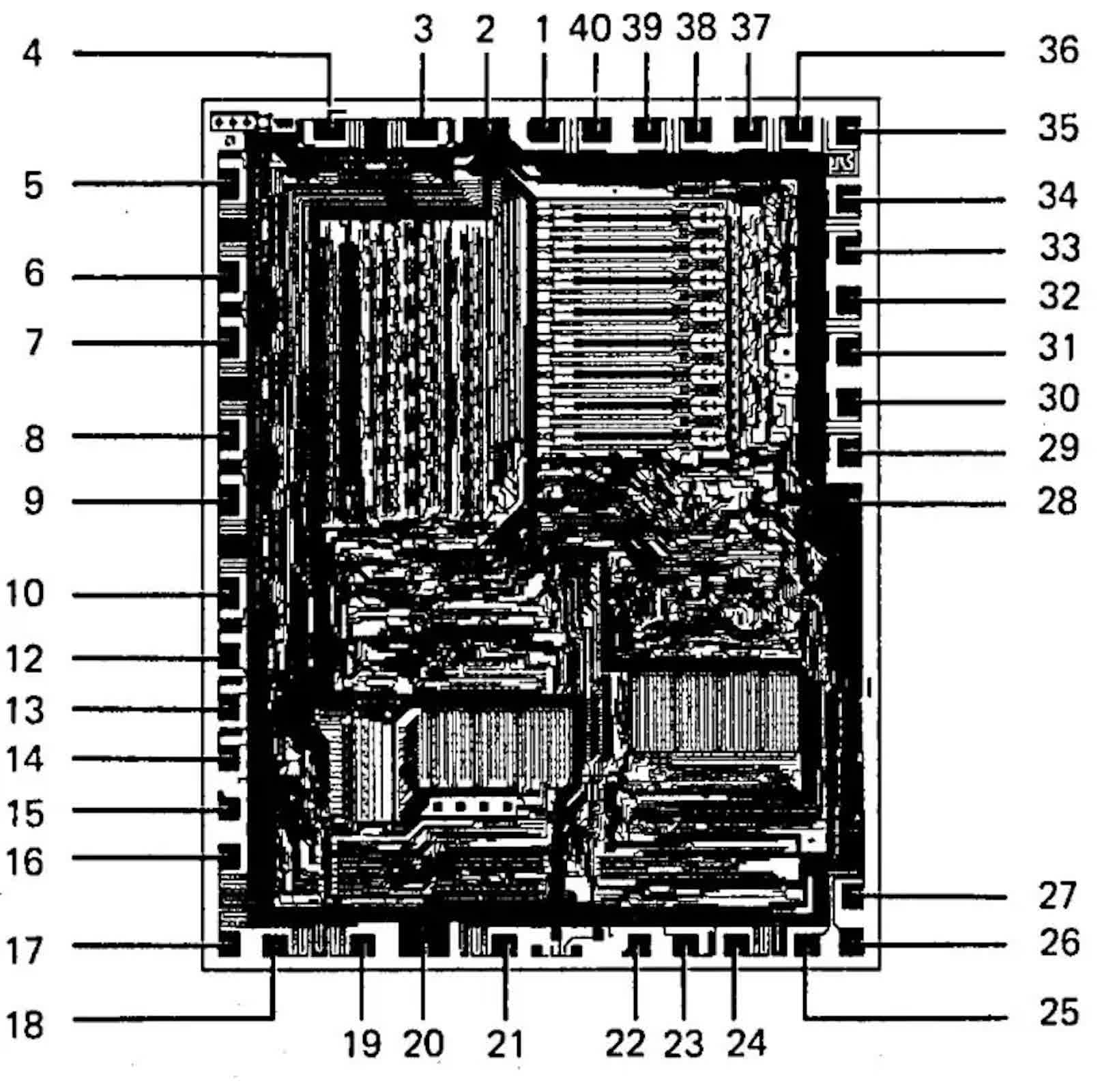
The Am9080's path to production began in the summer of 1973, when engineers Ashawna Hailey, Kim Hailey, and Jay Kumar, then employed by Xerox, examined an early Intel 8080 prototype. According to historical accounts, the trio photographed the pre-production chip in extreme detail, capturing roughly 400 images that revealed its structure and circuitry. From those photos, they reconstructed the processor's schematics and logic diagrams – effectively reverse-engineering its design.
The economics of production were striking. Reports claim each Am9080 could be manufactured for about $0.50 per die (with around 100 chips produced per wafer). Sold primarily to military and industrial customers that required reliability and redundancy, some parts reportedly fetched prices up to about $700 apiece. These specific figures are widely cited but not independently verified, with some others claiming the cost was closer to $300-350 per chip. Those kind of sharp margins provided AMD a solid financial base at a critical moment in its development.
Tensions between Intel and AMD could have escalated into a prolonged legal dispute, but both companies recognized mutual commercial benefit. In 1976, they signed a cross-licensing agreement that legitimized AMD's production of the Am9080 and enabled the company to serve as an authorized second-source supplier of Intel microprocessors.
Also read: The History of the Microprocessor and the Personal Computer
The deal required AMD to pay Intel an initial $25,000 fee and an annual $75,000 licensing payment. It also retroactively cleared any potential infringement claims. More importantly, it positioned AMD to bid on lucrative military procurement contracts, which often required at least two approved manufacturers for mission-critical components.
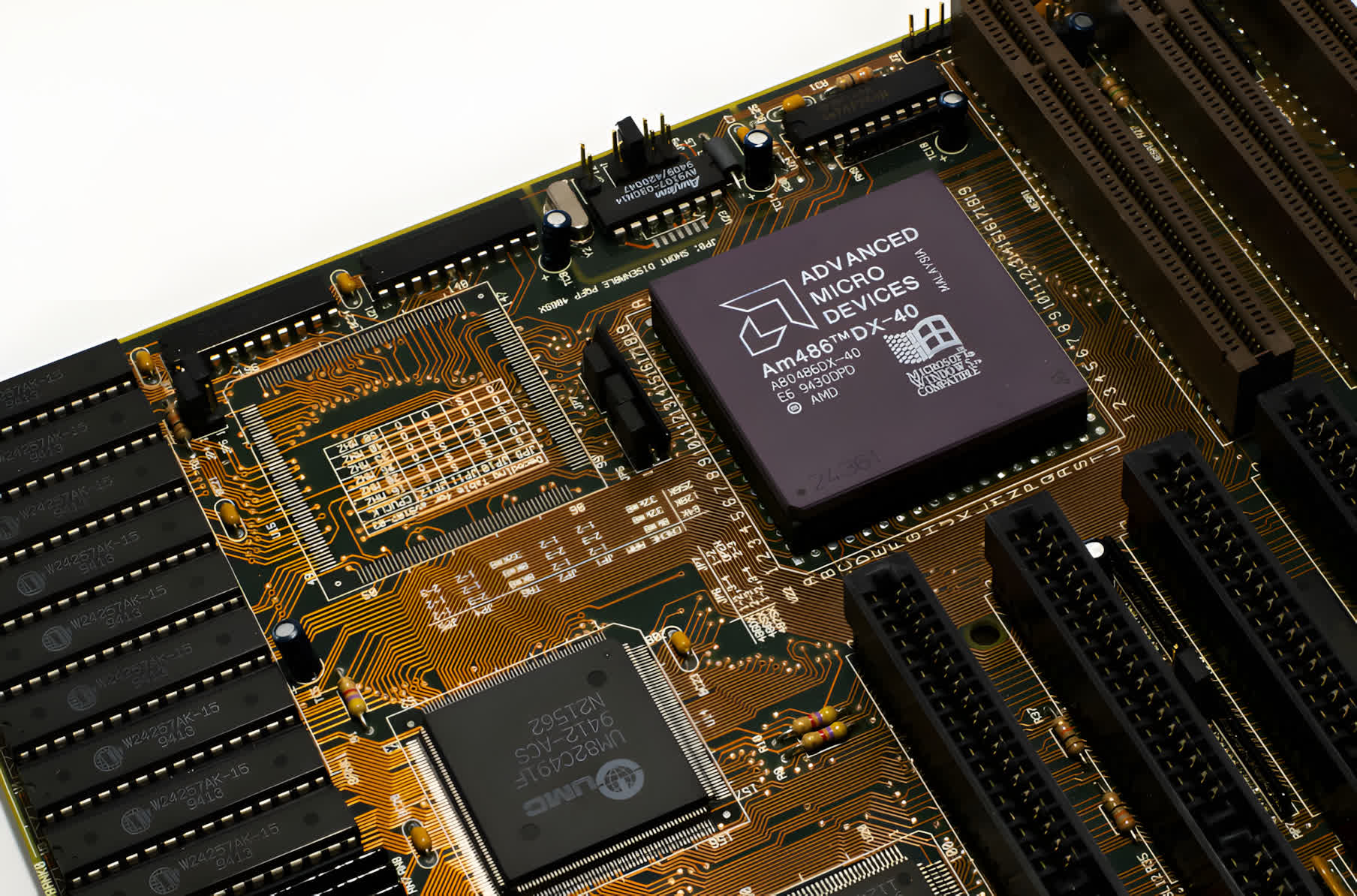
This agreement proved foundational. When the two companies expanded their licensing arrangement in 1982, AMD gained authorization to produce Intel's 286 processor under license. This step directly led to AMD's later development of its own x86-compatible CPUs.
Over its production lifespan, AMD manufactured 20+ known variants of the Am9080, with clock speeds ranging from 2.083 MHz to 4.0 MHz. Some models, such as the MIL-STD-883-compliant AM9080A-2DM, were engineered for extreme environments and were rated to operate at −55 °C to +125 °C.
By comparison, Intel's 8080 variants topped out at 3.125 MHz. AMD's use of a more advanced n-channel MOS fabrication process and a denser custom layout allowed for higher clock frequencies and a smaller die area, demonstrating the company's early mastery of efficient semiconductor manufacturing techniques.
Image credit: Tom's Hardware, CPU-Collection.de, WikiChip.
AMD's Am9080 at 50: The reverse-engineered chip that launched AMD into the CPU era


