Ford is ending the F-150 Lightning and pivoting to battery storage

Daniel Sims

Posts: 2,416   +73
Staff
What just happened? Following weeks of rumors, Ford has indicated that it will end production of the all-electric F-150 Lightning pickup truck. The move is the clearest sign yet that electric full-size trucks have failed to gain traction in the US.
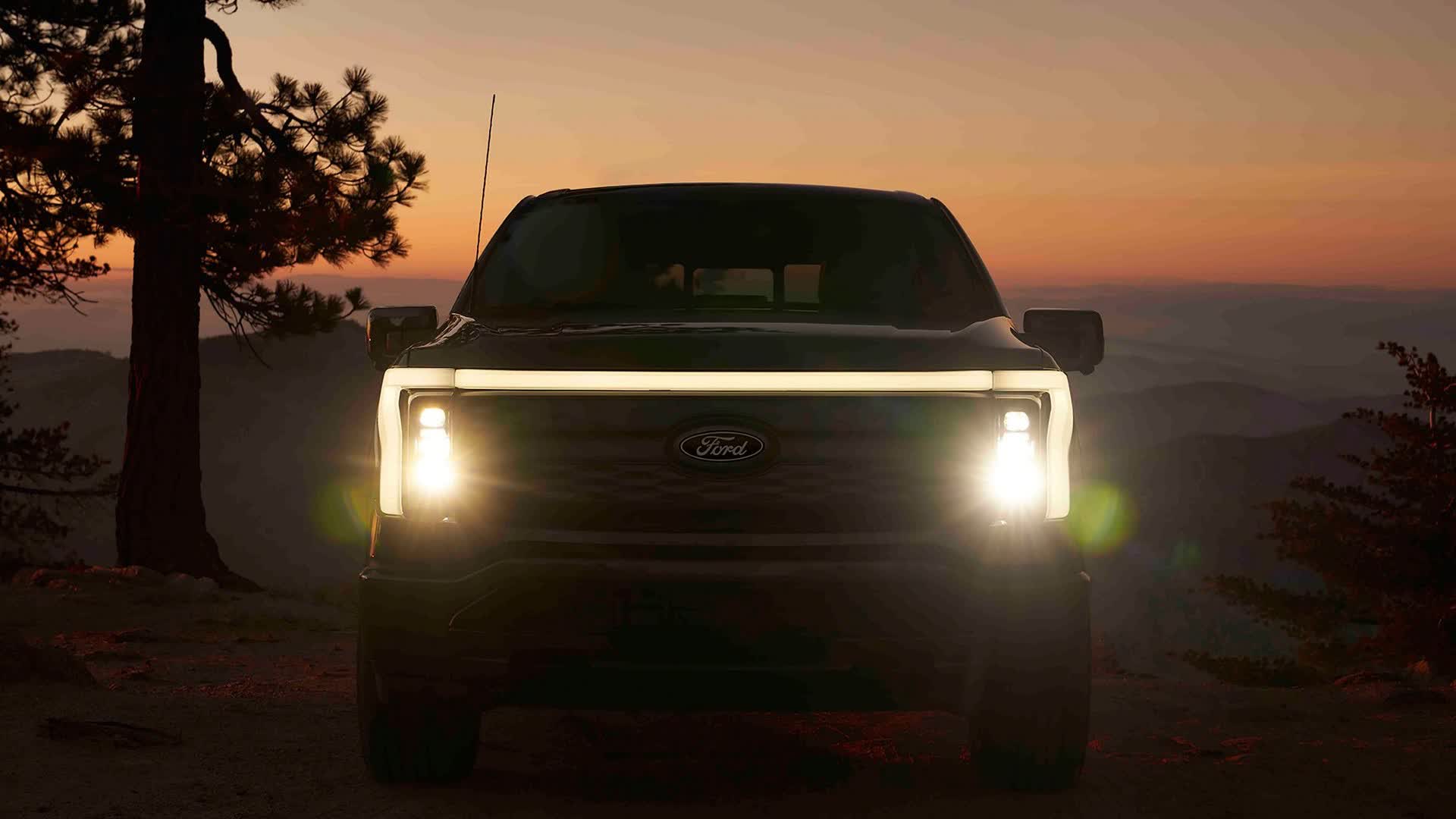
Ford explained that upcoming vehicles will shift to hybrid powertrains, partially to address the range anxiety that has plagued electric vehicle adoption. Moreover, the company will redeploy resources toward a new battery storage business with higher profit margins.

The decision marks the end of what Ford once hailed as a revolution in mainstream trucks. Upon introducing the F-150 Lightning five years ago, CEO Jim Farley compared it to the introduction of the Model T.

High costs, low sales, and expiring EV subsidies are likely the biggest factors behind the F-150 Lightning's failure, which follows flagging sales of other electric trucks. With batteries ranging from 98 to 131 kWh, prices for Ford's model ranged between $50,000 and $90,000, and its immense weight limited battery performance.
The issues, along with the end of federal EV tax credits, led to lukewarm demand. In October, the company reported selling only 1,500 units – down 24 percent year-over-year – and only a fraction of the 66,000 gasoline trucks sold during the same period. Over the past couple of years, EVs have cost Ford approximately $13 billion in losses.

Other automakers have similarly struggled with mainstream electric trucks. Sales of Tesla's Cybertruck have plummeted. Stellantis, General Motors, and Rivian have also scaled back electric truck efforts.

Still, some companies have not given up. Last month, Toyota introduced an all-electric variant of its famous Hilux. Maintaining the brand's conservative but reliable design, the 193-horsepower, 59.2 kWh pickup is now available in Thailand and Europe.

Although the electric Hilux is not expected to reach the US, Jeep is scheduled to launch its Recon EV in the country next year. Starting at $65,000, the vehicle achieves 650 horsepower and comes equipped with a 100 kWh battery.

Meanwhile, Ford's new battery storage initiative will redirect its Kentucky and Michigan plants to provide energy for data centers, likely to be used for AI. The company plans to deliver 20 GWh of capacity annually. Ford's all-electric vehicle offerings will shift toward more affordable models, such as a midsize pickup scheduled to begin production in 2027.

Permalink to story:

 
Yes, except ~anywhere outside the US, where they don't struggle.
No. Wanting something to be true doesn’t make it so. I mean, it’s not hard to look it up.

Lots of places outside the US are still dominated by ICE cars because EV adoption is actually quite low without strong policy support.

For example:

- Japan: EVs make up only about ~3–4% of new car sales. (Our World In Data)

- India: ~2% of new cars sold are EVs.
(Our World In Data)

-South Korea: ~9% EV share—still tiny compared to ICE. (Our World In Data)

- Many Southern/Eastern European markets are similar. Such as Croatia with ~1% EV share. (Reuters)

Even in broader Europe outside the Nordics, EV share isn’t winning yet (EU average ~20–25%, with ICE still a big chunk).
(Our World In Data)

Even Germany dropped from ~18% EV share to ~12% right after subsidies ended.

Meanwhile, the places people point to as “not struggling”—China and Norway—are outliers:

China has ~48% EV share of new sales and Norway ~90%+. (Our World In Data)

EVs generally need incentives and pro-EV policy to gain market almost everywhere. The idea that they’re dominating everywhere outside the US just doesn’t match the numbers.
 
That 305% number is nonsense. The U.S. isn’t some cartoon villain “f**king the world over” it’s one of the few major economies that’s actually reduced emissions while growing.

Europe looks cleaner largely because it offshored its dirty industries. Reality is more complicated than slogans.
 
Yes, except ~anywhere outside the US, where they don't struggle.
Those other countries are either propping up EVs with subsidies, and/or using various means to make ICE vehicles artificially expensive. The PRC, for example, has spent at least ~$230 billion subsidizing its EV makers. Norway has exempted EVs from the 25% VAT that is charged on ICE cars, and hit ICE cars with with very high "CO2" taxes on top of that.
 
Naturally, if the competition is going away, Tesla should do better in terms of market share, exactly as I predicted months ago:
The #2 EV brand in the US in Q2 was GM with 1/3 the sales that Tesla has. I noticed in the source article GM that was completely omitted. Well in Q2, GM also sold double what Hyundai did, triple what Ford did, quadruple what VW did, and the numbers diminish even further.

But these small players in the US EV market are who Reuters is hyping up lol (the source of this article's news). They also admit that they depended on significant discounts in order to convince customers to choose their vehicles. I'll tell you the reason why--these companies probably plan to wind down their EV production and don't want to deal with leftover inventory of cars they can't sell.
This was in response to a news article about Tesla losing market share, which I pointed out was only temporary because what Scott says:
EVs really struggle without taxpayer money propping them up.
At the time, reporting didn’t mention this at all. I further elaborated:
[Heavy discounts are] going to be unsustainable for these automakers, and it supports everything I said that this is a one time thing (only until the end of September) to clear out inventory. […] These competitors don't want to take the lead unless they can benefit from subsidies because no one will want to buy their vehicles at a higher price after the incentives go away. They will not be able to sell an attractive EV at a reasonable price to take the lead afterwards. Instead, they will reduce EV production (or deal with oversupply). Hyundai and Kia might be exceptions; in my opinion they actually have attractive looking EVs.

Just to note, when the article says it drove EV sales up 60-120%, none of the automakers listed are even the #2 automaker but typically sell 10,000 vehicles PER QUARTER. If they managed to 10x their sales, they would not catch up to Tesla lol.
Ford was the #3 EV automaker in the US in Q2 and now only has 1 consumer EV left (the Mustang Mach-E).
 
US continues to lead the world in pollution per capita with a very impressive 305% more pollution per capita than the average across similar wealth-per-capita European countries...
Just one of the many ways in which the US is now f**king the world over for the rest of us. Drill baby drill....
https://www.statista.com/chart/24306/carbon-emissions-per-capita-by-country/
No dude. The U.S. doesn’t ‘lead the world’ in per-capita emissions—several countries emit more per person. And the ‘305% more than Europe’ number simply isn’t supported by data. The real gap is closer to double, not quadruple.

More importantly, the U.S. has cut emissions more than any other country in absolute terms over the past 15+ years, largely by replacing coal with natural gas and renewables—while many European countries have quietly increased emissions after shutting nuclear plants.

What’s also worth noting is that the U.S. produces far more of the world’s food, medicines, technology, and clean-energy innovation than most countries.

Much of Europe’s lower emissions come from simply outsourcing manufacturing to places like China—emissions still happen, just off the books.

And the U.S. leads in carbon-capture tech, energy efficiency R&D, and clean-energy investment in absolute dollars.

Does the U.S. have more work to do? Absolutely. But calling it uniquely destructive while benefiting from its innovation, security, and exports is less ‘climate concern’ and more lazy America-bashing via bad math.

Criticism is fair. Reflexive ‘U.S. = bad’ rhetoric isn’t. When nuance disappears, so does credibility.
 
US continues to lead the world in pollution per capita with a very impressive 305% more pollution per capita than the average across similar wealth-per-capita European countries...
This completely ignores population density. When you factor that in (which greatly affects travel), you’ll find the US is pretty similar to Europe. Keep in mind usage of public transit is greatly affected by that. Residents in most American metropolitan cities can’t even rely on public transit (they have family that live in surrounding cities).
 
Aside form dunking on Oort for drinking the kool aid, Why doesnt the article bring up that Ford is making a PHEV F-150 to replace the lightning? Or more accurately, an EV F-150 with a gas range extender ALA the ramcharger.

The OG lightning wasnt bad, but in typical Ford fashion, they never bothered updating it once released. Rivian and Tesla periodically update with bigger batteries or drivetrain changes for longer range, but Ford never did, and not many people want a truck that can't go 100 miles if you actually use it as a truck.
 
Base was ~40k but to get the good battery you had to get all the bells and whistles that bummed up the price another ~40k for a 5k battery change.
 
Base was ~40k but to get the good battery you had to get all the bells and whistles that bummed up the price another ~40k for a 5k battery change.
That was a big killer. The real "base price" of the Lightning was $79k. Nobody wanted that pathetic low range model. And if you wanted decent seats we're up to $90k.
 
Those other countries are either propping up EVs with subsidies, and/or using various means to make ICE vehicles artificially expensive.

For example those emision standards like Euro 6.
Where car producers struggle to meat the requirements. Making big cars more expensive and small cars simply unsaleable.
No wonder the average age of cars in some countries is 18+ years.

With more and more restrictions 90% of citizens wont be able to buy a car in near future.
Not only a new car, but any car at all.

Something like restoration of 60th model GM in EU is simply ... unthinkable.
 
As a Lightning owner, I find all of this commentary ridiculous. I am absolutely saving tons of money on gas. It costs me ten cents per kWh to charge my truck at home, and that is only if I charge it at night. During the day, my solar panels on my roof charge the truck for free. Y'all act like you need to drive 300+ miles every day? It's just not so. Then on top of that, I'm in oil and gas, as a career, and some of the die hard petroleum supporters comments in here I find hilarious. Big oil is not your friend. Don't be a sucker? China is making the US look like fools right now.
 
No. Wanting something to be true doesn’t make it so. I mean, it’s not hard to look it up.

Lots of places outside the US are still dominated by ICE cars because EV adoption is actually quite low without strong policy support.

For example:

- Japan: EVs make up only about ~3–4% of new car sales. (Our World In Data)

- India: ~2% of new cars sold are EVs.
(Our World In Data)

-South Korea: ~9% EV share—still tiny compared to ICE. (Our World In Data)

- Many Southern/Eastern European markets are similar. Such as Croatia with ~1% EV share. (Reuters)

Even in broader Europe outside the Nordics, EV share isn’t winning yet (EU average ~20–25%, with ICE still a big chunk).
(Our World In Data)

Even Germany dropped from ~18% EV share to ~12% right after subsidies ended.

Meanwhile, the places people point to as “not struggling”—China and Norway—are outliers:

China has ~48% EV share of new sales and Norway ~90%+. (Our World In Data)

EVs generally need incentives and pro-EV policy to gain market almost everywhere. The idea that they’re dominating everywhere outside the US just doesn’t match the numbers.

Congratulations, you successfully picked the least significant markets to prove a point. Like Croatia lol. You don't even know where Croatia is, dude. The whole country has fewer residents than Los Angeles, that's how "significant" it is.

Even though "it's not hard to look up".

The biggest market today is China. Not the US. Not the EU. It's China. Which you call an "outlier", funny guy. They're not "the outlier", they're "the leader". The "outlier" is the US with its completely backwards approach to everything, and especially cars. The whole world is moving towards BEV and hybrid passenger cars, but what do Murricans buy? Exactly, V8 gas guzzler trucks, because that's totally what you need for your groceries. But then again, your whole attitude screams this "US = center of the universe" vibe.

Now, for some actual facts about 2025Q3:

- Worldwide: YoY 35% growth for BEVs
- China: YoY +36%, 34% market share
- EU: 5 biggest markets +32%, Germany itself +45%
- even the US: +22%

I see you're having trouble grasping this concept about "trends", but I help you out: when the global sales, worldwide, do grow, the markets that shrink are the "outliers", not the other way around.
 
As a Lightning owner, I find all of this commentary ridiculous. I am absolutely saving tons of money on gas

I'm quite glad that, in your very specific situation, you are saving money. I think you'd be hard pressed to find anyone who would wish to deny you the right or argue over, "your" choice in a horseless carriage.

But outside your isolated bubble:
It costs me ten cents per kWh to charge my truck at home,
I'm glad your electricity is that low. For most people, that is simply not even close to what they pay, on average. It's closer to double that, to start. Hit any bigger city and it can be close to 3 times that, on average, especially time of use, duration and size of battery. Ask those in Blue states, especially in AZ, CA, NY, PA, etc.

And lets not forget that, on a good day, assuming an average commute of 45 minutes one way, burning an average of 50% battery per day on a 75wh sized battery and ignoring power loss in charging on a 20cent kmh charge, that's $7.5 a day or an average week's consumption (assuming your weekend is light work of equal to one days travel), that's $45 a week. Hmm...not a super savings there. Seems like a weeks worth of gas. Some areas will see better savings while others worse. It's (gasp) situation dependent.

And before you argue, I'm not going to use miles traveled, as with Electric Cars, it's a useless metric. Electric cars have wild assumptions and assertions on their MPG converted ratings that only take into account the BEST case scenarios, without any additional functions used. It will come down to what it cost at the pump vs electricity consumed.


Y'all act like you need to drive 300+ miles every day? It's just not so.
News flash: People have commutes. Long commutes. Stop and Go, or out in the country side, where I just left (unwillingly), it can be 45 minutes to a job site, daily. In a city, it can be stop and go for an hour. Can't live closer because it gets more expensive. And It isn't "just" miles driven that drains your battery. Winter and Summer seasons are a thing, and AC and Heater has a serious effect on battery. If you really own an electric vehicle, you'd know this bane already.

During the day, my solar panels on my roof charge the truck for free.
Good for you. It's not economical or monetarily feasible to do this for most people: I.e. renting a house or apartment. Owning a home is difficult for most now. However, good for you.

Then on top of that, I'm in oil and gas, as a career, and some of the die hard petroleum supporters comments in here I find hilarious. Big oil is not your friend.
No one here thinks Big Oil is their friend. Left or Right, hardly a person here would think any Corp has their best interests at heart. No one said this. Some peeps will be die hard petroleum "users", simply because an electric vehicle will not cut it for their situation. You try to use your Truck against Mine for serious work and you'll find it will be quite difficult in towing and hauling, to match a full days work of my 'die hard petroleum' truck. You know, what Trucks are for. If it's just for luxury or occasional use, that's fine and good for you. But don't project your use case somehow applies to everyone in every situation. Gas cars are still cheaper overall.


Honestly I find most of your comment to be tone deaf. I'm not a huge fan of Electric. They are fun. But it certainly didn't change my cost around. Some will find it has, in their situation. Overall, it's just another tool and method of travel. It either works or it doesn't. To this day, range anxiety is still very much a thing. People on a trip can "gas and go" while you would "wait and charge". Winters and Summers will be more detrimental drain, while extreme areas (like Minnesota or Arizona) will cause an even greater strain. Not to mention, the power grid cannot sustain all of us going Electric in even the most conservative time frame unless we put forth serious effort in transmission line upgrades (APS, I'm looking at you).
 
Instead of getting better at EVs and developing globally-competitive products, US automakers seem fixated on cashing in on short term sales of ICE trucks and SUVs.

Like Europe, we enforce an inferior product to protect uncompetitive local industries. If BYD vehicles were available, Detroit would have to improve quickly.
 
Not saying one way or another here, but I wonder what this would look like if we shifted the subsidies from gas to electric heavily. I do think for vehicles hybrid is a great intermediary, especially plug in hybrids. Out here in Iowa we have some of the worst electrical infrastructure so if you regularly need to travel outside our major cities, you simply shouldn't go electric. But for me, who spends almost all my time in the city and along major interstates, it would be fine.
We have an extremely cheap rate for electricity here: 8 cents a kwh because we invested *hard* into wind turbines. Works great for us!
 
Congratulations, you successfully picked the least significant markets to prove a point. Like Croatia lol. You don't even know where Croatia is, dude. The whole country has fewer residents than Los Angeles, that's how "significant" it is.

Even though "it's not hard to look up".

The biggest market today is China. Not the US. Not the EU. It's China. Which you call an "outlier", funny guy. They're not "the outlier", they're "the leader". The "outlier" is the US with its completely backwards approach to everything, and especially cars. The whole world is moving towards BEV and hybrid passenger cars, but what do Murricans buy? Exactly, V8 gas guzzler trucks, because that's totally what you need for your groceries. But then again, your whole attitude screams this "US = center of the universe" vibe.

Now, for some actual facts about 2025Q3:

- Worldwide: YoY 35% growth for BEVs
- China: YoY +36%, 34% market share
- EU: 5 biggest markets +32%, Germany itself +45%
- even the US: +22%

I see you're having trouble grasping this concept about "trends", but I help you out: when the global sales, worldwide, do grow, the markets that shrink are the "outliers", not the other way around.

None of this is true unless you categorize CO2, a gas needed by plants to survive, with NO toxic levels (unless your sucking on a tailpipe), and happens to also be a trace gas in our atmosphere that we have breathed in, without issue, since the dawn of man.. Our pollution controls for industry are among the best in the world. The US is the great Satan while you cant breathe in major cities in China. India isn't much better. That's why we hire tech workers from these countries, because they are third world countries that can't be expected to spend money on pollution control and don't have the technology we have.

This whole subject is just another scam to put our industry out of business for the good of the world while they have clear reign to do as they please

While were at it, where are all of these Chinese breakthroughs in batter capacity and life that are put front and center on this website on a near daily basis? While they strip mine lithium, we can't even dig a hole without an environmental study.
 
Congratulations, you successfully picked the least significant markets to prove a point. Like Croatia lol. You don't even know where Croatia is, dude. The whole country has fewer residents than Los Angeles, that's how "significant" it is.

Even though "it's not hard to look up".

The biggest market today is China. Not the US. Not the EU. It's China. Which you call an "outlier", funny guy. They're not "the outlier", they're "the leader". The "outlier" is the US with its completely backwards approach to everything, and especially cars. The whole world is moving towards BEV and hybrid passenger cars, but what do Murricans buy? Exactly, V8 gas guzzler trucks, because that's totally what you need for your groceries. But then again, your whole attitude screams this "US = center of the universe" vibe.

Now, for some actual facts about 2025Q3:

- Worldwide: YoY 35% growth for BEVs
- China: YoY +36%, 34% market share
- EU: 5 biggest markets +32%, Germany itself +45%
- even the US: +22%

I see you're having trouble grasping this concept about "trends", but I help you out: when the global sales, worldwide, do grow, the markets that shrink are the "outliers", not the other way around.
Okay, Punchy. Spare the chest-thumping. Mockery isn’t an argument. Calling people “Murricans” doesn’t magically turn cherry-picked growth stats into global dominance or make your point more accurate.

No one said China isn’t important. The claim I disputed was “EVs are dominating everywhere outside the US.” That is a geographic generalization, not a ranking of market size. Market share ≠ market volume, and leaders ≠ typical cases.

Calling China and Norway “leaders” doesn’t invalidate them being outliers. They are outliers precisely because their policy environment, industrial strategy, pricing controls, and infrastructure are exceptional. An outlier can be large; those things aren’t mutually exclusive. China being the biggest market doesn’t make its adoption curve representative of Japan, India, Southeast Asia, Latin America, Eastern Europe, or most of the Global South.

And dismissing smaller countries misses the analytical point entirely. Adoption patterns don’t magically become irrelevant below some population threshold. Croatia, South Korea, Japan, and India together represent hundreds of millions of consumers—and they all show the same thing: without sustained policy support, EV share stalls at low single digits or low teens.

That’s a pattern.

As for “trends”: yes, global BEV sales are growing. That was never disputed. Growth ≠ dominance. A 35% YoY increase can coexist with ICE still being the majority of the fleet and often of new sales in most regions. Germany’s post-subsidy drop is a textbook example of demand being policy-sensitive rather than purely market-driven.

Finally, turning this into a “US bad, V8 trucks lol” rant doesn’t strengthen the argument. The US isn’t the center of the universe—but neither is China a proxy for “the whole world.”

If anything, the evidence still supports my original point: EV adoption accelerates fastest where governments push hardest, and outside a few exceptional cases, ICE vehicles remain dominant for now.

That’s not ideology. That’s just reading the numbers.
 
Back