Ford might kill the F-150 Lightning, the EV that was supposed to change everything

... if I had to go from London to Paris I'd almost certainly take the train...

I'd also rather take the train... or airplane or boat, rather than a car. Your feet may get wet otherwise. (Yesyes, you can put your car on the train underneath the North Sea channel.)

For the rest: I'm with you.
 
It's as simple as having a 220 outlet being run outside, then you run an extension cord from the outlet to your car to charge it. You also have to allow people to wall mount televisions, install Internet or cable lines and have satellite dishes installed outside
You said earlier that you live in Pittsburgh and stated some laws pertaining to installation of chargers. If you are referring to actually the city proper I have lived here all my life and never heard of those laws. After a quick look at the city codes I could not find in the municipal codes. Not saying you are not correct just never heard of them before. Could you point out where I can find these laws so I can help some friends who rent.
As for as simple as running a 220 line and a extension. You sound as if you work in construction so you probably referred to a 240 line as 220 out of habit. You know that we have not had 110 and 220 for years. At least as long ago as I had my 240 line installed to charge my Tesla.
About the extension I have owned two EV's and both strongly stated to not to use an extension. I know recommendations like this are ignored though.
 
You said earlier that you live in Pittsburgh and stated some laws pertaining to installation of chargers. If you are referring to actually the city proper I have lived here all my life and never heard of those laws. After a quick look at the city codes I could not find in the municipal codes. Not saying you are not correct just never heard of them before. Could you point out where I can find these laws so I can help some friends who rent.
As for as simple as running a 220 line and a extension. You sound as if you work in construction so you probably referred to a 240 line as 220 out of habit. You know that we have not had 110 and 220 for years. At least as long ago as I had my 240 line installed to charge my Tesla.
About the extension I have owned two EV's and both strongly stated to not to use an extension. I know recommendations like this are ignored though.
well the 220/240v thing is still a problem and it comes from whether the line voltage outside your house comes from single phase or three phase. If it comes from three phase then it ends up being 220V, if the line at the street is single phase then it is 240v. All most all the lines in Pittsburgh are three phase and that's from the lines not being updated from our previous industrial boom. I really only see 240V in areas of new construction where they are building entirely new neighborhoods from scratch. To push the point a little further, I work in commercial construction and almost exclusively see 220V systems as commercial buildings run on 3 phase. I typically say 220/240 but I was mostly being lazy and didn't feel like typing that out.

As far as the EV charging goes. I can't find the exact law, all I know is that it was added to the parts of the law saying that tenants have a choice of telecom utilities and are allowed to make modifications to run cabling for cable TV or internet.

As far as the extension cord thing goes, just make sure you're using a proper cable. Most people are fools so they put that warning in there with EV's. Don't string 2, 10amp extension cords together and try to charge at 20 amps
 
It's mostly Americans that drive trucks. I'm guessing that the majority of owners don't actually need a truck. Those that buy trucks as their daily driver obviously don't care about their mpg or saving the planet so why would they spend extra for an electric truck?
Sorry dude, but that’s just an overly cynical and reductive take.

People’s vehicle choices aren’t some moral referendum on how much they “care about the planet.” It goes way beyond oversimplification—more contemptuous elitism.

Buying habits are shaped by cost, availability, utility, geography, culture, marketing, etc. People buy what fits their environment, or what’s comfortable for their lifestyle. That’s it. People don’t wake up thinking, “how can I burn more gas today?” They buy what works for them out of the options available.

It’s beyond absurd to measure anyone’s moral values by their MPGs driven. Plenty of people drive fuel-efficient cars but take multiple long flights a year or live in oversized homes that put out far more yearly emissions than their automobiles ever do. A lot of truck owners drive sparingly, carpool, or contribute to sustainability in other ways.

I know it’s easy to suggest individuals are responsible for systemic issues, but that kind of judgement and negative blame-shifting adds zero insightful relevance to how things actually work.
 
Sorry dude, but that’s just an overly cynical and reductive take.

People’s vehicle choices aren’t some moral referendum on how much they “care about the planet.” It goes way beyond oversimplification—more contemptuous elitism.

Buying habits are shaped by cost, availability, utility, geography, culture, marketing, etc. People buy what fits their environment, or what’s comfortable for their lifestyle. That’s it. People don’t wake up thinking, “how can I burn more gas today?” They buy what works for them out of the options available.

It’s beyond absurd to measure anyone’s moral values by their MPGs driven. Plenty of people drive fuel-efficient cars but take multiple long flights a year or live in oversized homes that put out far more yearly emissions than their automobiles ever do. A lot of truck owners drive sparingly, carpool, or contribute to sustainability in other ways.

I know it’s easy to suggest individuals are responsible for systemic issues, but that kind of judgement and negative blame-shifting adds zero insightful relevance to how things actually work.
I sometimes waste gasoline just to upset people like that though, they get so angry about it I must
 
I wonder why they did not attempt to make what sold really well for Toyo, small affordable hybrids that, the ones like Prius.
Instead, they made their version of a cybertruck minus the weird looks.
It's not that people don't want EVs, it's that people don't want unfixable $100,000 EVs. Make something repairable that reliably sells for $25-30,000 and people will eat that up. Also, they need to stop with the "future" design elements that throws it in your face that you're driving an electric vehicle every chance it gets. Make a normal car that just happens to be electric for 30k or under and it will sell like crazy.

They also need to stop the crap about how EVs are saving the environment.
Battery modularity+ much longer passive life (as in years before it begins to degrade regardless of charges number) are critical for Ev adoption. I have a suspicion that people who buy used EVs today without the knowledge of how EVs age will have a hard shock finding out their 8k EV needs 10k battery.
I would really like to see companies working in this direction. Those millions of barely alive batteries must not be just dumped somewhere with all the chemistry in them.
 
I have a suspicion that people who buy used EVs today without the knowledge of how EVs age will have a hard shock finding out their 8k EV needs 10k battery.
That is where Europeans have advanced so much more. We know an electric motor can last a very long time, and they look to it as a battery replacement makes more sense than an engine rebuild could hope to. That it's basically a vehicle renewed.
Of course that depends on if the car was maintained.

Those millions of barely alive batteries must not be just dumped somewhere with all the chemistry in them.
Considering what recycling centers pay for them, you will never, and have never, seen that happen.

I sometimes waste gasoline just to upset people like that though, they get so angry about it I must
Ah, to be 10 years old again.
I miss those days.
 
Last edited:
The size of Europe is roughly equivalent to that of America. The average American drives 37 miles per day while the average European drives 20 miles per day. The difference is probably due to America having large isolated suburban areas situated miles from shops and work. Europe also has much better public transport networks so if I had to go from London to Paris I'd almost certainly take the train rather than drive and, when I arrived, I'd be able to use the local public transport network.

I've lived in Texas now for 20 years. 37Mi a day is very hard to do....Add in the heat (A/C on all of the time) as well as the stop and go traffic that just kills your fuel economy and you're well past 37 Mi. Having said that, from what I've seen, the local EV's are mostly second cars for the well to do, and Tesla is far and away the most popular. Next you have the cold (I used to live in Michigan and Ohio), that just kill battery capacity, and even charging can become an issue. In Ohio, where I used to live, there were 6 major cities within a 4 hour drive. In Texas Dallas/Ft. Worth is a bit longer than three hours, and that makes San Antonio the only large city within 2.5 hours drive.

No, my statement stands....even when I lived in Ohio, I lived outside of the large city, and it took me 20Mi one way to go anywhere. This problem was never about the number of people that could make this work, It's about the large number of people that it does NOT work for, esp. in the U.S.
 
That is where Europeans have advanced so much more. We know an electric motor can last a very long time, and they look to it as a battery replacement makes more sense than an engine rebuild could hope to. That it's basically a vehicle renewed.
Of course that depends on if the car was maintained.
Automotive and light truck engines have come a long way....100,000 MI is beyond easy to do without replaceing and engine, and I woked for a fleet that had 4 Lincoln Town Cars that had in excess of 450,000 on the originaly engine. Add to that, a replacement automotive engine runs about 25% to 50% of a battery for a full EV vehicle and you begin to understand why the used EV market is crashing and burning.
 
Not to mention, you should look into the drop in range in zero degree weather
with an EV and a smoke pump. Why do so many people not remember their mileage drops
in the cold?
"Fuel economy tests show that, in city driving, a conventional gasoline car's gas mileage is roughly 15% lower at 20°F than it would be at 77°F. It can drop as much as 24% for s"

BUT,
I'm not saying all is equal.
"For electric vehicles (EVs), fuel economy can drop roughly 39% in mixed city and highway driving, and range can drop by 41%."
It's just that statements about the EV drop in cold ALWAYS ignores the fact that smokers are far from unaffected.

But also, 5–10 minutes with the charger on before driving warms the battery, and helps cold operation efficiency a lot.

Lots of crapola to consider either way.

The major difference is that the ICE engine runs rich until it warms up, and the difference at that point becomes a density equasion for fuel mixture that is much leaner than the start/warm up cycle.

EV's on the other hand have to constantly heat the cabin and batter the ENTIRE time they are operating in the cold weather. Add to that that the overall capacity drops with lower temps and you know why it will drop 40% of it's range every time it's cold and does not get better.

10-15% is nothing compaired to 40%.
 
For the record, there is no such thing as a cheap EV and there is not likely to be on anytime soon. Tesla is the only pure EV player in the game, and the reason their vehicles have slowed down is that they are an acquired taste. I've driven several of them. Elon is a genius at figuring out what people can live with and what they can live without. VW just announced that they are putting back all of the tactile controls back in their EV's, and many people have no issues running the whole car from a single touch screen. I for one like the idea that I can operate any function on the car by reaching for the appropriate switch or control without having to take my eyes of the road.

Keep in mind, the super high prices for EV's are artificially low. Ford has subsidized they're EV division to the turn of 13 Billion dollars. Since they're still in business they are not losing money overall, but that's because the gas engine buyers are literally paying substantially more for their vehicles to offset EV loses.
 
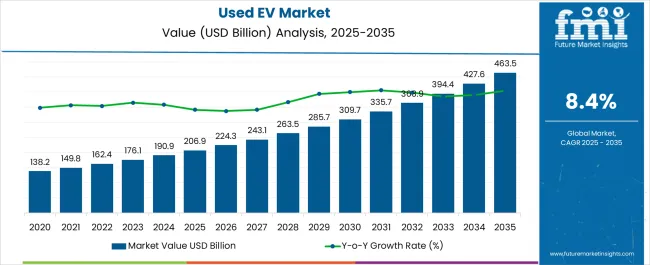
and you begin to understand why the used EV market is crashing and burning.
Well to start, I mean, since that isn't happening......


used-ev-market-market-value-analysis.webp


Add to that, a replacement automotive engine runs about 25% to 50% of a battery for a full EV vehicle
For now, would you mind looking into that a little closer man?
I honestly have no urge to answer that for the 5th or 6th time.
It reminds me of the old "EV insurance is 50% more expensive" garbage, while in the article that started it, information sources showed the cost was based on jumping from a $16000 2007 Corolla with 125 horsepower to a $89000 2007 Model S that went 0-60 in 5 seconds.
That bit of bad faith continues today.
 
Last edited:
Sorry dude, but that’s just an overly cynical and reductive take.

People’s vehicle choices aren’t some moral referendum on how much they “care about the planet.” It goes way beyond oversimplification—more contemptuous elitism.

Buying habits are shaped by cost, availability, utility, geography, culture, marketing, etc. People buy what fits their environment, or what’s comfortable for their lifestyle.
I'll admit I'm cynical and reductive but you have to be to process all that goes on in the world but lets look at your possible reasons:

Cost - the cheapest F150 is double the price of a Toyota Corolla.

Availability - I suspect if people only want to buy trucks then places will only sell trucks. If you did want a Tesla then you just click buy and it can appear on your driveway later.

Utility - What do you actually need that a standard car won't offer? the cheapest F150 truck only has 2 seats.

Geography - if you live on a farm, tow large loads or live in the frozen north then sure but if you live in suburbia, like 70% of Americans, then you probably don't need a truck.

Culture, marketing - these are the real reasons Americans drive trucks. Every Hollywood action film or romance has the hero driving a truck. My guess is that most Americans would prefer a horse but the truck is the next best thing. Ordinary "sensible" cars are seen as vehicles for losers so Walter White in Breaking Bad drives a Pontiac Aztek while in the film Big Trouble the divorced main character is berated by his son for driving a Geo Metro.
 
Last edited:
No, the average person doesn't want an ev. Charging takes longer the filling with gas. Most people don't have a way to charge it, most people live in apartments or have street parking. Ev is just a waste of money. Look at biofuel like wood gas if you want cheaper fuel.
Biofuel is cheaper than typical fuel, but this is because the governments haven't decided to tax it like current fuels. Typically a gallon of regular gas is taxed at 18.4 cents (federal) and states very from 8.9 cents (Alaska) to 70.9 cents (California). Plus you add in the production taxes, the sales taxes and then local county and city taxes it cost much more. As soon as it gets more popular, they will tax it and the price will be similar. However, EVs are not the answer to the equation.
 
What did Ford expect when selling consumers on the idea of a $40,000 truck and then hitting them with the actual price of $50,000+ (but really $60,000+)?
The larger battery required the Lariat package so it is more Like over $80,000 if you want the advertised range.
 
Biofuel is cheaper than typical fuel, but this is because the governments haven't decided to tax it like current fuels. Typically a gallon of regular gas is taxed at 18.4 cents (federal) and states very from 8.9 cents (Alaska) to 70.9 cents (California). Plus you add in the production taxes, the sales taxes and then local county and city taxes it cost much more. As soon as it gets more popular, they will tax it and the price will be similar. However, EVs are not the answer to the equation.
Except as seen in ww2 you can mount a gasifier on your car, was quite common at the time. You produce it as you use it. You do have to clean the ash and charcoal out afterwards but it's the cost of wood
 
I'll admit I'm cynical and reductive but you have to be to process all that goes on in the world but lets look at your possible reasons:

Cost - the cheapest F150 is double the price of a Toyota Corolla.

Availability - I suspect if people only want to buy trucks then places will only sell trucks. If you did want a Tesla then you just click buy and it can appear on your driveway later.

Utility - What do you actually need that a standard car won't offer? the cheapest F150 truck only has 2 seats.

Geography - if you live on a farm, tow large loads or live in the frozen north then sure but if you live in suburbia, like 70% of Americans, then you probably don't need a truck.

Culture, marketing - these are the real reasons Americans drive trucks. Every Hollywood action film or romance has the hero driving a truck. My guess is that most Americans would prefer a horse but the truck is the next best thing. Ordinary "sensible" cars are seen as vehicles for losers so Walter White in Breaking Bad drives a Pontiac Aztek while in the film Big Trouble the divorced main character is berated by his son for driving a Geo Metro.

Actually the reason most people in America drive trucks is entirely tied to the EPA. For cars to meet at mission's requirements including the Toyota Corolla these days The engines are horribly choked and underpowered. That's because the EPAs mileage and emissions requirements are directly tied to the size of the vehicle. So the smaller the car the more strict and tight it is meaning yes they can meet you know those mileage requirements but the car is subjectively horrible performing. Europe doesn't have these problems because you guys's environmental regulations they're not actually as strict as ours.
 
EV will never change anything... On the SUSTAINABILITY front they are even worse than the ICE. But no one cares about this.
 
The size of Europe is roughly equivalent to that of America. The average American drives 37 miles per day while the average European drives 20 miles per day. The difference is probably due to America having large isolated suburban areas situated miles from shops and work. Europe also has much better public transport networks so if I had to go from London to Paris I'd almost certainly take the train rather than drive and, when I arrived, I'd be able to use the local public transport network.
Europeans & Asians also use bicycles as transportation whereas Americans use them primarily as recreation. Streets are narrow, etc., cars are usually smaller; and fewer.
 
I'll admit I'm cynical and reductive but you have to be to process all that goes on in the world but lets look at your possible reasons:

Cost - the cheapest F150 is double the price of a Toyota Corolla.

Availability - I suspect if people only want to buy trucks then places will only sell trucks. If you did want a Tesla then you just click buy and it can appear on your driveway later.

Utility - What do you actually need that a standard car won't offer? the cheapest F150 truck only has 2 seats.

Geography - if you live on a farm, tow large loads or live in the frozen north then sure but if you live in suburbia, like 70% of Americans, then you probably don't need a truck.

Culture, marketing - these are the real reasons Americans drive trucks. Every Hollywood action film or romance has the hero driving a truck. My guess is that most Americans would prefer a horse but the truck is the next best thing. Ordinary "sensible" cars are seen as vehicles for losers so Walter White in Breaking Bad drives a Pontiac Aztek while in the film Big Trouble the divorced main character is berated by his son for driving a Geo Metro.

It has everything to do with the EPA here actually. Modern sedans are under powered in the States, we have the engines so choked down with emissions equipment you're getting 1/4 of the possible power, and the engines are just getting smaller, add to that increased maintenance because to maintain usable power now they have to add in turbos which need frequent maintenance to be reliable. This all adds up to make the SUV not the Truck but the SUV the most popular models, and Trucks and SUV's are not the same, you might view them from Europe as the same but that's a you problem, no one here calls a Taho or Explorer a truck, they are SUV's. And they offer quite alot of utility, you can haul 4-5 kids at once, all your groceries for the month, and anything else you might want within limits of the enclosed cargo area, and this is because of the size of the SUV they havn't been assaulted by the EPA to suck all the power out of them, turning into under powered piles of crap like a 2025 Carolla.

As for anyone getting berated for driving a Geo Metro, good the Metro was on reliable POS that was more likely to leave you stranded than at work, and maybe you missed it the Aztec was to show Walter White was a looser through and through, not that he is cool. The Aztec was a failure of a car, the only people that drove them either had no sence of taste similar to that Nissian Cube or desperate for a car and willing to drive anything.
 
You are speaking my language. I am still waiting for an EV that is as boring and rock-stable as a Camry or Accord and priced like a Camry/Accord.
The Tesla Model 3 doesn't fit that bill? People I know that own it love it and say its reliable as a rock, and you can get a 2021 used Model 3 with 35k miles for about $24k USD.
 
It has everything to do with the EPA here actually. Modern sedans are under powered in the States, we have the engines so choked down with emissions equipment you're getting 1/4 of the possible power, and the engines are just getting smaller, add to that increased maintenance because to maintain usable power now they have to add in turbos which need frequent maintenance to be reliable. This all adds up to make the SUV not the Truck but the SUV the most popular models, and Trucks and SUV's are not the same, you might view them from Europe as the same but that's a you problem, no one here calls a Taho or Explorer a truck, they are SUV's. And they offer quite alot of utility, you can haul 4-5 kids at once, all your groceries for the month, and anything else you might want within limits of the enclosed cargo area, and this is because of the size of the SUV they havn't been assaulted by the EPA to suck all the power out of them, turning into under powered piles of crap like a 2025 Carolla.

As for anyone getting berated for driving a Geo Metro, good the Metro was on reliable POS that was more likely to leave you stranded than at work, and maybe you missed it the Aztec was to show Walter White was a looser through and through, not that he is cool. The Aztec was a failure of a car, the only people that drove them either had no sence of taste similar to that Nissian Cube or desperate for a car and willing to drive anything.
Off topic: such a small car as the Geo Metro is inherently unsafe; with so many larger vehicles on the road, you will almost surely be crushed in a collision.

Sad that vehicle safety ratings assume collisions with only similar size & weight vehicles. :cold_sweat:
 
It has everything to do with the EPA here actually. Modern sedans are under powered in the States, we have the engines so choked down with emissions equipment you're getting 1/4 of the possible power, and the engines are just getting smaller, add to that increased maintenance because to maintain usable power now they have to add in turbos which need frequent maintenance to be reliable. This all adds up to make the SUV not the Truck but the SUV the most popular models, and Trucks and SUV's are not the same, you might view them from Europe as the same but that's a you problem, no one here calls a Taho or Explorer a truck, they are SUV's. And they offer quite alot of utility, you can haul 4-5 kids at once, all your groceries for the month, and anything else you might want within limits of the enclosed cargo area, and this is because of the size of the SUV they havn't been assaulted by the EPA to suck all the power out of them, turning into under powered piles of crap like a 2025 Carolla.

As for anyone getting berated for driving a Geo Metro, good the Metro was on reliable POS that was more likely to leave you stranded than at work, and maybe you missed it the Aztec was to show Walter White was a looser through and through, not that he is cool. The Aztec was a failure of a car, the only people that drove them either had no sence of taste similar to that Nissian Cube or desperate for a car and willing to drive anything.
I don't think anyone was confusing a large SUV with a truck but obviously the same points do apply. Do you have 4-5 kids? or do you want others to think you haul around 4-5 kids? I looked it up, the average American family seems to have 1.6 kids.

I just looked up the power output for the "under powered" 2025 Corrolla. It's 169HP. That's actually over double the power output of my own car and I've happily driven across Europe in that. I also looked up the reliability of the Geo Metro and it appears pretty good, mostly because there's little to go wrong with them. Out of curiosity, I also looked up the reliability of your favoured Ford Explorer and that appeared very mixed.

American advertising shows truck drivers to be heroes and drivers of ordinary vehicles to be losers. From your post I can only assume the advertising is working.
 
Back