Ford might kill the F-150 Lightning, the EV that was supposed to change everything

Skye Jacobs

Posts: 1,913   +58
Staff
Rumor mill: If Ford cancels the Lightning, it would mark the first major exit of a mainstream electric truck from the US market. For an industry that once viewed battery pickups as the most straightforward path to electrified profitability, the reversal underscores a deeper reality: heavy vehicles remain the toughest test case for the EV revolution.
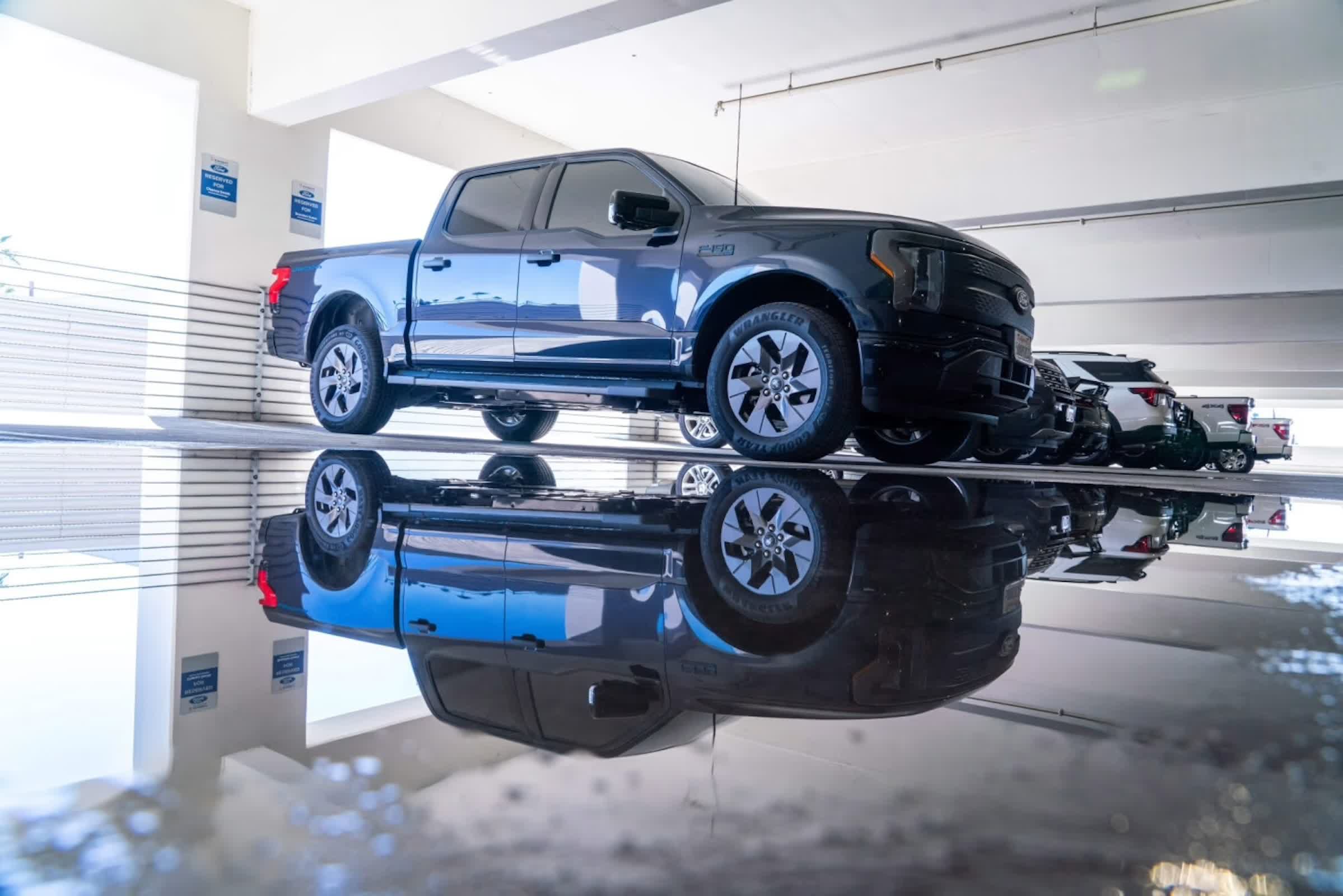
Ford is debating whether to discontinue the all-electric version of its bestselling F-150 pickup – a move that would mark a sharp reversal in the US electric vehicle market. People familiar with internal discussions told The Wall Street Journal that executives are assessing whether the F-150 Lightning still fits in the company's long-term lineup, following steep losses and sluggish sales.

The decision would be momentous. When Ford CEO Jim Farley unveiled the Lightning five years ago, he framed it as a transformation on the scale of the Model T. The truck combines high performance with battery power capable of running a house through its 240-volt ports. It was built for heavy-duty tasks but promised zero tailpipe emissions and up to 320 miles of range per charge under ideal conditions.

Despite early enthusiasm, the truck failed to win over traditional pickup buyers. The Lightning's sticker price climbed far beyond early projections, starting closer to $50,000 than the advertised $40,000 baseline and stretching toward $90,000 for well-equipped trims. Range anxiety, battery performance in cold weather, and energy drain under towing loads proved persistent deterrents.

Since 2023, Ford has accumulated about $13 billion in losses from its electric-vehicle program. The company's latest data show that in October, after the end of federal EV tax credits, US EV sales dropped 24 percent year over year. Dealers moved roughly 66,000 gasoline F-Series pickups but only about 1,500 Lightnings – the lowest monthly total of any F-Series variant.
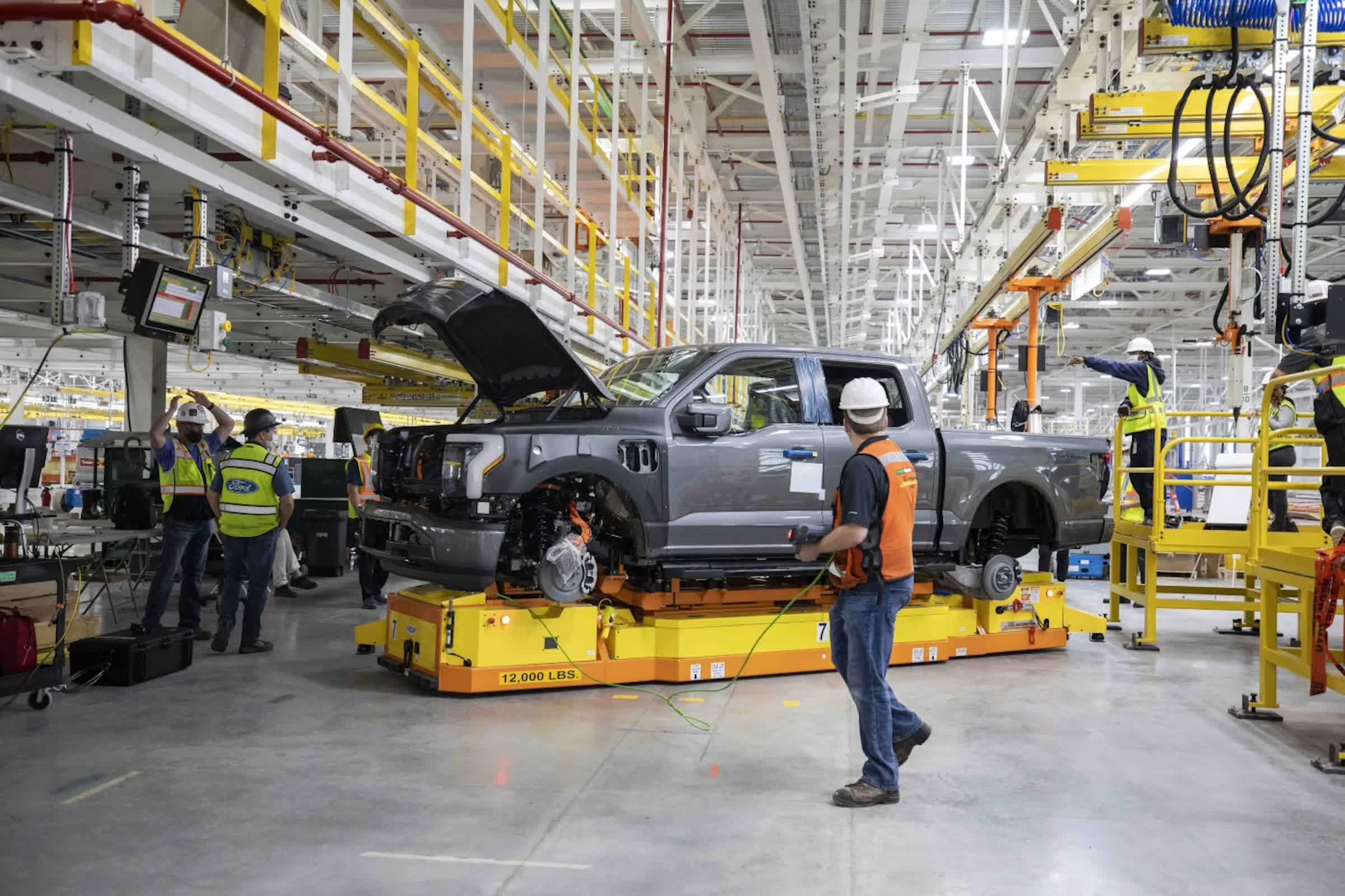
The downturn has broader implications. Ford temporarily halted Lightning production last month, citing an aluminum shortage, and is considering keeping the Michigan facility idle while redirecting resources toward smaller, more affordable models. Farley recently acknowledged that the US EV market appears strongest for compact city cars and commuter vehicles, not heavy trucks with one-ton battery packs.

Ford's deliberations mirror a broader industry pullback. Earlier this year, Stellantis canceled its planned electric Ram 1500, while General Motors executives privately discussed trimming their EV truck lineup. GM's electric offerings, including three versions of the Chevrolet Silverado EV, sold only about 1,800 units in October. The company has idled production at its Detroit assembly plant through late November and stopped manufacturing its BrightDrop electric cargo van.

Tesla's stainless-steel Cybertruck, once hailed as a disruptive design experiment, has seen sales collapse, while Rivian, maker of the electric R1T pickup, has repeatedly cut staff to preserve cash reserves. Scaling EV production – typically a $10 billion to $15 billion investment per model line, including battery and supply chain infrastructure – has proven unsustainable without strong sales or regulatory support.

Consultants say the math no longer favors big EVs. Lenny LaRocca, who leads the auto sector practice at KPMG, notes that electric platforms require substantial upfront investment to achieve manufacturing efficiency and optimize battery costs. Additionally, US adoption rates are not at a scale sufficient for profitability.

"The volumes are not hitting where people would have expected when they made these investments," he told The Wall Street Journal.

The Lightning's 98-kWh and 131-kWh battery packs are among the most expensive in the industry, and each vehicle weighs roughly 1,600 pounds more than its gas counterpart. That weight limits payload capacity and increases energy consumption, particularly under load, making EPA-rated range figures difficult to sustain in daily use.

These engineering constraints have collided with cooling demand and policy changes. As subsidies expire, consumers are increasingly gravitating toward hybrid powertrains, which combine electric torque with range security. Farley has echoed those sentiments, noting that full-size trucks will likely rely on hybrid or traditional powertrains for the foreseeable future.

Image credit: The Wall Street Journal

Permalink to story:

 
It's not that people don't want EVs, it's that people don't want unfixable $100,000 EVs. Make something repairable that reliably sells for $25-30,000 and people will eat that up. Also, they need to stop with the "future" design elements that throws it in your face that you're driving an electric vehicle every chance it gets. Make a normal car that just happens to be electric for 30k or under and it will sell like crazy.

They also need to stop the crap about how EVs are saving the enviorment.
 
It's not that people don't want EVs, it's that people don't want unfixable $100,000 EVs. Make something repairable that reliably sells for $25-30,000 and people will eat that up. Also, they need to stop with the "future" design elements that throws it in your face that you're driving an electric vehicle every chance it gets. Make a normal car that just happens to be electric for 30k or under and it will sell like crazy.

They also need to stop the crap about how EVs are saving the enviorment.
You are speaking my language. I am still waiting for an EV that is as boring and rock-stable as a Camry or Accord and priced like a Camry/Accord.
 
These are niche products, much like the Tesla truck. Those that wanted them have already purchased them. I know of absolutely no one that wants an EV as a truck. I know a few people that wouldn't mind having a EV coupe of some sort, but no one wants the way overpriced, bulky SUVs or truck versions.
 
These are niche products, much like the Tesla truck. Those that wanted them have already purchased them. I know of absolutely no one that wants an EV as a truck. I know a few people that wouldn't mind having a EV coupe of some sort, but no one wants the way overpriced, bulky SUVs or truck versions.
The fact they sell tens of thousands of EV trucks per year suggests that there are, indeed, some people who want those "bulky SUV or truck versions".

There's plenty of people interested in an EV truck. Just not a $70k+ one.
 
It's not that people don't want EVs, it's that people don't want unfixable $100,000 EVs. Make something repairable that reliably sells for $25-30,000 and people will eat that up. Also, they need to stop with the "future" design elements that throws it in your face that you're driving an electric vehicle every chance it gets. Make a normal car that just happens to be electric for 30k or under and it will sell like crazy.

They also need to stop the crap about how EVs are saving the enviorment.
No, the average person doesn't want an ev. Charging takes longer the filling with gas. Most people don't have a way to charge it, most people live in apartments or have street parking. Ev is just a waste of money. Look at biofuel like wood gas if you want cheaper fuel.
 
No, the average person doesn't want an ev. Charging takes longer the filling with gas. Most people don't have a way to charge it, most people live in apartments or have street parking. Ev is just a waste of money. Look at biofuel like wood gas if you want cheaper fuel.
While it varies by city, on average somewhere between 20-30% of Americans live in apartments. Only 39% of renters rent apartments, the rest rent houses.

Over two thirds of Americans have access to a garage.

Woodgas is not a solution. Aside from the obvious scale issue, its not very energy efficient either to make.
 
No, the average person doesn't want an ev. Charging takes longer the filling with gas. Most people don't have a way to charge it, most people live in apartments or have street parking. Ev is just a waste of money. Look at biofuel like wood gas if you want cheaper fuel.

-Most people don't give a **** if their car is powered by unicorn farts so long as it gets them from point A to B cheaply, reliably, and ideally while looking good.

EVs ain't cheap, the charging network is not reliable (the range and time anxiety problem), and they all look like a 13 yo concept artist slapped together some faux anime bullshit instead of a normal car.

Not insurmountable problems, but at some point the problems have to be tackled.

 
The fact they sell tens of thousands of EV trucks per year suggests that there are, indeed, some people who want those "bulky SUV or truck versions".

There's plenty of people interested in an EV truck. Just not a $70k+ one.
It is an absolutely awesome work truck, and it does almost everything better than my Ram 2500 smoker.
It has also been overhyped, overpriced, and overweight, even for an EV.

I was saying those things 3 1\2 years ago, and if TS had a better search function, I would be able to see just how close I was on all my other thoughts on it back then.
 
I miss when hybrids were the newest buzz. I wouldn't mind a cheap EV with a 40kWh battery if it came with a REX. Either way, despite the fact that the average vehicle sales price continues to rise in the US, nobody is actually HAPPY that they're having to spend more and more on vehicles that are falling in quality and reliability as well as becoming increasingly expensive/difficult to repair.
 
No, the average person doesn't want an ev. Charging takes longer the filling with gas. Most people don't have a way to charge it, most people live in apartments or have street parking. Ev is just a waste of money. Look at biofuel like wood gas if you want cheaper fuel.
So in my city, Pittsburgh, we have a permit system if you are a renter in town with on street parking. Taking someone's spot is a BIG crime here in places where space is limited. Also, landlords must allow renters to install and have EV chargers if they choose. The landlord isn't required to pay for it, but if a tenant wants to install a charger at their own expense, the landlord has to allow them, they do anything about it. What's funny about that is that tenants who install chargers have longer occupancy rates and lower rates of eviction that those who do not so you will often see apartments advertised as "EV friendly"

You can have a charger for your EV and live in an apartment, they are not mutually exclusive
 
Last edited:
It's mostly Americans that drive trucks. I'm guessing that the majority of owners don't actually need a truck. Those that buy trucks as their daily driver obviously don't care about their mpg or saving the planet so why would they spend extra for an electric truck?
 
People love claiming I’m wrong, but we’re going to see more headlines like this and Tesla’s market share is bound to go up in the US as a result:
As I've stated before, these automakers have been offering massive discounts to clear out inventory because they plan to significantly reduce production and discontinue EVs. This month alone, cancelations include the Nissan Ariya, Acura ZDX, Dodge Charger Bashee EV, Ram pickup EV, Bentley, and Porsche.

Few automakers still plan to maintain or increase their EV production in the US, despite the 15 year long claim that other automakers would usurp Tesla's lead. Meanwhile, Tesla didn't even offer any steep discounts and sold 500k EVs this quarter (see discount history). As a result of the EV rebate cancelation, Elon Musk announced Tesla will produce a lower priced Model Y in Q4 (no discounts needed): https://www.fool.com/earnings/call-...ffordable models available for everyone in Q4.
Tesla might make some changes to the Cybertruck, but unlike Tesla’s competitors it actually makes a good amount of money on its EVs. Rivian and Lucid are a pretentious situation for this reason, whereas traditional automakers have other ways to make money besides EVs.

Here are some examples of current, unsustainable deals on EVs:
Kia ($10k off): https://carbuzz.com/kia-electric-car-discounts-november/
Honda Prologue ($17k off): https://electrek.co/2025/10/21/honda-still-offering-nearly-17000-off-prologue-ev/
Hyundai (up to $17.5k off): https://www.jalopnik.com/1984205/hyundai-drops-ioniq-5-price-10000/

In addition, Hyundai and Kia saw their top selling EVs drop by 50-70% last month (hence the even steeper discounts). It’s too early to tell what will happen, but that’s my theory based on what everything that’s happening.
 
Auto manufacturers massively over-responded to the Bidumb admin threat of killing off all ICE vehicles. Now thousands of vehicles are languishing on lots as their batteries age and lose capacity.
 
Auto manufacturers massively over-responded to the Bidumb admin threat of killing off all ICE vehicles. Now thousands of vehicles are languishing on lots as their batteries age and lose capacity.
the problem is that auto makers tried selling $20,000 piles of garbage for $100,000. EVs that are illegal in to sell in the US for *reasons* frequently sell for $15,000 with 300 mile ranges. The US decided to try to boost the US auto industry by making these other EVs illegal. Manufactures then had no competition and could charge whatever they wanted.

EVs are actually more popular in the rest of the world because we have some of the cheapest gas in the world in the US. We have more oil than anyone else, even the middle east. The problem is that even though we produce more oil than anyone else in the world we also USE more oil in the world making us a net importer.

The EV movement isn't about being good for the environment, it's about flexibility and national security. The problem is that it was originally branded as being good for the environment and now that branding has stuck in the US. You can power an EV off of coal, solar, or nuclear. You can only power ICE cars off of oil and that makes any country who's primary mode of transportation ICE vehicles vulnerable.
 
the problem is that auto makers tried selling $20,000 piles of garbage for $100,000. EVs that are illegal in to sell in the US for *reasons* frequently sell for $15,000 with 300 mile ranges. The US decided to try to boost the US auto industry by making these other EVs illegal. Manufactures then had no competition and could charge whatever they wanted.

EVs are actually more popular in the rest of the world because we have some of the cheapest gas in the world in the US. We have more oil than anyone else, even the middle east. The problem is that even though we produce more oil than anyone else in the world we also USE more oil in the world making us a net importer.

The EV movement isn't about being good for the environment, it's about flexibility and national security. The problem is that it was originally branded as being good for the environment and now that branding has stuck in the US. You can power an EV off of coal, solar, or nuclear. You can only power ICE cars off of oil and that makes any country who's primary mode of transportation ICE vehicles vulnerable.

I don't know where to start with this one. First, we were very self sufficient with petroleum fuels until, much like everything else in the U.S., we decided we could get it cheaper elsewhere. Just like rare earths, we abandoned them because this country as a whole decided we could be a service economy, not because we could not produce, but because we did not want to. Once our production drops below a certain point, we become hostages to the producers. This is what I think is the ONLY issue with capitalism, that maximizing shareholder value and profits are the ONLY metric that matters. As a result, we are getting back into producing things rather than importing things.

Next, Europe has a far more compressed geography. The need to drive 3-500 Mi to get anywhere does not exist there. This is also why the densely populated areas of this country do not understand the EV/Mass transit hesitation of the middle of the country, It's a whole different set of needs and wants.

The major problem with the EV crowd is the insistence that there is a one size fits all solution. What works for one area will not work for everyone. Add to this that pickup truck buyers need them for either commercial, personal, or mixed useage, and you again get a product that doesn't quite work for anyone except the personal crowd, and even then, depending on your usage case.

 
I don't know where to start with this one. First, we were very self sufficient with petroleum fuels until, much like everything else in the U.S., we decided we could get it cheaper elsewhere. Just like rare earths, we abandoned them because this country as a whole decided we could be a service economy, not because we could not produce, but because we did not want to. Once our production drops below a certain point, we become hostages to the producers. This is what I think is the ONLY issue with capitalism, that maximizing shareholder value and profits are the ONLY metric that matters. As a result, we are getting back into producing things rather than importing things.

Next, Europe has a far more compressed geography. The need to drive 3-500 Mi to get anywhere does not exist there. This is also why the densely populated areas of this country do not understand the EV/Mass transit hesitation of the middle of the country, It's a whole different set of needs and wants.

The major problem with the EV crowd is the insistence that there is a one size fits all solution. What works for one area will not work for everyone. Add to this that pickup truck buyers need them for either commercial, personal, or mixed useage, and you again get a product that doesn't quite work for anyone except the personal crowd, and even then, depending on your usage case.
I will admit that this issue is a lot more nuanced than I made it out to be in my post. I do want to point out that in my personal situation, the maximum that my work requires me to drive in my F-350 on a daily basis is 62 miles(100KM) radius of my house. otherwise, they have to put me up in a hotel and pay me for being away from home. That does happen. I do project management for commercial construction company and drive a tool truck. I'm rarely asked to drive more than 120M/200km a day, but sometimes I do. That said, you could give me a an EV tool truck and I would be fine.


That said, these electric F-150s are designed as trucks for people who want a truck but don't need one. The F-150 lightnings are actually pretty popular with the apprentices right now and they aren't a bad vehicle. They're just priced like sh!t. The 1 kid tows his boat around on the weekends with it and is thrilled.

I do haul tools around to job sites, I do tow heavy equipment around all over the place and I wouldn't do that in an EV. The thing is, I'm driving a 10,000lbs tool truck and often towing 10-15 tons of equipment behind me.


It is my opinion that we ruined the appeal of EVs(I hate that term, BTW) for Americans years ago when we started saying " it's enviormently friendly". For 99% of Americans, an electric truck would be fine. I don't want to hear about how the guy living in an apartment can't tow his boat on the weekends because he can't charge his electric truck. If you have a boat or trailer that needs towing allt he time, you aren't living in some apartment in town on a busline with no parking.
 
Next, Europe has a far more compressed geography. The need to drive 3-500 Mi to get anywhere does not exist there.
The size of Europe is roughly equivalent to that of America. The average American drives 37 miles per day while the average European drives 20 miles per day. The difference is probably due to America having large isolated suburban areas situated miles from shops and work. Europe also has much better public transport networks so if I had to go from London to Paris I'd almost certainly take the train rather than drive and, when I arrived, I'd be able to use the local public transport network.
 
Last edited:
So in my city, Pittsburgh, we have a permit system if you are a renter in town with on street parking. Taking someone's spot is a BIG crime here in places where space is limited. Also, landlords must allow renters to install and have EV chargers if they choose. The landlord isn't required to pay for it, but if a tenant wants to install a charger at their own expense, the landlord has to allow them, they do anything about it. What's funny about that is that tenants who install chargers have longer occupancy rates and lower rates of eviction that those who do not so you will often see apartments advertised as "EV friendly"

You can have a charger for your EV and live in an apartment, they are not mutually exclusive
Maybe where you're at where I'm at absolutely not, and honestly if I was the landlord in Pittsburgh I would be rather upset about my tenants being allowed to modify the property in the first place. It's a loss says that it has to be allowed and I would have a contractor did I have pre-picked maybe more expensive than the other guys but it's going to do quality work otherwise no but I wouldn't be happy about having to do it anyway if I was the property owner it's my property. But that's why I don't live in a blue s*******.
 
Maybe where you're at where I'm at absolutely not, and honestly if I was the landlord in Pittsburgh I would be rather upset about my tenants being allowed to modify the property in the first place. It's a loss says that it has to be allowed and I would have a contractor did I have pre-picked maybe more expensive than the other guys but it's going to do quality work otherwise no but I wouldn't be happy about having to do it anyway if I was the property owner it's my property. But that's why I don't live in a blue s*******.
It's as simple as having a 220 outlet being run outside, then you run an extension cord from the outlet to your car to charge it. You also have to allow people to wall mount televisions, install Internet or cable lines and have satellite dishes installed outside
 
the problem is that auto makers tried selling $20,000 piles of garbage for $100,000. EVs that are illegal in to sell in the US for *reasons* frequently sell for $15,000 with 300 mile ranges. The US decided to try to boost the US auto industry by making these other EVs illegal. Manufactures then had no competition and could charge whatever they wanted.

EVs are actually more popular in the rest of the world because we have some of the cheapest gas in the world in the US. We have more oil than anyone else, even the middle east. The problem is that even though we produce more oil than anyone else in the world we also USE more oil in the world making us a net importer.

The EV movement isn't about being good for the environment, it's about flexibility and national security. The problem is that it was originally branded as being good for the environment and now that branding has stuck in the US. You can power an EV off of coal, solar, or nuclear. You can only power ICE cars off of oil and that makes any country who's primary mode of transportation ICE vehicles vulnerable.
EV's are popular only in a handful of countries and even that is region dependent as there are almost no EV's in the north of China due to long and bitter cold winters that reach Siberian temperatures. Most EV's in China are in the south due to weather conditions, which shows the limitation and uselessness of what is branded as 'new energy technology'.

EV's have nothing to do with national security and is a step towards the 15 minute city.
 
while the average European drives 20 miles per day
That surprised me honestly because I didn't think it was that much, but it's true.

It's as simple as having a 220 outlet being run outside, then you run an extension cord from the outlet to your car to charge it.
If you want a red stater to understand that, draw it..... in crayon! :D

EV's are popular only in a handful of countries
Surprisingly, 15 countries have a 15% or higher adoption rate.
Not since the current tech is only 16 year old.

there are almost no EV's in the north of China
Most EV's in China are in the south due to weather conditions
I'm surprised to hear you still cling to that.
"Electric vehicles (EVs) in North China are indeed popular, as evidenced by their rapid growth in the market. The region has seen a surge in EV sales, with a significant portion of the new car market being dominated by electric vehicles."

Not to mention, you should look into the drop in range in zero degree weather
with an EV and a smoke pump. Why do so many people not remember their mileage drops
in the cold?
"Fuel economy tests show that, in city driving, a conventional gasoline car's gas mileage is roughly 15% lower at 20°F than it would be at 77°F. It can drop as much as 24% for s"

BUT,
I'm not saying all is equal.
"For electric vehicles (EVs), fuel economy can drop roughly 39% in mixed city and highway driving, and range can drop by 41%."
It's just that statements about the EV drop in cold ALWAYS ignores the fact that smokers are far from unaffected.

But also, 5–10 minutes with the charger on before driving warms the battery, and helps cold operation efficiency a lot.

Lots of crapola to consider either way.
 
Back