Facepalm: Millions of users on several leading password manager platforms face heightened security risks due to unpatched clickjacking vulnerabilities, researchers warned at the recent DEF CON 33 hacker conference. If exploited, these flaws could allow attackers to steal sensitive data including login credentials, authentication codes, and financial information.

At the conference, security researcher Marek Tóth revealed that browser extensions for six password managers – 1Password, Bitwarden, Enpass, iCloud Passwords, LastPass, and LogMeOnce – are vulnerable to sophisticated clickjacking attacks. According to his findings, these flaws persist in the latest versions of the platforms tested as of August 19, 2025.
Clickjacking is a technique in which attackers overlay invisible buttons or forms on legitimate website content, tricking users into clicking hidden elements without realizing it.
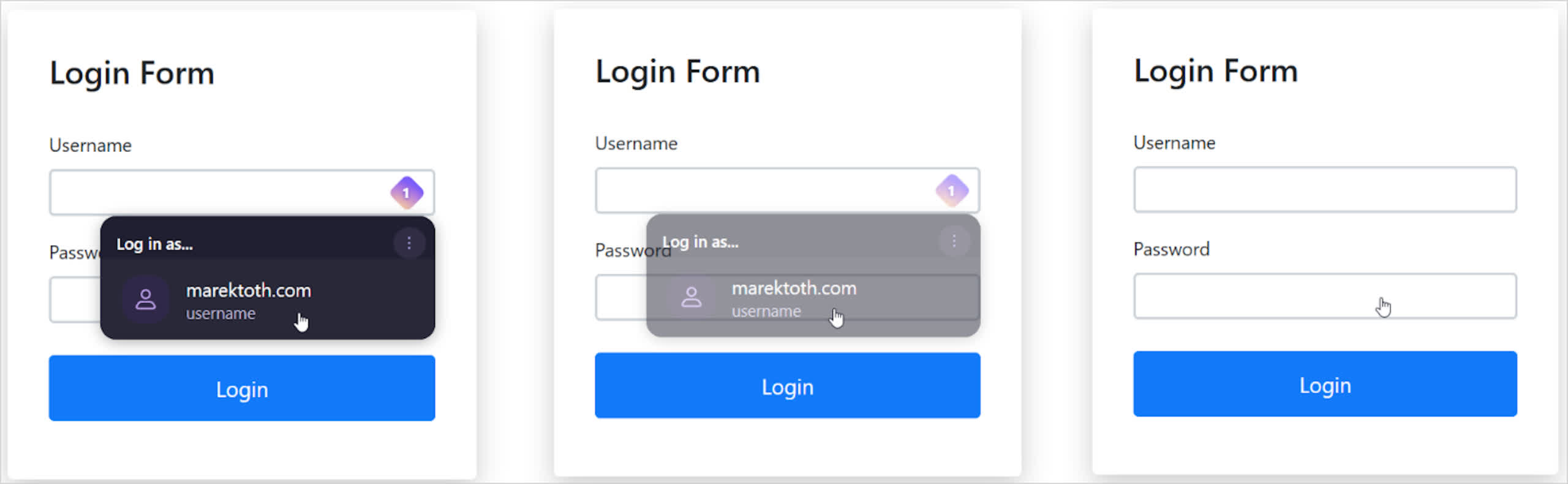
How hackers make parts of the password manager invisible.
Tóth's research extends traditional clickjacking techniques to target browser extensions – software that users increasingly rely on for managing credentials. The attacks involve tactics such as rendering parts of the password manager invisible, overlaying fake elements on top of legitimate ones, or tracking the user's mouse so that any click could expose sensitive information.
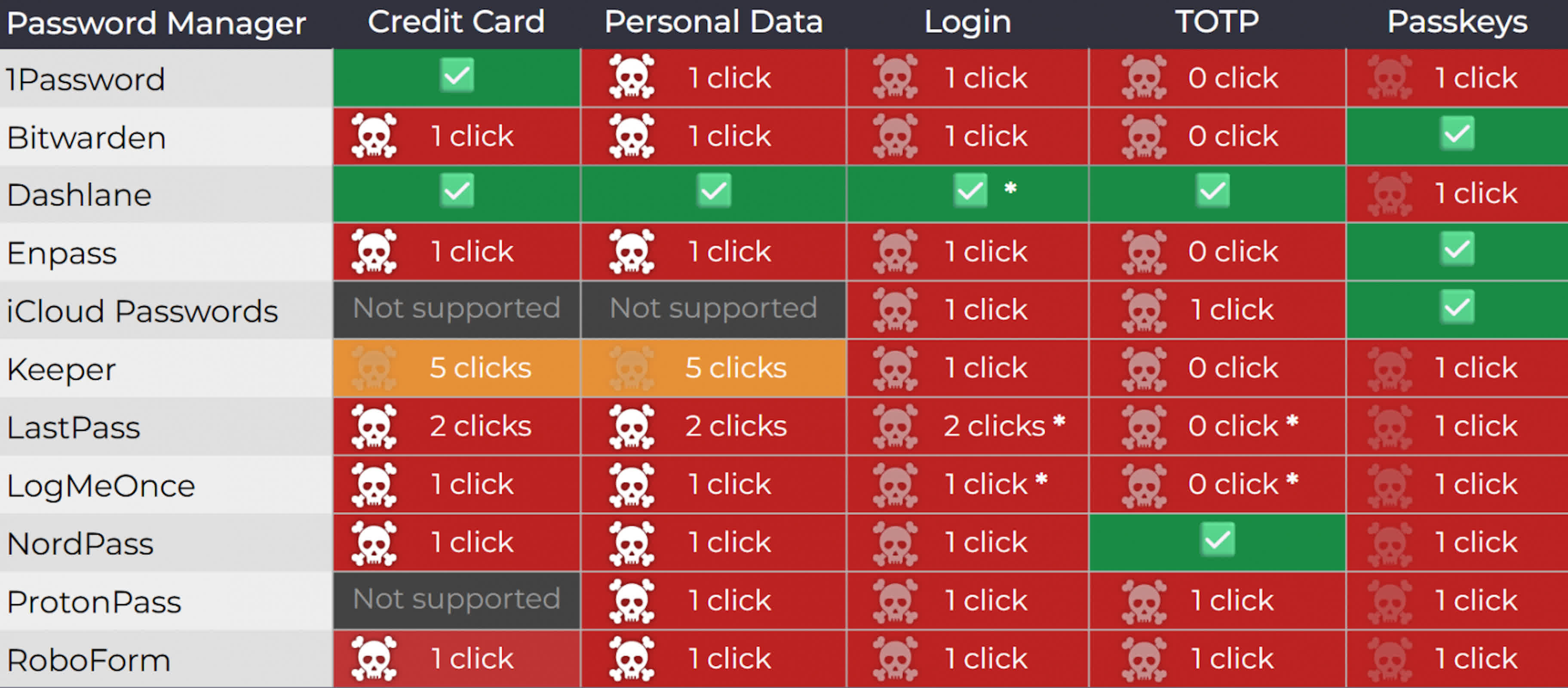
How hackers leak private information.
Out of 11 popular password managers tested, every product showed at least one vulnerability to the reported attack technique. Tóth privately notified all affected companies in April 2025, ahead of his planned public disclosure at DEF CON 33 in August.
Cybersecurity firm Socket later verified the findings and is now working with vendors to assign Common Vulnerabilities and Exposures identifiers for each impacted product.
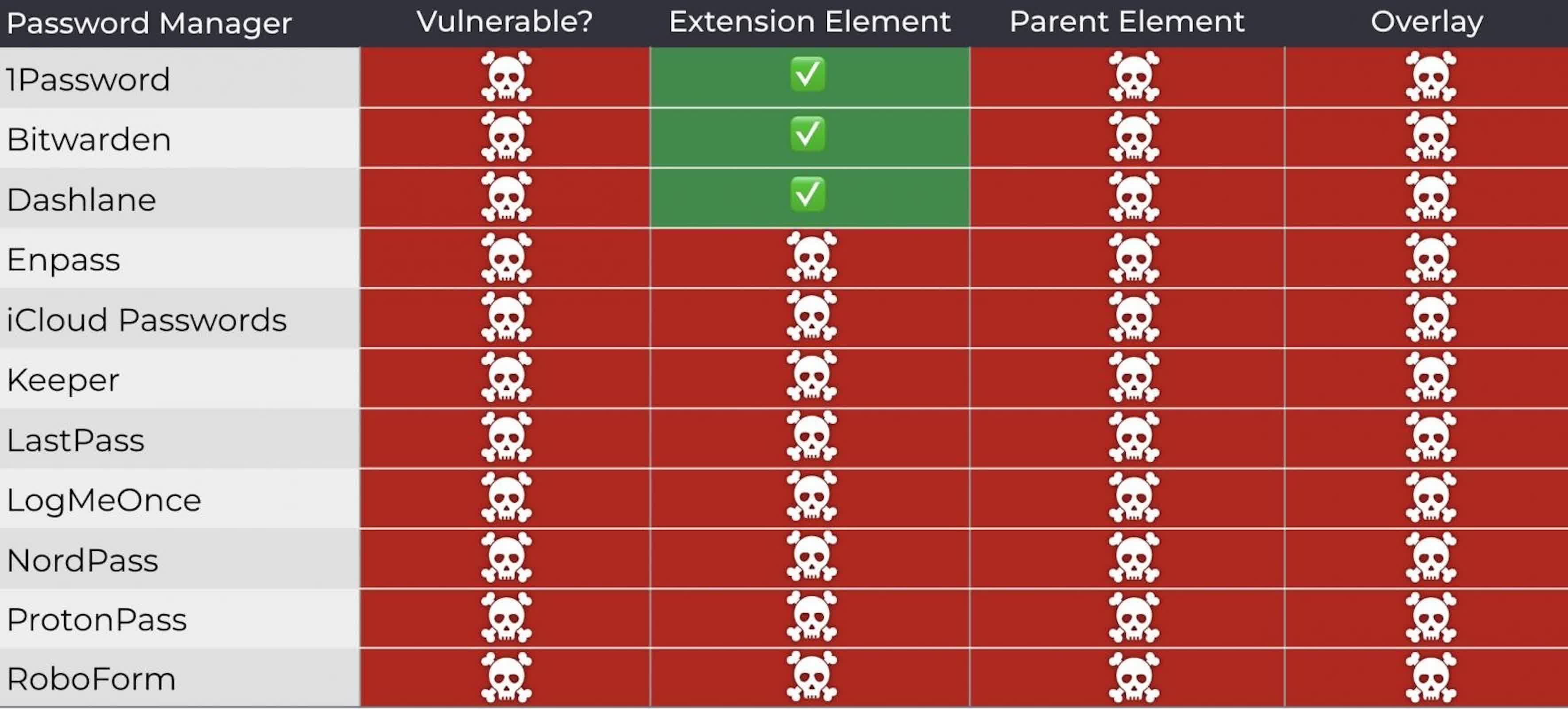
Where the vulnerabilities are.
The affected platforms include 1Password (version 8.11.4.27), Bitwarden (version 2025.7.0, though a fix was released in 2025.8.0 after disclosure), Enpass (version 6.11.6, which had previously introduced a partial mitigation), iCloud Passwords (version 3.1.25), LastPass (version 4.146.3), and LogMeOnce (version 7.12.4).
Collectively, these six vendors serve an estimated 40 million users. In contrast, some industry peers – such as Dashlane, NordPass, Proton Pass, RoboForm, and Keeper – responded quickly with patches or updates ahead of Tóth's presentation. Users are strongly advised to verify that they are running the latest available versions to remain protected.
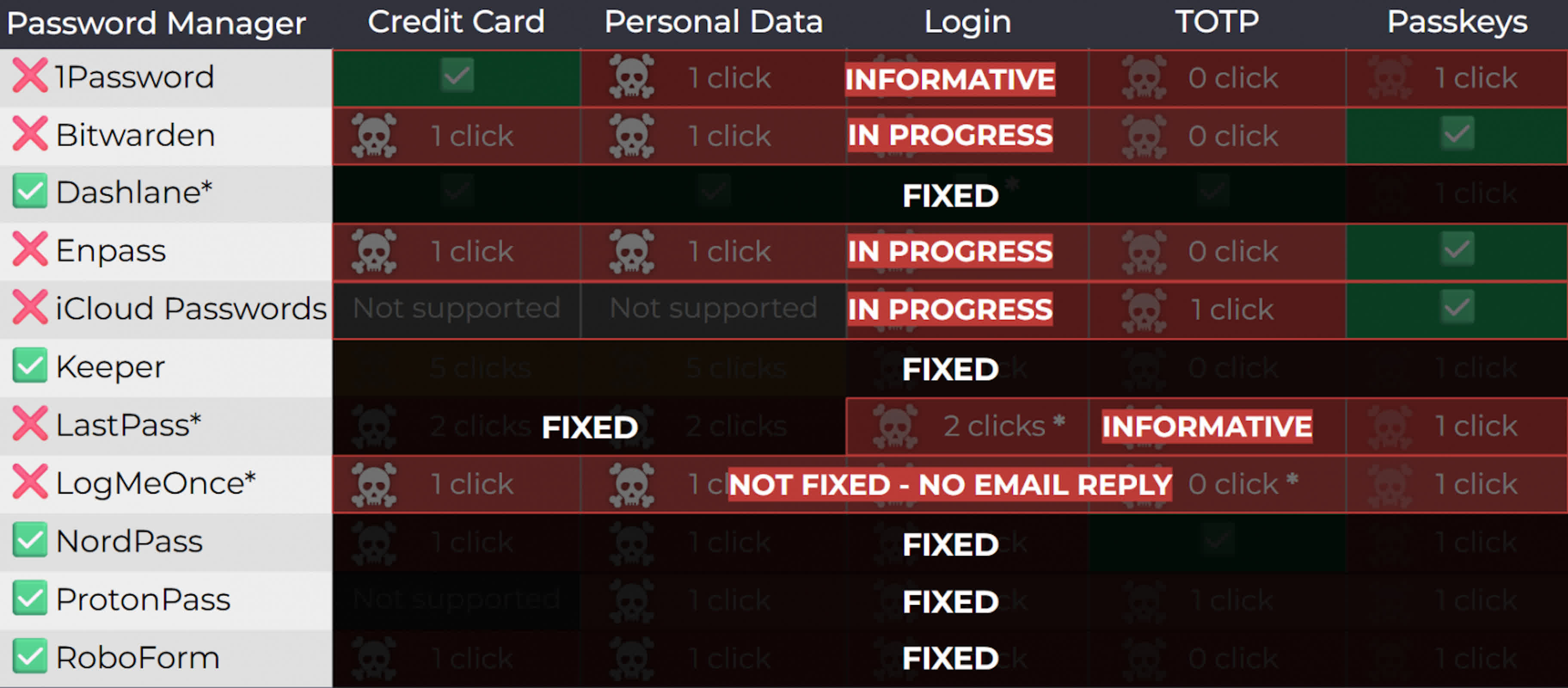
Current security risk.
Vendor responses to the discovery have varied. Bitwarden acknowledged the vulnerabilities and implemented a fix in version 2025.8.0, which is currently being deployed across browser extension stores.
By contrast, 1Password and LastPass initially categorized the reported flaws as "informative," suggesting they did not consider them in scope for immediate, incentivized remediation. LastPass later told Bleeping Computer that it is working to address the issues and emphasized existing safeguards, such as pop-up prompts before auto-filling sensitive data. LogMeOnce did not respond to repeated communication attempts.
The attack works by manipulating web technologies to hide or make password manager UI elements transparent, using CSS properties like opacity or stacking elements with z-index. For example, an attacker might craft a fake interface – such as a cookie consent banner or CAPTCHA – that covers the genuine autofill button of a password manager. When the user interacts with what appears to be a benign element, their input is redirected to the password manager, triggering silent autofill and exposing confidential information.
Tóth's research also demonstrated that a universal attack script could identify which password manager is active in a user's browser and dynamically adapt its approach. The researcher published live proof-of-concept demos showing successful exploitation against multiple platforms, including scenarios where login credentials and credit card details were exfiltrated.
Despite the critical nature of these findings, many password manager vendors maintain that clickjacking is a generalized web security risk that is traditionally mitigated by browser security models and user vigilance, rather than by password manager software alone. Some companies have even listed this vulnerability type as "out-of-scope" in their bug bounty programs, citing prior research and existing industry mitigations.
Until comprehensive fixes are rolled out and verified by vendors, security researchers recommend that users disable autofill functions within password manager extensions and, where possible, use copy-paste workflows for handling credentials. Enhanced user vigilance and cautious interaction with suspicious web overlays or pop-ups are also advised.
LastPass, 1Password, and Bitwarden extensions are vulnerable to clickjacking attacks


