
Facepalm: Since launching Windows 365 in 2021, Microsoft has aggressively promoted its cloud PC subscription service, some say to the detriment of local computing. However, recent outages have illustrated the new risks that arise when users and businesses offload their software and files to external servers. Is Windows 365 reliable enough to become a pillar of IT?

Microsoft 365 suffered widespread outages late last week, preventing thousands of users from accessing cloud-based apps such as Outlook, Defender, and Purview. Although the company quickly resolved the issue, the frequency of disruptions raises questions about the reliability of cloud computing.
Ironically, the outage occurred on the same day that Microsoft published a blog post describing 365 as a service that reimagines the PC as a streaming cloud service. As Microsoft 365 and Xbox Game Pass have become central to the company's business model, Microsoft has increasingly attempted to turn users into subscribers.
We've identified a portion of service infrastructure in North America that is not processing traffic as expected. We're working to restore the infrastructure to a healthy state to achieve recovery. More information can be found at https://t.co/uSHwRmXFJZ or under MO1221364 if…
– Microsoft 365 Status (@MSFT365Status) January 22, 2026
Although the non-subscription versions of Microsoft Word, Excel, PowerPoint, and Access remain available (and often on sale), Redmond locks the latest features behind 365. Microsoft also attempts to push users into the cloud by saving files to its OneDrive cloud service by default, locking free Windows 10 security updates behind OneDrive, nagging users to renew lapsed subscriptions, and selling cloud mini PCs to businesses.
During last week's 365 outage, thousands of users reported being unable to work or access emails. Microsoft eventually identified "a portion of service infrastructure in North America" as the source of the problem.
Notably, Downdetector reported another spike in Microsoft 365 outages on Monday, during a large winter storm that caused widespread power outages throughout much of North America. The incidents highlight the vulnerability of cloud servers and the internet connections of their users. "[Microsoft 365] goes down multiple times a year; anyone who's in IT knows the frustration when it does," one Redditor stated.
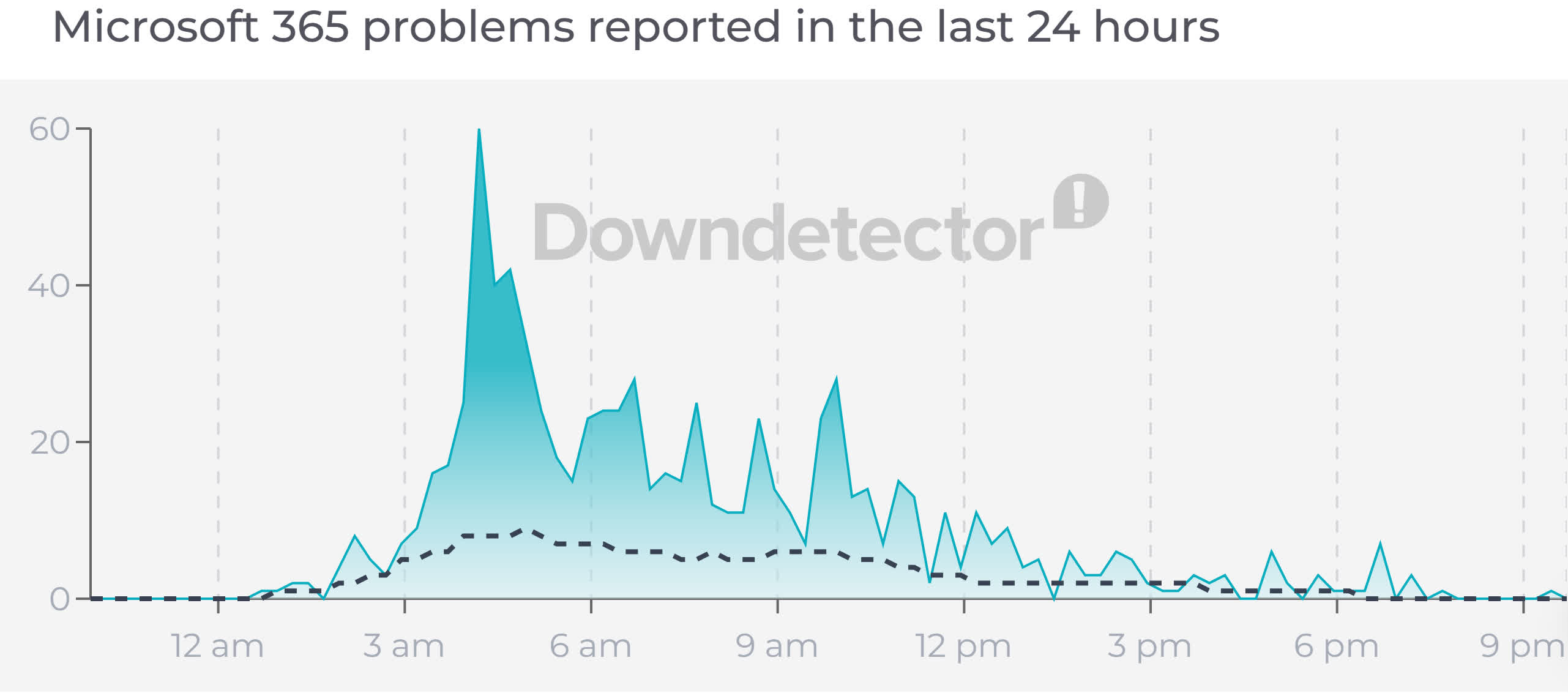
Microsoft 365 outage reports on January 26, 2026
Aside from the threats that outages can pose to users' files, pivoting to cloud PCs also raises issues regarding ownership and control. Outlets recently seized on a 2024 anecdote by Amazon CEO Jeff Bezos comparing local computing to the local power generators businesses used over a century ago, before public power grids became commonplace.
Although Bezos was actually referring to company data centers and not home PCs, commentators saw it as an admission that tech giants plan to migrate user activity entirely to the cloud. With the AI infrastructure buildout and ongoing RAM crisis making home PCs increasingly unaffordable, some even see a conspiracy to turn PC owners into renters, drawing comparisons to the housing market.
European governments are attempting to minimize their reliance on Microsoft and other tech giants, partially to avoid incidents such as last week's outage. German state offices have replaced Teams and other Microsoft apps with Linux alternatives, and France plans to follow suit.
Microsoft 365's latest outage is a reminder that the cloud isn't always there


