Microsoft admits Windows 11 lost its way, Nadella pledges to "win back fans"

Skye Jacobs

Posts: 1,998   +58
Staff
TL;DR: Microsoft is trying to repair Windows 11's reputation and overhaul its app ecosystem, and both efforts center on one idea: get back to fundamentals and make the OS feel like a fast, coherent, native-first platform again. That shift runs from Satya Nadella's pledge to "win back fans" to internal engineers publicly declaring that "Native apps are back!" for Windows 11.
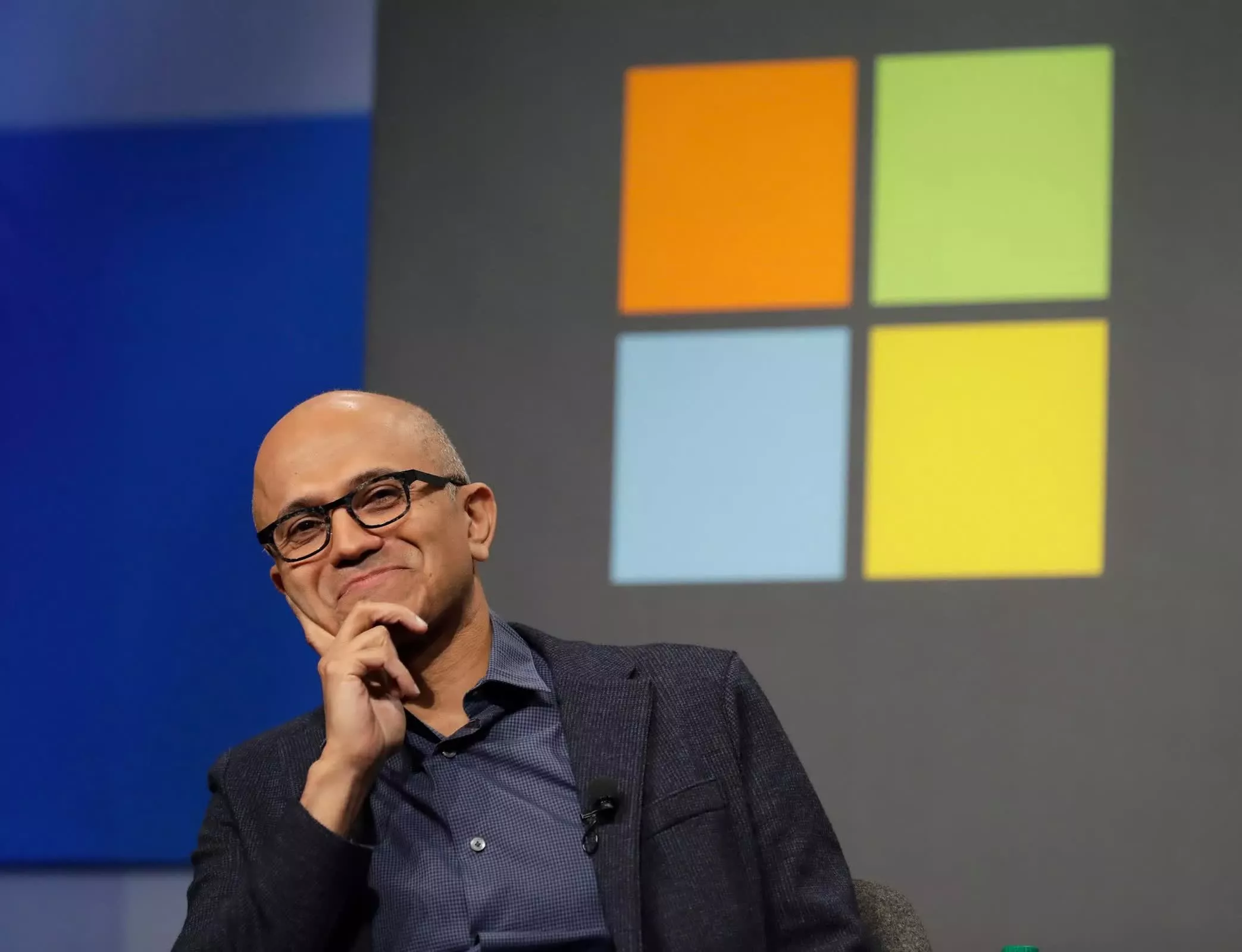
During Microsoft's fiscal Q3 2026 earnings call, Nadella put consumer Windows front and center. As part of Microsoft's broader push to reconnect with users across its platforms, he framed the Windows strategy as a back-to-basics project around performance, quality and core UX. "When it comes to our consumer business, we are doing the foundational work required to win back fans and strengthen engagement across Windows, Xbox, Bing, and Edge. In the near term, we are focused on fundamentals, prioritizing quality and serving our core users better," the CEO said.

He cited work already underway in Windows 11, including performance improvements for lower-memory devices, a streamlined Windows Update experience, and a renewed emphasis on "core features and fundamentals that matter most to our customers."

Those remarks came as Microsoft reported that monthly active Windows devices have surpassed 1.6 billion, a figure that includes Windows 10 and older versions. Nadella argued that, over time, "Windows value will extend to deliver unmetered intelligence at the edge," positioning the OS as the local substrate for AI workloads instead of just a thin client for cloud services.
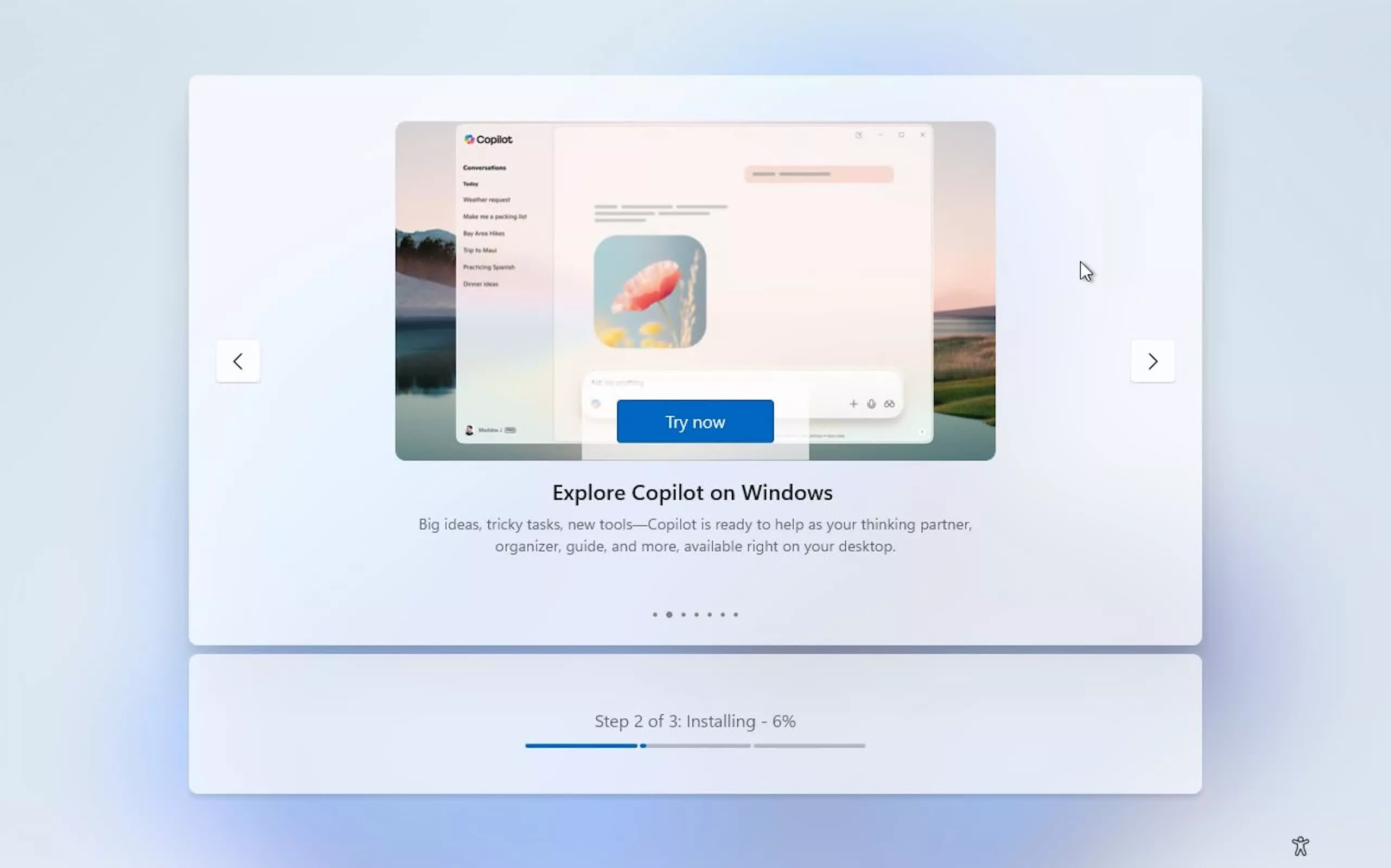
For longtime Windows users, though, the more immediate concern has been day-to-day friction: ads and upsells in the out-of-the-box experience, UI inconsistencies, and system components that feel sluggish compared with older releases.

Inside the Windows organization, the response is showing up as a mix of OS-level and app-level changes that all point in the same direction: less web wrapper, more native code.

Microsoft has already teased at least 18 notable improvements for Windows 11 in 2026, several of which are rolling out to early adopters. The company is testing a "quieter" Windows with fewer upsells and ads in the setup flow, along with a more streamlined first-time setup that takes fewer clicks to reach the desktop, including the ability to skip updates during OOBE.

Other work focuses on fundamentals: reducing baseline RAM usage, fixing dark mode inconsistencies across legacy dialogs and tools like Registry Editor, and moving more Control Panel functionality into the modern Settings app without breaking older hardware and workflows.
Performance problems haven't been limited to the OS shell. The Microsoft Store's evolution into a framework-agnostic distribution channel made it easier to ship Progressive Web Apps and Electron-style wrappers, but it also pushed many popular services away from native WinUI implementations. Netflix and WhatsApp are among the apps that moved from native frameworks to WebView2-based PWAs on Windows 11, with testing showing WhatsApp using around 600MB of RAM on an 8GB machine while idle.

Electron-based Discord can use up to 4GB of RAM and includes a mechanism to restart itself when usage gets too high. Users have been complaining for some time on forums like Reddit that this shift to web-centric clients has hurt overall OS responsiveness, especially on mid-range hardware.

Microsoft's own apps face similar issues. The web-based Copilot experience on Windows 11 pulls in a full Edge stack and, in testing, has been observed using roughly 500MB of RAM in the background and up to 1GB under active use.

The company's answer is not to retreat from rich clients but to rebuild them with native tooling. Rudy Huyn, a Partner Architect working on the Store and File Explorer, has said he is forming a team focused on building better Windows 11 apps and has confirmed that new experiences from that group will be "100% native."

That push gained a public signal boost when David Fowler, a distinguished engineer at Microsoft known for his work on .NET and ASP.NET Core, posted a simple message on X: "Native apps are BACK!"

Inside the Windows community, the comment has been read as an indication that Microsoft intends to move key experiences away from web wrappers and back to native frameworks such as WinUI.

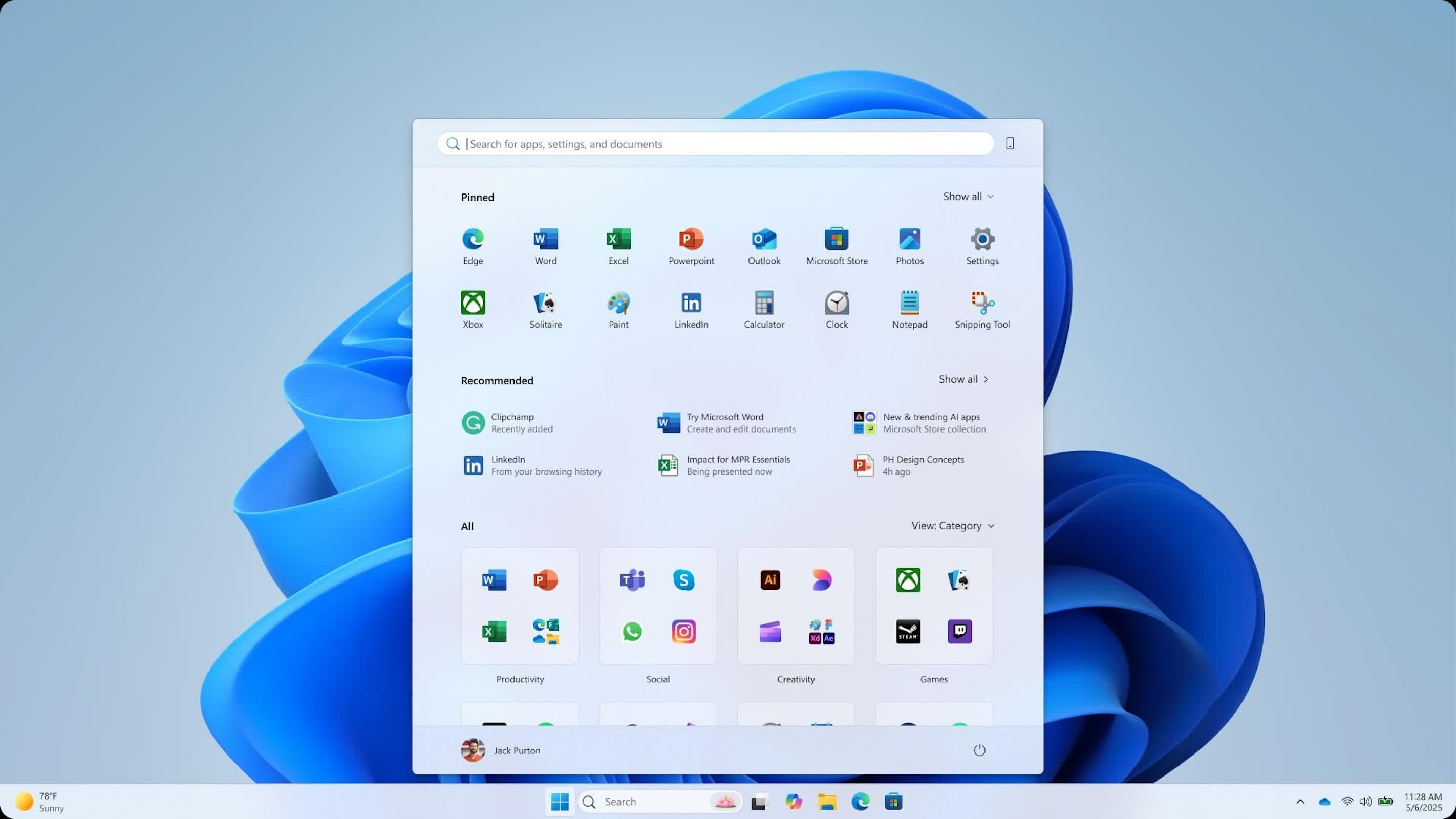
One visible example is the Windows 11 Start menu, which is shifting from React-based components to WinUI to cut latency and improve reliability, alongside plans to make it resizable again, as it was in Windows 10.

Under the hood, .NET 10 and its Native AOT (ahead-of-time compilation) support are expected to be central to this strategy. Native AOT is designed to reduce startup times and memory footprints for .NET applications compared with traditional JIT-heavy .NET deployments, which could directly address the overhead seen in today's WebView2 and Electron apps.

If Microsoft can demonstrate those benefits in its own in-box apps – File Explorer, communications clients, utilities – it will be in a stronger position to convince third-party developers to follow.

The more difficult problem is ecosystem inertia. Developers have grown used to cross-platform web stacks that let them target Windows, macOS, and mobile with a single codebase, even if that comes with higher resource usage on Windows.

To shift that calculus, Microsoft will likely need more than architectural guidance; it will have to show that 100% native Windows 11 apps can deliver clear performance and UX gains without giving up reach, and possibly sweeten the deal with Store visibility or other incentives.

For now, Nadella's focus on "foundational work" and Fowler's assertion that native apps are back describe the same direction: a Windows 11 that feels less like a cluster of web views and more like a coherent, responsive operating system.

Permalink to story:

 
I'm not sure it's fans you need to win over, It's people like me who have to use it at work and find the overall experience frustrating as hell. And people who might now be looking at Apple for personal machines like I did.

The fans will probably stick with you in the rough, I was happy to jump ship.

Whatever your thoughts on Apple it feels like they really lit a fire under Microsoft.
 
I'm not sure it's fans you need to win over, It's people like me who have to use it at work and find the overall experience frustrating as hell. And people who might now be looking at Apple for personal machines like I did.

The fans will probably stick with you in the rough, I was happy to jump ship.

Whatever your thoughts on Apple it feels like they really lit a fire under Microsoft.

Apple is far from perfect and can be just as frustrating. My MacBook Pro became worse and worse over the years, due to updates. Forced updates that is (or apps did not work), that changed things like UI and apps massively over time. From good to worse and then ended with no support. Now I run Linux on it. Just like I run Arch based Linux on my Lenovo T14.

I use Windows, MacOS and Linux pretty much daily. There is no perfect OS.

For gaming, Windows is the only OS that matters still, for the majority of people that actually buy new hardware and play newer games. Multiplayer especiall, that is 100% fact and Nvidia/AMD/Intel have pretty much only their eyes on Windows in terms of support and optimization.

I have 9800X3D and 4090 and aim for 240 fps due to 240 Hz monitor, there is no way in hell Linux would make me satisfied for gaming yet. Tried a bunch of gaming oriented distro's with dual boot and they don't come close to my tweaked Windows 11 install. Not even close when talking support, minimum 1% lows etc. Performance is hit or miss, mostly miss, in Linux. Many new games don't even work. Not a single game delivered better performance. Proton is likely to blame, as you pretty much emulate the games, meant for WIndows in the first place.

Proton improved alot in recent years (thanks to Valve) but still a long way to go.

I would use Linux in a heartbeat if performance was better and my entire gaming catalog worked. That is just not the case and people must be delusional if they think that.
 
Last edited:
Bring back Aero, and study every inch of 7 to see what made it excellent.

If one thinks about it, modern programming practices make a handful of programmers' lives easier at the cost of increased resource usage on billions of devices. In that light, it makes no sense. The hard work should be done in one place, and the benefit reaped billions of times.
 
Test your updates. When people report major issues, update after update, maybe it is time to hire new people.
Why not learn combinatorics? There are literally quadrillions of potential hardware configurations alone for a Windows system, and the number of software states it can potentially be in before an update is larger than the number of particles in the observable universe. When you figure out a way to test all those various combinations, tell the software industry and get rich overnight.
 
Linux Bazzite is doing 99% of what I want it to, which is mostly gaming. Took a few mildly annoying days to find my way around everything, but I don’t see a need to go back. The best part of a good OS is not having to think about it.
 
To late, got my kid, myself, a Neo, and MacBook recently as well as upgrading our old iPads and iPhones. MacOS has its issues, so I still have a Windows PC laying around, but it might be running Linux in the near future. All the games I play are supported on MacOS anyways and believe it or not, my M5 Max easily outperforms my 9800X3D system in MMORPG.
 
IMO, it still doesn't sound like Nadella or the rest of the "gang" at M$ gets it. If they were really serious about winning back "fans," the first thing they would do is get rid of these ridiculous TPM hardware requirements that have been proven useless and require that the technically illiterate computer users get new hardware that they might have trouble affording.

But, that's been the trouble with M$ for YEARS. They think they know better than their OS users and shove their crap OS down their users throats. Each new version of Windows has been filled with BS updates that are totally meaningless and just change the workflow for doing things that people have been doing for years and continue to do today. Worse yet, these "improvements" make a snail's pace OS even slower with pretty pictures and other useless junk.

M$ isn't, and hasn't, perhaps never has, given a crap about, nor understands, its users and, IMO, this is exemplified by their asinine statement "NATIVE APPS ARE BACK". Who gives a crap?
 
Microsoft only improves its products as a VERY LAST RESORT. If they claw back some users with a few scraps of goodness, they'll be back to their old horrible tricks soon enough.

Windows users need to understand that they are in an abusive relationship. Don't let them get away with "this time it'll be different, I promise." Microsoft will continue to abuse Windows users forever. Get out. Get out NOW. Don't make excuses.
 
I worked in IT support for 27+ years. I have worked with UNIX/Linux/VMS .
I have an Intel IMac, Linux laptop and 3 windows machines at home.
Windows works for me. I don't consider myself a fan or detractor of any particular OS.
For what I wish to do Windows works fine. I like to play around with LInux.
 
Bring back Aero, and study every inch of 7 to see what made it excellent.

If one thinks about it, modern programming practices make a handful of programmers' lives easier at the cost of increased resource usage on billions of devices. In that light, it makes no sense. The hard work should be done in one place, and the benefit reaped billions of times.

7 was literally just a rebranded vista after vista has caused people to upgrade from older PCs that couldn’t run it.
 
Remove the constant nagging for edge, onedrive, office 365, bing, copilot etc etc
Stop trying to install recall or anything related to recall
Remove need for online accounts on install
Make search work
Make the UI consistent
Make settings consistent
Redo the awful new categories-based start menu so it can be customised or get rid of it
Allow me to have the start menu look how I want
Make updates install much faster and not break things all the time
Make shortcuts all behave the same way so I can create shortcuts consistently at the moment there are so many different types of shortcut it has become a complete crapshoot for what can be created where
Make the icon cache actually work and my icons stay put. Surely this can't be that hard can it?
 
IMO, it still doesn't sound like Nadella or the rest of the "gang" at M$ gets it. If they were really serious about winning back "fans," the first thing they would do is get rid of these ridiculous TPM hardware requirements that have been proven useless and require that the technically illiterate computer users get new hardware that they might have trouble affording.

Can't agree more. They still don't get it.

The first thing Nadella should be doing is to bring back Windows QA/testing teams with huge labs full of different hardware configurations and use case setups, that must greenlight every update and hotfix before releasing them (even before the insider program), and in time stop people from being afraid of updates. Even if that means a slower cadence.

And of course, they should be focused on reducing the bloat that breaks many of these windows updates in the first place. Many pre-installed bloat in Windows should be removed, or become opt-in.

The second thing they should do, would be to change their "AI first" approach and stop all vibe coding.

Another big red flag that they still don't get it, is the goal of moving more control panel functionality to the Settings app. They should be setting the opposite goal: Get rid of the Settings app entirely and move everything back to the Control Panel.

Other red flags that they don't get it, is that they seem to be still trying to reinvent the wheel by changing the start menu again, among other things. Third party apps like OpenShell, StartAllBack and Windhawk already shows what users want. Just bring back the Windows 7 start menu and taskbar.

And of course, the lack of concern about removing artificial hardware requirements such as TPM, and removing online account requirements, also make obvious that they don't get it at all.

The way the project is described here makes it sound like it will turn Windows into even more of a clusterf*ck of legacy code and different frameworks...
 
Apple is far from perfect and can be just as frustrating. My MacBook Pro became worse and worse over the years, due to updates. Forced updates that is (or apps did not work), that changed things like UI and apps massively over time. From good to worse and then ended with no support. Now I run Linux on it. Just like I run Arch based Linux on my Lenovo T14.

I use Windows, MacOS and Linux pretty much daily. There is no perfect OS.

For gaming, Windows is the only OS that matters still, for the majority of people that actually buy new hardware and play newer games. Multiplayer especiall, that is 100% fact and Nvidia/AMD/Intel have pretty much only their eyes on Windows in terms of support and optimization.

I have 9800X3D and 4090 and aim for 240 fps due to 240 Hz monitor, there is no way in hell Linux would make me satisfied for gaming yet. Tried a bunch of gaming oriented distro's with dual boot and they don't come close to my tweaked Windows 11 install. Not even close when talking support, minimum 1% lows etc. Performance is hit or miss, mostly miss, in Linux. Many new games don't even work. Not a single game delivered better performance. Proton is likely to blame, as you pretty much emulate the games, meant for WIndows in the first place.

Proton improved alot in recent years (thanks to Valve) but still a long way to go.

I would use Linux in a heartbeat if performance was better and my entire gaming catalog worked. That is just not the case and people must be delusional if they think that.

The near perfect OS is likely AMIGA OS but that is looked after by its enthusiasts these days, maybe Linux is in that category a well.
 
Back