Nvidia's mythical N1 SoC surfaces on a real motherboard, and it's packing 128GB of LPDDR5X

zohaibahd

Posts: 979   +19
Staff
In context: Arm-based laptops typically lag in the GPU department – after all, unlike x86, the platform isn't known for its gaming performance. But that may soon change. Nvidia has been working with MediaTek on an Arm-based SoC featuring a GPU that could rival the RTX 5070. The chip, reportedly called the N1, is impressive given that it integrates the CPU and GPU into a single package.
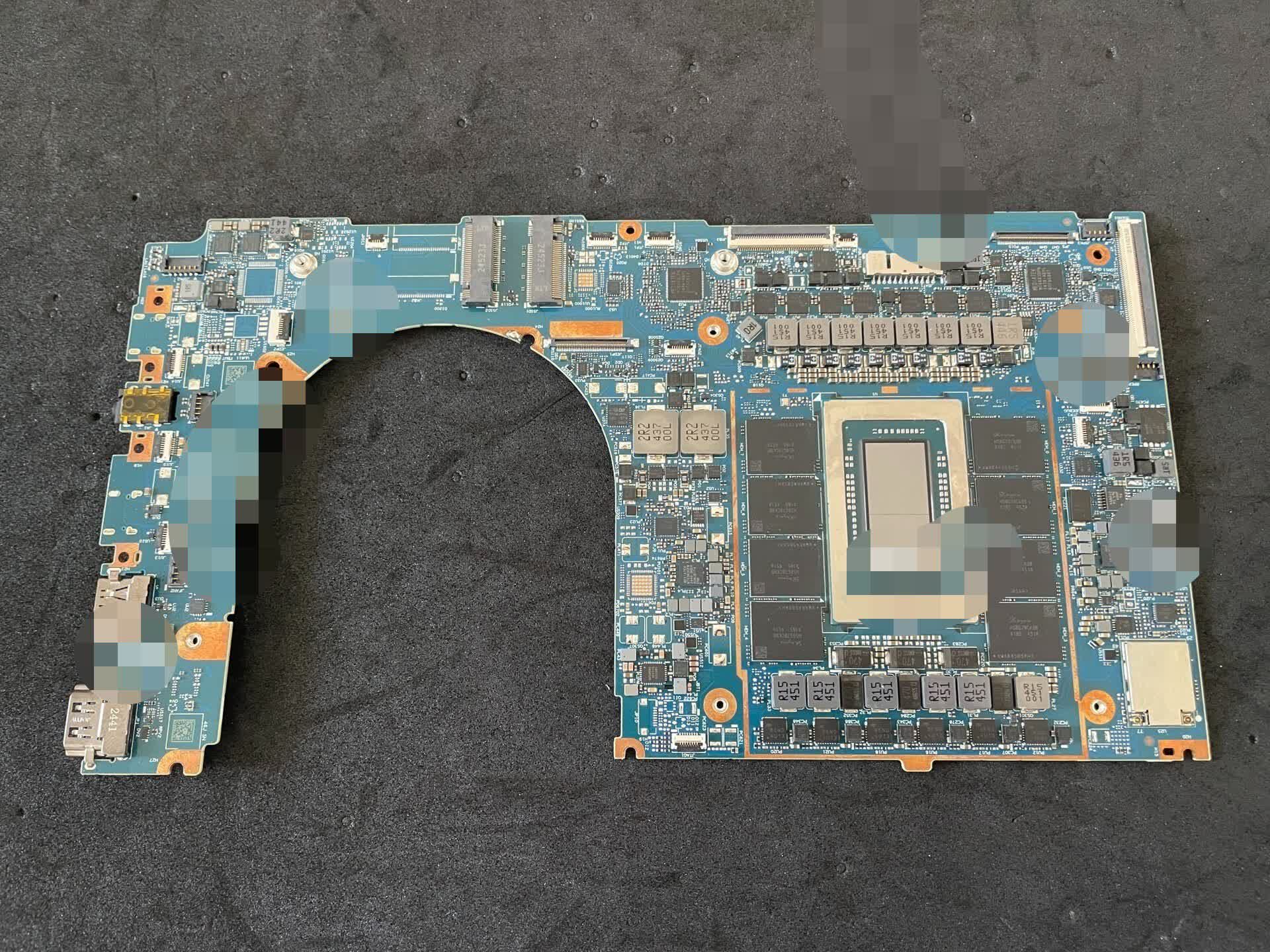
The long-rumored Nvidia N1 chip has been circulating in leaks and rumors for what feels like an eternity. But with a fresh leak, we may finally be getting our first proper look at it – and this time, it includes actual, high-quality images. From these, the product appears closer to a near-final retail design than an early prototype.

The leak originates from a listing on the Chinese resale platform Goofish, showing what appears to be a laptop motherboard with the N1 SoC mounted on the PCB. The entire package was listed for about $1,400 (9,999 RMB), though the listing has since been removed. At the time it was live, it described the board as an "Nvidia N1 AI Book engineering sample" intended for both laptops and tablet-style 2-in-1 devices.

Moving on to the board, the N1 is the largest component on it. It is surrounded by eight SK Hynix LPDDR5X memory chips, which together total a hefty 128GB of memory. These chips are clocked at 8,533 MT/s, placing them roughly between AMD's Strix Halo (8,000 MT/s) and Intel's Panther Lake, which can reach up to 9,600 MT/s.

Flanking the chip is a robust 8+6+2-phase VRM setup, suggesting the system would draw considerable power. With high power comes the need for effective cooling, and unsurprisingly, there is a large fan cutout as well.

As for connectivity, the board includes HDMI, USB Type-A, USB-C, a headphone jack, two M.2 slots for compact 2240 SSDs, and integrated Wi-Fi and Bluetooth antennas.
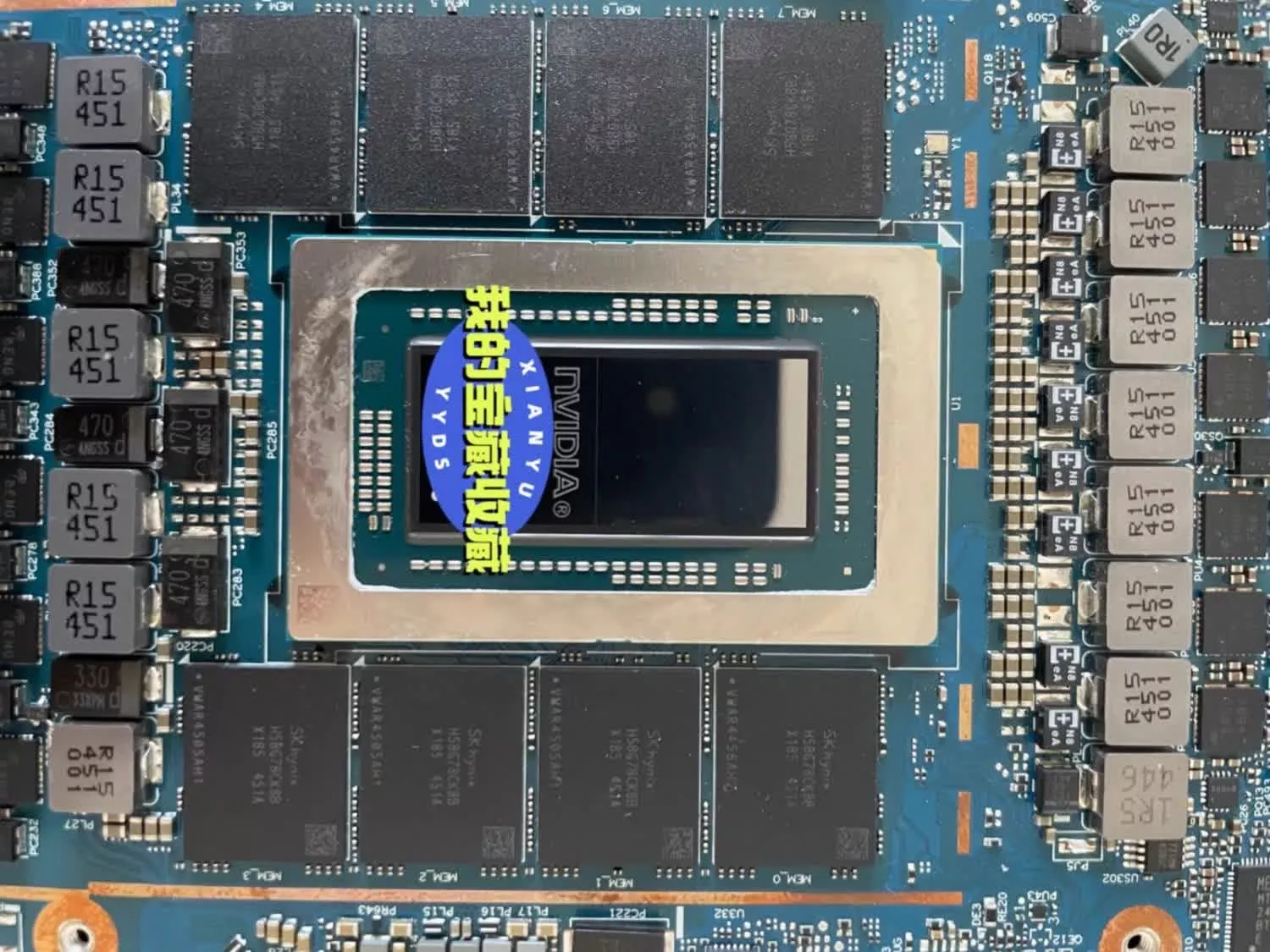
The N1 itself shares its silicon with the GB10 Superchip found in the DGX Spark workstation, according to Nvidia CEO Jensen Huang. It reportedly features 20 Arm-based CPU cores split into two clusters designed by MediaTek. Alongside this is a Blackwell-architecture GPU packing up to 6,144 CUDA cores (notably, this is an integrated GPU), placing it roughly in RTX 5070 territory.

The chip is significant for Nvidia, as the company has not released a consumer CPU product since the Tegra X1, which powered the Shield TV in 2015. As for its release, all signs now point to a Computex 2026 reveal, scheduled for June 2-5. Dell and Lenovo are already among the OEM partners reportedly testing laptops with the N1, according to reports.

Permalink to story:

 
I hope so - will be very interested to see some real competition in the laptop space.
I don't understand why people get so excited about ARM. Unless you want to buy a mac or use a Linux distro with no software support, you're basically stuck using Android.
 
I don't understand why people get so excited about ARM. Unless you want to buy a mac or use a Linux distro with no software support, you're basically stuck using Android.
Are you still confused on what ARM is? Sounds like it.

Windows exists and runs on ARM. Linux has ARM translation built in. You do not have to use android. What has held back Linux on ARM, to this point, is that desktop/laptops up to this point have been built on qualcomm who locks down the bootloader and does not allow linux to boot. That shouldnt be a problem on a nvidia box.

Stop spreading misinformation. If you dont like ARM, you dont have to use it, you can keep buying intel and AMD chips. People are excited for ARM because it has the potential to offer us incredibly powerful SoCs outside of the x86 duopoly that get great battery life on top of it all. Apple has demonstrated that they work quite well.
That RAM better be as reliable as dimm stick.
It will likely be more reliable. Soldered memory fixes one of the most common memory issues - dimms coming loose and throwing a memory error.
 
This looks expensive. Jacket man wants to sell me 128GB hard soldered to ARM, which I won't do for apple and for the same reasons nvidia either. They must be living good if they can roll on a risk like that. Call me when someone writes fun and useful software for it. I don't need an oversized raspberry pi.
 
Are you still confused on what ARM is? Sounds like it.

Windows exists and runs on ARM. Linux has ARM translation built in. You do not have to use android. What has held back Linux on ARM, to this point, is that desktop/laptops up to this point have been built on qualcomm who locks down the bootloader and does not allow linux to boot. That shouldnt be a problem on a nvidia box.

Stop spreading misinformation. If you dont like ARM, you dont have to use it, you can keep buying intel and AMD chips. People are excited for ARM because it has the potential to offer us incredibly powerful SoCs outside of the x86 duopoly that get great battery life on top of it all. Apple has demonstrated that they work quite well.

It will likely be more reliable. Soldered memory fixes one of the most common memory issues - dimms coming loose and throwing a memory error.

Talk about spreading misinformation. ARM is nothing more that a DIFFERENT CPU core with a different instruction set. Linux doesn't have ARM built in. Linux is an operating system that has a been rewritten to run on the ARM architecture. OS's can be rewritten to run on any BASIC CPU for the most part. -What gives Apple and to a lesser extent, Qualcomm their abilities is all of the extra DSP's, GPU's, etc. added to the SOC. Since the CPU itself is simpler and smaller, you can throw more cores in the same die area.

Apple was also able to make a system that recompiled their x86 programs to their new SOC because they have COMPLETE control of the ecosystem, Hardware, Software and OS are all controlled by them with limited to no options of hardware variations. Not easily done with Windows, as Microsoft and Qualcomm have already found out. And the newer version from Qualcom and Microsoft is just a bit better, but still hasn't solve the problems.

The idea that you just need to license the cores from ARM to relegate x86 (Intel, AMD) to the dustbin of history is sheer fantasy.

As for dimms coming loose, the last time I had ANYTHING come loose inside a pc or laptop was a gpu on a new HP system back in the early 90's. It's a manufacturing cost saving measure as well as a way for Nvidia to limit options a la Apple
 
I don't understand why people get so excited about ARM. Unless you want to buy a mac or use a Linux distro with no software support, you're basically stuck using Android.
This will obviously run Linux and is specialised for LLM's, rather than general compute.
 
ARM is nothing more that a DIFFERENT CPU core with a different instruction set. ... OS's can be rewritten to run on any BASIC CPU for the most part. -What gives Apple and to a lesser extent, Qualcomm their abilities is all of the extra DSP's, GPU's, etc. added to the SOC. ...
Apple was also able to make a system that recompiled their x86 programs to their new SOC because they have COMPLETE control of the ecosystem, ... As for dimms coming loose, the last time I had ANYTHING come loose inside a pc or laptop was a gpu on a new HP system back in the early 90's. It's a manufacturing cost saving measure

Impressive how you can get so wrong on most of it... Trying to summarize:
- you can't just compile an OS to ARM, is far more complex than that
- extra DSPs etc: no. It's again far more complex than that. Apple uses ARM instructions but the architecture is of their own design, very optimized. Everything else as matrix accelerators, video codecs etc are added optimizations but drivers and apps must also use them.
- apple has control of the completed ecosystem: again, incorrect. They can control their apps and OS but nothing else written by third party. Fortunately they work closely with most and kept things easy for them, giving them Rosetta 2 while giving them time to prepare the apps for ARM.
- Microsoft and Qualcomm: those companies just don't give a real cr.p about doing something well done, besides servers, cloud, AI and smartphones. Microsoft just can't get a grip with their own x86 version (and massive adoption of Android and iOS/iPadOS made a lot of pressure), let alone doing something fine tuned for ARM. Qualcomm is just too bad doing drivers and doesn't care; Microsoft is also not putting too much effort.
- soldered RAM vs slots: soldered RAM for portable devices is a must, it is a fixed asset. Slots is good for desktops. Besides, soldered means the RAM is exactly as the OEM intended, but if buy, you just don't know. If it's in the package, even better, it'll be really exactly as the APU maker intended (and won't cheap out).
 
- soldered RAM vs slots: soldered RAM for portable devices is a must
It had and still have some advantages, but it is NOT a must

Soldering memory modules:
- is cheaper
- is more reliable
- may take less space (mostly vertical)
- provides higher RAM speed

SOCAMM and/or LPCAMM2 may change that and send that "soldered must" into low-cost segment.
 
Impressive how you can get so wrong on most of it... Trying to summarize:
- you can't just compile an OS to ARM, is far more complex than that
- extra DSPs etc: no. It's again far more complex than that. Apple uses ARM instructions but the architecture is of their own design, very optimized. Everything else as matrix accelerators, video codecs etc are added optimizations but drivers and apps must also use them.
- apple has control of the completed ecosystem: again, incorrect. They can control their apps and OS but nothing else written by third party. Fortunately they work closely with most and kept things easy for them, giving them Rosetta 2 while giving them time to prepare the apps for ARM.
- Microsoft and Qualcomm: those companies just don't give a real cr.p about doing something well done, besides servers, cloud, AI and smartphones. Microsoft just can't get a grip with their own x86 version (and massive adoption of Android and iOS/iPadOS made a lot of pressure), let alone doing something fine tuned for ARM. Qualcomm is just too bad doing drivers and doesn't care; Microsoft is also not putting too much effort.
- soldered RAM vs slots: soldered RAM for portable devices is a must, it is a fixed asset. Slots is good for desktops. Besides, soldered means the RAM is exactly as the OEM intended, but if buy, you just don't know. If it's in the package, even better, it'll be really exactly as the APU maker intended (and won't cheap out).

What you describe as me getting it wrong is my skipping the obvious. As for OS's, although the term compile was sloppily used, it amounts to basically the same thing. The OS (if I'm not getting to simple for your tastes) is a translation layer between higher level languages and the hardware. Your making commands to the OS address the correct hardware commands of the ISA of the processor. The point was, it's not impossible with the exception of specific CPU features that do exist (Think Intel's AVX extensions, etc.).

As for Apple making a super ARM core responsible for their being 100x faster than x86, Their redesign is more about working with the ecosystem and the other parts rather then a huge IPC increase. Is it better? Probably, but not to the degree you imagine. The co-processors or custom chips offload a ton of functions from the CPU, and if the OS is tailored to them they have a HUGE advantage. Cell phones did this with ARM first, Apple just took it to the desktop. There are prior examples, but this is comment section. Lastly, there's a reason Apple needs fewer resources. Again, owning the ecosystem means fewer devices to accommodate, enforcemen ot tighter standards and more efficient use of resources allows them to get more done with less. This is no credit to ARM either, as they did it with MC69000 and x86 before that.


Microsoft just wants to be Apple. The Qualcomm route was just expedient. Microsoft has been essentially writing an OS for someone else's CPUs. They want to build vertically integrated empire where they have control. I think they thought it would be easier then it turned out, becaus the underestimated the extend which Apple controlled their ecosystem. Not to mention, neither of them actually make PC GPU's. There's another spot both companies didn't know what they were getting into.

Lastly, while there are some performance gains from soldered memory, the biggest reason by far is cost savings, yes, layout is simpler, but you're using one type of memory, from one supplier. No socket costs, no bios adjustments for different memory, fewer SKU's, etc. Nvidia never does anythng for the customer's benefit, they look out of number one.

If ARM could replace the PC with their IP alone, they would have done it a long time ago. Linux has done well with games because they have a fairly standardized workflow and was modifies for new hardware as it came available, and created interfaces (vulcan) to access the hardware and could write capable translation layers to avoid stepping on copyright toes.

Things will change, ARM will find ways to expand and improve, but it's still not going to be the super CPU to replace them all anytime soon, as some seem to think.
 
Back