Plasma engines are emerging as the next frontier in deep-space propulsion

Skye Jacobs

Posts: 2,030   +59
Staff
The big picture: In deep-space travel, the race is no longer about who has the biggest rocket – it's about who can build the smartest plasma engine. As the competition to reach Mars intensifies, engineers in the US, Russia, and China are accelerating development of propulsion systems that trade conventional fuel for charged particles and magnetic fields.
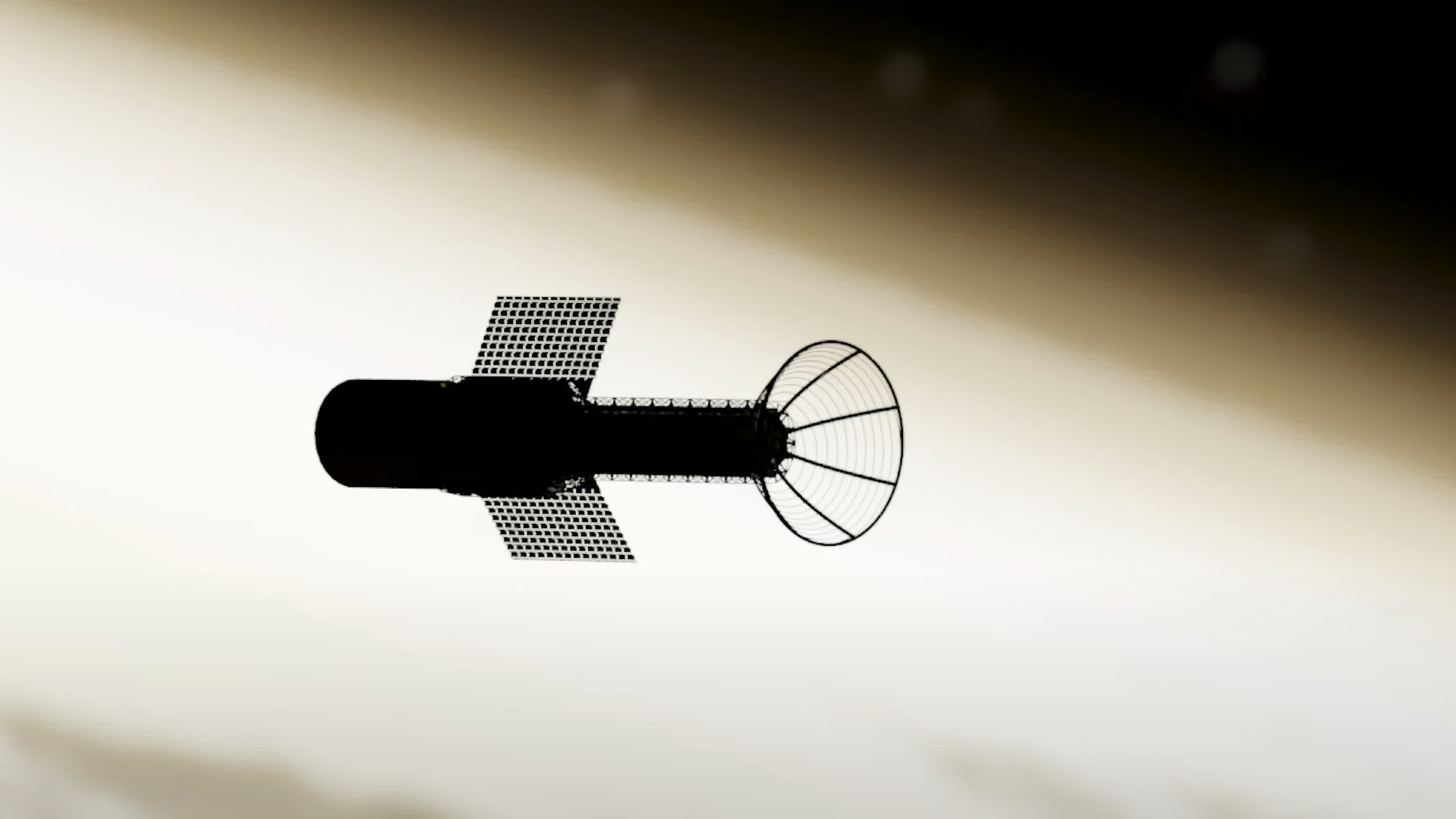
Once confined to laboratory experiments and speculative research, the technology now stands at the forefront of interplanetary innovation and represents the most credible path to cutting travel times from months to mere weeks.

Plasma propulsion transforms an inert propellant – often hydrogen – into plasma, a superheated mix of ions and electrons. Magnetic fields then funnel and accelerate the plasma to extreme velocities, generating thrust.

Because the process relies on electromagnetic forces rather than combustion, plasma engines are far more fuel-efficient than chemical rockets, though they require substantial power input. The current challenge is not whether the concept works – it does – but whether it can produce enough thrust to propel a crewed spacecraft across the solar system.

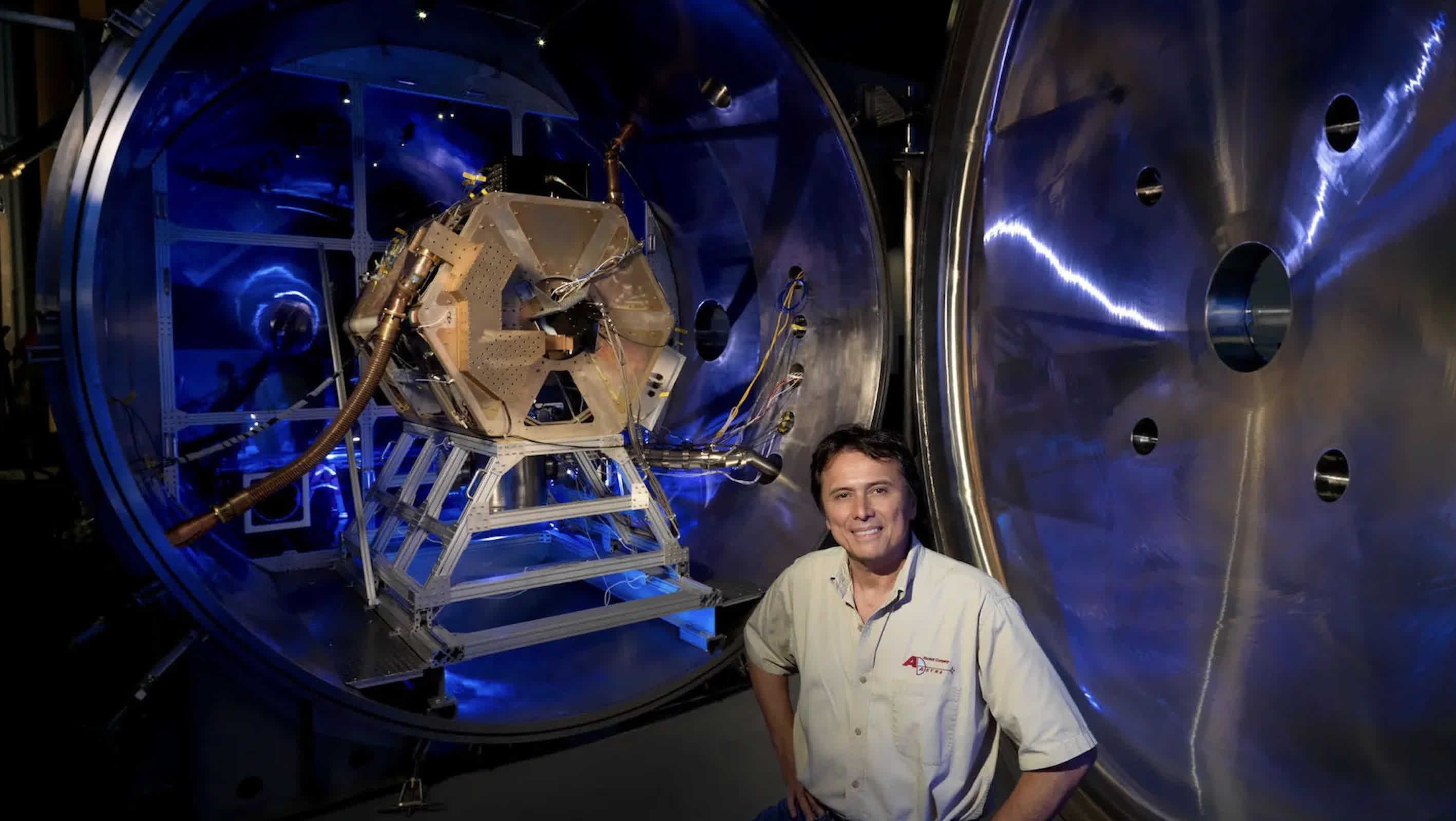
NASA has explored multiple designs through its Innovative Advanced Concepts program. These include the Pulse Plasma Rocket, which uses controlled bursts of plasma for propulsion, and the Variable Specific Impulse Magnetoplasma Rocket, developed by Ad Astra Rocket Company in Texas. Both designs draw heavily on magnetic confinement and ion acceleration technologies refined in fusion research.

For perspective, a conventional chemical rocket takes roughly eight months to reach Mars when planetary orbits align favorably. Vasimr and the Pulse Plasma Rocket aim to compress that travel time to about 45 to 60 days.

Russia's state-owned nuclear conglomerate, Rosatom, has entered the field with a magnetoplasma accelerator developed at its Troitsk Institute near Moscow. Announced in early 2025, the system reportedly achieves a specific impulse – essentially, exhaust velocity – of up to 100 kilometers per second, powered by a 300-kilowatt energy source. For comparison, most engines of this type operate in the 30- to 50-kilometer-per-second range.

Rosatom claims the technology could enable a one-month Mars trip, with officials targeting 2030 for a flight-ready prototype. The figures, while impressive, come amid significant financial and operational challenges in Russia's broader space sector.

In mid-2025, RSC Energia chief Igor Maltsev openly criticized the industry's deteriorating condition, warning that expectations had outpaced realistic capabilities. Whether Rosatom can deliver a functioning plasma engine within the decade remains uncertain.
China has also entered the plasma arena through its Xi'an Aerospace Propulsion Institute, whose researchers report developing a "high-thrust magnetic plasma thruster," according to state media.

Meanwhile, a separate team at Wuhan University is exploring how similar ionized-gas technology could improve high-altitude aircraft engines, potentially enabling plasma-based thrust within Earth's atmosphere.

Skeptics caution that despite decades of experimentation, turning plasma physics into practical propulsion remains a monumental engineering challenge. Issues such as power generation, heat dissipation, and material endurance under plasma bombardment are still unresolved. Yet the promise of high-velocity travel across the solar system at previously unthinkable speeds, fueled not by combustion but by controlled electromagnetism, is too great to ignore.

The momentum behind plasma propulsion marks a clear turning point in the story of human spaceflight. Chemical rockets opened space; plasma engines may finally make it traversable.

Permalink to story:

 
1 month to Mars - amazing. How long would Alpha Centauri take with one of these I wonder?

The lady scientist said they hope for a speed of 500 km (ca. 300 miles) per second max speed . That's 18000 miles per minute, but let's use an average / lower speed of 150,000 mph

The rest is easy, the distance to Alpha Centauri being 25 trillion miles: Divide the distance by the speed per hour, divide the result (the total of hours needed) by days then the result by 12 to get the number of years.

PS: My brain is very foggy from medication, I hope my suggestion / idea is correct.
 
Well, they said at the fastest it's 1000km/s, so to get 40Tkm it'd take 40B seconds, so about 1268 years. If I did all my math right. This is if they wouldn't run out of fuel or electricity, as they certainly would.
Well that's less than ideal.
 
"As the competition to reach Mars intensifies, engineers in the US, Russia, and China." The USA will win.
Russia ? Don't make me laugh all their dough has gone into the war with Ukraine
 
They'll also need to generate enough thrust to stop when they get there while carrying a mission payload and drawing a constant massive electrical load for confinement. Gotta spend it to make it.
 
One month to Mars is incredibly slow even on an interstellar scale, let alone galactic.

The question is not how long it would take to get there, but how much time would have passed when you get home.
I'm glad I'm not the only one who thought that.
 
Getting to Mars fast means you have to decelerate fast, even if you only intend to enter orbit or do a slingshot. Chemical rockets would still be needed for manoeuvring. (UK spelling manoeuvring. manoeuvering for the USA)
 
Last edited:
Plasma engines won't get your payload or astronauts into orbit.

Chemical rockets aren't going anywhere any time soon.
 
Where do they put the natural gas power plant to generate all of the electricity. I suppose you could try nuclear, but cooling and shielding make that almost as improbable.

I have it! Several football field size solar panels.
 
It's not very relevant what Rosatom "claims". They can't even sustain their soviet-era nuclear early warning system anymore, that's how demolished their space programs (and their economy) are.
 
Glad we're focusing our tax dollars on this and certain terrorists states instead of literally anything else.

Healthcare? Yes, maybe healthcare.

Or education?

Or infrastructure?

Or economy?

Or a justice department?
 
Simultaneously, work must be done on shielding. Impacting a .5mm grain of dust while traveling at 100 km/s (360,000 kph) would result in an equivalent energy of a .357 magnum concentrated into the equivalent area of the head of a pin.

That force, released instantly upon contact, would vaporize the grain of dust and the surface of the hull.

Instantly changing phase from solid to plasma, the impact would result in a shaped-charge-like blast rearward, creating a much larger hole than the contact point. That blast would shoot extremely high velocity molten shrapnel toward the interior of the ship.

The impact, occurring in a fraction of a microsecond, having no time to expand in 3 dimensions, would essentially be akin to a 1-dimensional kinetic bomb, producing an instantaneous concentrated explosive temperature (depending on the hull's composition) between 10,000-20,000C (18,000-36,000F).

Such an instantaneous change in temperature and force would easily overcome the atomic bonds of any material, more-or-less rendering the ship's hull effective as liquid butter for protecting the crew.

And this is only for a speck of dust. Consider 10% lightspeed. At relativistic speeds velocity squares. 30,000 kph (300X) results in a destructive power of 90,000X.

The same speck of dust would see an explosive force equivalent to nearly 150 lbs of TNT concentrated into the area the size of the head of a pin.

Going fast is cool, in theory, but new technology needs to be created to protect occupants. What is currently available is terribly unsuitable and incapable.
 
"Issues such as power generation, heat dissipation,"
So if they could turn the heat into electricity, like a Thermoelectric generator, that could help, right?
 
Cutting Mars travel from eight months to six weeks sounds amazing until you remember you now have six weeks to sit inside a radiation-filled metal tube with the same people. Faster engines won’t fix the psychological DLC.
 
"As the competition to reach Mars intensifies, engineers in the US, Russia, and China." The USA will win.
Russia ? Don't make me laugh all their dough has gone into the war with Ukraine
as the good ol' us of a descends into 3rd world country status they ain't got a hope in hell of beating the chinese.
 
It's not very relevant what Rosatom "claims". They can't even sustain their soviet-era nuclear early warning system anymore, that's how demolished their space programs (and their economy) are.

Not quite true...

Russia's economy is doing quite well. They score 4th in Purchasing Power Parity (PPP). Better than Japan or Germany.
https://en.wikipedia.org/wiki/List_of_countries_by_GDP_(PPP)

Russia (and China) produce more STEM graduates than the US. Almost 40% of all Russian grads are STEM. Compare to 20% for US graduates.
https://en.wikipedia.org/wiki/Science,_technology,_engineering,_and_mathematics

Meanwhile, the US still has not produced a working hypersonic missile. Russia has been using them all over the Ukraine.
 
Back