Samsung's first 6K gaming monitor pushes even the RTX 5090 beyond its comfort zone. We test Nvidia's uber expensive flagship to see what gaming above 4K really costs in performance and image quality.
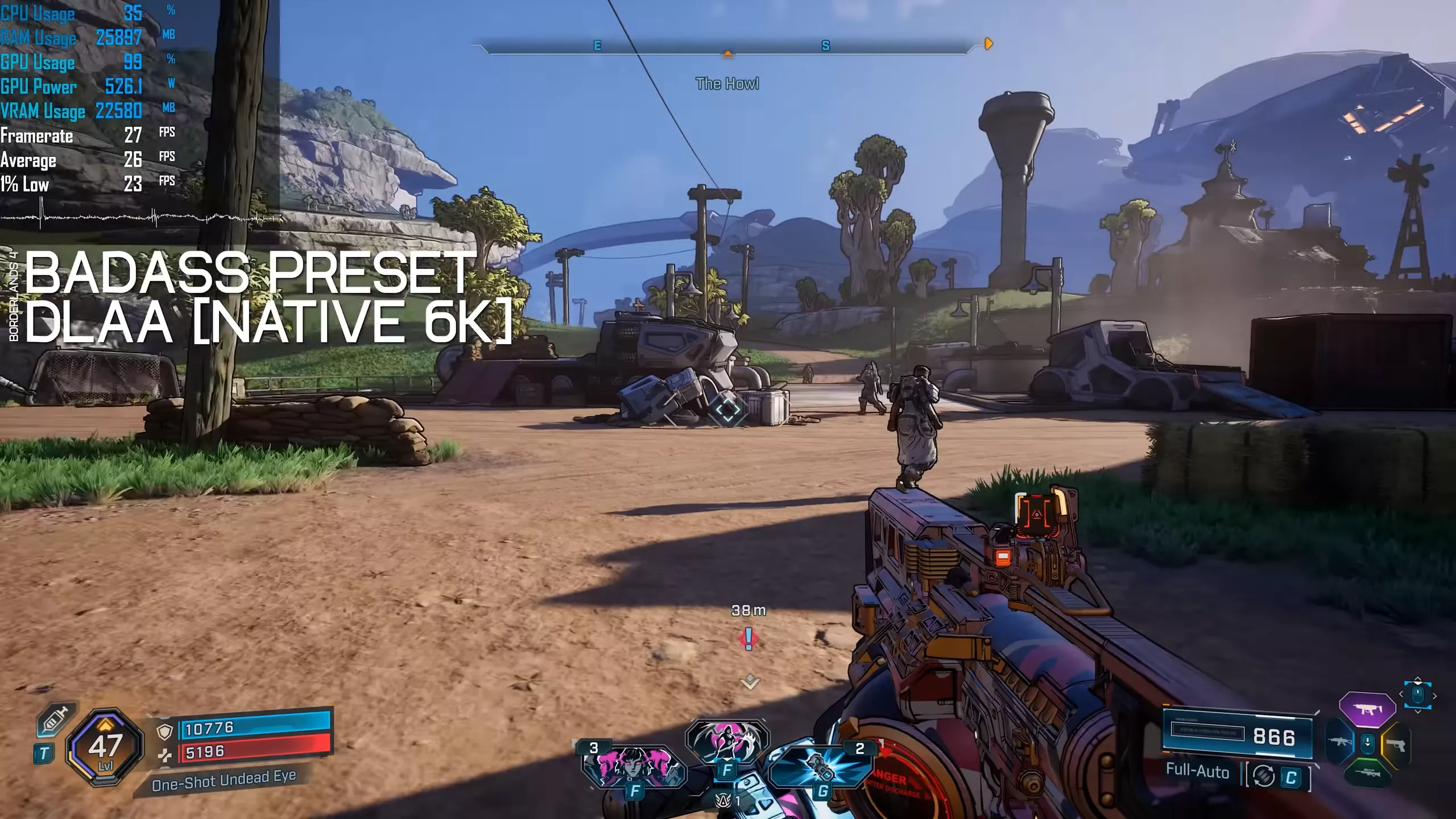
Samsung's first 6K gaming monitor pushes even the RTX 5090 beyond its comfort zone. We test Nvidia's uber expensive flagship to see what gaming above 4K really costs in performance and image quality.


It's intentionally sarcastic, it opens with a satirical paragraph. I for one enjoyed it.Title a bit misleading,
Maybe I'm an elitist then. I tried 1440p @27" and found a significant increase in detail when moving to 4K. I'd love to be happy with 1440p, far less cost and power use. And if I were a competitive shooter, yup, 1080p @240Hz+ for sure. But even 10 years ago, as an RPG enthusiast, I did everything I could to get closer to 4K - 3840x1600, 3200x1800 (this is a nice option if okay with the boxing).I can't wait for the elitists to start making fun of 4k gamers and how they're just poor. 4k only makes sense because that's what most TVs run at natively, otherwise there is no real reason to go beyond 1440p. I wonder if they're gonna try to start pushing 6k to move hardware while 1440p and even 1080p hardware(if you consider value) is unaffordable for most people. I'd also hate to see what the compression is like in game streaming 6k
Something I've noticed and this is a big reason why I say this, pixel size and the spacing between pixels provides vastly different experiences. 1080p on a duel mode monitor looks like a much higher resolution than a native 1080p display. There is a smoothness to the image without it looking soft or dull and it makes it feel much sharper than it is.Maybe I'm an elitist then. I tried 1440p @27" and found a significant increase in detail when moving to 4K. I'd love to be happy with 1440p, far less cost and power use. And if I were a competitive shooter, yup, 1080p @240Hz+ for sure. But even 10 years ago, as an RPG enthusiast, I did everything I could to get closer to 4K - 3840x1600, 3200x1800 (this is a nice option if okay with the boxing).
That said, I do not understand the obsession with going much beyond it for gaming. OLED, HDR, and HFR are a far bigger deal for game immersion and feel. Photo work is often 6000x4000+, so 6K would be awesome for that, and medical, architecture, etc.

From team red we have GPU's that are $300-400 less than team green.And from Team Red we have ... (insert GIF of tumbleweed blowing across the scene).
Yeah but you get what you pay for..From team red we have GPU's that are $300-400 less than team green.
A 6K monitor is a pointless niche,it's too expensive and wouldn't be much of a noticeable difference in resolution over a 4K monitor.
I'm not sure this is true. On VR headsets I can tell the difference between video that is shot in 4k vs 6k. Obviously the display itself has a capped resolution, so maybe that speaks more to VR camera quality or compression artifacts than the display.Just for a reality check here, with 20/20 vision one will only be able to see a visual difference between 4K and 6K at a distance of 24 inches.
I'm not sure this is true. On VR headsets I can tell the difference between video that is shot in 4k vs 6k. Obviously the display itself has a capped resolution, so maybe that speaks more to VR camera quality or compression artifacts than the display.


And, at the current rate, with a price tag equal to the model number, I'm sure.The 5090 is top dog for now. Not sure when or if we’ll get a replacement since Nvidia doesn’t need us anymore for money.
Hopefully 8K gaming will be a realistic thing by the 9090 or 10090.


Yeah the Pimax Crystal super while not true 8k is also insanely difficult to run at 4k per eye resolution.Nevermind 8k, just try PCVR and you will again see how it already falls short in rendering and encoding for, as an example, the Quest 3 optics.

… the reality of the Red Team not claiming 8k compatibility 3 GPU generations ago?And from Team Red we have ... (insert GIF of tumbleweed blowing across the scene).