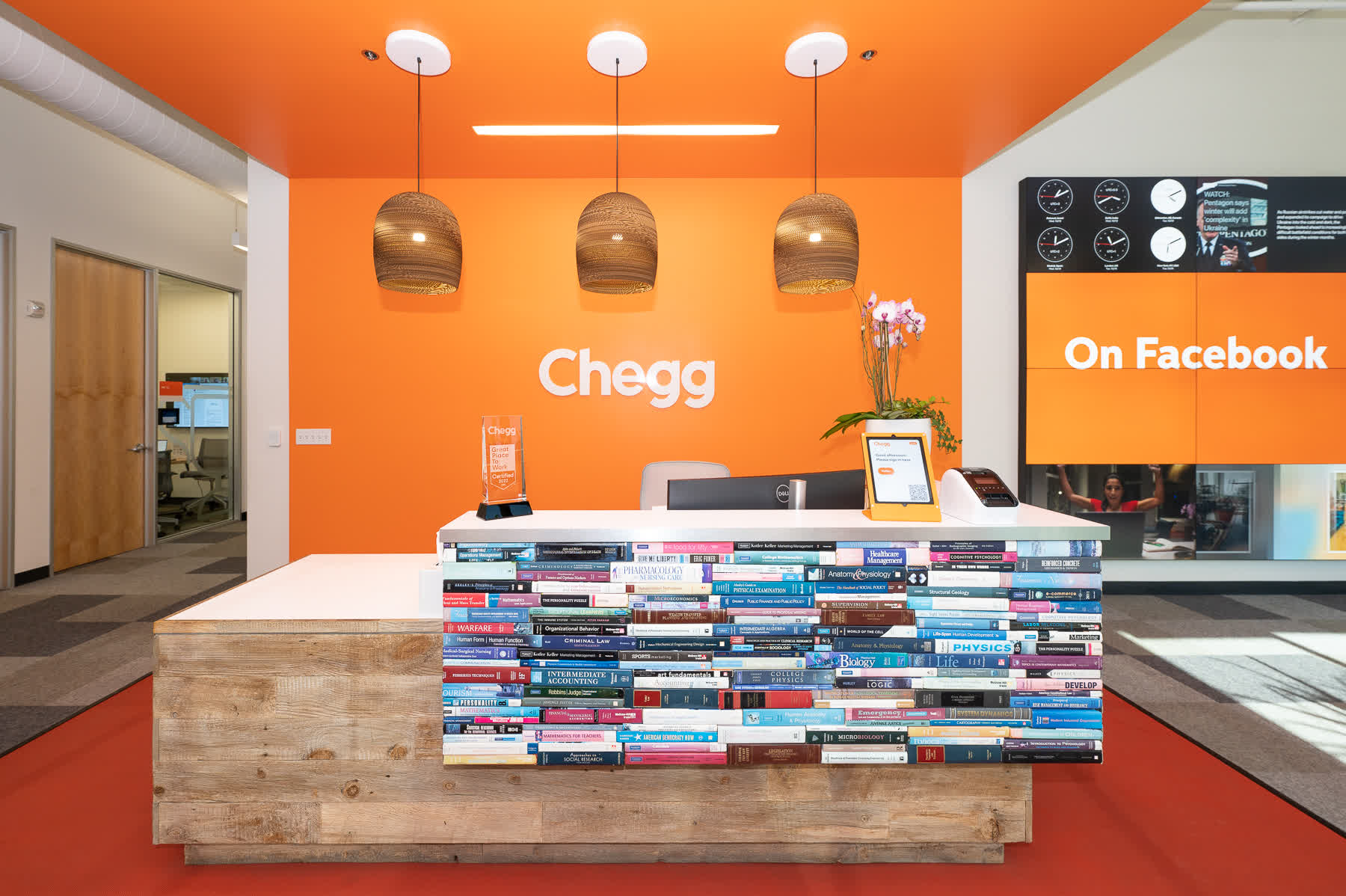
What just happened? AI's impact on jobs isn't always so direct as replacing workers. Chegg, the education tech company once valued at more than $12 billion, has said it is cutting 45% of its workforce and replacing its CEO as a result of the technology, which has essentially rendered many of its services obsolete.
Having started as a digital and physical textbook rental service, Chegg later expanded to offer homework help, tutoring, and study tools. It offers subscription services that cost between $15 and $20 per month.
Chegg's popularity exploded during the pandemic, thanks to almost every education facility in the world being forced into virtual learning. Its share price skyrocketed 345% between March of 2020 and January of 2021 to give the company a market cap of more than $12 billion. Then ChatGPT launched.
Like many online businesses, generative AI has decimated Chegg. A company spokesperson admitted that the "new realities" of the tech, along with reduced traffic from Google to content publishers, have led to a significant decline in its traffic and revenue.
With billions of people opting for – often free – gen AI tools instead of Chegg for their education needs (and cheating), the company's stock price was down 99% from its peak in November 2024, erasing $14.5 billion from its value as the company lost half a million subscribers.

As reported by Reuters, Chegg is now slashing 388 roles globally, or 45% of its workforce, to reduce costs and streamline operations. It is also bringing back old CEO Dan Rosensweig effective immediately, replacing Nathan Schultz, who has stepped down and will serve as an executive adviser.
Chegg tried the "if you can't beat them, join them" approach by launching its own in-house chatbot called CheggMate, but it failed to turn around the company's fortunes.
In February, Chegg filed a lawsuit against Google over the latter's AI Overviews. It claims the AI-generated summaries are harming Chegg's business by diverting traffic and monetization away from Chegg.
Chegg also argues that Google uses its dominance in search to compel companies like itself to provide content, and in turn uses that content in its AI Overviews without fair compensation.
Chegg has just concluded a review to analyze the possibility of going private or putting the business up for sale. The company has now decided it will instead remain a standalone organization.