Highly anticipated: Valve has finally revealed and confirmed the appearance and system specs for a new console-style PC and a standalone VR headset, extending the Steam Deck's operating system from handhelds into new environments. The company also unveiled a new Steam Controller and updated VR motion controllers.
After a year of detailed leaks and rumors, Valve has finally pulled back the curtain on several new hardware products. Starting sometime in the first quarter of next year, users will be able to bring SteamOS into the living room or strap it to their faces while playing with redesigned controllers.
The pre-built desktop, called the Steam Machine, is a compact device offering six times the Steam Deck's horsepower. With a cube-like form factor, it weighs just 2.6kg and measures 152mm tall, 26.2mm deep, and 156mm wide.


Valve claims the new Steam Machine supports 4K gameplay at 60 frames per second, though its graphics chip will likely struggle with modern AAA games at high settings. The AMD RDNA 3 GPU with 28 Compute Units includes only 8GB of VRAM. Digital Foundry estimates its performance may resemble that of the Radeon RX 7600.
Although the company has not yet revealed pricing for any of its upcoming hardware, it highlighted cost as a primary reason for opting for a modest graphics chip.
Valve explained that it should feel like an upgrade for most Steam users, which is likely true, as the Steam Hardware Survey's most popular GPUs are currently the Nvidia RTX 3060, 4060, and laptop 4060.
The CPU is a 4.8GHz, 6-core, 12-thread AMD Zen 5 processor. The Steam Machine includes 16GB of DDR5 system RAM and a choice of either 512GB or 2TB of internal storage. A microSD card slot allows users to instantly transfer game installs from the Steam Deck.
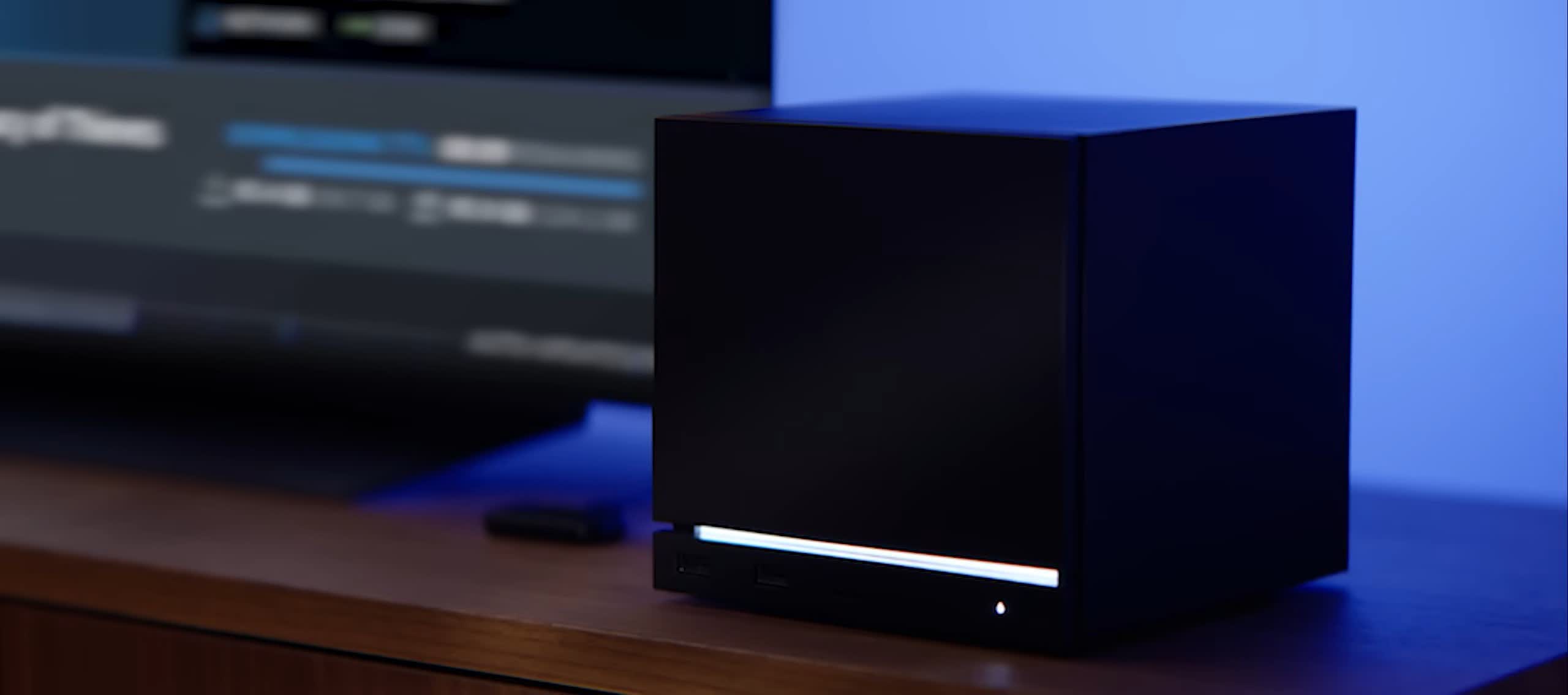
Connectivity options include HDMI 2.0, DisplayPort 1.4, two front-facing USB-A ports, two rear USB-A ports, a rear USB-C port, and a gigabit Ethernet jack. The device supports 2x2 Wi-Fi 6E and Bluetooth 5.3.
Valve also incorporated a couple of unique features on the Steam Machine's front panel: 17 RGB LEDs that can display status information, and a swappable front plate. The company used a plate with an e-ink screen during testing, but it will likely not be available publicly unless a third-party company designs an alternative.
The Steam Machine is a successor to Valve's previous attempt to bring Linux gaming into living rooms. In 2013, the company unveiled a lineup of third-party pre-built PCs running on an early version of SteamOS, which failed to gain traction due to a shortage of compatible games. Valve was also criticized for launching the lineup without providing a reference product.
Several years later, Valve addressed those mistakes with the Steam Deck and a drastically improved SteamOS that now runs thousands of Windows games through a compatibility layer that often outperforms Microsoft's own operating system. Since the handheld PC's 2022 debut, observers have wondered whether Valve would return to the living room.
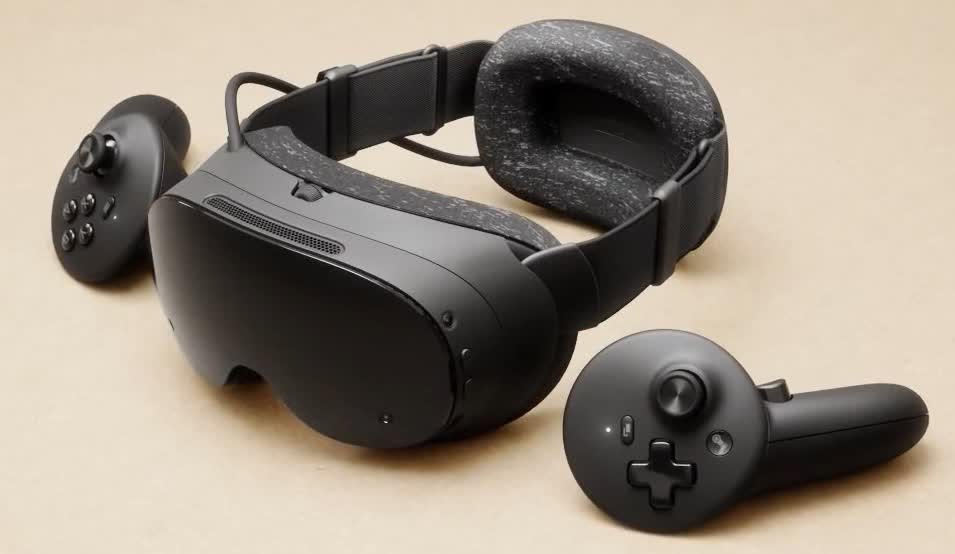
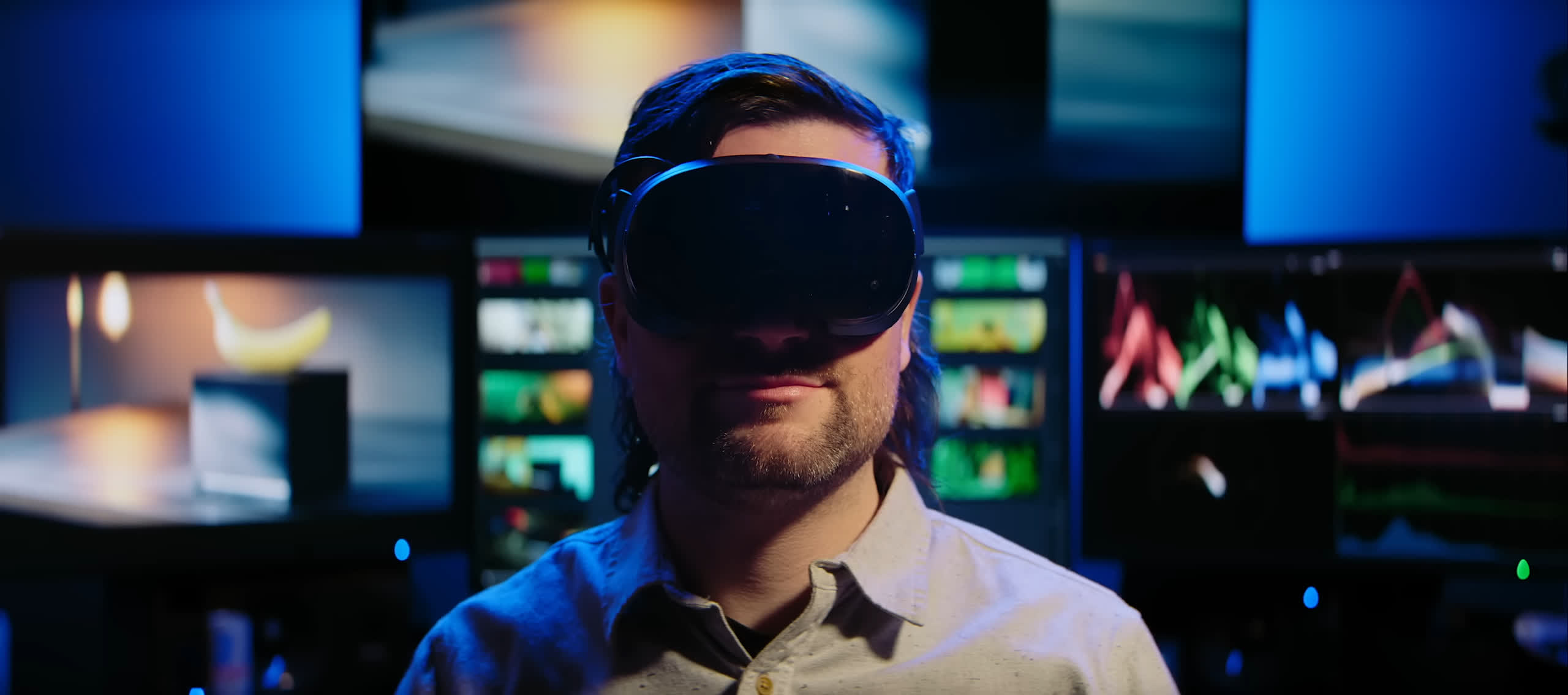
The company's other major hardware announcement, the Steam Frame, is a new VR headset that runs on SteamOS. Although it can connect to Steam Machines, PCs, and Macs through an included wireless adapter, the device also works standalone. Users can install any Steam Deck-compatible games or indeed any Linux software, bringing the full functionality of a Linux PC to a VR headset.
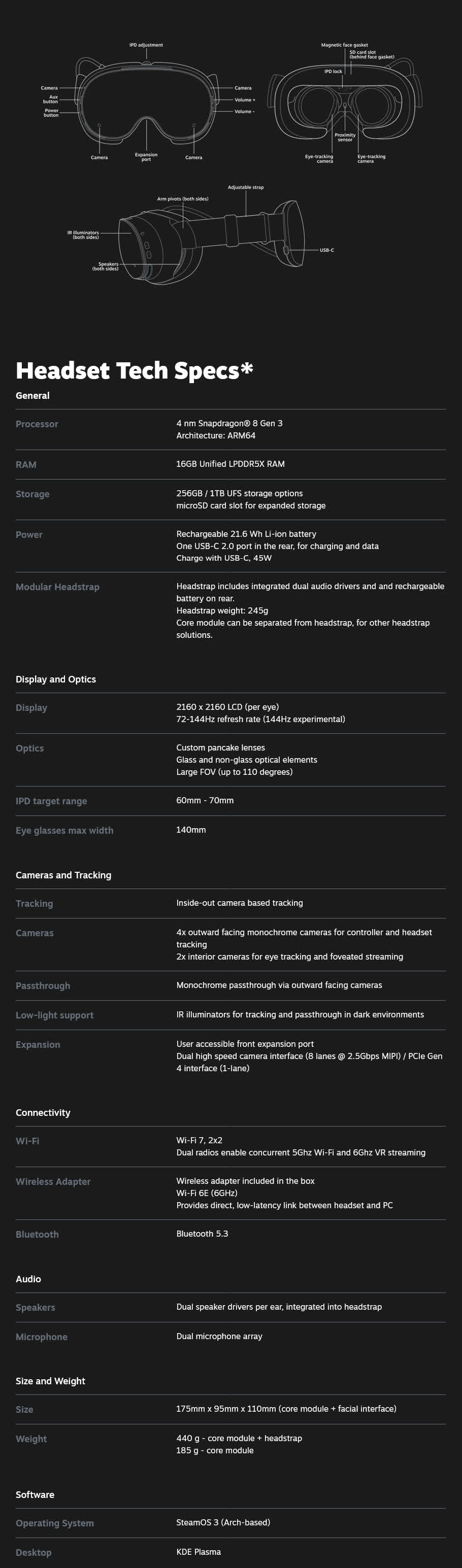
Running on Arm64, the Steam Frame uses a Snapdragon 8 Gen 3 processor with 16GB of unified LPDDR5X RAM, a choice of 256GB or 1TB of UFS storage, and a microSD card slot. Custom pancake LCD lenses display 2,160 × 2,160 pixels per eye at 72 to 144Hz with an FOV of up to 110 degrees. Software designed for x86 systems will run through the Fex translation layer, though real-world game performance remains unclear.
Four outward-facing monochrome cameras track the headset and controllers, while two internal cameras enable eye tracking and foveated rendering. The 175mm × 95mm × 110mm device weighs 440g with its head strap and rear-mounted rechargeable battery attached.
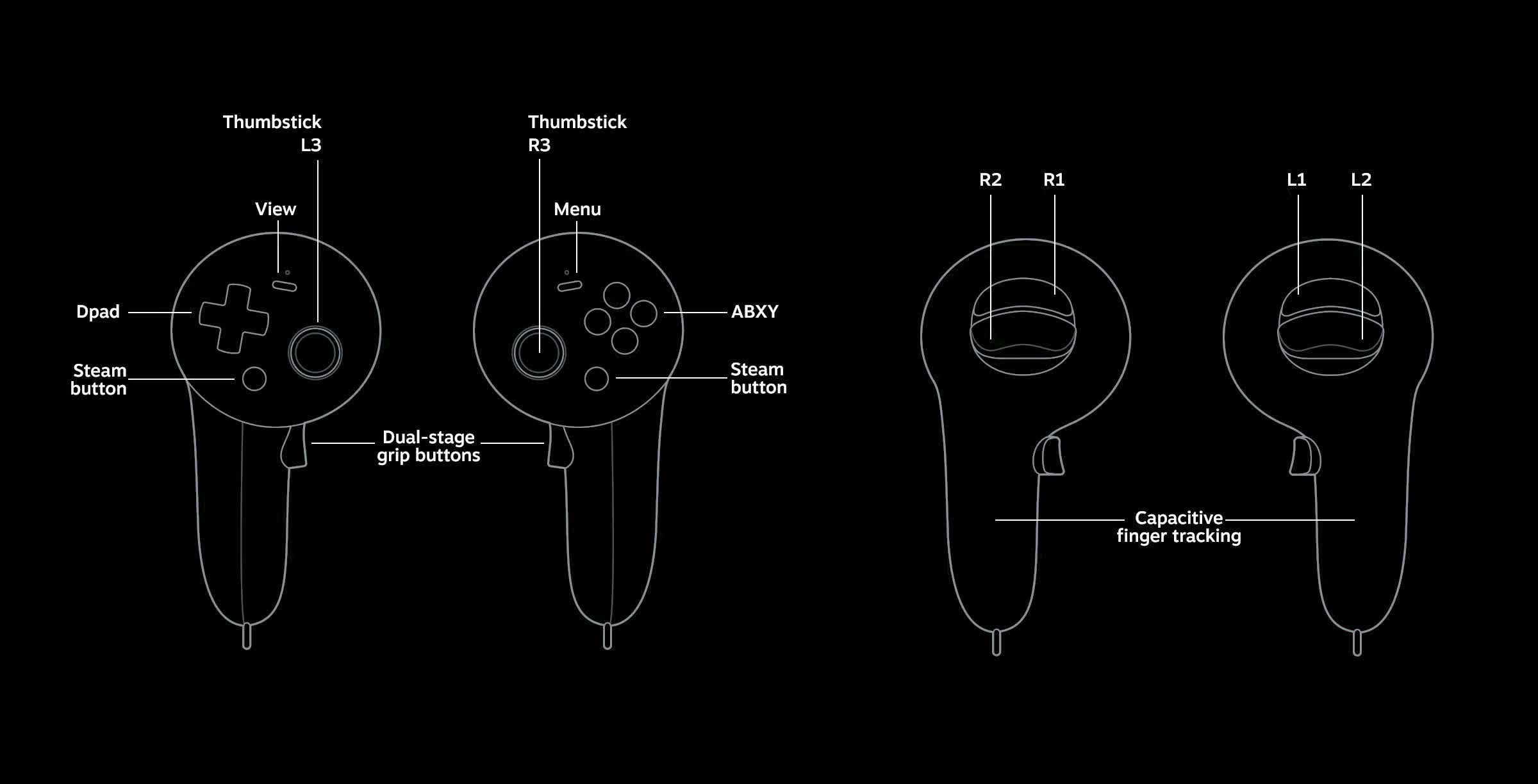
Valve's new VR controllers closely resemble the Meta Quest 3's controllers but include the full array of standard controller buttons and a directional pad, likely enabling them to function as a standard split controller without the headset. They also feature capacitive finger tracking and haptic motors. Each controller uses a single replaceable AA battery that should last roughly 40 hours.
The Steam Frame and Steam Machine also support the upcoming Steam Controller 2. Unlike the unconventional original Steam Controller, the sequel adopts a more traditional layout while revising the trackpads previously featured on its predecessor and on the Steam Deck. The magnetic TMR thumbsticks should avoid the stick-drift issues that have plagued various modern controllers. Gyro aiming is enabled through bottom-mounted capacitive touch sensors.
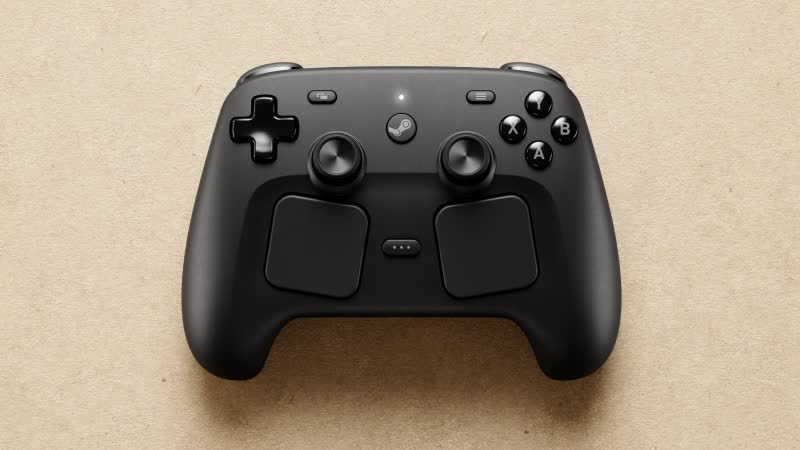
Although the Steam Controller 2 connects to devices via Bluetooth and USB, Valve also unveiled a magnetic puck that serves as both a wireless dongle and a docking station. For more console-like functionality, the controller can remotely power on the Steam Machine. Its 8.39Wh lithium-ion battery provides an estimated 35 hours of gameplay.
Alongside its new hardware portfolio, Valve is expanding its software verification program. All Steam Deck-verified games will also carry a "Steam Machine Verified" designation, though developers may additionally optimize their titles specifically for the box and ensure seamless support for the Steam Controller 2.
Valve has also begun distributing Steam Frame development kits to help developers ensure their VR software supports the device natively. The company says that Android XR and Meta software can be ported relatively easily to the Arm version of SteamOS. According to Gamers Nexus, users may even be able to sideload Android APKs onto the Steam Frame.