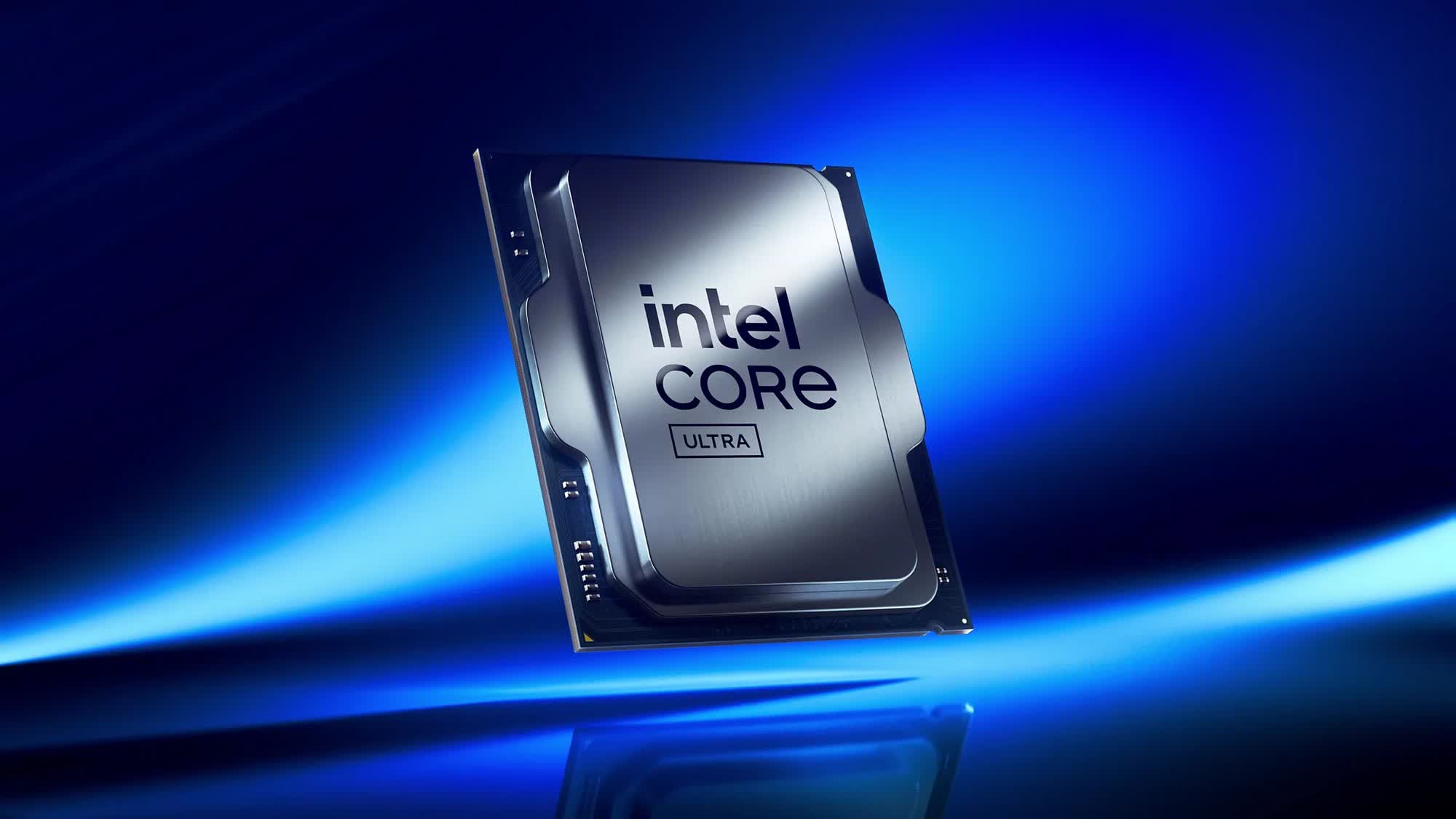
Forward-looking: Intel has confirmed that it will officially unveil its Core Ultra Series 3 "Panther Lake" CPU lineup at CES 2026 in Las Vegas on January 5. The next-generation chips will be manufactured using Intel's cutting-edge 18A process node and will introduce substantial upgrades over the company's current Arrow Lake and upcoming Lunar Lake processors.
Panther Lake processors will employ a five-tile architecture, comprising Cougar Cove performance cores, Darkmont and Skymont efficiency cores, an Xe3 Celestial integrated GPU, and a 5th-generation NPU for on-device AI acceleration. The lineup will introduce Intel's new Core Ultra X branding, with the flagship model designated as Core Ultra 9.
The series is expected to include approximately 14 SKUs, led by the 16-core Core Ultra X9 388H, which features four Cougar Cove performance cores, eight Darkmont efficiency cores, and four Skymont low-power E-cores, alongside a 12-core Xe3 integrated GPU. Preliminary specifications suggest a maximum clock speed of 5.1 GHz and a 25W TDP.

The entry-level Core Ultra 5 322 will feature a dual-core Celestial GPU and a six-core CPU, consisting of two performance cores and four low-power E-cores, with a maximum clock speed of 4.4 GHz. Alongside this model and the flagship Core Ultra X9, 12 additional SKUs are expected to power a wide range of laptops and handheld devices next year, some of which may debut at Intel's CES showcase.
Panther Lake represents a major release for Intel as the company continues to face stiff competition from AMD in both consumer and data center markets. The new chips are projected to deliver up to 50 percent faster CPU and GPU performance compared with Lunar Lake, while the integrated NPU reportedly offers up to 180 TOPS of AI performance.
At an official Panther Lake media event in May, Intel claimed that the new chips would provide Arrow Lake-level performance with Lunar Lake-level efficiency, although no official benchmarks were shared. Instead, the company demonstrated the chips' AI capabilities by running DaVinci Resolve on a Panther Lake laptop powered by an unspecified 16-core engineering sample.
While Intel did not disclose exact specifications for that engineering sample, unverified leaks suggested it included four performance cores, eight efficiency cores, and four low-power E-cores, with a 2.0 GHz base clock, 3.0 GHz boost clock, 1.6 MB of L1 cache, 24 MB of L2 cache, and 18 MB of L3 cache.