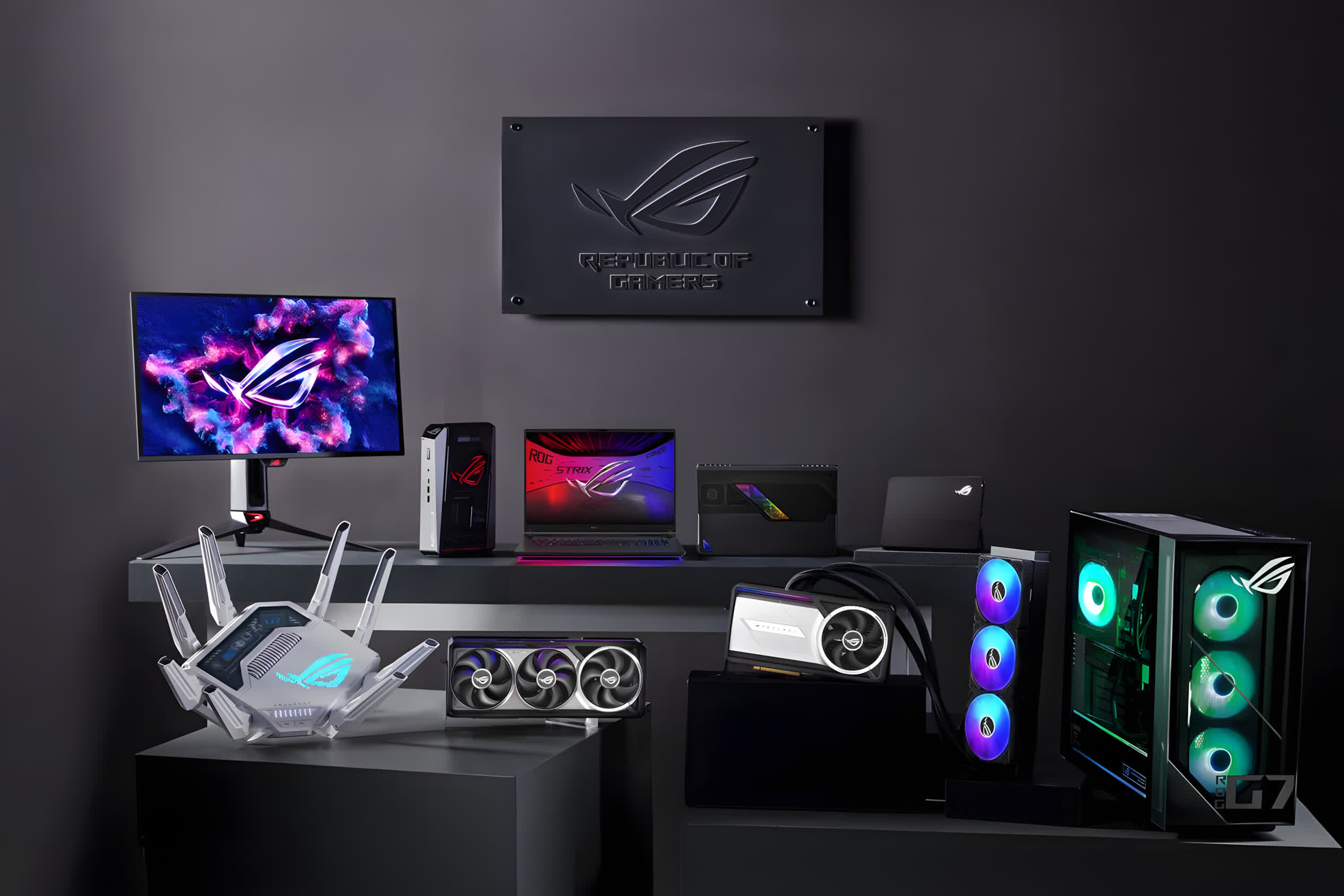
A hot potato: A few weeks ago, Asus forecast a change in its pricing schemes to reflect the current AI-driven market hysteria. The increase is now official, although the Taiwanese manufacturer isn't happy that consumers are learning about the changes through its internal communications.
In a letter recently sent to its partners, Asus confirmed that some of its products will soon undergo a significant price increase. The Taiwanese manufacturer stated that the change is essential for facing the challenges of this new era of AI-driven computing, although a significant portion of PC consumers are unhappy about this alleged revolution.
Negative sentiment against AI and its related effect on prices and product shortages are growing by the day. Asus is now facing structural volatility in the global supply chain, while demand for PC and IT infrastructure products remains strong. The company quotes specific product lines such as DRAM and NAND chips for solid-state storage drives as the most likely to be affected by the price increase.
Asus had allegedly been trying to avoid the change by directly absorbing the cost pressure without passing it to customers. Now, the manufacturer is being forced to implement a "strategic" price adjustment to specific products and combinations of hardware components. Asus provided no info about the impacted products, but it said the changes will be implemented before CES 2026 begins.

The end goal is "to ensure stable supply, maintain quality and service levels, and continue supporting your long-term planning for key IT investments," the letter said.
Asus initially announced a price increase earlier in December. The company later denied industry rumors about a new chip manufacturing venture, which would provide no actual benefit to current market conditions.
After the letter became public, Asus' public relations team remarked how the document was not intended to be seen by external customers. The memo was just an internal business communication shared privately with channel partners so that they could better coordinate with their customers.
Despite not being regarded as "press material," the memo is now out in the open and everyone is talking about it. There is widespread speculation about the most likely outcome about the most likely outcome of the current market situation. Optimists say that if AI technology sticks around, IT corporations will be forced to increase their chip manufacturing capacity. However, if the AI bubble finally bursts, the existing capacity should be "fine again" and market conditions will improve for the global customer base.