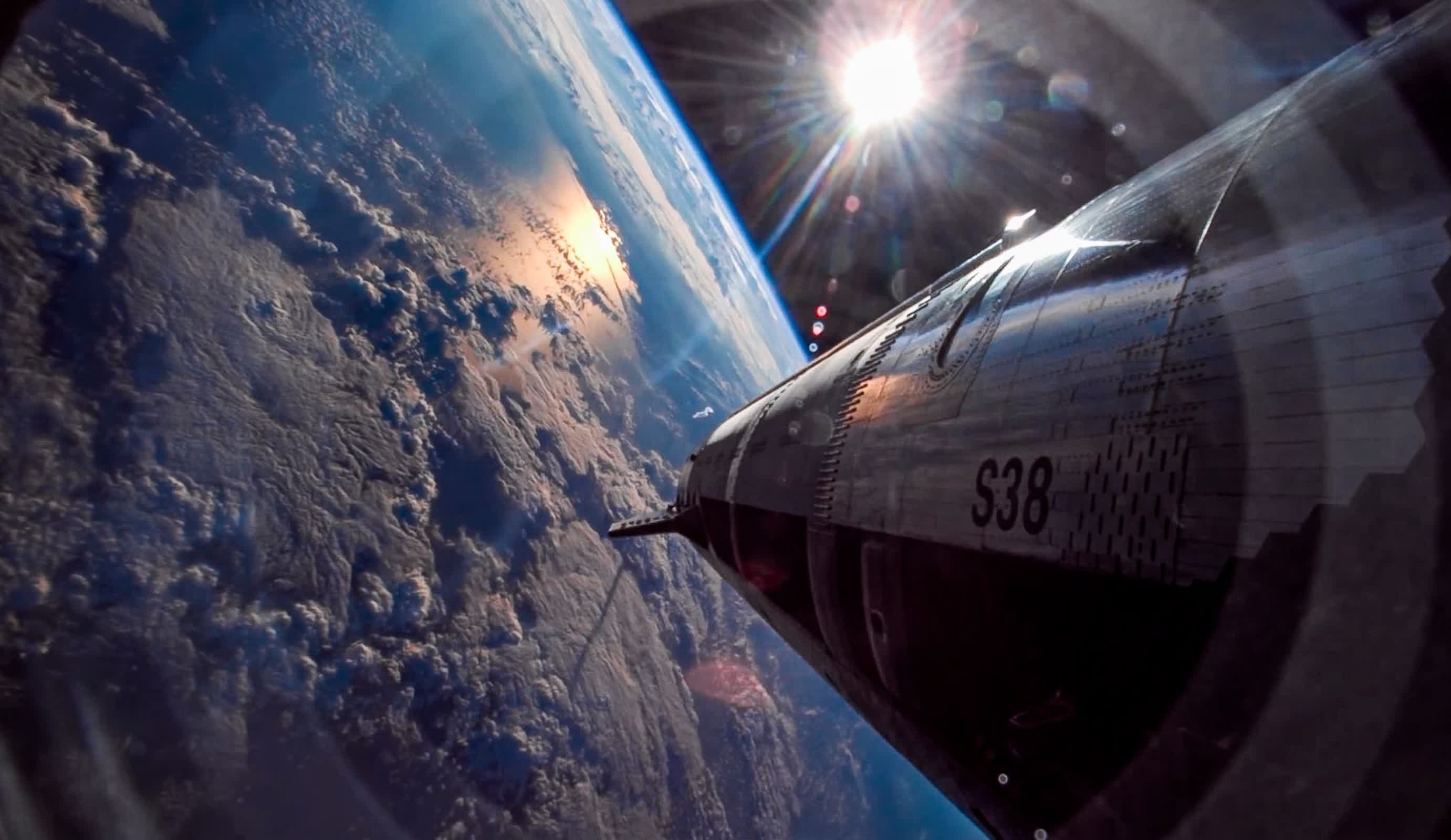
TL;DR: SpaceX is folding Elon Musk's artificial intelligence startup xAI into its rocket and satellite business and tying the deal to an unusually aggressive bet: that the cheapest, most scalable way to run frontier AI models will be to move the data centers into orbit. The company is now pitching itself as a vertically integrated machine that links reusable launch vehicles, mass-produced satellites, space-based networking, and a full AI stack under one corporate roof.
SpaceX has filed for permission to launch up to 1 million satellites configured as "orbital data centers." These spacecraft would operate in low Earth orbit between roughly 500 and 2,000 kilometers in a mix of low-inclination and Sun-synchronous planes, forming a dense, solar-powered compute mesh interconnected by high-bandwidth links.
The company framed the deal in characteristically expansive terms, saying the merger marks "not just the next chapter, but the next book" in a shared mission to "scale to make a sentient sun to understand the Universe and extend the light of consciousness to the stars."
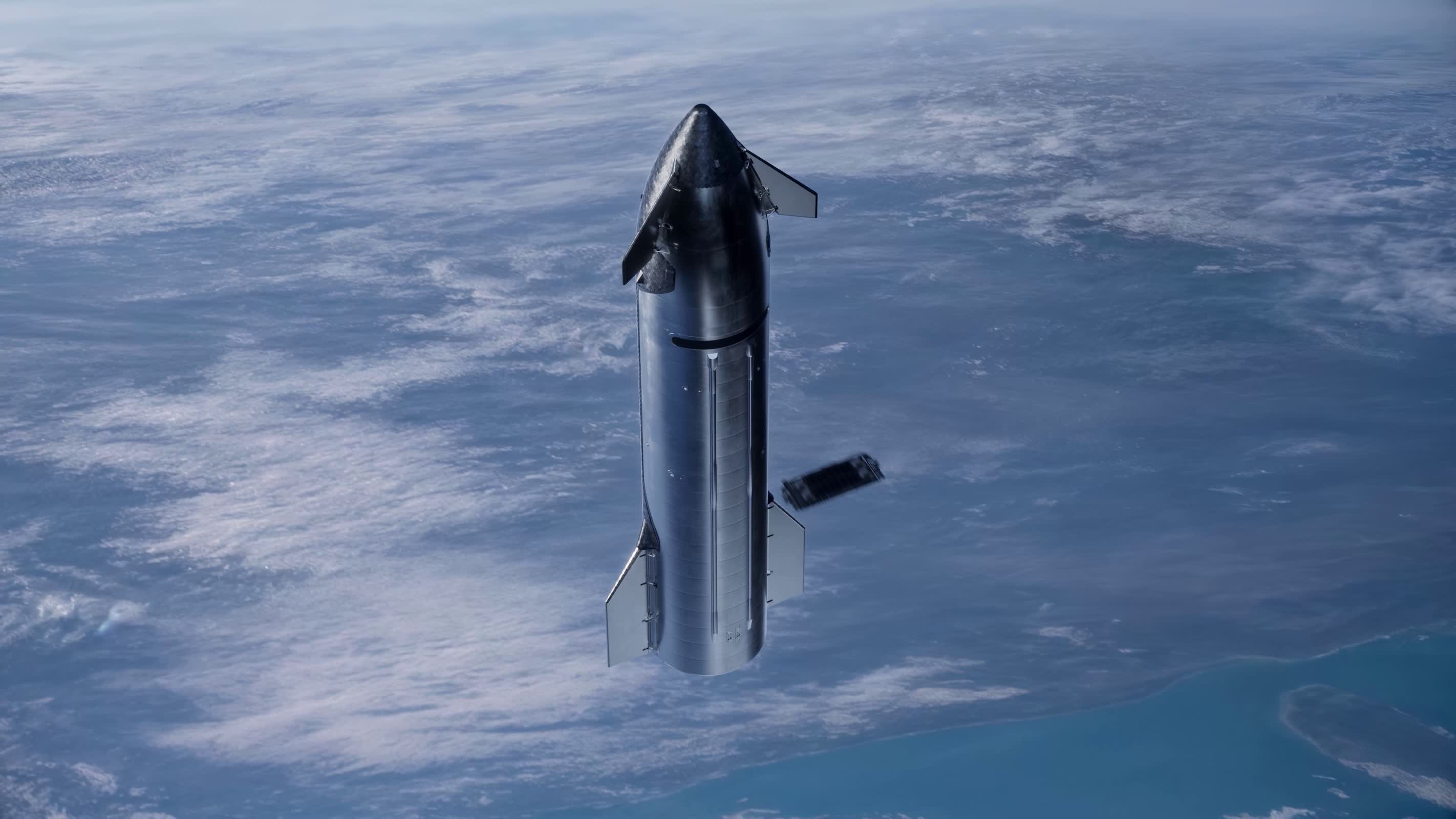
The combined company would own a full stack that runs from launch hardware to in-orbit networking to application-layer AI. SpaceX already has Falcon 9, the workhorse reusable rocket that can deliver about 20 metric tons to low Earth orbit for an internal cost the company pegs at around $15 million, significantly lower than prevailing commercial prices for similar lift capacity. It is also pushing ahead on Starship, a fully reusable super heavy-lift vehicle designed to loft around 200 tons per flight. On the orbital side, SpaceX operates roughly 9,600 satellites, primarily for Starlink broadband.
In an email to employees, Musk made clear that the orbital data center concept is now a central use case for Starship. He said the rocket will begin launching V3 Starlink satellites this year, along with a new generation of direct-to-mobile spacecraft, and described the deployment cadence for AI satellites as a "forcing function" to drive Starship toward rapid reusability.
In one scenario he outlined, "launches every hour carrying 200 tons per flight" would allow "millions of tons" to reach orbit and beyond each year. He said that if the company can eventually launch 1 million tons of satellites per year, and each ton hosts about 100 kilowatts of compute, that would add roughly 100 gigawatts of AI capacity annually "with no ongoing operational or maintenance needs." He has also floated a long-term path to 1 terawatt per year of space-based AI compute.
Musk argues that within two to three years, space will be the lowest-cost environment to generate AI compute. In his view, a space-based data center layer – powered by continuous sunlight and unburdened by terrestrial land, cooling and regulatory constraints – would let companies train models and process data at unprecedented scale, accelerating progress in physics and technology.
Many in the AI community are more cautious, predicting prolonged growing pains for the field and questioning whether the economics of orbital compute can beat hyperscale facilities on the ground once launch costs, radiation shielding, maintenance strategies and deorbiting are fully priced in.
The scale of the proposed constellation immediately raises questions about congestion and debris in low Earth orbit. To address that, SpaceX has outlined a space situational awareness system called Stargaze. The system uses star trackers on its satellites to generate large volumes of positional observations.
The goal is to shrink the uncertainty "bubble" around each satellite, issuing fewer but more accurate collision warnings and letting operators fly closer without constantly performing avoidance burns.
Marlon Sorge of The Aerospace Corporation points out that key details of the orbital data center satellites remain unspecified, including their exact size and the area of the solar arrays they will need to support large compute loads.
The altitude bands matter as well. The region around 800 to 1,000 kilometers is already polluted with debris from past events. Higher altitudes are cleaner today but have negligible atmospheric drag, which means failed satellites or debris can persist for centuries.
In regulatory filings, SpaceX says each orbital data center satellite will carry redundant maneuvering systems so that it can be actively deorbited into the atmosphere at end of life, rather than being abandoned in place.
The company also acknowledges emerging research that burning up large numbers of aluminum-rich satellites could damage the ozone layer. As a mitigation, it says it is considering raising aging satellites to high Earth or even heliocentric orbits instead of allowing them to reenter.
Sorge notes that the velocity change required to move from low Earth orbit to a heliocentric orbit is "non-trivial," implying significant propellant and hardware overhead on every satellite if that approach is adopted at scale.
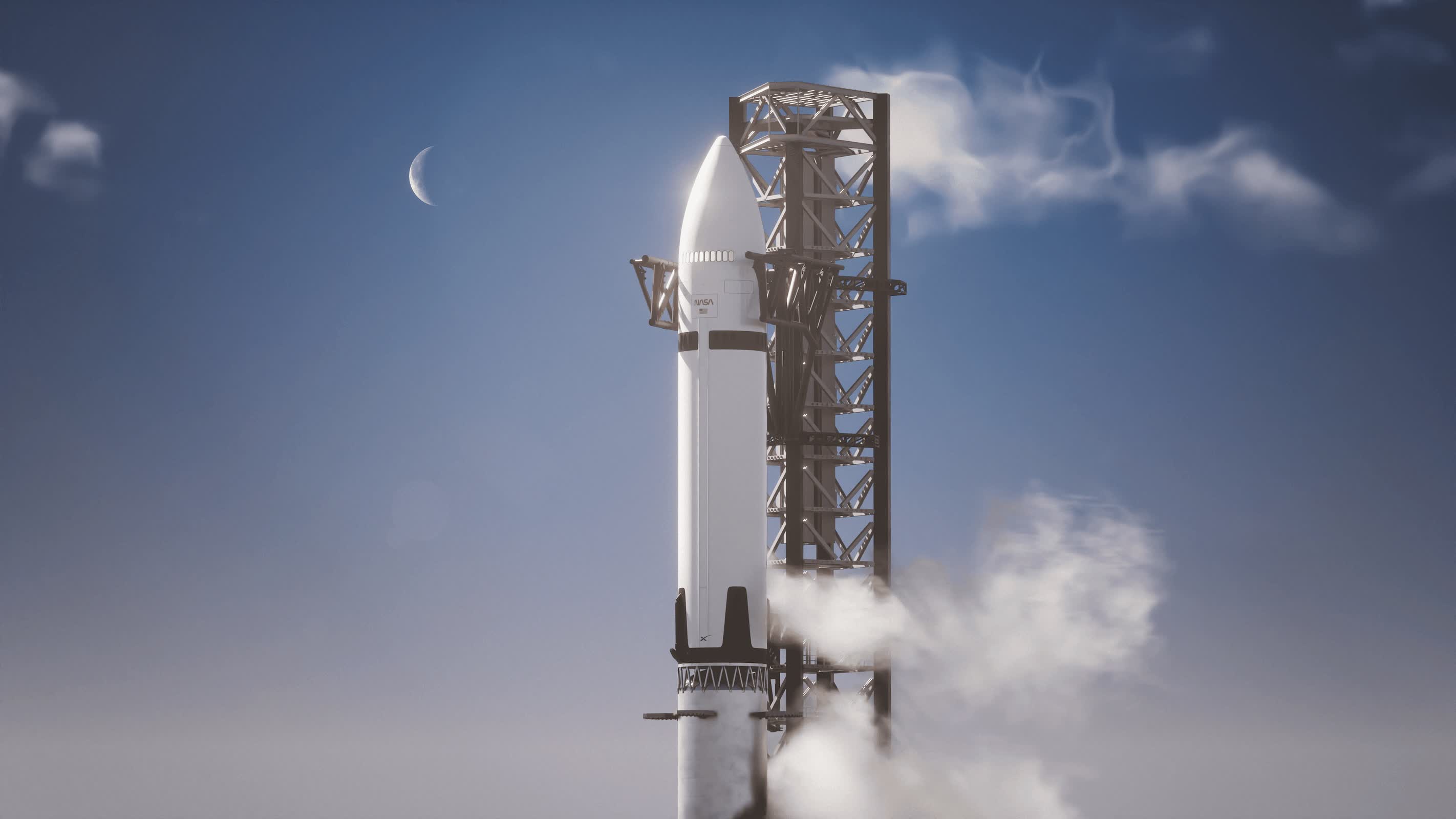
The acquisition also revives a long-running question about SpaceX's direction: is this still a Mars company? Musk founded SpaceX in 2002 with a singular focus on human settlement of Mars, and Starship has been presented as the vehicle that could finally make large-scale cargo and crew transport to the red planet feasible.
Turning the company into an AI-plus-space platform, with a major investment of engineering effort into orbital data centers, looks to some like a strategic pivot.
Musk argues the opposite. In his email, he said the initial focus on launching AI satellites from Earth will ultimately serve a broader roadmap in which Starship lands large masses of cargo on the Moon, enabling permanent scientific and manufacturing facilities there.
In that scenario, lunar factories would use local resources to build satellites and send them further into space, and the cash and capabilities generated by space-based data centers would "fund and enable self-growing bases on the Moon, an entire civilization on Mars and ultimately expansion to the Universe."
For now, that is a vision statement rather than an operating plan. The merged SpaceX-xAI entity still has to prove that data centers in orbit can be built, financed and operated at the proposed scale without overwhelming the already crowded shells of low Earth orbit.