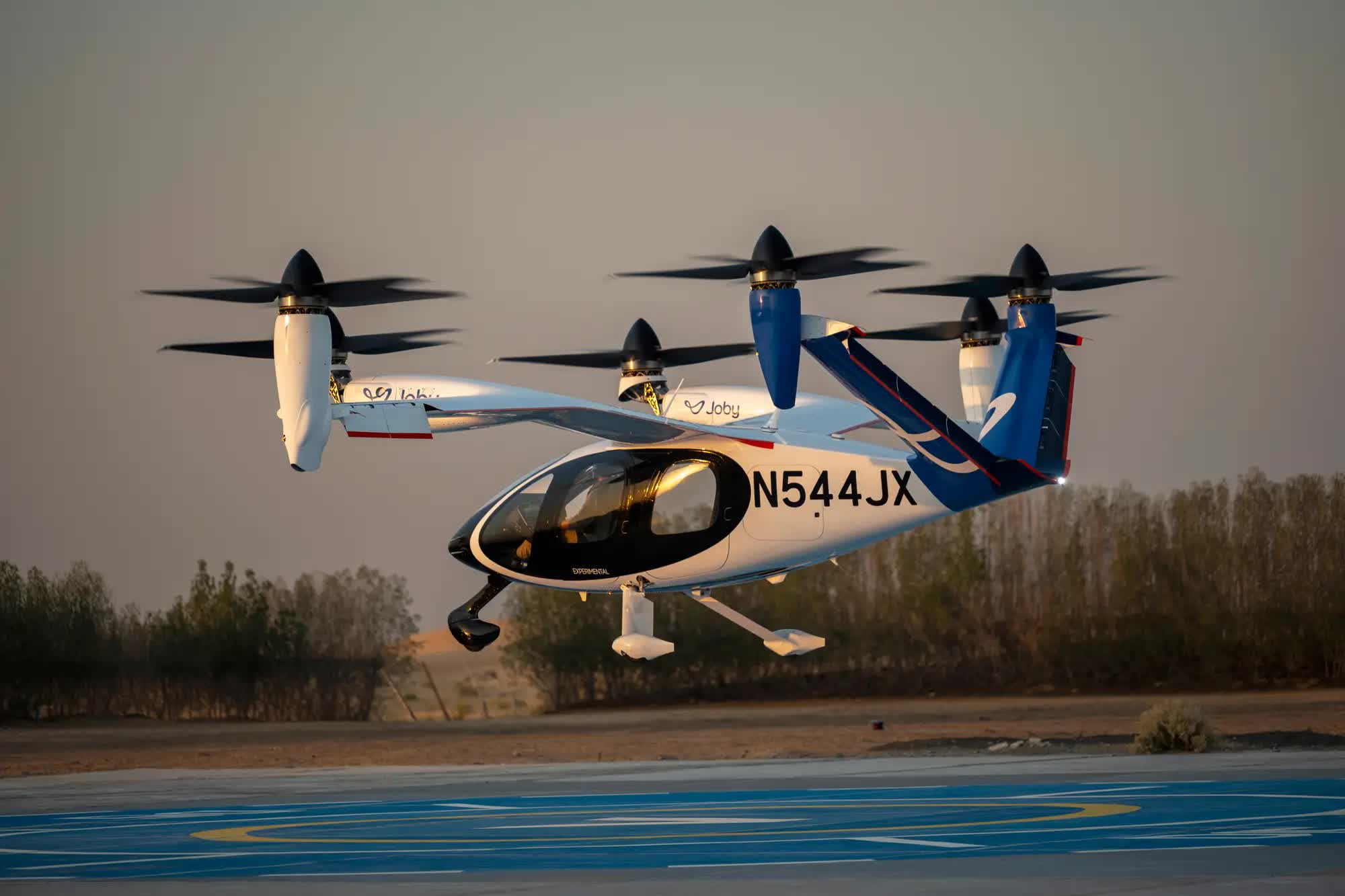
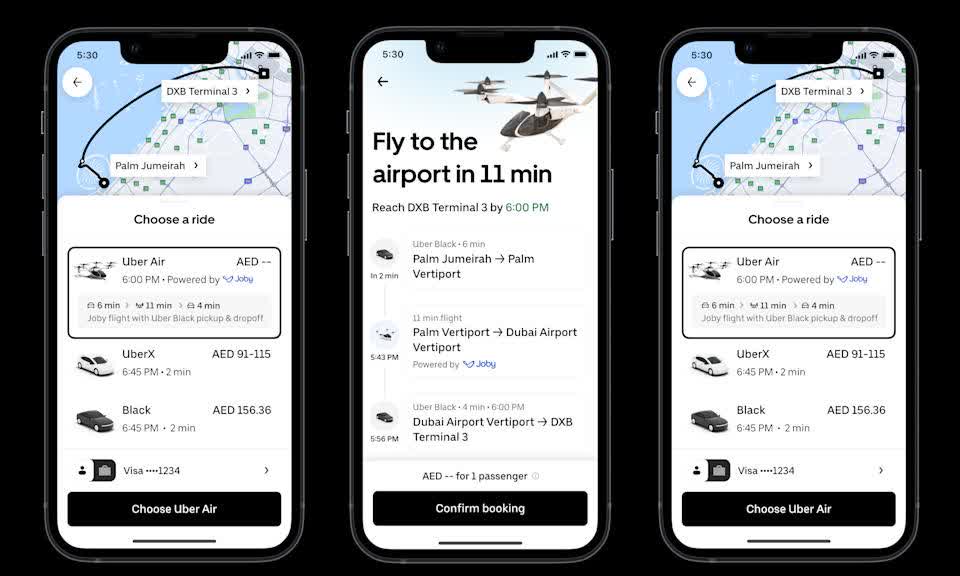
Forward-looking: Uber is previewing how an electric air taxi ride would appear inside the Uber app, ahead of a planned commercial rollout in Dubai with Joby Aviation. It's essentially an interactive demo where users can pick a route, see estimated timing, and understand how the trip fits into a door-to-door plan.
Uber is positioning itself as the booking layer. Joby supplies the aircraft and, eventually, the operations. The preview suggests that the companies believe they're close enough to a working air service to start showing off the booking system. If air taxis are going to work at scale, the first challenge is generating demand.
Joby's specs describe a five-seat eVTOL designed for short journeys, with a stated range around 150 miles and speeds up to roughly 200 mph. The interior is around the size of an SUV and offers panoramic windows.
Joby also claims its eVTOL is much quieter than helicopters, which is important when flying near residential areas. For now, the taxis aren't autonomous – the service concept is piloted, so expect them to be pretty expensive.
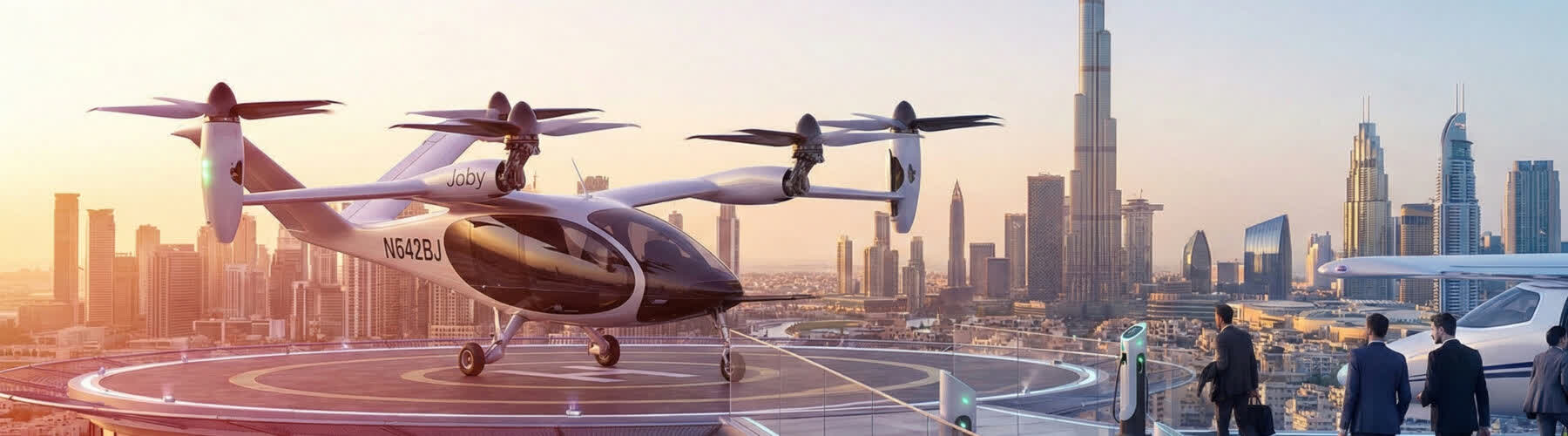
Dubai's early blueprint leans on vertiports rather than random rooftop landings. Dubai International Airport is expected to be part of the initial network, with other locations tied to major destinations where reducing road time actually matters.
Reports point to the end of 2026 as a target for commercial operations in the city, aligning with the aim of Dubai becoming a flagship market rather than a test lab.
This is also Uber circling back to an old dream. The company offloaded its Elevate air-mobility unit to Joby in 2020, but stayed involved as a platform partner instead of an aircraft builder.
While this is a major step toward a working air-taxi service, it doesn't give us an idea of how long we might be waiting for a US launch.
In 2025, President Trump signed an executive order that directed the creation of an eVTOL/Advanced Air Mobility integration pilot program, which later got rolled out publicly by the FAA/DOT as the eVTOL Integration Pilot Program (eIPP). Companies like Joby and Archer issued statements about being early operators in specific cities and use cases, but there are significant safety and cost concerns that need to be addressed before US skies are filled with flying taxis.