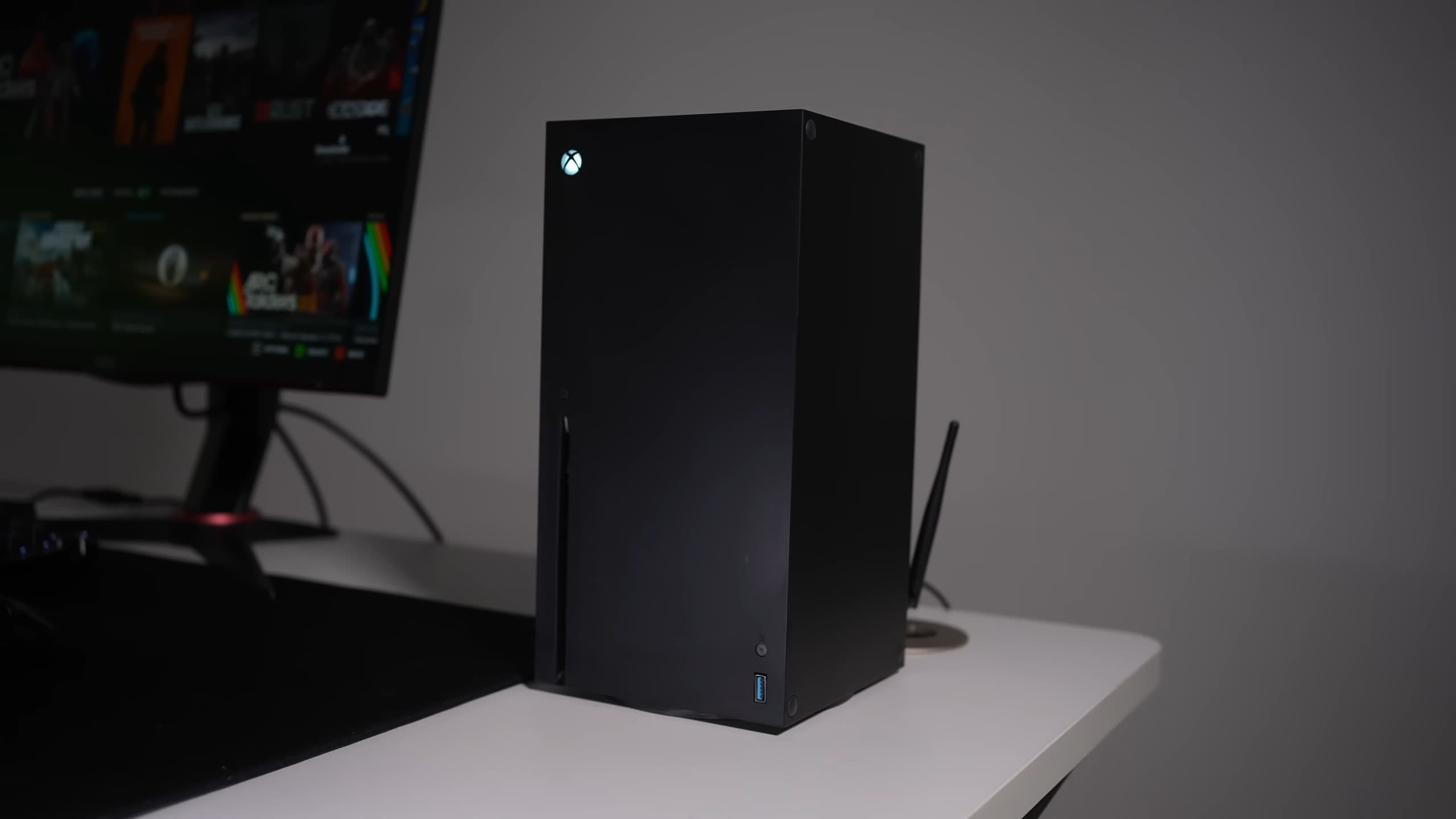
Recap: Modders have long treated game consoles as small-form-factor testbeds, but few projects push that idea as far as YouTuber PhasedTech's latest build: a full Windows gaming rig, complete with discrete graphics and an internal PSU, shoehorned into an Xbox Series X shell while preserving a working optical drive and front-panel controls.
The result of the mod is less a novelty case mod and more a proof-of-concept for what a hybrid Xbox/PC box could look like in practice, arriving months before Microsoft's own Project Helix promises official support for PC titles on next-gen Xbox hardware.
PhasedTech is not new to this territory. The creator previously rebuilt an Xbox One S into a compact RTX 3050 PC that kept the stock disc drive and external appearance intact, effectively turning an aging console into a sleeper Windows machine.
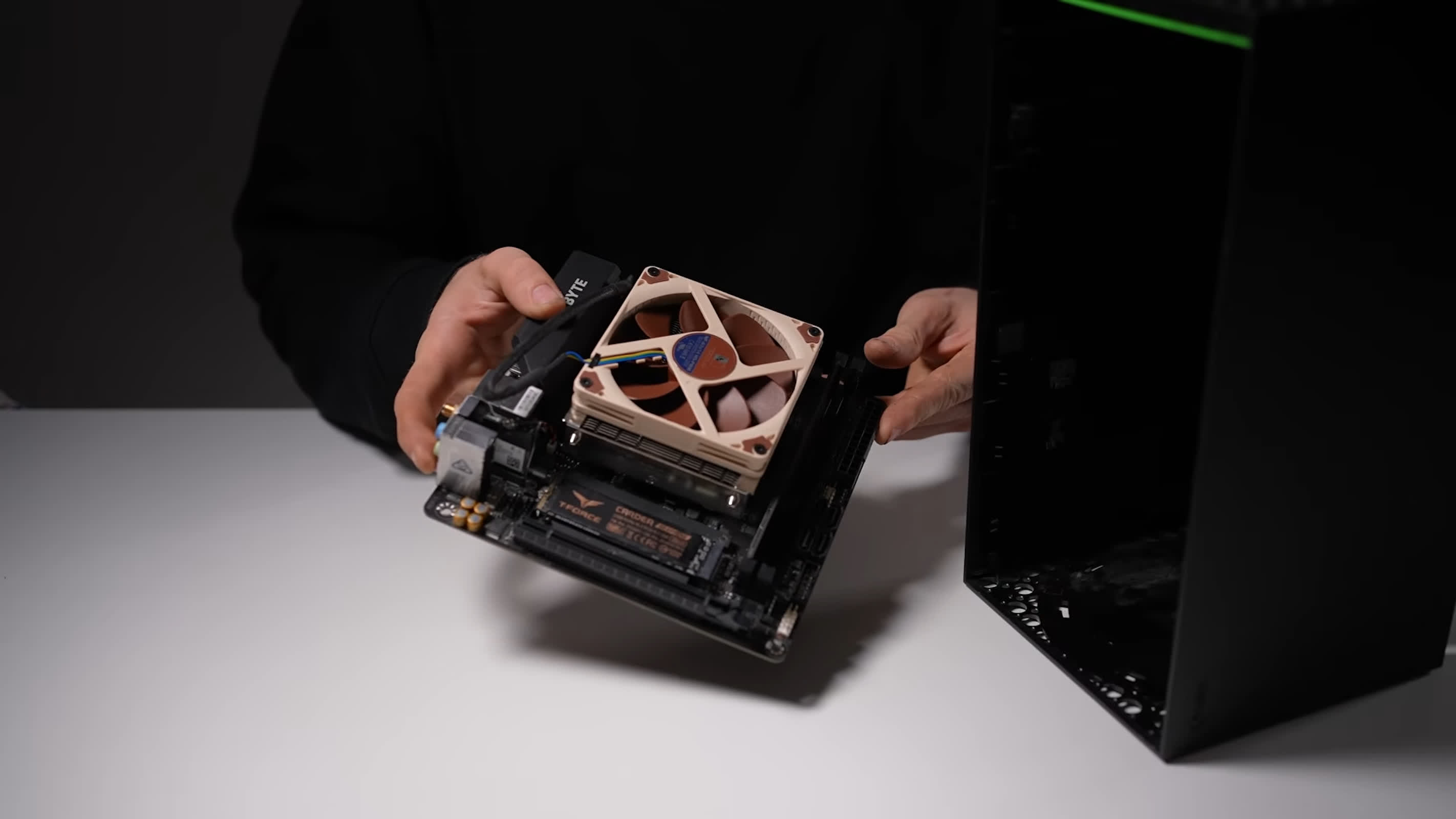
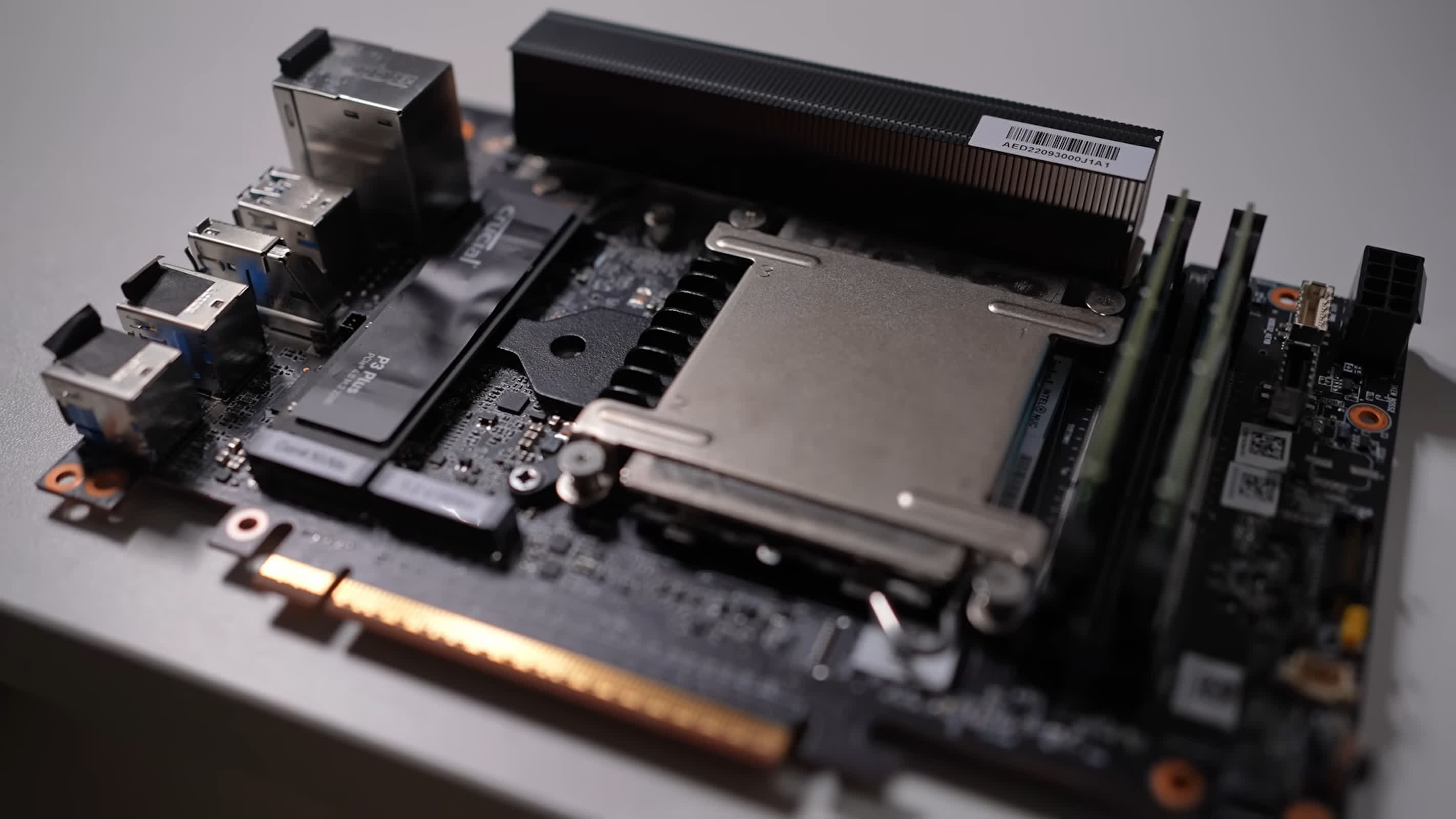
The new project applies the same philosophy to the far denser Xbox Series X enclosure, which was never designed to host off-the-shelf PC hardware. So, instead of trying to force a conventional motherboard into the case, PhasedTech centered the build on Intel's NUC 12 Extreme Compute Element, a PCIe card that integrates a full PC platform onto a single module.
In this configuration, the card carries a Core i7-12700 with 12 cores (8 performance and 4 efficiency), 32 GB of DDR4 SODIMM memory, and a 1 TB Crucial P3 Plus PCIe 4.0 NVMe SSD. The compute card's thickness – about 4.75 inches – comes in nearly two inches slimmer than a typical mini-ITX board, which is what finally makes it viable inside the Series X clamshell.
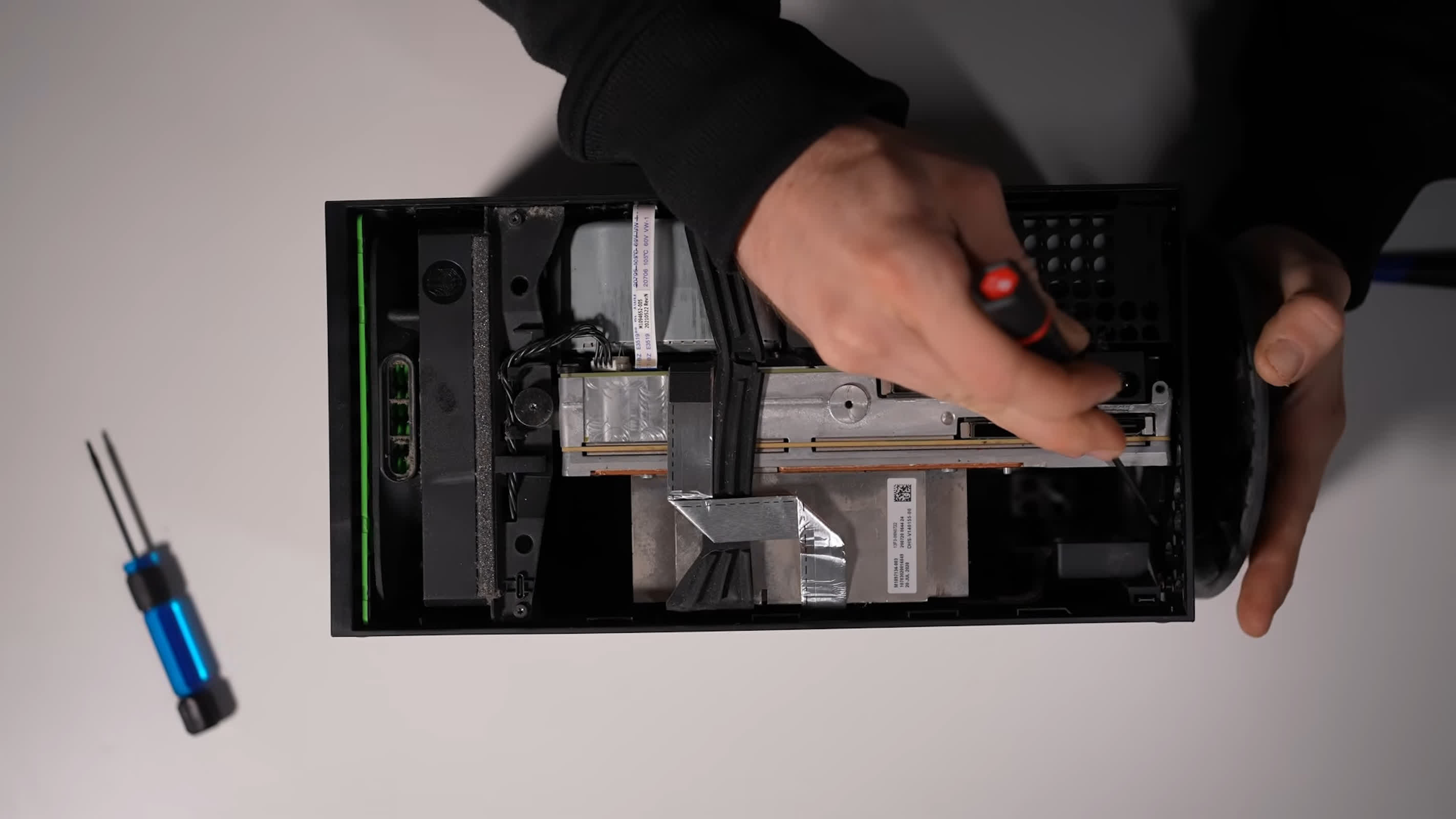
For graphics, PhasedTech chose a low-profile Gigabyte GeForce RTX 5060, leaving vertical headroom for a 600W Flex-ATX power supply to sit above the GPU without breaking the case's dimensions. Cooling is handled by a single 120mm fan, roughly where the original Series X exhaust path used to be.
PhasedTech stripped a second-hand Series X down to its bare shell, then used a Dremel to trim internal plastic until there was just enough clearance for the new components. With no standard mounting points in the right places, he designed a set of custom 3D-printed brackets and screw mounts to secure the compute card, GPU, PSU, fan, and optical drive to the chassis.
The I/O also needed rethinking. The original Xbox rear panel has nothing to do with a modern PC's layout, so PhasedTech printed a replacement backplate that exposes the compute card and GPU outputs, USB ports, power input, and Wi-Fi antenna cutouts in a configuration that makes sense for Windows.
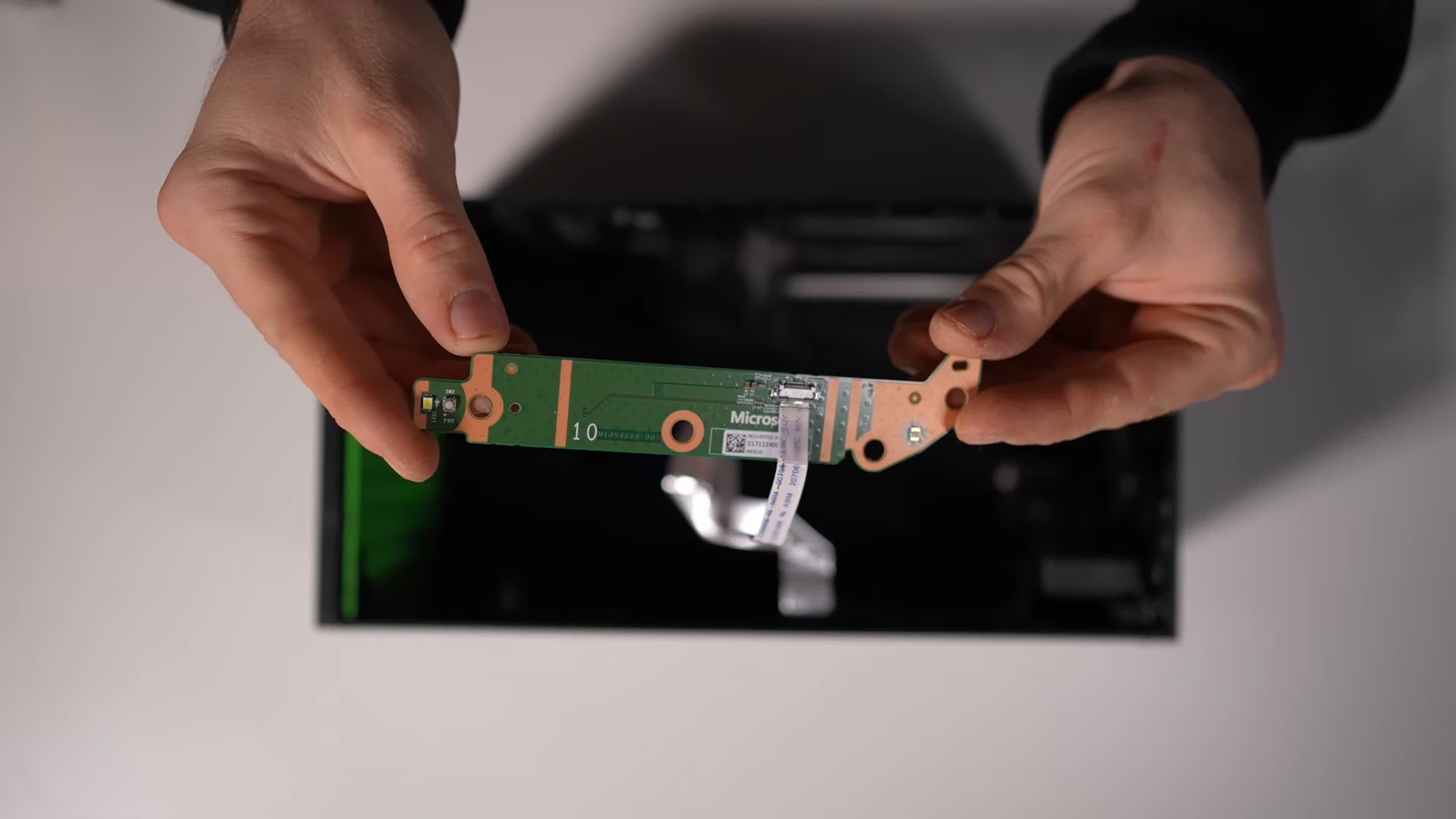
At the front, the project keeps the Series X power and LED board, wiring it into the NUC so the stock power button still wakes the system and acts as the eject control for the modified optical drive. The DVD drive itself is repurposed from the console's original internals and adapted to the PC platform.
Once the hardware was in place and Windows installed, the build had to justify its complexity with real performance numbers. In Arc Raiders at 1080p using medium to high settings, the system delivers between 100 and 140 frames per second, depending on in-game activity, a significant jump over the locked 60 fps targets common on current consoles.
In Counter-Strike 2 at high settings, PhasedTech reports around 250 fps, which is squarely in high-refresh-monitor territory despite the enclosure coming from a living-room device. Both CPU and GPU temperatures reportedly stay below 75 degrees Celsius under load.
Beyond the benchmark figures, the system serves as a practical illustration of where Microsoft says it wants to go. Xbox's next-generation Project Helix console is pitched as a device that will play both Xbox and PC games, effectively collapsing the boundary between console and Windows gaming ecosystems.
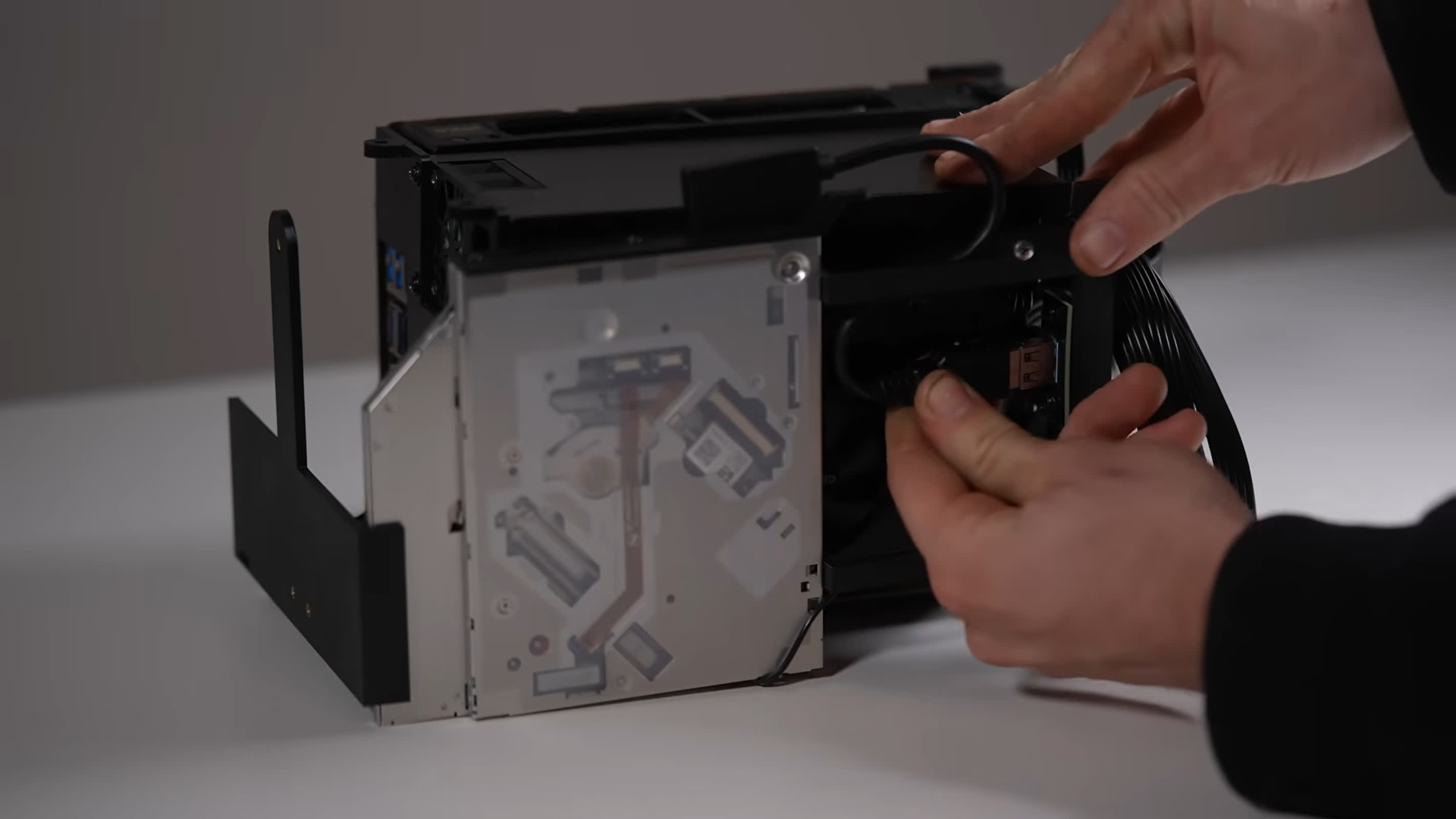
PhasedTech's Series X mod arrives at the same destination from the opposite direction: taking an existing console shell and turning it into a full-fledged PC with an integrated power supply and optical drive.