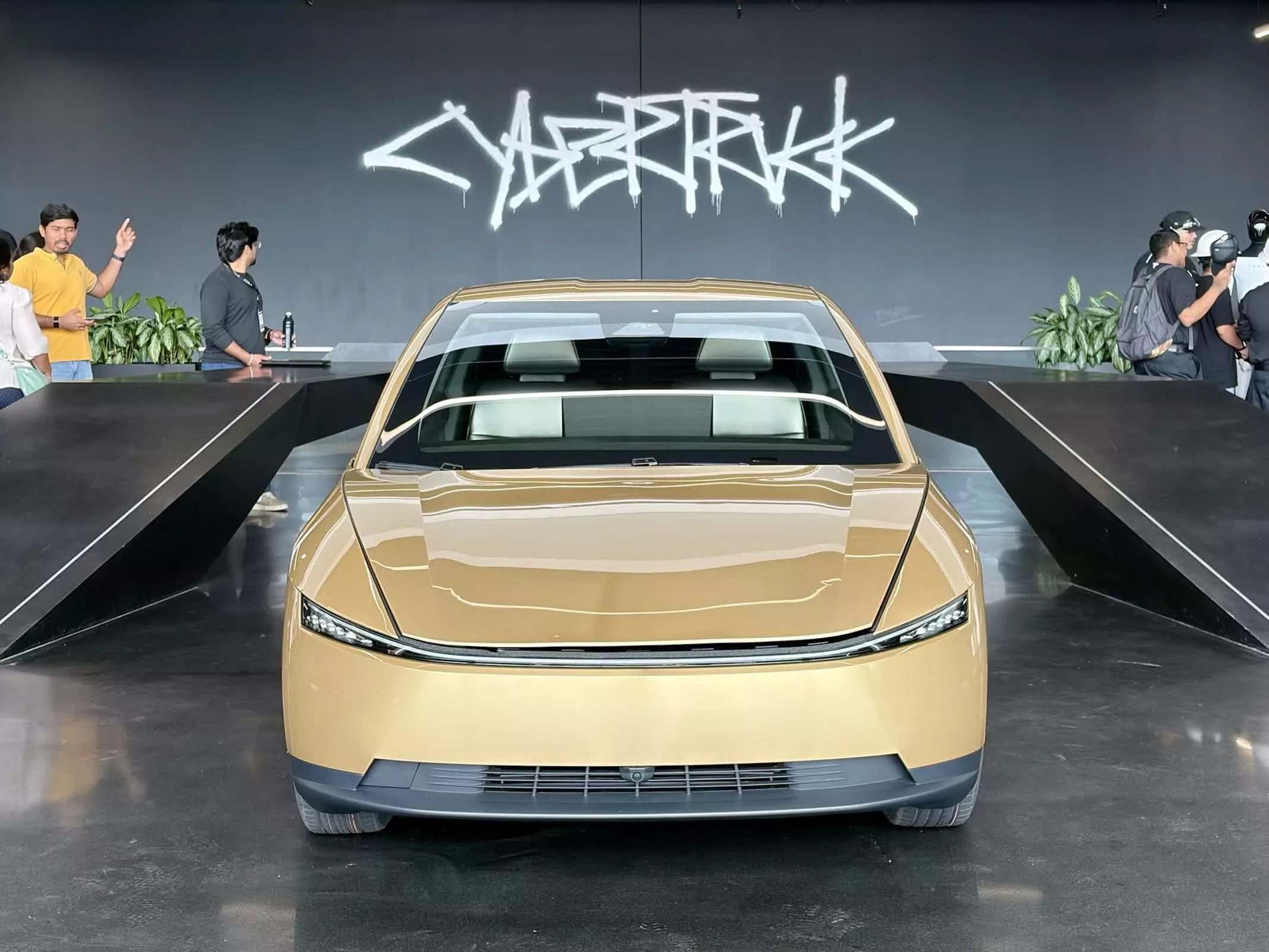
First look: Tesla's first purpose-built robotaxi is moving from concept to the assembly line, even as the technology behind the Cybercab prompts Elon Musk to slow the rollout. At Tesla's Gigafactory outside Austin, Texas, Cybercab production has shifted from a handful of units built in February to continuous manufacturing. The company posted footage on X showing a steering-wheel-less vehicle driving out of the plant, with the caption "Purpose-built for autonomy."
The compact two-seat EV is designed from the ground up to operate without human controls, with no steering wheel, pedals, mirrors, or conventional driver interface in the cabin. Instead, it relies on Tesla's vision-only Full Self-Driving software and an onboard AI computer to perceive its surroundings and navigate city streets.
That hardware – software combination underpins Musk's newly cautious tone about how quickly Tesla can expand its robotaxi service. On Tesla's latest earnings call, he said the "limiting factor" for expansion is "really rigorous validation" and safety, adding that the company does not want "a single accidental injury" as it scales.
Meanwhile, Tesla has reported 14 robotaxi crashes in Austin, Texas to federal regulators since launching the service there last summer, while redacting details that other autonomous operators often make public. That gap between Tesla's safety messaging and its more opaque crash reporting is shaping how investors and observers expect the Cybercab rollout to proceed.
Musk also said Cybercab production would follow what he described as a stretched-out S-curve. He added that because both Cybercab and the Tesla Semi use new designs and supply chains, production would remain very low this year before ramping more sharply late in the year and into next.
That marks a notable reset from his earlier claim that Tesla's robotaxi network would reach around half of the US population by the end of 2025. Today, the company's autonomous ride-hail footprint is limited to a few markets, including Dallas and Houston, as well as an invite-only, human-driven service in San Francisco.
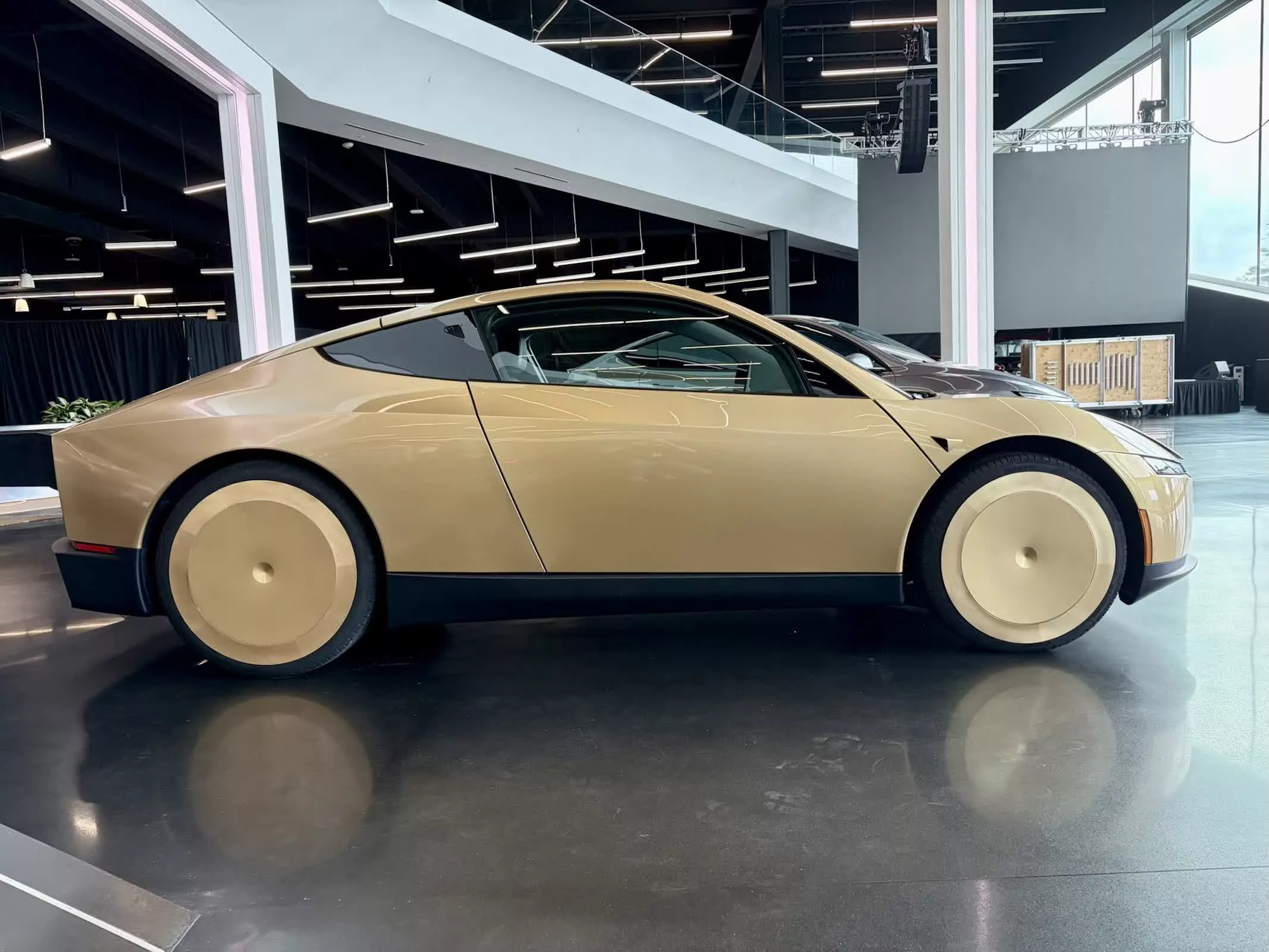
While Elon Musk is downplaying the near-term financial impact of robotaxis, the Cybercab design and production line are evolving quickly at Tesla's Austin Gigafactory. The first mass-produced unit, dubbed VIN Zero, has appeared at Giga Texas in a glossy champagne-gold finish, a sharp departure from the flat, matte-wrapped prototypes that headlined Tesla's 2024 "We, Robot" event.
Rather than conventional paint, Tesla is believed to be using a specialized clear-coat process to achieve a mirror-like finish, giving the small two-seater a more premium, futuristic appearance. Photos from the plant show tightened panel gaps, large aerodynamic wheel covers, and a bare, control-free interior that underscores the company's bet on full autonomy.
This aesthetic shift comes as production ramps up, with multiple Cybercabs visible in outbound lots and Tesla targeting higher weekly output as the year progresses. The underlying goal is to support what Musk has long described as an unsupervised Full Self-Driving robotaxi network, aiming to reduce ride costs to pennies per mile once human drivers and traditional ride-hail overhead are removed.
– Tesla (@Tesla) April 23, 2026
But the software required for that vision remains a moving target. Musk has said that FSD Version 15 will be a "complete overhaul" of the software architecture, running on more powerful hardware and relying even more heavily on AI models. He has also acknowledged that millions of cars shipped with older Hardware 3 computers will not reach unsupervised autonomy without extensive retrofits, marking a reversal of earlier assurances.
That mix of ambitious engineering goals and a newly cautious tone puts the Cybercab in an awkward middle stage. Tesla now has a dedicated robotaxi in production – a vehicle that embodies its belief that end-to-end neural networks and camera-only perception can replace human drivers.
At the same time, the company is tempering expectations for how quickly it can scale, how soon regulators will approve steering-wheel-free vehicles, and when robotaxis will have a meaningful impact on revenue.
Until then, the Cybercab functions primarily as a rolling testbed: a production-ready platform built around autonomy, moving ahead in the factory while software capability and safety validation continue to evolve.
Image credit: Tech Operator