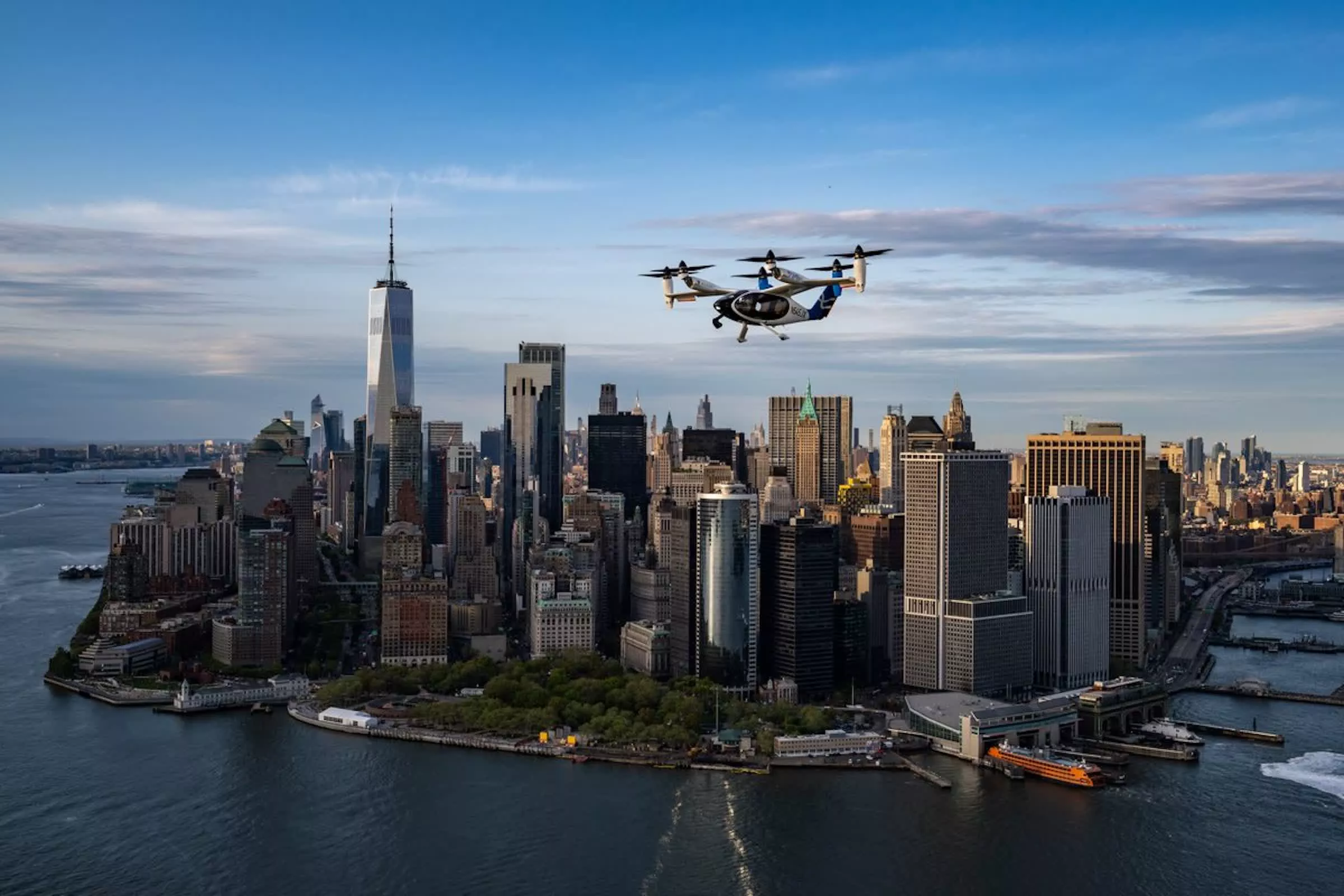
Forward-looking: Joby Aviation has begun a series of real-world flight tests in New York City, placing its electric vertical takeoff and landing aircraft in one of the most complex urban airspaces in the US as it works toward commercial approval. The company is conducting 10 days of demonstration flights focused on operational performance rather than passenger service. The tests are designed to evaluate how the aircraft performs on real-world routes between airports and city heliports.
In early demonstrations, Joby flew from JFK Airport to heliports in Lower Manhattan and Midtown in under 10 minutes. The route, which can take significantly longer by car depending on traffic, is a key use case for the company's proposed urban air mobility network.
Joby's aircraft is designed for short urban trips using electric power. It can take off and land vertically, eliminating the need for a runway and allowing it to operate from smaller heliport-like facilities. The company positions it as a quieter, lower-emission alternative to traditional helicopters.
The New York flights are part of the FAA's eVTOL Integration Pilot Program, which aims to accelerate certification and deployment. Testing in major cities allows the FAA and companies to evaluate how these aircraft operate alongside existing air traffic, infrastructure, and regulations.
Joby remains in the final stages of FAA certification, a process that has become one of the main bottlenecks for the broader air taxi sector. The company had previously targeted a 2025 launch, but that timeline has since slipped.
The flights follow piloted demonstrations in the San Francisco Bay Area in March, bringing testing into a busier urban environment. Each phase is intended to validate different aspects of the system, from aircraft performance to routing logistics and integration with existing aviation infrastructure.
If certification proceeds as expected, Joby plans to begin passenger operations in the second half of 2026, with initial service targeted at New York, Texas, and Florida. The company's strategy points to a phased rollout focused on high-density, high-traffic corridors where time savings could justify the cost of early adoption.
For now, the New York flights remain a technical demonstration rather than a commercial service. However, they represent a critical step in moving eVTOL aircraft from prototype and pilot programs into regulated airspace, where they will ultimately need to operate at scale.