Editor's take: AMD has made several announcements at Computex 2026, though the focus is on relaunching older products at a time when the memory crisis is making PC gaming a luxury hobby. By reviving old favorites, the company is extending the life of its platforms and giving budget-conscious gamers a few more options.
In Taiwan a few hours ago, Team Red revealed the return of the Ryzen 7 5800X3D for AM4 users, a cheaper Ryzen 7 7700X3D for AM5, and the global launch of the Radeon RX 9070 GRE.
The announcement making the most headlines is the Ryzen 7 5800X3D 10th Anniversary Edition. AMD is bringing back the chip to celebrate 10 years of the AM4 platform, with availability starting June 25 at $349, or $100 less than the original MSRP in 2022.
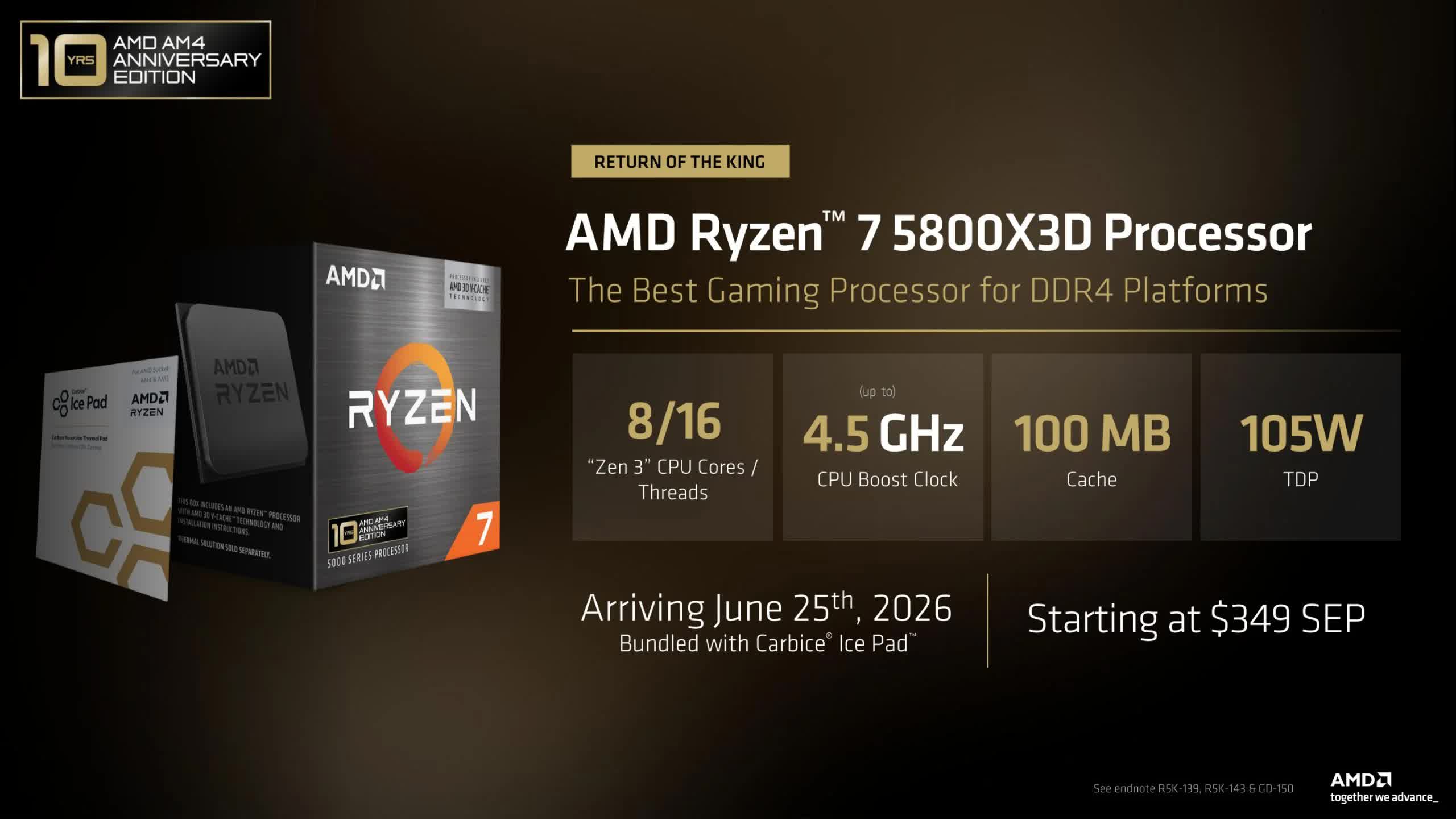
The Zen 3 CPU comes with the familiar eight cores, 16 threads, 3D V-Cache, and support for DDR4 memory. AMD is bundling the anniversary edition with Carbice Ice Pad thermal interface material, but it's still essentially the same legendary gaming processor that gave AM4 owners one of the best late-platform upgrades in PC history.
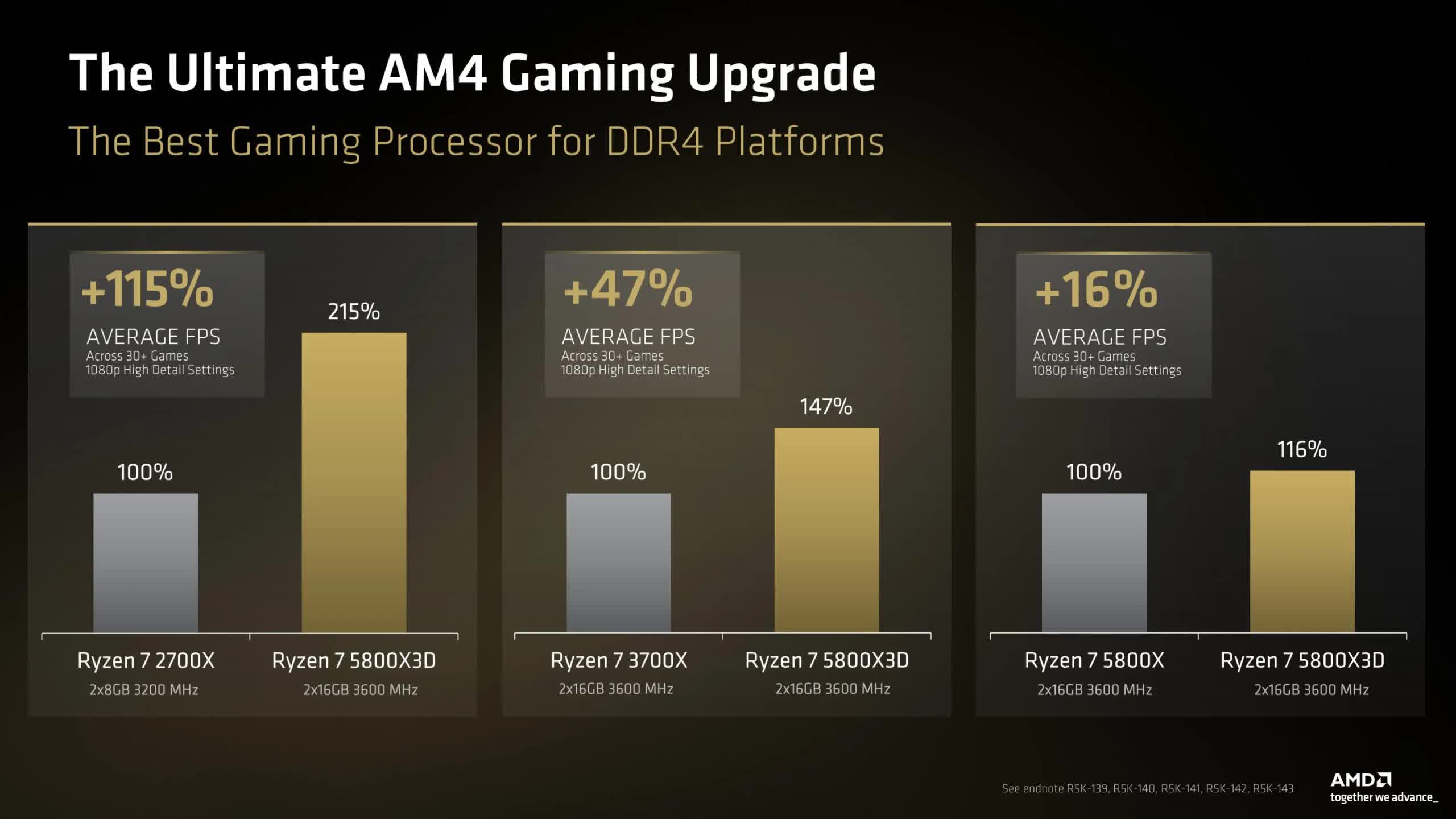
Plenty of people are still using AM4 boards, and the 5800X3D remains a strong gaming CPU, especially for those moving up from older Ryzen 1000, 2000, or 3000-series parts. Most importantly, it lets users stay on DDR4. That might sound like a bad thing in a normal market. But in today's AI-driven hellscape where memory pricing has been hammered by hyperscaler demand, avoiding a new motherboard and RAM kit is a major selling point.
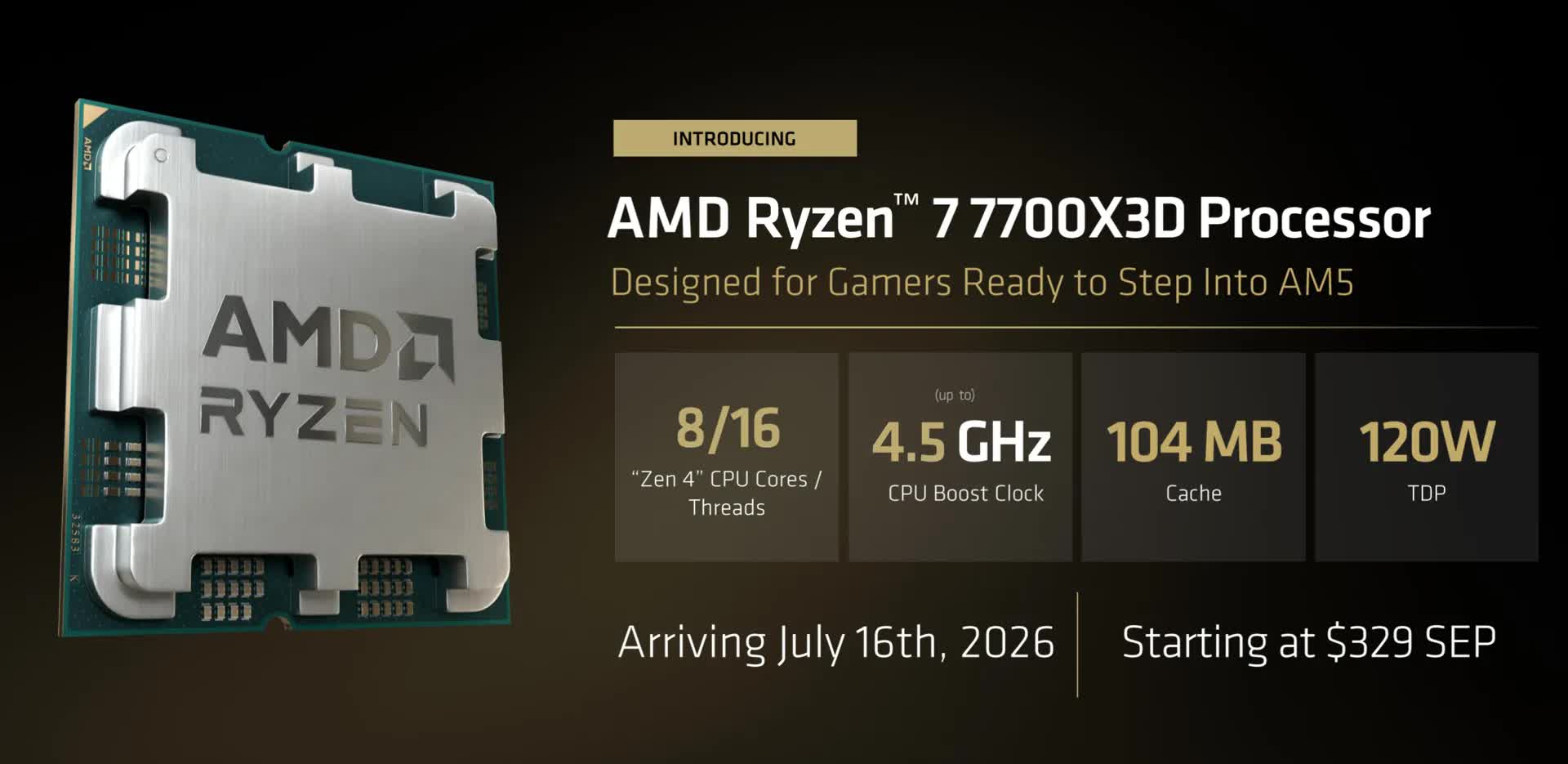
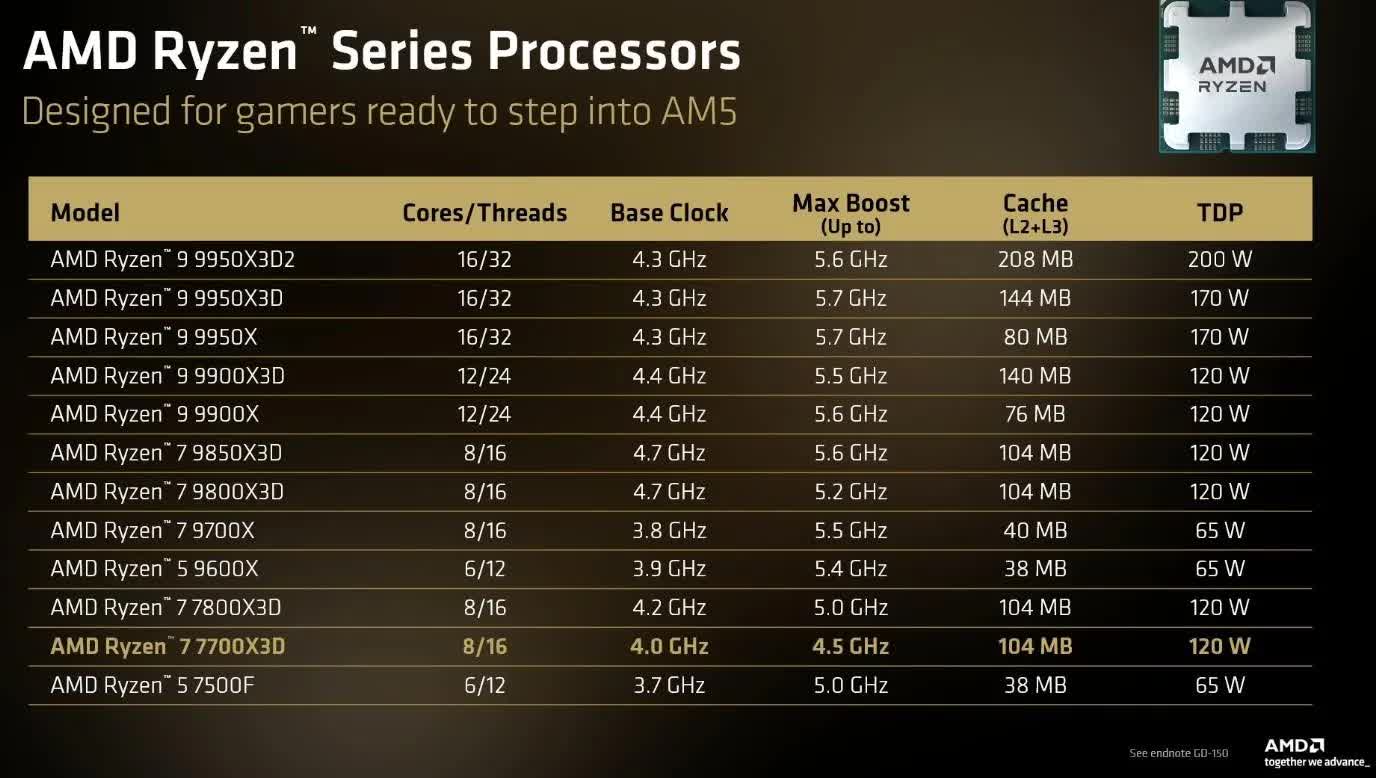
Elsewhere, rumors that AMD has been preparing to give AM5 users a new X3D option in the Ryzen 7 7700X3D have proven accurate. It launches on July 16 for $329 and features eight cores, 16 threads, a 4.5GHz max boost clock, 104MB of total cache, and a 120W TDP.
The chip looks very much like a lower-clocked Ryzen 7 7800X3D, which might not be a bad thing given how strong that CPU has been for gaming.
The 7700X3D may not be as exciting as a new flagship, and its value will depend heavily on where existing 7800X3D and 9800X3D pricing sits by the time it reaches stores. But as a lower-cost way into AMD's 3D V-Cache ecosystem, it looks like a good option. It also fits with the company's promise that if you buy into AM5 now, you should have several more years of CPU upgrades ahead.
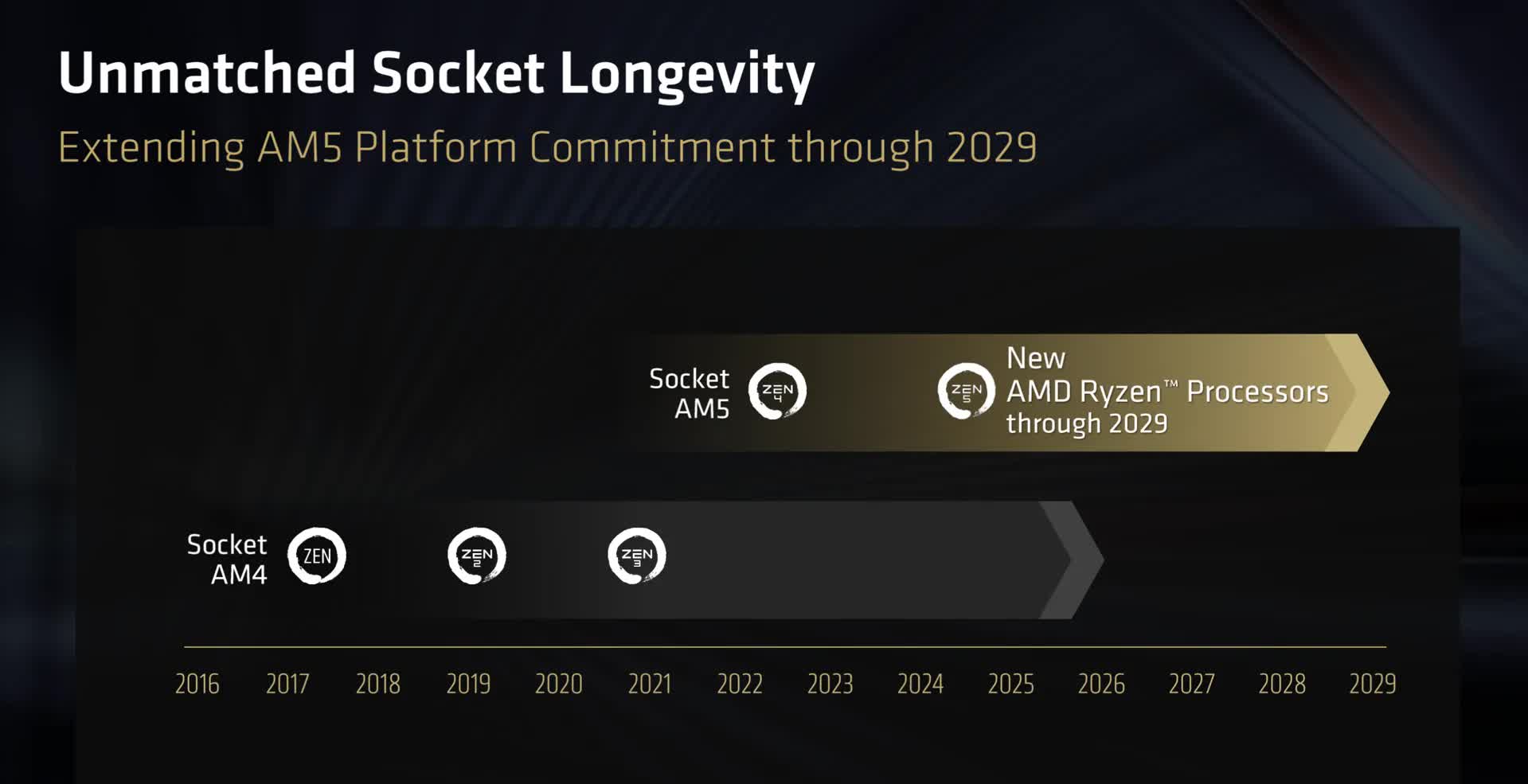
That brings us to AMD's most important platform announcement. The company has extended AM5 support through 2029. Previously, AMD had committed to support the socket through 2027 and beyond, so this gives current and future AM5 owners an even better value proposition.
On the graphics side, AMD is taking the Radeon RX 9070 GRE global. The card was released in China last year, and it's now launching worldwide at $549.
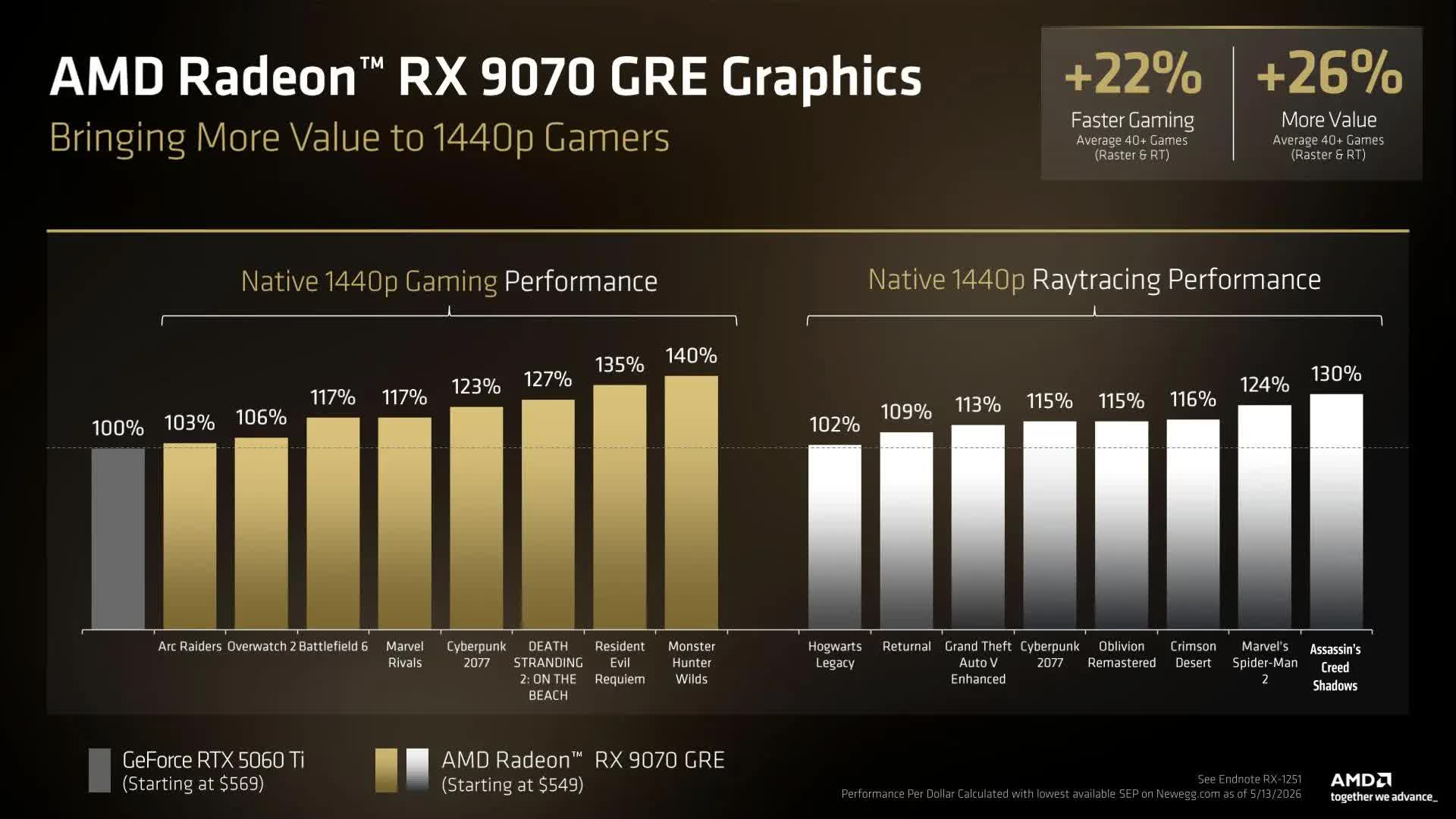
It's a cut-down version of the RX 9070, with 48 compute units, 12GB of GDDR6, a 192-bit memory bus, and boost clocks of up to 2.79GHz. AMD is positioning it for 1440p gaming and claims strong performance against Nvidia's RTX 5060 Ti 16GB.
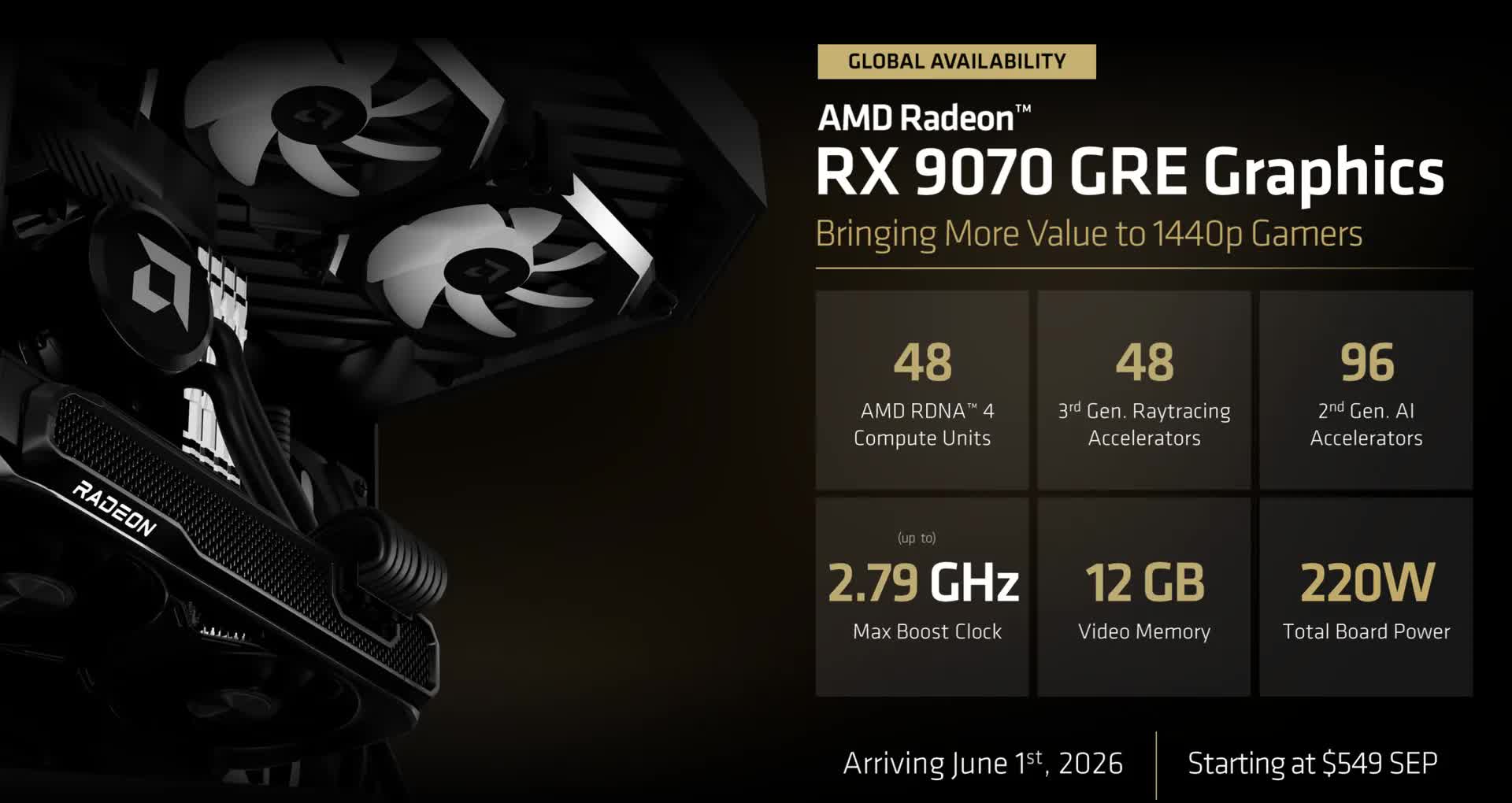
Despite having less memory and a narrower bus, the RX 9070 GRE is launching at the same $549 price AMD originally attached to the full RX 9070 – even though that card was almost impossible to find at MSRP.
The actual price at retailers will likely be higher, too: Radeon RX 9070 cards now go for between $600 and $700. Moreover, 12GB on a $549 card in 2026 is going to be an issue, especially when some competing cards offer 16GB.
AMD is also trying to squeeze more performance out of AM5 systems with EXPO Ultra Low Latency, a new extension of its EXPO 1.2 memory overclocking profiles. Rather than simply pushing higher DDR5 speeds, the feature focuses on tighter timings at common enthusiast speeds such as DDR5-6000 and DDR5-6400.
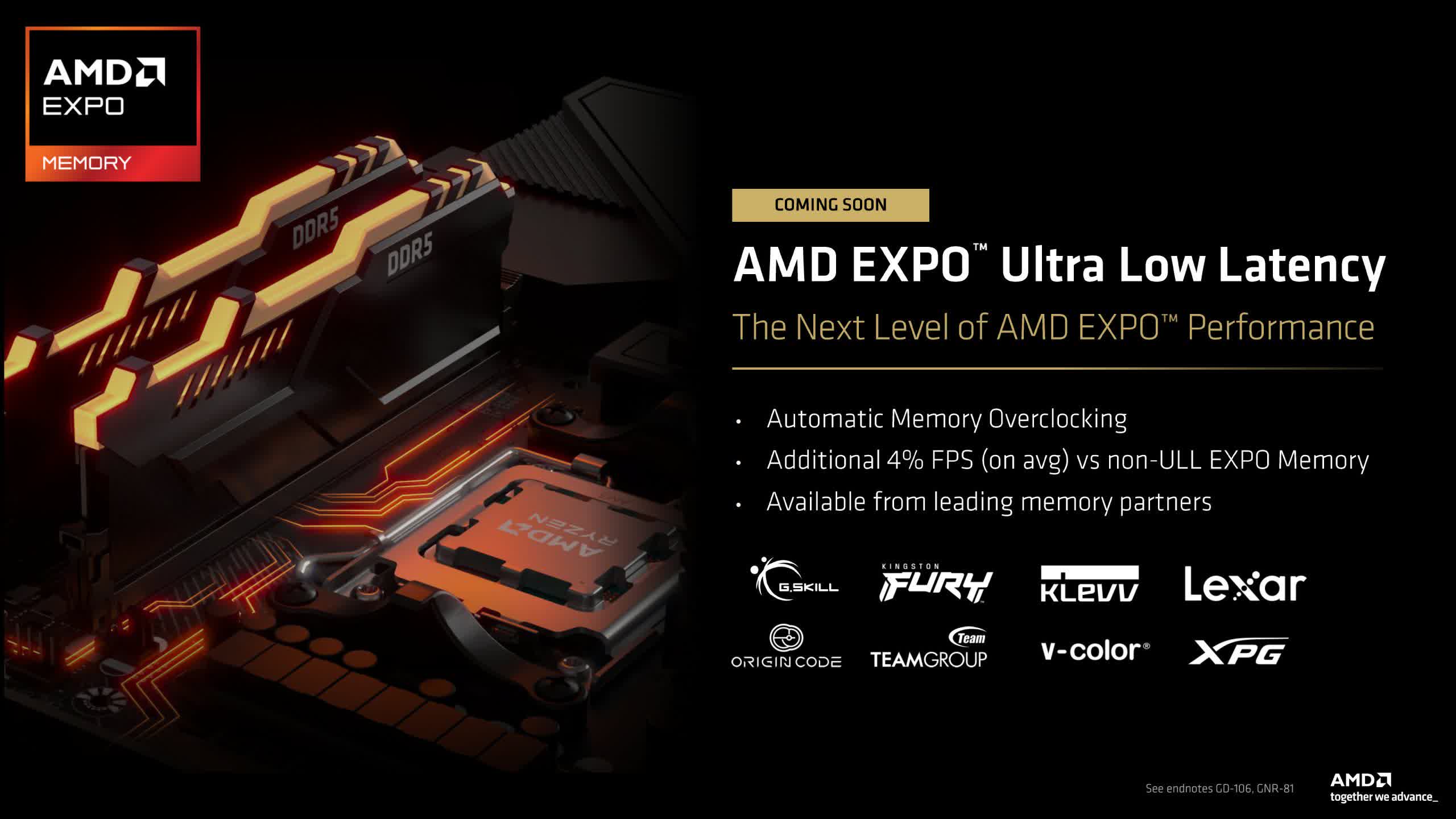
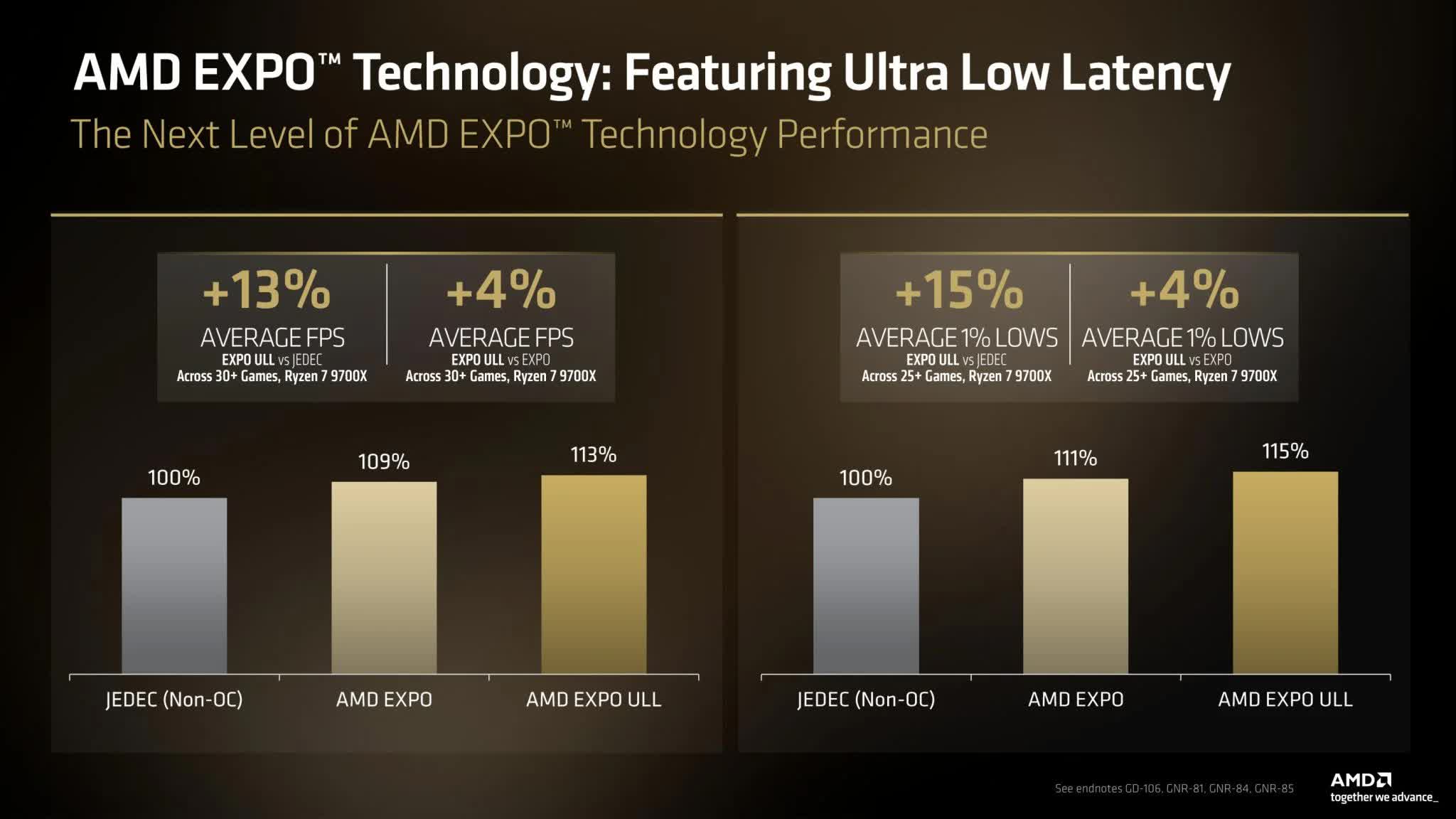
AMD says certified kits can improve gaming performance on Ryzen systems, with claims of up to 13% higher average frame rates and 15% better 1% lows compared with standard JEDEC DDR5, or a smaller 4% gain over existing non-ULL EXPO memory. The first certified kits are expected from several memory vendors, including G.Skill, Kingston, KLEVV, Lexar, Team Group, V-Color, and ADATA XPG, starting in June.
Ultimately, it seems AMD is trying to convince gamers that old platforms still have life left in them at a time when everything is more expensive.