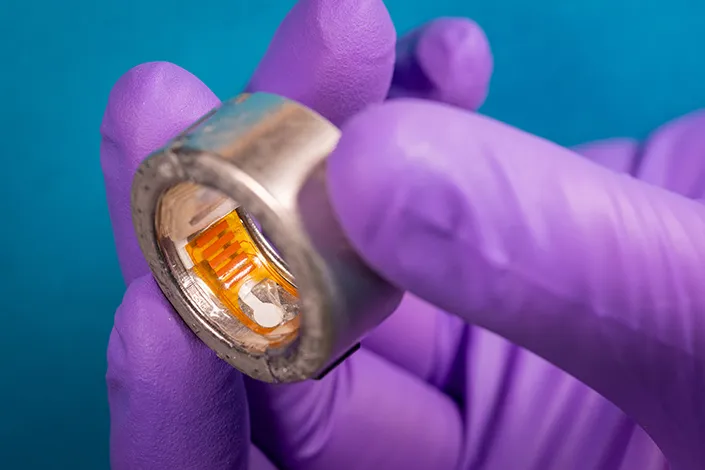
Forward-looking: While the health-monitoring abilities of wearables have advanced enormously in recent years, there's one thing that still eludes these devices: measuring glucose levels, aka blood sugar. But researchers believe they have created a ring that does just that by analyzing a wearer's sweat. And it can also measure alcohol levels, uric acid, and more.
For the millions of people with type 1 diabetes (and some with type 2 and other forms of the disease) who must monitor their glucose levels, the only options are regular painful finger-pricks or a constant glucose monitor (CGM), which can be expensive, awkward, sometimes inaccurate, and invasive.
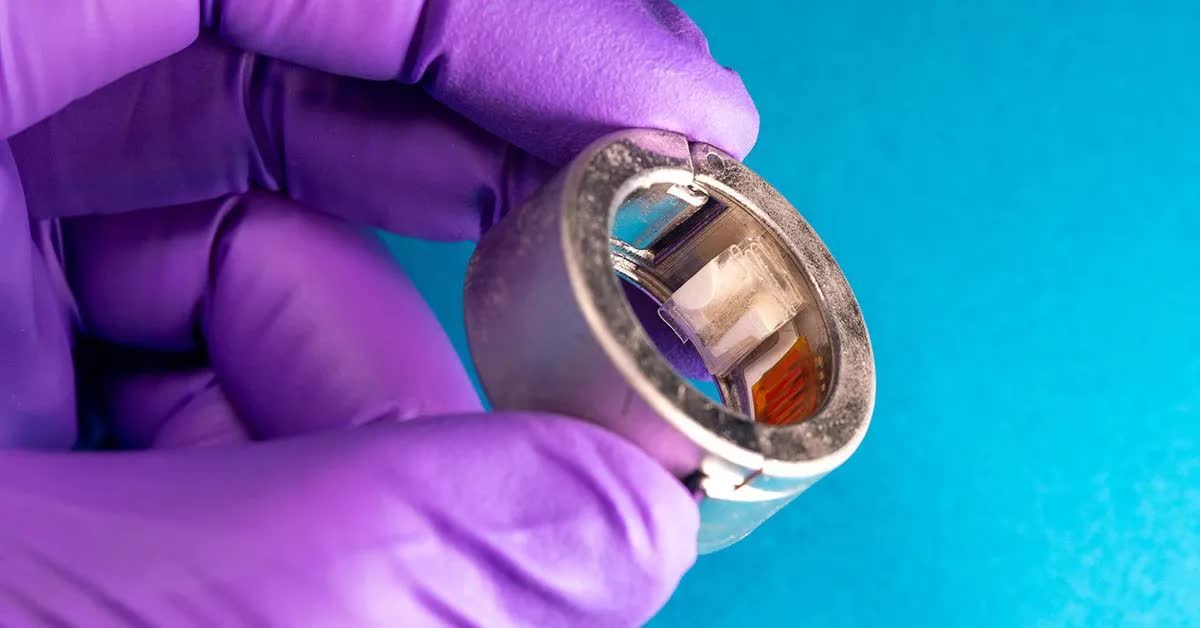
But hope could be on the horizon, thanks to engineers at the University of California, San Diego. The prototype ring they created uses sweat to track chemical biomarkers.
In addition to glucose, the ring can monitor ketones, vitamin C, uric acid, lactate, and alcohol concentrations. Ketone measurements are also important to those with type 1 diabetes, as these acids can build up when the body lacks sufficient insulin, often alongside persistently high glucose levels, potentially leading to life-threatening diabetic ketoacidosis (DKA).
We've been hearing stories for years now about an upcoming Apple Watch that can measure glucose, but it's yet to happen. One of the main concerns is that the measurements need to be highly accurate or someone could, at worst, overdose on insulin.
In the case of the smart ring, tests involving individuals both with and without type 1 diabetes showed its readings closely matched those from commercial CGMs. Ketone readings also matched those taken from blood meters.
Even those without diabetes could benefit from the ring, as it should help with other conditions or spot them early. Athletes and those wanting to track their nutrition will likely take an interest, too.
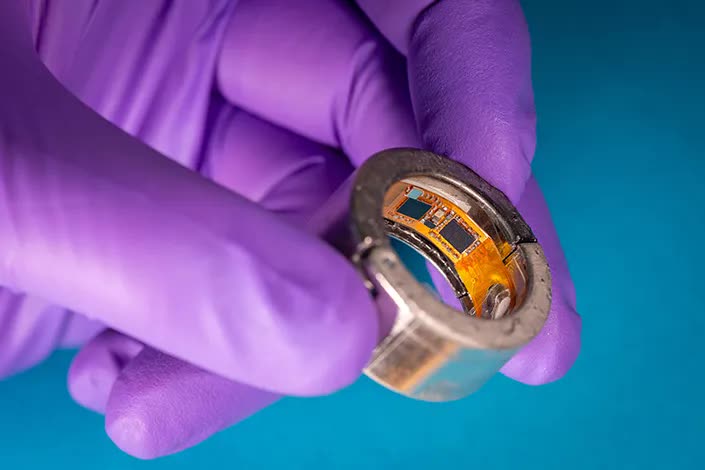
The ring doesn't require someone to start sweating to work. It features an osmotic hydrogel, which is a soft polymer that uses a pain-free pressure gradient to pull sweat from the skin. Electrochemical sensors in the smart ring repeatedly analyze the sweat, using the readings to calibrate the device and calculate concentration levels. The results are then transmitted wirelessly to a smartphone app.
Tamoghna Saha, a UCSD postdoctoral researcher who developed the osmotic hydrogel, said the ring still needs extensive validation before commercialization. One issue that needs addressing is the short 12-hour battery life. It also looks very bulky in its prototype form. But anything that allows people with type 1 diabetes to constantly measure their glucose without having a needle rammed into their skin would be appreciated.
Via: CNET