Another massive support headache for the Linux world
Facepalm: The open-source community is once again facing a major security incident tied to an "unprecedented" vulnerability. The new flaw could give attackers a reliable way to escalate user privileges, and no patch is available yet. Fortunately, the mitigation process is relatively straightforward. Still, kernel developers are already growing frustrated with the seemingly endless stream of critical bugs.
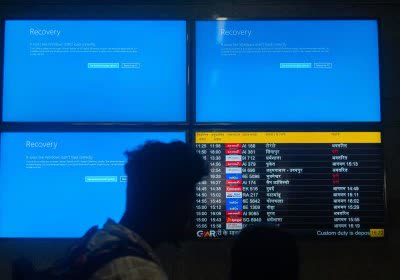
Winners & losers: Apple's new eight-minute ad takes a thinly veiled jab at last year's CrowdStrike meltdown – the software update that crashed Windows systems running critical infrastructure around the world. Beyond the humor, the short film highlights the differences between how Windows and macOS secure their kernels, which was the root cause behind last year's incident.
The big picture: Researchers from the Universities of Birmingham and Warwick in the United Kingdom estimate that roughly 80 websites selling cheats for online video games generate between $12 million and $73 million annually. Although some cheats can bypass robust (and often unpopular) anti-cheating software, these tend to be more expensive.
Why it matters: The kernel space is the core component of a computer operating system, where critical hardware management and device driver code reside in memory. If a kernel-level driver malfunctions, the entire OS can behave erratically – or simply crash and burn with a BSOD. Microsoft has stated that it is working on a significant change to the Windows architecture to help prevent another large-scale incident like the one involving CrowdStrike a year ago.
A hot potato: While still working with CrowdStrike to bring millions of botched PCs back online, Microsoft is also thinking about the future of Windows. The platform must evolve and innovate, enhancing resilience against the next faulty update coming from a third-party company.
Linux Kernel 6.10 introduces Rust language support for the RISC-V architecture, as well as initial support for AMD Zen 5 processors and Intel's Battlemage GPUs.
In context: Nothing can ruin a multiplayer game faster than rampant cheating, so it's no surprise that developers go to great lengths to devise ways to mitigate it. One controversial method is to install kernel-mode drivers that monitor for anything that tries to tamper with the game's software. However, many players are not comfortable with granting such low-level privileges.
This Kali Linux release is the first to include the Linux 4.15 kernel which includes fixes for Spectre and Meltdown vulnerabilities. It also includes better support for AMD GPUs and Secure Encrypted Virtualization.