
The computing industry has always run on prediction, rumor, and occasionally spectacular overconfidence. Long before every roadmap became a secret and every patent a weapon, engineers, executives, and founders were often surprisingly candid about where they thought technology was headed.
Sometimes they were right. Sometimes they were very, very early. And sometimes they gave us the kind of quote that only gets better with age.
As the pace of tech accelerated, so did the appetite for bolder claims. A new chip architecture, operating system, search engine, mobile device, social network, cloud platform, cryptocurrency, or AI model always had the potential to reset the conversation almost overnight. In that environment, the quotable sound bite became part prediction, part marketing, and part public performance for an eager audience of enthusiasts eager to dissect every word.
"Two years from now, spam will be solved" – Bill Gates, Microsoft's founder and Chairman [January 2004, World Economic Forum] To be fair, spam filters did get a lot better. To be less fair, 20 years later your inbox, texts, social feeds, and comment sections would all like a word.
Not every prediction ages like that. Three years before co-founding Intel, Gordon E. Moore published "Cramming More Components Onto Integrated Circuits" in the April 1965 edition of Electronics magazine. In it, Moore observed that the number of components on an integrated circuit had roughly doubled every year and predicted that this trend would continue for at least another decade.
It was so accurate, and eventually became a self-fulfilling prophecy, that it became known as Moore's Law.
But most tech predictions do not become laws. They become launch slogans, investor pitches, conference sound bites, famous last words, or reminders that even the smartest people in the room are still guessing. The industry has produced plenty of genuine foresight, but also an endless supply of misplaced confidence, defensive spin, and wonderfully awkward timing.
Every few years, we've revisited this TechSpot original feature to add new quotes, refresh old ones, and retire those that have grown stale or become irrelevant. The result is a running time capsule of tech culture, from the infamous and unintentionally funny to the genuinely prescient. Some aged brilliantly. Others, not so much.
"There's no chance that the iPhone is going to get any significant market share. No chance." – Steve Ballmer, Microsoft CEO [April 2007, USA Today] Ballmer was mocking the iPhone's price, missing keyboard, and business appeal, which all seemed fair in 2007 Microsoft terms. Unfortunately for Microsoft, consumers had other ideas.
"I couldn't type on it and I still can't type on it, and a lot of my friends can't type on it… It's hard to type on a piece of glass." – Mike Lazaridis, co-CEO of Research In Motion (BlackBerry) [November 2007, New York Times] He wasn't entirely wrong about the keyboard. He was wrong about the billion people who decided they didn't care.
"If I were running Apple, I would milk the Macintosh for all it's worth – and get busy on the next great thing. The PC wars are over. Done. Microsoft won a long time ago." – Steve Jobs, before he returned to Apple[February 1996, Fortune] Jobs said this while he was still outside Apple, when Microsoft really did look like it had won the PC era. Less than a year later he was back at Apple, and a decade later the iPhone changed the scoreboard entirely.
"What would I do? I'd shut it down and give the money back to the shareholders" – Michael Dell, CEO of Dell Computers said when asked what he would do if he was CEO of Apple [October 1997, Various news outlets]Apple later became one of the most valuable companies on Earth, which made the quote an all-time boardroom boomerang.

"The era of the PC is over" – Louis Gerstner, Chairman/CEO of IBM [July 1999, Smart Computing] IBM had already moved away from the PC business spiritually before selling it off for real years later. The funny part is that the PC era did not end, it just stopped belonging to IBM.
"Our industry does not respect tradition – it only respects innovation" – Satya Nadella, email to employees on his first day as Microsoft's CEO [February 2014, Microsoft PR] Nadella said this on day one, and it turned out to be less corporate poetry than a warning shot. Microsoft would soon look very different, especially once cloud and AI became the new center of gravity.
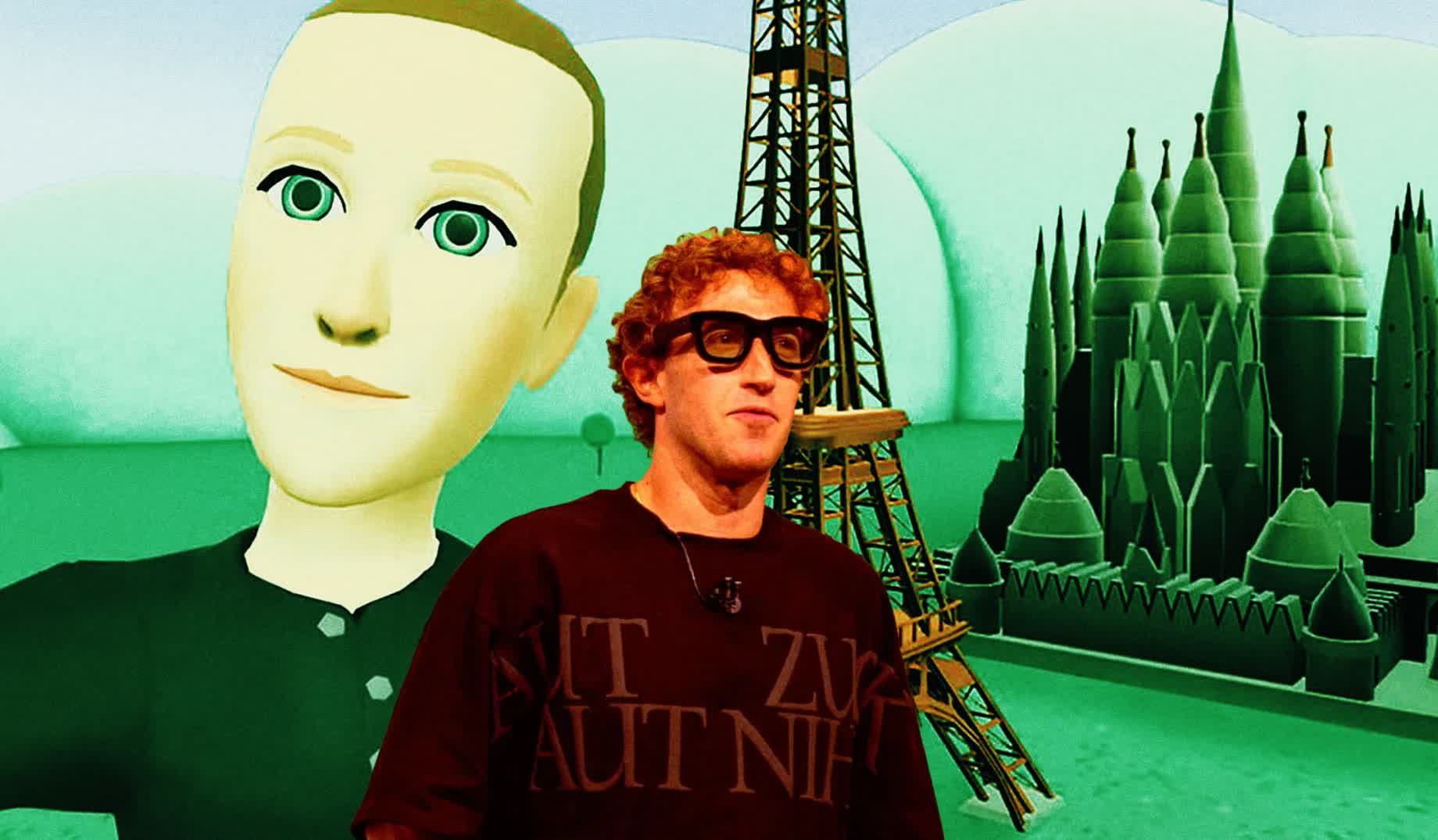
Image credit: Futurism
"The next platform will be even more immersive – an embodied internet where you're in the experience, not just looking at it." – Mark Zuckerberg, Meta co-founder and CEO [October 2021, Founder's Letter] Meta put its whole company name behind this bet. A few years later, the metaverse looked less like the next mobile internet and more like the thing everyone forgot once ChatGPT showed up.
"I knew I had just seen the most important advance in technology since the graphical user interface." – Bill Gates, Microsoft co-founder [March 2023, Gates Notes] Gates was talking about OpenAI's GPT model, comparing it to the first time he saw the GUI. From anyone else that might sound like AI hype; from Gates, it is at least historically interesting hype.

"AI could wipe out half of all entry-level white-collar jobs." – Dario Amodei, Anthropic CEO [May 2025, Axios interview] It hits differently when the warning comes from one of the people building the thing. Depending on your view, it was either responsible honesty or the darkest product marketing campaign in history.
"We are now confident we know how to build AGI as we have traditionally understood it. We believe that, in 2025, we may see the first AI agents 'join the workforce' and materially change the output of companies." – Sam Altman, OpenAI CEO [January 2025, "Reflections" blog post] The boldest single claim of the AI boom, made by the person with the most to gain from everyone believing it. Whether it ages like Moore's Law or like everything else on this page is the trillion-dollar question.
"The geek is back" – Intel CEO Pat Gelsinger, talking to the press shortly after returning to the company as the new CEO [March 2021, Fortune] Gelsinger returned to Intel with engineer energy and a lot of nostalgia behind him. The hard part was that Intel did not just need the geek back, it needed the process lead, the manufacturing crown, and Wall Street's patience back too.

"In five years we're going to sit around and laugh that we even had operating system wars; there's just going to be Linux. We're going to take over" – Trae McCombs, site manager Linux.com [October 1999, Maximum Linux] Linux did take over servers, supercomputers, Android phones, embedded devices, and much of the cloud. It just forgot to conquer the consumer desktop on the way there.
"Engineering is magic ... Or at least the closest thing to magic that exists in the real world" – Elon Musk, founder of SpaceX, CEO of Tesla [June 2018, X] This is Musk at his most optimistic, and honestly, on rockets and EVs, the quote holds up pretty well. The trick is that real-world magic still comes with production delays, recalls, and firmware updates.

Image credit: Rolling Stone
"I wish I had the money to make tons of investments at the start of the internet revolution. I could see it coming" ... "We started the Vision Fund at the very beginning of the AI revolution" – Masayoshi Son, SoftBank Group founder [June 2019] Son has a remarkable habit of seeing the future early. He also has a remarkable habit of selling some of his best assets before the rest of the world catches up.

"Everyone is a programmer now – you just have to say something to the computer." – Jensen Huang, Nvidia founder and CEO [May 2023, Computex] This was both a great AI soundbite and the most Nvidia way possible to say demand for GPUs was about to explode. Developers may dispute the "everyone is a programmer" part, but Nvidia shareholders probably did not.
"Nvidia is the single worst company we've ever dealt with… Nvidia, f*** you." – Linus Torvalds, Linux creator, at Aalto University in Finland, on Nvidia's refusal to cooperate with the Linux kernel team [Aalto Talk with Linus Torvalds, Helsinki, June 2012] In what may be tech history's greatest reversal, Nvidia became the world's most valuable company in 2024 – its GPUs powering the AI revolution, predominantly on Linux servers. Nvidia has since released open-source kernel drivers. Torvalds later acknowledged he uses one of their cards himself.
"In the future, the primary means of communication with computers will be through speech, not through graphics" – Nicholas Negroponte, director of MIT's Media Lab. [November 1989, BYTE] Luckily... Mr. Negroponte didn't specify how far into the future.

"We are currently not planning on conquering the world" – Sergey Brin, Google co-founder, Alphabet Inc. President A very funny thing to say before Google became the front door to the web, online ads, maps, mobile search, email, browsers, etc. Technically, not planning is not the same as not doing.
"The question isn't 'What do we want to know about people?' It's, 'What do people want to tell about themselves?" – Mark Zuckerberg, Facebook founder and CEO [Charlie Rose interview, November 2011] Zuckerberg was describing Facebook as a place where users voluntarily shared their lives. The next decade made that distinction feel a lot more complicated.
Discussing Facebook's impact on society: "It's addictive; it's not good for you; they're after your kids, they're running political ads that aren't true." – Marc Benioff, Salesforce founder and co-CEO, calling for Facebook to be broken up [CNN interview, October 2019]

"We are just an advanced breed of monkeys on a minor planet of a very average star. But we can understand the universe. That makes us something very special." – Stephen Hawking, theoretical physicist and world-renowned scientist, on humans and our place in the world [Der Spiegel interview - October 1988] Hawking had a gift for making humanity sound tiny and extraordinary at the same time. It is not a tech prediction so much as the reason tech predictions exist at all.
"We know where you are. We know where you've been. We can more or less know what you're thinking about." – Eric Schmidt, Google CEO [The Atlantic, October 2010] Schmidt was trying to explain Google's ability to personalize services, but the phrasing sounded like a privacy nightmare wearing a conference badge. It remains one of the most accidentally honest Big Tech quotes.

"I predict the Internet will soon go spectacularly supernova and in 1996 catastrophically collapse" – Robert Metcalfe, Founder of 3com and co-inventor of the Ethernet wrote this in a magazine column [Infoworld, December 1995] Metcalfe was so wrong he famously ate his own column. To his credit, that is still a better correction policy than most pundits have.
"Social media has created a historical shift from the historically powerful to the historically powerless. Now everyone has a voice" – Sheryl Sandberg, COO of Facebook ["The Future of the Digital Economy," World Economic Forum Annual Meeting, January 2015] Sandberg captured the idealistic version of social media. The harder lesson was that giving everyone a voice also gives everyone a megaphone, a mob, and an algorithm.
"Personally, I think the idea that fake news on Facebook - it's a very small amount of the content - to think it influenced the election in any way is a pretty crazy idea." – Mark Zuckerberg, Facebook CEO, two days after the 2016 US presidential election. He publicly regretted the comment a week later. [Tech conference, November 2016]

"We want to try and build a place where people can come to find and discover anything that they might want to buy online" – Jeff Bezos, Amazon.com founder, about 15 years before Amazon became one of the biggest forces of the internet and worldwide retail, among other things [Charlie Rose Show, May 1999]
"Jeff Bezos is opening a retail store and owns a newspaper. Turns out everything we thought about the internet is wrong." – Aaron Levie, CEO of Box about Bezos buying The Washington Post and Amazon opening a physical retail store. [via Twitter, October 2014] Bezos made this sound like a simple online store ambition. In hindsight, it was closer to a mission statement for eating retail and several adjacent industries.
"It doesn't matter how good or bad the product is, the fact is that people don't read anymore. 40% of the people in the US read one book or less last year. The whole conception is flawed at the top because people don't read anymore." – Steve Jobs, CEO of Apple, dismissing Amazon's Kindle e-reader [New York Times, January 2008] Two years later, Jobs launched Apple's own e-reader platform, iBooks, alongside the iPad.
"The interesting thing about cloud computing is that we've redefined cloud computing to include everything that we already do ... The computer industry is the only industry that is more fashion-driven than women's fashion. Maybe I'm an idiot, but I have no idea what anyone is talking about. What is it? It's complete gibberish. It's insane. When is this idiocy going to stop?" – Larry Ellison, Oracle co-founder and CEO [Analyst conference, September, 2008] Ellison was mocking cloud as a buzzword before Oracle eventually embraced cloud because customers and revenue kept insisting on it. Sometimes the gibberish becomes the business model.

- Tandy's Radio Shack division financial VP when asked about the IBM PC"There definitely is a new kid on the block, but there is nothing that IBM has presented that would blow the industry away"[Business Week, August 24, 1981]By 1989, eight years after its introduction, the IBM PC and its clones had captured 83.6% of the personal computing market.
- John Roach, Tandy President in August 1981 when asked about the impact that IBM's imminent move into personal computing with the IBM PC"I don't think it's that significant"[The Making of Microsoft, by Daniel Ichbiah and Susan Knepper, 1991]
"Stone Age. Bronze Age. Iron Age. We define entire epics of humanity by the technology they use. In fact, technology has been the story of human progress from as long back as we know. In 100 years people will look back on now and say, "That was the Internet Age." And computers will be seen as a mere ingredient to the Internet Age." – Reed Hastings, Netflix co-founder and CEO [Education Innovation Summit, May 2002]
"We're competing with sleep, on the margin. And so, it's a very large pool of time." – Reed Hastings, Netflix co-founder and CEO, on who Netflix actually competes with [April 2017, Netflix Q1 earnings call] Asked whether Amazon was a threat, Hastings reframed the entire market as a war against rest. Autoplay, cliffhangers, and "are you still watching?" suggest he meant it.
At the COMDEX expo in Las Vegas on 18 Nov 1996, Andrew Grove (Intel CEO and President) predicts that by 2011, Intel CPUs will integrate one billion transistors, operate at 10 GHz and be capable of 100,000 MIPS (millions of instructions per second). Intel's Gulftown would meet two of those criteria (1.17 billion transistors and 147,600 MIPS) in 2010. We are still waiting on the third.
Grove nailed the transistor and performance direction, but the 10 GHz part ran into the brick wall of heat and power. The industry got faster anyway, just by going wider, smarter, and much more parallel.

"There is no reason anyone would want a computer in their home." – Ken Olsen, founder of Digital Equipment Corporation [1977] This is the classic home-computing misfire, though Olsen was speaking from a minicomputer worldview. The quote aged badly because the home computer became not just useful, but eventually the gateway to work, school, games, shopping, and everything else.
"Above all, what we'll never see fly is the scanner / printer / fax / copier combo" – John C. Dvorak [PC Magazine, November 27, 1990] Dvorak bet against the all-in-one printer at exactly the wrong time. The device did fly, though usually while jamming, begging for ink, or refusing to scan until you replaced cyan.

"What a computer is to me is the most remarkable tool that we have ever come up with. It's the equivalent of a bicycle for our minds." – Steve Jobs, Apple founder [film "Memory & Imagination," 1990] Jobs was at his best when he described technology as amplification rather than machinery. "Bicycle for the mind" still works because it makes the computer feel empowering instead of intimidating.
"In five years I don't think there'll be a reason to have a tablet anymore. Maybe a big screen in your workspace, but not a tablet as such. Tablets themselves are not a good business model." – Thorsten Heins, BlackBerry CEO, when emphasizing phones' predominance over tablets [April 2013]
"There are no plans to make a tablet. It turns out people want keyboards... we look at the tablet, and we think it is going to fail." – Steve Jobs, at the 2003 All Things Digital conference. Apple would ship the iPad seven years later Jobs dismissed tablets years before Apple made the iPad, which is either a change of mind or classic Apple misdirection. Either way, the company later built the tablet that mattered.

"It seems probable that once the machine thinking method had started, it would not take long to outstrip our feeble powers... They would be able to converse with each other to sharpen their wits. At some stage, therefore, we should have to expect the machines to take control." – Alan Turing, mathematician, computer scientist and philosopher, in 1951. Turing saw the machine-intelligence problem before the industry even had the hardware to make it practical. The eerie part is how modern the concern still sounds.
"AI doesn't have to be evil to destroy humanity - if AI has a goal and humanity just happens to come in the way, it will destroy humanity as a matter of course without even thinking about it, no hard feelings." ....."With artificial intelligence we are summoning the demon." – Elon Musk warns about AI, saying it could be our biggest existential threat[MIT Aeronautics and Astronautics's Centennial Symposium, October 2014] Musk reached for the most theatrical possible metaphor, which made the warning impossible to ignore and easy to mock. A decade later, AI safety became a boardroom topic anyway.

"AI will not destroy the world, and in fact may save it." – Marc Andreessen, Netscape co-founder and venture capitalist [June 2023, Andreessen Horowitz] Peak Silicon Valley confidence, delivered right as the rest of the world was debating whether AI needed a pause button. Whether it saves the world or just makes more slide decks remains an open question.
"I've come to the conclusion that one of the biggest evils in this industry is the family plan" – John Legere, T-Mobile US CEO, before he announced T-Mobile's offer to pay for customers' termination fee if they want to switch carriers [CES 2014, January 2014] Legere turned wireless pricing into theater, and this was classic Un-carrier provocation. He made family plans sound like a moral crisis, then used the outrage to sell people a different phone plan.
"Our mission is to elevate the world's consciousness." – Adam Neumann, WeWork co-founder and CEO, in the company's IPO filing [August 2019, WeWork S-1] This was the second line of a prospectus for an office-rental company losing billions. The IPO collapsed within weeks, the $47 billion valuation evaporated, and Neumann was pushed out by October. A near-perfect time capsule of peak unicorn-era hubris.

"You're just like well I'm in the Ponzi business, and it's pretty good." – Matt Levine, Bloomberg columnist, to Sam Bankman-Fried [April 2022, Bloomberg Odd Lots] This was Levine describing SBF's explanation of crypto yield farming, not SBF confessing to anything. Still, SBF responding that it had "a depressing amount of validity" became one of those quotes that looked much worse after FTX collapsed.
"I believe the internet will have a native currency and I don't know if it's bitcoin. I think it will be [bitcoin] given all the tests it has been through and the principles behind it, how it was created" – Jack Dorsey, co-founder of Twitter and Square [Joe Rogan Experience podcast, February 2019] Dorsey has long treated Bitcoin less like a trade and more like infrastructure for the internet. Whether that future arrives or not, the quote captures crypto at its most idealistic.

"It's worse than tulip bulbs. It won't end well. Someone is going to get killed… It's a fraud." – Jamie Dimon, CEO of JPMorgan Chase, on Bitcoin [CNBC Delivering Alpha conference, September 12, 2017] Bitcoin was trading at around $4,100 the day Dimon said this. He also threatened to fire any JPMorgan trader caught buying it. The bank later held positions in spot Bitcoin ETFs. Dimon eventually conceded: "I defend your right to do Bitcoin."

"I can see the day when Apple won't be in the personal computer business" and "The personal computer business as we have known it is not very attractive for the Nineties" – John Sculley, CEO and Chairman of Apple Computer [Fortune Magazine, July 26, 1993]
"The Internet is the first thing that humanity has built that humanity doesn't understand, the largest experiment in anarchy that we have ever had." – Eric Schmidt, software engineer, former Google/Alphabet CEO and Chairman
On not selling to Facebook...
"There are very few people in the world who get to build a business like this. I think trading that for some short-term gain isn't very interesting." – Evan Spiegel, Snapchat co-founder and CEO

"We don't see Windows as a long-term graphical interface for the masses" – Lotus Development official at the demonstration of a new DOS version of Lotus 1-2-3 [BYTE, June 1989]Windows 3.0 would launch twelve months later
"There's no doubt that the antitrust lawsuit was bad for Microsoft, and we would have been more focused on creating the phone operating system. And so instead of using Android today, you would be using Windows Mobile" – Bill Gates on why he thinks Microsoft was unable to build the world's most popular mobile OS... he got too personally involved with the company's antitrust battle in the late 90s [New York Times DealBook Conference - November 2019] Gates' admission is remarkable because Microsoft had the resources, talent, and early mobile experience to win. Instead, Android became the Windows of phones.
"[DOS will be] with us forever. We've learned how passionate people are about DOS" – Brad Silverberg, Microsoft VP [InfoWorld, July 29, 1991] DOS did linger for years in offices, boot disks, utilities, and muscle memory. Forever was a stretch, but anyone who has fixed an old PC knows the sentiment was not completely insane.
"No one wants to work with Microsoft any more. We sure won't. They don't have any friends left" – Philippe Kahn, Chairman of Borland International [Hard Drive - Bill Gates and the Making of the Microsoft Empire, by James Wallace and Jim Erickson, 1992]. Kahn was speaking during Microsoft's bruising rise, when rivals saw it as both unavoidable and unbearable. The funny part is that plenty of companies kept working with Microsoft because the purchase orders were still real.

"My name is Linus, and I am your God." ....."See, you not only have to be a good coder to create a system like Linux, you have to be a sneaky bastard too." – Linus Torvalds, software engineer, Linux creator Torvalds' humor has always had the subtlety of a kernel panic. The line works because Linux really did become the invisible foundation under much of modern computing.
"I think the most likely scenario now is not a splintering, but rather a bifurcation into a Chinese-led internet and a non-Chinese internet led by America" – Former Google CEO Eric Schmidt, responding to a question which specified "in the next 10 to 15 years." [ Village Global VC event, September 2018] Schmidt's prediction has only become more plausible as technology, trade, censorship, chips, and platforms have split along geopolitical lines. The open global internet increasingly looks like a phase, not a guarantee.

"You should learn from your competitor, but never copy. Copy and you die." ....."If we don't align together, human beings are going to fight each other, because each technological revolution makes the world unbalanced." – Jack Ma, co-founder and former executive chairman of Alibaba Group [World Economic Forum, Jan 2018] The quote is a neat slogan, though the tech industry has always treated "inspiration" as a very flexible concept.
"Businesses often forget about the culture, and ultimately, they suffer for it because you can't deliver good service from unhappy employees." – Tony Hsieh, former CEO of Zappos
"Just avoid holding it that way"....."I'm going to destroy Android, because it's a stolen product. I'm willing to go thermonuclear war on this" – Steve Jobs on iPhone 4's "antennagate" issues and the threat of Android copying Apple [Email reply & Walter Isaacson's 2011 book, Steve Jobs] Apple's iPhone 4 antenna problem produced one of the least satisfying troubleshooting tips in consumer tech history. It was technically advice, but emotionally it was gasoline.
"There is a reason they call it hardware - it is hard." – Tony Fadell, one of the fathers of the iPod and Nest Labs founder [LeWeb conference, 2012] Fadell earned the right to say this after helping build the iPod and Nest. Software can ship a patch; hardware ships a consequence.

"If there's lots of technology, we won't understand it." – Warren Buffett, investor and business tycoon – when laying out six criteria on what companies to invest [Letter to Berkshire Hathaway shareholders, 2014] Buffett's tech skepticism was never about hating technology, but about avoiding businesses he could not confidently understand. That caution made him miss some rockets, but also plenty of craters.
"What we maybe should've realized sooner was that we are running a political campaign and the candidate is Uber. And this political race is happening in every major city in the world. And because this isn't about a democracy, this is about a product, you can't win 51 to 49. You have to win 98 to 2 " – Travis Kalanick, Uber co-founder [Vanity Fair, November 2014]
"Don't worry about failure; you only have to be right once." – Drew Houston, Dropbox co-founder and CEO
(On PS3's price) "We want consumers to think to themselves 'I will work more hours to buy one.'" – Ken Kutaragi, Chairman of Sony Computer Entertainment [Toyo Keiza, July 2005] Sony was trying to position the PS3 as a premium machine, not just a console. Gamers mostly heard, "this thing is very expensive," which was not exactly the launch message you want.

"The market is confusing, although it provides us with some sort of job security" – Richard Bader, Intel General Manager [Personal Computing, October 1988] This is the kind of Intel quote that sounds like a joke until you try explaining PC compatibility, chip branding, or upgrade paths to a normal person. Confusion really was a business model.
"[Intel's Pentium name] better suited as "a name for toothpaste" – W. Jerry Sanders III, AMD Chairman "Pentium" sounded strange until Intel spent enough money to make it normal. By the end of the decade, the weird toothpaste name had become one of the strongest brands in computing.
"One thing's for sure, *nobody* is going to call it the Pentium" – John C. Dvorak [both PC Magazine, January 12, 1993]

"Coding is like writing, and we live in a time of the new industrial revolution. What's happened is that maybe everybody knows how to use computers, like they know how to read, but they don't know how to write." – Susan Wojcicki, YouTube CEO [April 2016] Wojcicki framed coding as literacy, not just a specialist skill. In the age of AI coding assistants, the comparison feels even sharper, because more people can "write" software without fully understanding the grammar.
"We weren't first on the MP3 player; we weren't first on the tablet; we weren't first on the smartphone. But we were arguably the first modern smartphone, and we will be the first modern smartwatch---the first one that matters." – Tim Cook, Apple CEO on launching the Apple Watch [March 2015, Fast Company interview] Cook was not claiming Apple invented the smartwatch, only that it would define the version that mattered. That is basically Apple's favorite historical pattern, and in this case it worked.

"The truth is no online database will replace your daily newspaper, no CD-ROM can take the place of a competent teacher and no computer network will change the way government works"
...
"Yet Nicholas Negroponte, director of the MIT Media Lab, predicts that we'll soon buy books and newspapers straight over the Internet. Uh, sure." – Clifford Stoll, astronomer, author and teacher [Newsweek - "The Internet," 1995] Stoll's skepticism was thoughtful, but spectacularly mistimed. Online databases, remote learning, digital news, and networked government did not just happen, they became boringly normal.

"I feel very confident predicting that there will be autonomous robotaxis from Tesla next year." – Elon Musk, Tesla CEO [April 2019, Tesla Autonomy Day] Musk also said Tesla would have more than a million robotaxis on the road by 2020. The confidence aged about as well as most full self-driving timelines.
"When the anthropologists dust off the 1980s and 1990s and look at the productivity dip, they're going to blame [Microsoft] Office" – Scott McNealy, Chairman /CEO of Sun Microsystems [BYTE, January 1997] McNealy's anti-Microsoft jab aged into a strangely evergreen office joke. Whether Office hurt productivity is debatable, but anyone lost in a spreadsheet at midnight understands the argument.
"One way to understand human progress is to look at how technology has made products and services - once reserved for the elite - progressively more accessible and affordable." – Dan Schulman, PayPal CEO[CNBC, July 2015] Schulman's line is the optimistic version of technology: more access, lower friction, wider participation.