Moores law articles

researchers performance chip research 3d graphics moores law transistor yields

Moore's law is hitting a wall, so researchers are stacking silicon chip layers instead of shrinking them

University of Illinois team stacks three active silicon layers on a single chip, achieving 98-100% transistor yield
Forward-looking: For years, the chip industry has chased better performance by shrinking transistors and squeezing more of them onto a flat slice of silicon. That strategy is running into hard limits. A group at the University of Illinois thinks the next gains will come not from going smaller, but from going vertical.
startups compute moores law photonics optical computing

Startup claims light-based chip could deliver 10x Nvidia's performance at similar power

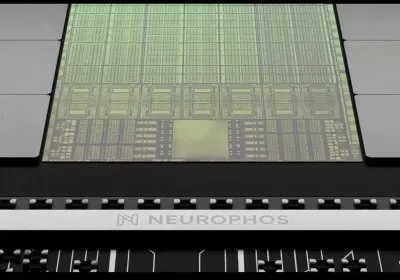
First look: Light, not silicon, may define the next leap in computing power. That's the bet Austin-based startup Neurophos is making as it challenges the idea that Moore's Law still governs the pace of performance progress. The company is developing a photonics-driven processor designed to do what decades of transistor scaling can no longer achieve: massive compute throughput without a proportional explosion in energy use.
trump tsmc semiconductor tariffs donald trump wafer

TSMC's 2nm wafer prices hit $30,000 as SRAM yields reportedly hit 90%

Apple, Intel, Nvidia, and others line up for next-gen chips
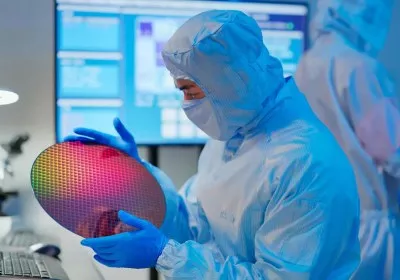
In context: TSMC has steadily raised the prices of its most advanced semiconductor process nodes over the past several years – so much so that one analysis suggests the cost per transistor hasn't decreased in over a decade. Further price hikes, driven by tariffs and rising development costs, are reinforcing the notion that Moore's Law is truly dead.
home depot diy chips google amd intel qualcomm semiconductor broadcom manufacturing moores law chipmakers

Home Depot for DIY Chips: What's the going trend?

The chip companies are never going to really love this business
The big picture: Earlier this year we were reviewing Analyst Day slides from leading semiconductor companies and a clear theme emerged. Large companies are all shifting in a similar direction, posing some potential challenges for their long-term positions. More and more customers are looking for special purpose chips, a coping mechanism for dealing with the slowdown in Moore's Law. And the big players are all looking to support those customers.