I saw DLSS 5 running across multiple games. It's not a face filter.

Julio Franco

Posts: 9,313   +2,248
Staff member
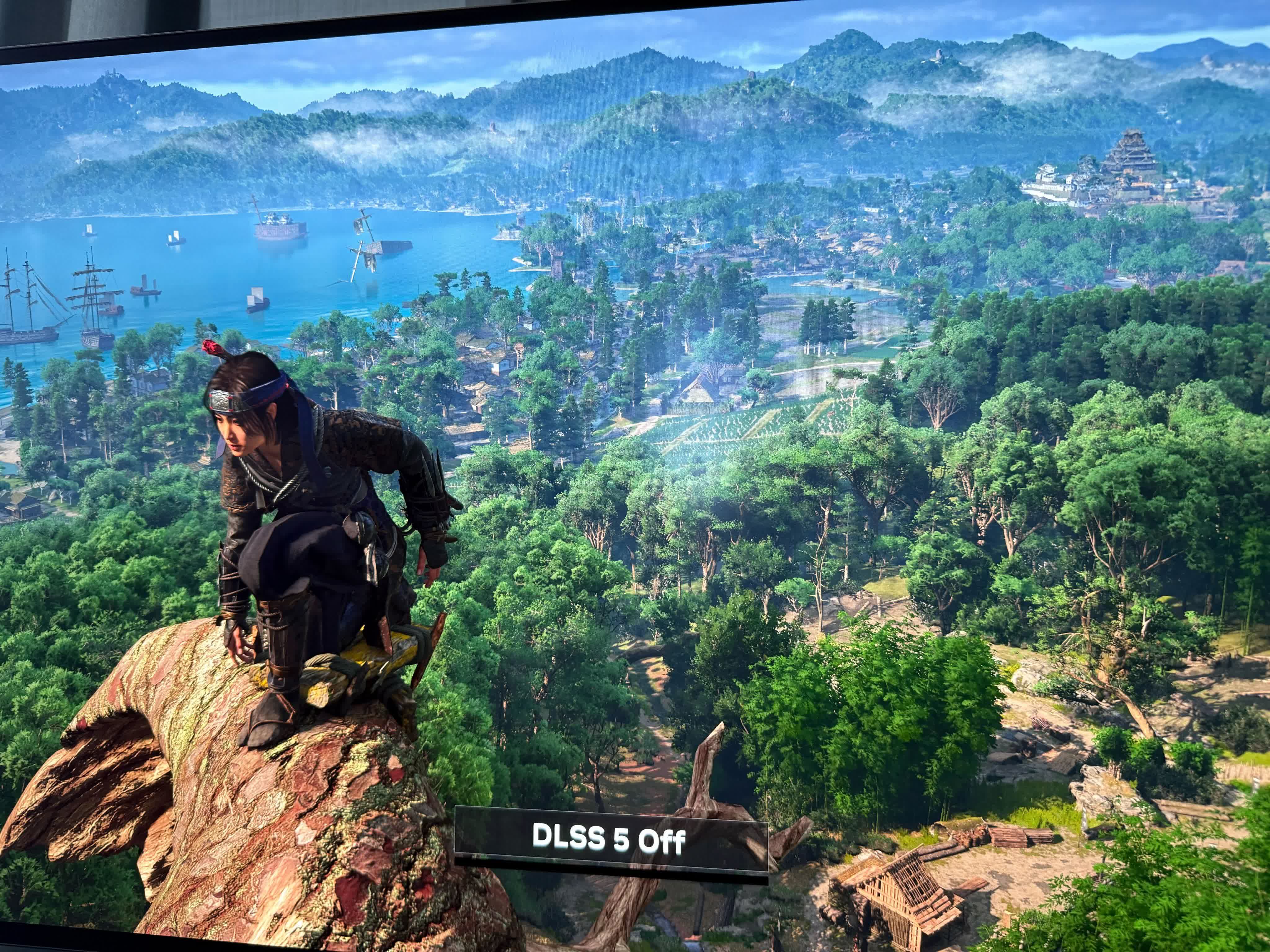
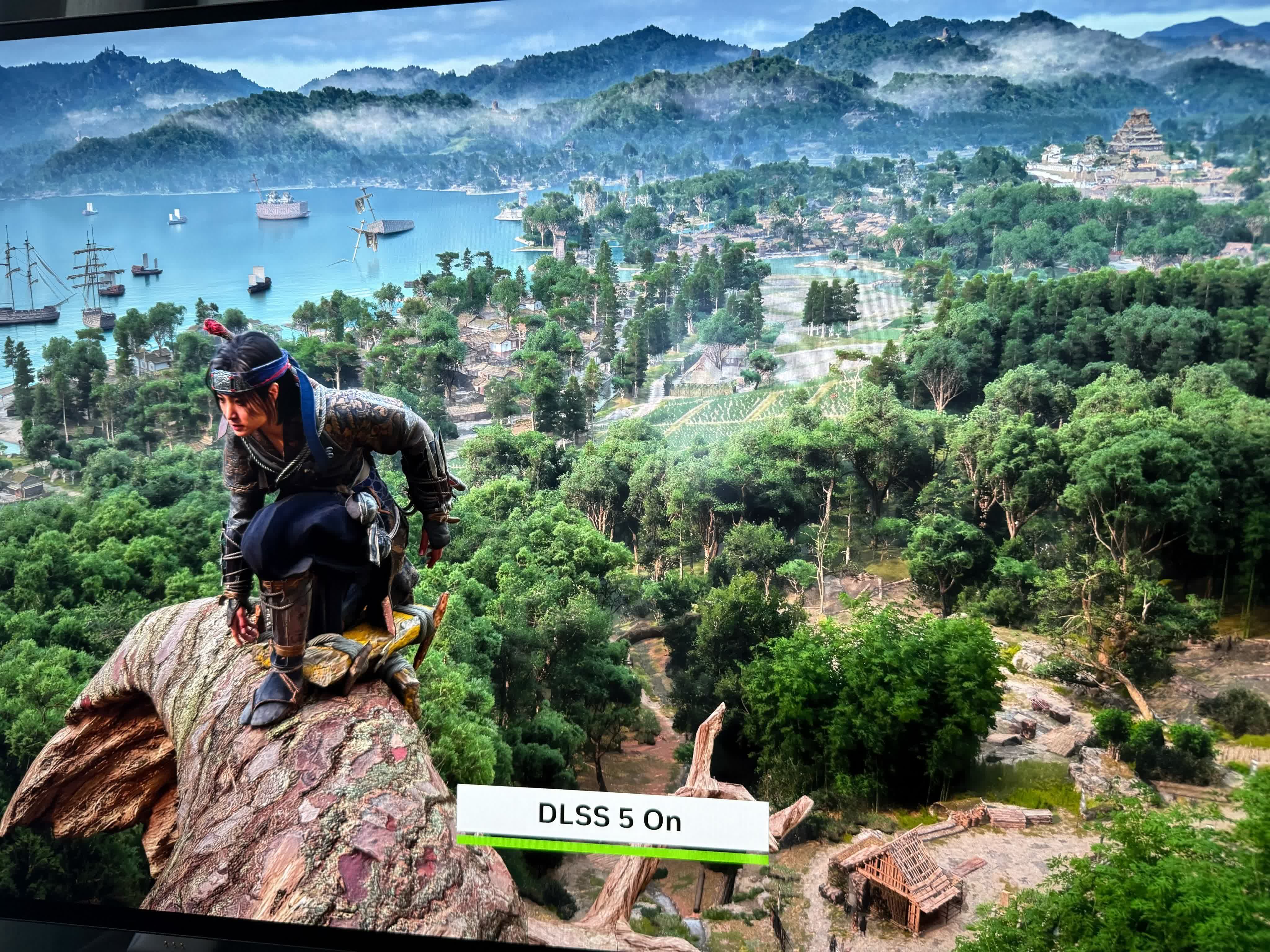
Sounding off: I went hands-on with Nvidia's DLSS 5 across multiple games at GTC and the "it's just a face filter" isn't the right take. The improvements to shadows, water, foliage, clothing, and even a coffee maker in Starfield are just as impressive as the character enhancements. Here are my full impressions including some details on the dual-GPU demo setup and the developer control story that I think matters quite a bit.

Nvidia dropped DLSS 5 at GTC 2026 this week, and the internet already has opinions.

Ryan Shrout is a longtime technology analyst and industry veteran who has spent over two decades covering PC hardware, graphics, and semiconductors. He previously led technical marketing at Intel and was the founding editor of PC Perspective. He is currently President and GM at Signal65. You can follow him on X @ryanshrout.

I was in the room and I went hands-on. Not watching a sizzle reel, not scrubbing through a carefully curated 30-second trailer, but sitting in front of multiple games with DLSS 5 toggling on and off in real time. Hogwarts Legacy. Starfield. Assassin's Creed Shadows. Oblivion Remastered. The Zorah tech demo. The visual improvements are significant. Not incremental. Significant.

But if you've been scrolling social media, you'd think Nvidia just shipped an Instagram beauty filter for video games. And I get why that's the first reaction. But it misses the true picture by a wide margin.

Why Faces Get All the Attention

We've had photorealistic environments in games for a while now. Water reflections, volumetric lighting, incredibly detailed cityscapes and forests. The hardware and the rendering techniques have gotten us to a place where environments can look stunning under the right conditions.

But faces have been the holdout. Getting a human face to look truly photorealistic in real time has been one of the most expensive problems in computer graphics from a compute standpoint. Subsurface scattering on skin, the way light interacts with individual strands of hair, the micro-expressions that make a character feel alive rather than like a wax figure. All of that requires an enormous amount of rendering horsepower..

I've probably seen ten different "floating head" tech demos over the course of my career. That's not an exaggeration. They're always a single head with no hair, no body, no environment, because rendering a photorealistic face at that level of quality is so expensive that it can only be done in isolation. You never see it inside an actual game, because the performance budget won't allow it.
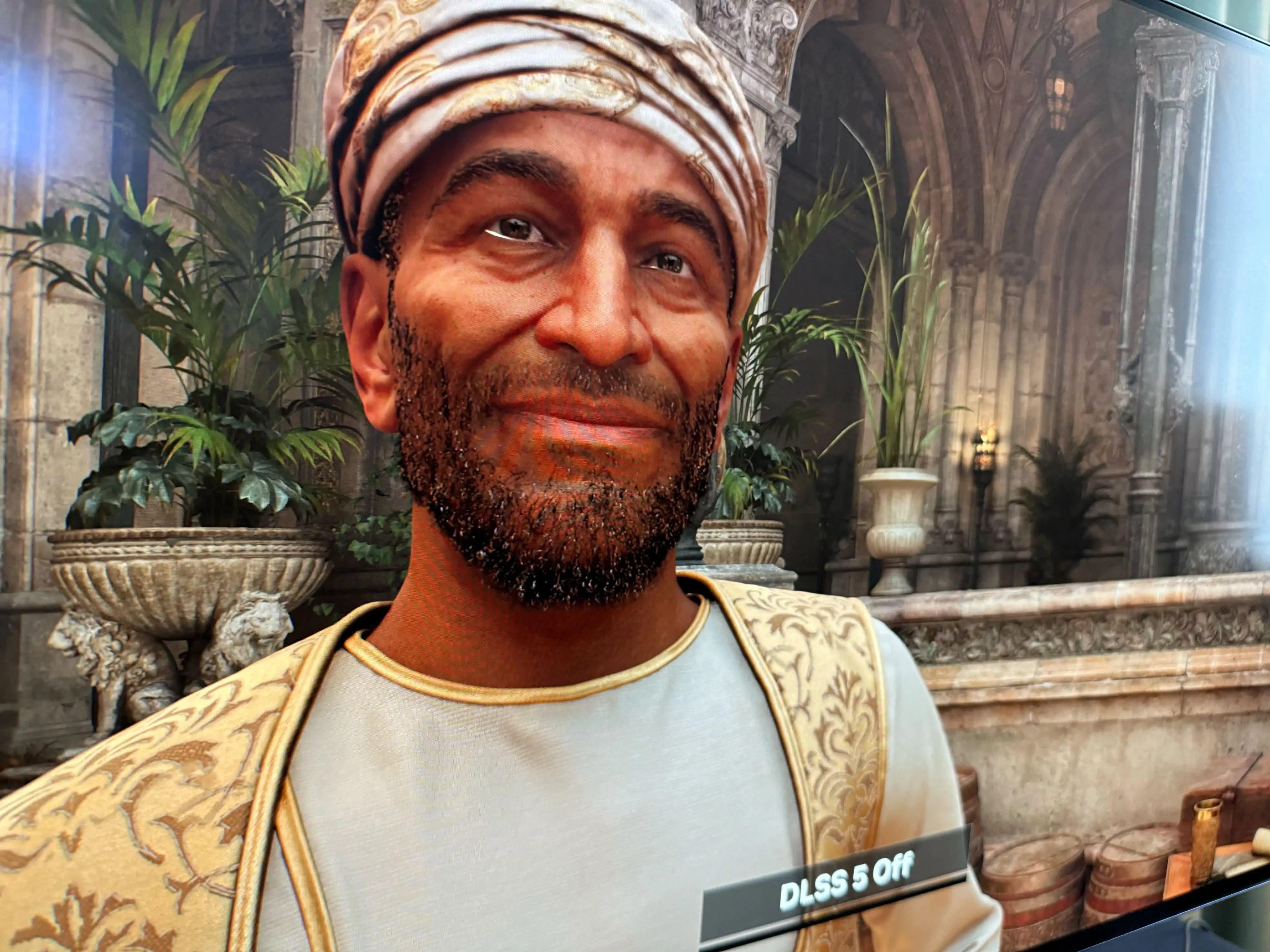
DLSS 5 closes that gap in a pretty dramatic way. And because that's the area where the delta between "before" and "after" is most visible, that's what everyone is reacting to. The Nvidia team put it well during my demo. It's a psychological effect.

You've seen environments rendered really well before. When you suddenly see a character rendered at that same photorealistic level, your brain flags it immediately. It stands out.

Fair enough. But focusing only on the faces is wrong.

It's Happening Everywhere, Not Just on Character Models

What I saw in the demos was a comprehensive improvement across the entire scene. And the moment that really drove this home wasn't a face. It was a coffee maker.

In Starfield, there's a countertop scene with a coffee machine, some paper towels, a cup, napkin holders. Standard environmental clutter. With DLSS 5 off, everything looks flat. The coffee maker fades into the background.

Toggle it on, and suddenly the objects have shape. The lighting wraps around them naturally. The spatial relationships between the items and the surfaces they're sitting on become clear. It goes from "assets placed in a scene" to "objects that actually belong in a room."
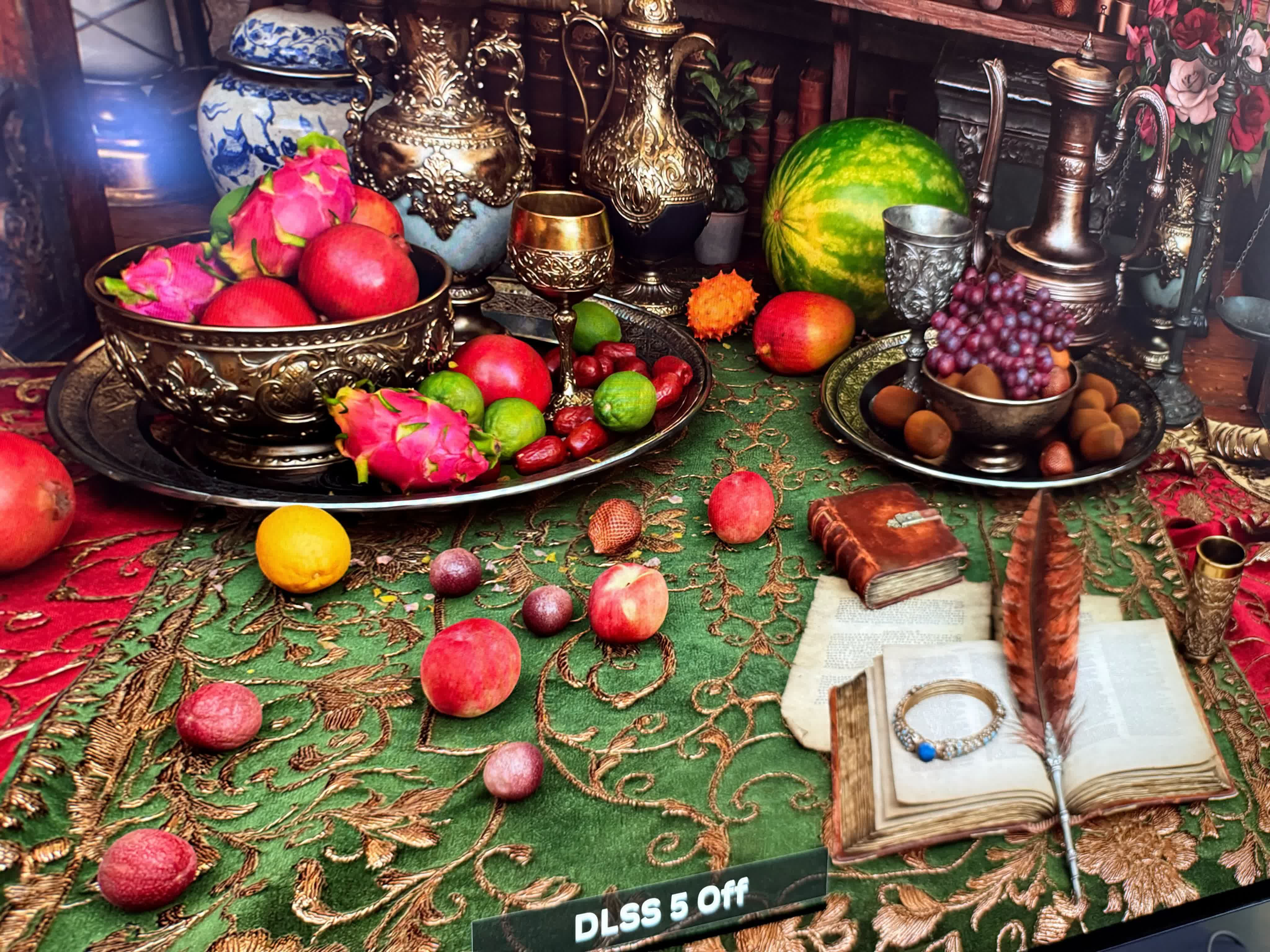
The same thing played out across every title. In Oblivion Remastered, the water went from good video game water to something that could pass for real, with the kind of light interaction and shimmer you'd expect from an offline render.

In Assassin's Creed Shadows, the trees and distant foliage gained dramatically better depth and separation in how light moved from the canopy down through the branches. In the Zorah tech demo, which is a 300 GB courtyard scene built by 20 full-time artists, the subsurface scattering on foliage was just as impressive as anything happening on character faces. Leaves picked up that translucent glow from backlighting that is incredibly difficult and expensive to model and render through traditional means.

The AI model powering DLSS 5 is a single unified model. Same model for every game. It's not trained per-title, per-face, or per-object type. It takes the raw color buffer and motion vectors as input, analyzes the scene semantics from that single frame, and enhances the lighting and material response while staying anchored to the original 3D content. It recognizes the difference between skin and metal and water and stone and foliage, and it processes each of those materials differently based on how light should interact with them.

That's not a filter. That's a fundamentally different approach to how the final image gets assembled. And it's deterministic and consistent from frame to frame, which is a hard requirement for games.

The Developer Angle Matters More Than People Realize

One of the things I came away most encouraged by is the developer control story. This is critical. If DLSS 5 were a black box that slapped a one-size-fits-all enhancement over every game, the artistic intent concerns would be completely valid. But that's not what this is.
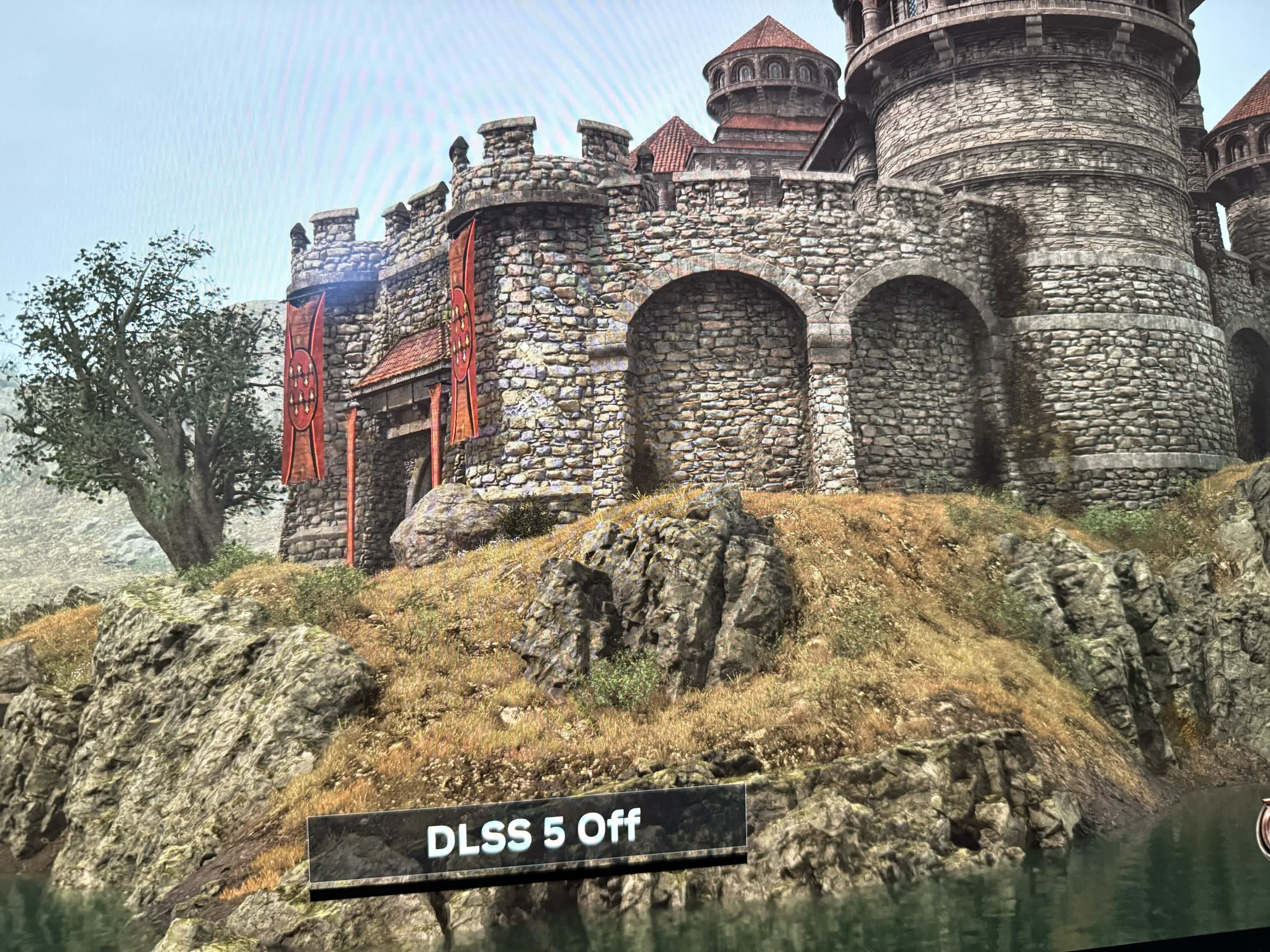
During the demo, the DLSS research talked through the level of granularity available. Developers don't just get an on/off switch. They get intensity controls that can be dialed anywhere, not just full strength.

They get spatial masking, so they can set the water enhancement to 100%, wood to 30%, characters to 120%, all independently within the same scene. They get color grading controls for blending, contrast, saturation, and gamma. All of this runs through the existing SDK, which means studios already using DLSS and Reflex have a familiar pipeline to work with.
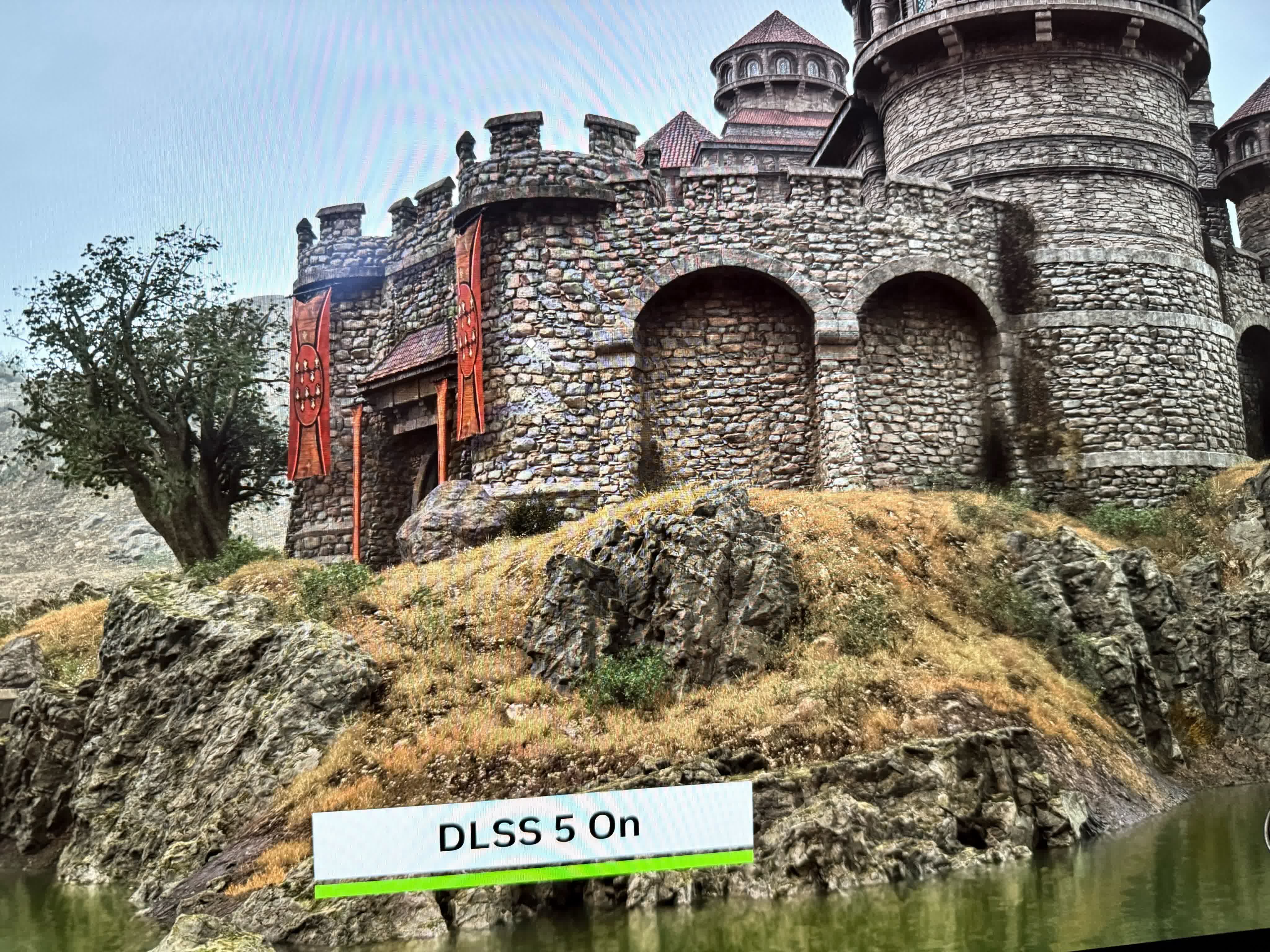
The developer support list tells you something. Bethesda, CAPCOM, Ubisoft, Tencent, Warner Bros. Games, and others have already signed on. But what struck me more than the names was what the Nvidia team shared about the reactions inside those studios.

When developers previewed the technology, their technical artists were apparently co-advocating for it internally, because it gets them closer to what they actually intended their characters and environments to look like when they were designing them in their authoring tools. Then those assets get dropped into a real-time game engine with a finite performance budget, and compromises happen. DLSS 5 lets them claw back some of what gets lost in that translation.

I think that's the right framing. DLSS 5 isn't Nvidia applying its stylistic choices on top of someone else's game. It's providing a tool that helps developers close the gap between what they can render in 16 milliseconds and what they actually want the player to see. That's a meaningful distinction, and it's a big reason why the developer response has been positive.

The Hardware Story Is Interesting Too

The demos I saw were running on a pair of RTX 5090 GPUs. One was handling the game rendering, the other was dedicated entirely to running the DLSS 5 AI model. Nvidia was upfront that there's still significant optimization work to do, and the plan is to ship DLSS 5 running on a single GPU when it launches later this year.
But I think the dual-GPU setup itself is worth mentioning. For years, multi-GPU gaming has been effectively dead. SLI is gone. CrossFire is gone. The idea that you'd run two graphics cards for a better gaming experience felt like a relic of the mid-2000s.

And yet here we are, with a legitimate use case where a second GPU running an AI workload alongside a primary rendering GPU produces a dramatically better visual result.
Is that where this ends up for enthusiasts? Probably not at launch. But the concept of dedicating GPU compute specifically to AI-driven visual enhancement, separate from the rendering pipeline, is an interesting architectural idea. It wouldn't surprise me if that becomes a real conversation again as neural rendering matures.

Where This Goes From Here

DLSS 5 is targeting a fall 2026 launch, which means we've got several months of optimization and refinement ahead. Developers are just getting their hands on it now, and they'll need time to work with the controls and dial in the right settings for their specific titles.

First-wave games include Starfield, Assassin's Creed Shadows, Resident Evil Requiem, Hogwarts Legacy, Phantom Blade Zero, The Elder Scrolls IV: Oblivion Remastered, Delta Force, and more.

It's also worth noting that this works across rendering approaches. Rasterized games, ray-traced titles, and path-traced experiences all benefit. And the higher the fidelity of the input, the better the output. DLSS 5 isn't replacing good rendering. It's amplifying it.

The early social media reaction is predictable. New technology that changes how games look will always generate strong opinions, especially when AI is involved. But the knee-jerk "it's just a face filter" take doesn't hold up once you've actually seen the full scope of what DLSS 5 is doing across an entire scene, across multiple games, in real time. Go look at a coffee maker. Go look at stone textures. Go look at the way light passes through a leaf. That's where the real story is.

What do you think, is neural rendering the next big unlock for game visuals? I'd love to hear from people who have spent time with these games.

Permalink to story:

 
Sorry, but all of those pictures, both faces and background objects, look they have been run through an uncanny valley filter. That's an issue with trying to make things look more realistic or natural - the more realistic things are, the more they look off and well wrong if the small details are off. Less realistic artwork ends up looking better. Getting out of the uncanny valley on the other side using AI stuff is going to take a lot of time an effort.
 
This looks like the future companies see. You give the AI a sketch and it will add in the details. You don't have to have great models or animations, not even the code needs to be perfect, the AI will fill in the missing pieces.

People will get lazy and nVidia will take the money.
 
Apparently DLSS 5 can be tweaked by the dev. If it was something that a user could apply, tweak and adjust to their preference, OK. That puts the power in the hands of the user.

I don't want this. I believe it subtracts from almost all of the examples show and these are likely the best that DLSS 5 can do. I mean, you don't put the worst examples in the unveiling for a new feature.

This is without taking into account the performance cost of this tech. Wow. I'd rather the FPS, a higher upscaling resolution or absolutely anything, over this.
 
So people can barely afford 1 GPU in any price bracket and now we need to start buying two just so all our games can look like they are run through Instagram filters? Upscaling is a software solution to a hardware problem. Now we need to buy more hardware instead of developers better coding their games? We needed better hardware because the software sucked, so we're coming full circle? We now need extra hardware to run a software solution because our hardware isn't fast enough to rune a developers code natively?

People are going to start dropping $10k on 5090s just to run DLSS5. Sure, SOME people will, but 80% of people in steam surveys have 60 class cards or lower and consoles typically target the 60 class GPU when designing hardware.
 
This is a diffusion model layered into the upscaling to give the illusion of better graphics.

If that isn't sad enough on its own, just consider how it uses the generic looking faces you see in every diffusion model to conpletely butcher the original look made by the artist - assuming the studio still has enough integrity to hire artists in the first place.

This is a low-IQ dull sledgehammer for a fabricated "problem". Like a texture pack for your game made by Shutterstock. It must be very cost effective, because the end result is completely lacking anything that could even be confused for quality.
 
People will get lazy and nVidia will take the money.
I've read similar objections before:

1810: "These automated looms are making our master weavers lazy. Instead of spending a month to weave four yards of plaid tartan, they're just giving a pattern to the machine and knocking off early!"

1890: "These electric lights are making my maids and man servants lazy! Instead of spending hours ensuring all the candles have been properly cleaned and lit, they merely flick a switch!"

1970: "These pocket calculators are making our engineers lazy. Why, I haven't seen one drag out a slide rule in weeks. Week!"
 
Last edited:
The people on this website:

"Ai is taking away jobs day by day"...
people's response:
"Well it's just a generational shift."

"NVIDIA is changing the way games look"
People's response:
"OMG, how dare they do such thing"

Obviously people on here have the wrong priorities on what to worry about.
I think you're interpretation of it is off. People are angry that AI slop is being shoved down our throats because it sucks. People aren't worried about AI taking their job because it sucks.

The economy is crashing, has been for awhile now, and AI gives companies a convenient excuse for layoffs. If you look outside the "magic 7" in the markets, the rest of the market has been stagnet or going down for a long time now. The AI market has been propping itself up with circular investing and is massively over leveraged
 
Last edited:
Chances are when this tech is actually viable at a reasonable price, games will be full on AI rendered. It sounds like it will probably require highend RTX 50 hardware. Then maybe mid-range RTX60 can handle it, RTX70 will probably just be tensor cores.
 
Chances are when this tech is actually viable at a reasonable price, games will be full on AI rendered. It sounds like it will probably require highend RTX 50 hardware. Then maybe mid-range RTX60 can handle it, RTX70 will probably just be tensor cores.
That's a bit like saying "With self driving cars you wont need wheels or gas anymore, they'll just drive themselves!".

You still need ROPs and Texture units and Shader cores to render what the AI infers. The Tensor cores themselves cant make the video happen.

And a game cannot just be AI rendered, you still need to know what is going on. The game engine cant just exist in AI and neither can all the assets. Knowing how they interact is a fairly important thing for rendering and AI cant just infer it. Planes can fly and land themselves, you still need ATC to coordinate them all.
I've read similar objections before:

1810: "These automated looms are making our master weavers lazy. Instead of spending a month to weave four yards of plaid tartan, they're just giving a pattern to the machine and knocking off early!"

1890: "These electric lights are making my maids and man servants lazy! Instead of spending hours ensuring all the candles have been properly cleaned and lit, they merely flick a switch!"

1970: "These pocket calculators are making our engineers lazy. Why, I haven't seen one drag out a slide rule in weeks. Week!"
I've read similar arguments before, you always forget to mention that the class that was put out by sweeping innovation struggled to adapt, often winding up destitute. But mass suffering doesnt matter, only progress!
 
I've read similar objections before:

1810: "These automated looms are making our master weavers lazy. Instead of spending a month to weave four yards of plaid tartan, they're just giving a pattern to the machine and knocking off early!"

1890: "These electric lights are making my maids and man servants lazy! Instead of spending hours ensuring all the candles have been properly cleaned and lit, they merely flick a switch!"

1970: "These pocket calculators are making our engineers lazy. Why, I haven't seen one drag out a slide rule in weeks. Week!"
I don't think you understand just how fast the changes are happening right now. It's unprecedented. It took 1 year, for what happened in 10 years in the time periods you mentioned, and your comparisons are just a sad sarcastic joke...
 
Zooming at the pictures closely, I can see that the DLSS 5 ones look photorealistic, while the original look like a game. If wasn't for the game like textures, you'd think the picture wasn't from a game but a AI photo.

Why AI?! Because it's a new style! We recognise it, because it is new and the next thing aiming for photorealism.

Sometimes tries too much and that it what gives it away though.

In hogwarts legacy, I'd like them to dial down a bit on the characters, as is a game that doesn't aim, with it's characters, to be too realistically portrayed, but more toward fantasy, almost like warcraft's type of style in my opinion.

That's why developer intent matters. Can AI copy what feel developer intended ? If a game like Warcraft began with this type of realistic graphics, would it be as unique as we know them for?
 
Last edited:
I've read similar arguments before, you always forget to mention that the class that was put out by sweeping innovation struggled to adapt, often winding up destitute. But mass suffering doesnt matter, only progress!
You also fail to mention that the 'destitute' of today have a higher standard of living than the middle class of 200 years ago, thanks to that progress you decry.

And of course, If you're truly dead-set against such progress, there are Amish and Old Order Mennonite communities that will happily take you in, to return to those beatific times of barn-raising and working in the fields, to return home each night, take a refreshing hand-pumped cold bath, blow out the lantern, and go to bed.

I don't think you understand just how fast the changes are happening right now. It's unprecedented. It took 1 year, for what happened in 10 years in the time periods you mentioned
And yet, in that last year, the economy continues to grow healthily and the mass unemployment you predicted has failed to materialize.

Before the Industrial revolution, essentially 100% of adults and children age 12 and up worked long hours every day. Today, a full 40% of adults (and nearly all children) don't participate in the work force at all ... yet their standards of living are far higher today than then. I fully expect AI automation to increase that figure to 60% or higher .... but even as it does so, the lives of those most affected will improve. When food, housing, and even complex medical care can be cheaply provided via a robotic workforce, it can indeed become the human right that so many of you mistakenly believe it already is.
 
I think you're interpretation of it is off. People are angry that AI slop is being shoved down our throats because it sucks. People aren't worried about AI taking their job because it sucks.

The economy is crashing, has been for awhile now, and AI gives companies a convenient excuse for layoffs. If you look outside the "magic 7" in the markets, the rest of the market has been stagnet or going down for a long time now. The AI market has been propping itself up with circular investing and is massively over leveraged
So you are saying that people don't care about losing their jobs????

I think the millions of people facing job extinction in the next 5 years because of A.I would highly disagree with you.

It's only clear that A.I is only a problem to those that get affected directly by it...those losing their jobs not even half way through their lifetime and those that care about how different those games might look like.

Priorities, priorities, priorities.......
 

This is the future where the tech website writer doesn't know how to take a screenshot of the AI slop.

Alright, how about you tell us how the experts take a screenshot of a computer display in front of you?

Speaking of AI, though this is not a filter, it changes faces and artists' designs completely, even changing expressions on the face. What can stop NVIDIA from influencing how games look? With a slight tweak, they can change a happy face to a neutral, change the color of the character's skin, etc.

Okay and the point of this exercise would be? Other than having people decide not to use their toolkit anymore?

How much did you take from NVIDIA for this article? The sad part is we can't downvote articles here.

Ugh, there’s a new low for today. But the day is still young.


I've read similar objections before:

1810: "These automated looms are making our master weavers lazy. Instead of spending a month to weave four yards of plaid tartan, they're just giving a pattern to the machine and knocking off early!"

1890: "These electric lights are making my maids and man servants lazy! Instead of spending hours ensuring all the candles have been properly cleaned and lit, they merely flick a switch!"

1970: "These pocket calculators are making our engineers lazy. Why, I haven't seen one drag out a slide rule in weeks. Week!"

The guys with the slide rule built the F-1 engine in the Saturrn V rocket. The guys with the calculators, PC's, scanners, and supercomputers can't replicate it. Better tools does NOT equal a better outcome.
 
This is the future where the tech website writer doesn't know how to take a screenshot of the AI slop. Speaking of AI, though this is not a filter, it changes faces and artists' designs completely, even changing expressions on the face. What can stop NVIDIA from influencing how games look? With a slight tweak, they can change a happy face to a neutral, change the color of the character's skin, etc. How much did you take from NVIDIA for this article? The sad part is we can't downvote articles here.
Nvidia has been influencing how games look for years, it's interesting how people are only now concerned with Nvidia negatively affecting the entire games industry. IMO, it's too late to complain about it now, Jensen doesn't care about the gaming market.
And I think the next step could be every part of a game is generated by AI, with no concern about the story or how playable the game is, and the GPU doesn't matter because all it would be is an AI accelerator processing the LLM story being fed into it. But, unless the AI bubble pops most won't be buying a GPU anyways.
Ugh, there’s a new low for today. But the day is still young.
The new low is tech media sites praising this and posting copy+paste PR articles.
 
The guys with the slide rule built the F-1 engine in the Saturrn V rocket. The guys with the calculators, PC's, scanners, and supercomputers can't replicate it. Better tools does NOT equal a better outcome.
Guys with slide rules also designed the B-52 stratofortress bomber, the US military still hasn't found a better replacement for a long range heavy bomber. More tech can't replace well talented engineers.
 
Zooming at the pictures closely, I can see that the DLSS 5 ones look photorealistic, while the original look like a game. If wasn't for the game like textures, you'd think the picture wasn't from a game but a AI photo.

Why AI?! Because it's a new style! We recognise it, because it is new and the next thing aiming for photorealism.

Sometimes tries too much and that it what gives it away though.

In hogwarts legacy, I'd like them to dial down a bit on the characters, as is a game that doesn't aim, with it's characters, to be too realistically portrayed, but more toward fantasy, almost like warcraft's type of style in my opinion.

That's why developer intent matters. Can AI copy what feel developer intended ? If a game like Warcraft began with this type of realistic graphics, would it be as unique as we know them for?

The better question is "What is photorealism?" Does anyone actually know or see it? According to common photography beliefs, the IPhone can replace the DSLR or medium format cameras. How is this possible, you may ask? Because the digital enhancement produces a high resolution picture that is pleasing to the eye. It even "fixes" flaws in the "original" capture. Colors in the real world don't "pop" like an enhanced print. Not to different from the way people listen to music....push the base, add a vibration device to enhance the effect, etc. No one listens to music to replicate how it actually sounds anymore (almost).

None of this is about what the artist intended, what's the most real, or what "should" it look like. It's about finding the vision to present to the masses that they find the most pleasing, therefore, selling the most product and making the most money. If Nvidia is successful, they will wind up the sole proprietor of this vision just like they have done with AI.

Jensen is the P.T. Barnum of the 21st century.
 
So you are saying that people don't care about losing their jobs????

I think the millions of people facing job extinction in the next 5 years because of A.I would highly disagree with you.

It's only clear that A.I is only a problem to those that get affected directly by it...those losing their jobs not even half way through their lifetime and those that care about how different those games might look like.

Priorities, priorities, priorities.......
I think the big problem is that AI in it's current state isn't capable of taking anyone's jobs. While it's a promising technology, it's still half baked. Has anyone notticed that the firings and job losses are in full swing, but there's a shortage of getting AI scaled up (power, memory, fab space, etc.) And many of the initial adopters are doing some re-hiring.

While the search for the holy grail of AI is real, and shows promise, most of these mass layoffs are about increasing profits. Both to free up cash for joining the AI race, but also psdding the bottom line. Probably more so the latter, and both with the goal of increasing their stock price in the process.
 
So you say dev will be able to adjust setting, to get the style and details they want.
Just like I can do with ComfyUI using AI. You can see it is not AI, I understand. Getting free hardware is important for tech site. But it doesn't change the fact.
 
Back