Valve is working with Intel, AMD, and Nvidia to make SteamOS run on any PC hardware

Alfonso Maruccia

Posts: 2,572   +956
Staff
Forward-looking: Valve's Steam Machine signals the company's willingness to push Steam beyond software and into a proper hardware platform. But hardware is only half the story. Alongside gaming devices, Valve has been quietly laying the groundwork for something potentially more significant: a version of SteamOS that runs on just about any PC you care to throw at it.
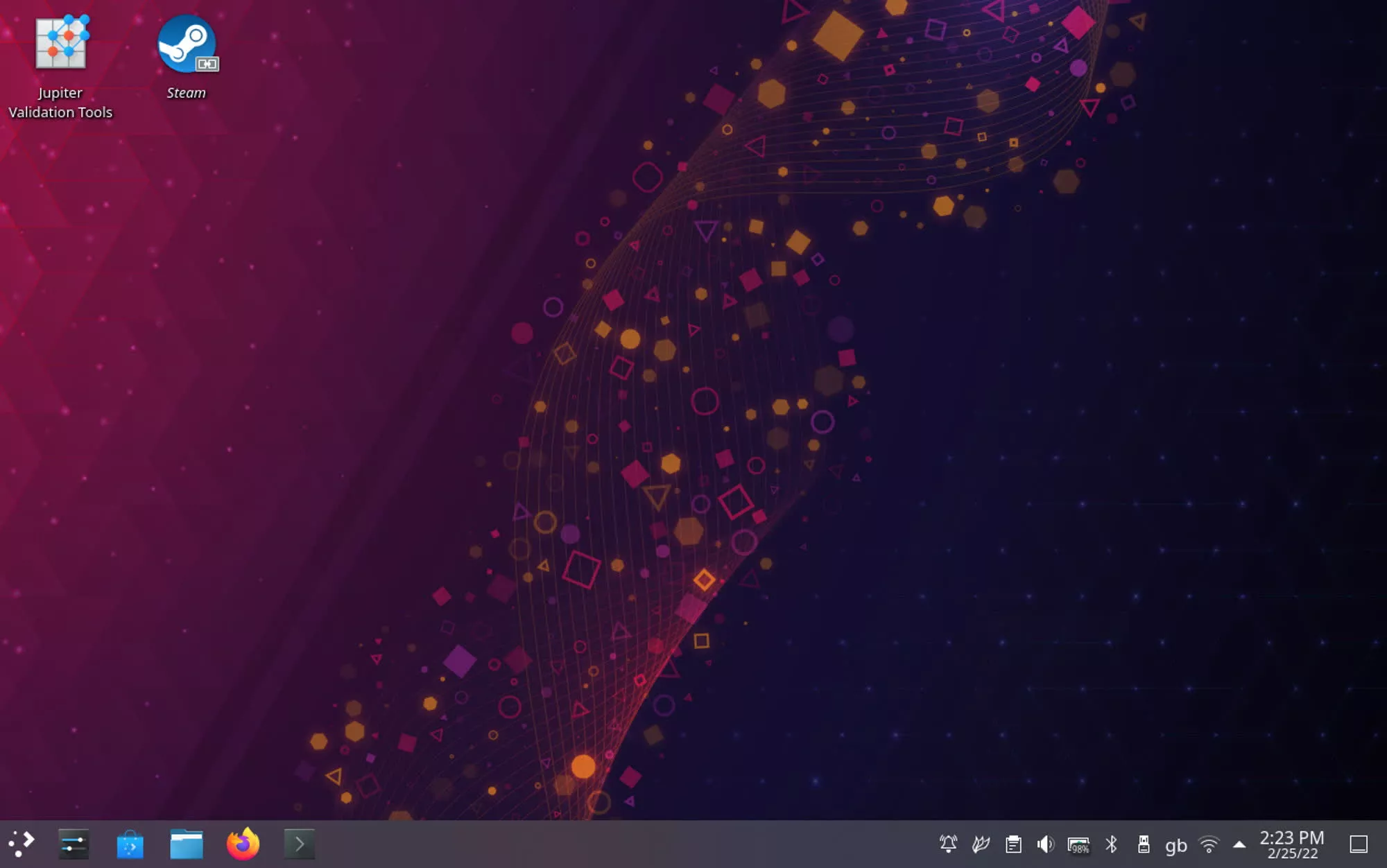
SteamOS has spent most of its life as a closed ecosystem, optimized almost exclusively for Valve's own devices. That's beginning to change. The company recently updated its Arch Linux-based OS to broaden hardware compatibility, and the move is backed by active collaboration with some of the biggest names in the PC industry.

The SteamOS 3.8.10 release is where the signals start to add up. The update adds initial support for upcoming Steam Machine hardware and meaningfully improves compatibility with Intel-based handhelds, along with better support for recent Intel and AMD processor platforms more broadly. On paper, it reads like a routine maintenance release. In practice, it looks like Valve is quietly building out the foundation for a much wider platform.
In a recent interview with The Verge, Valve confirmed the Intel relationship goes deeper than a few driver patches. The company is working closely with Intel's engineers to optimize SteamOS at the graphics stack level, ensuring the OS runs properly on Panther Lake – Intel's latest computing platform, and the architecture behind the Arc G3 Extreme SoC powering upcoming handhelds like the MSI Claw 8 EX AI+.

The Claw 8 EX AI+ ships with Windows, but Intel has acknowledged real user demand for a Linux alternative. No firm timeline for official SteamOS support has been given.

That device, like the new Steam Machines, carries a price tag that reflects the moment we're in. The MSI Claw 8 EX AI+ retails for a hefty $1,799 – a figure that would have seemed implausible for a handheld a few years ago. It remains to be seen if the halo device sells in any meaningful quantities at that price level, too.

MSI's product marketing lead Andy Chu has been straightforward about why: memory and storage costs have surged, largely on the back of AI industry demand, and OEMs have run out of room to absorb them. Chu says MSI exhausted every option trying to bring the price down and still landed here. He's also warned the situation could get worse before it gets better.

Against that backdrop: expensive hardware, a fragmented ecosystem, and a Windows-centric status quo – Valve's SteamOS ambitions start to look more strategic than incidental. Valve engineer Pierre-Loup Griffais has said that starting with the 3.8 release, users can now build their own Steam Machines using whatever PC hardware they have on hand. The experience, Griffais says, will closely resemble a docked Steam Deck, with some caveats.

Nvidia support is the most notable gap. Valve is actively collaborating with Nvidia on driver support, but Griffais was measured about the timeline. Most reporting puts realistic availability at 2027 at the earliest. SteamOS is an immutable OS with a read-only filesystem, which makes bundling Nvidia's proprietary drivers a fundamentally different problem than the open-source AMD and Intel drivers already baked in.

Previous attempts to install SteamOS outside of Valve hardware meant navigating the Steam Deck recovery image, a process that made most mainstream Linux installs look effortless by comparison. What's happening now is that the OS is being deliberately expanded to meet the broader PC ecosystem, rather than waiting for the ecosystem to come to it.

Permalink to story:

 
Seems pretty ambitious, but if they can get it to a point where it's pretty close to parity with Windows for gaming at least, I could easily see Valve becoming a serious threat to Apple in the future. People need Windows to get stuff done, Apple is brands themselves more as entertainment products.
 
Seems pretty ambitious, but if they can get it to a point where it's pretty close to parity with Windows for gaming at least, I could easily see Valve becoming a serious threat to Apple in the future. People need Windows to get stuff done, Apple is brands themselves more as entertainment products.
Maybe not so much Apple, they market themselves as premium and highend products and like to advertise their ecosystem. I think SteamOS is mostly just people tired of dealing with MS and gaming on windows. Macs can still be a productivity OS and Valve has a long way to go before SteamOS can compete on a productivity level if they try to at all. Not saying it is impossible, I just don't see that as the direction they're trying to go. Atleast in the immediate future. I think their current goals are to get a big enough marketshare for developers to stop using DRM/anti-cheat to not support Linux. Proton has gotten good enough at this point that DRM and Anti-cheat are really the only things holding Linux gaming back.
 
Good to see Valve is actually looking into this. I've been asking for this for a bit now and many others.
 
What is the accomplishment here? Oh wow, you made linux run on commercially available hardware! NOBODY has done that before!
Better idea....just use linux. It already exists.
Run? Yeah, it's been done before. Run well and reliably? That's still hit or miss. AMD tends to do better with their open source drivers but it's still not a slam dunk. NVidia has gotten significantly better over the last year, but still requires certain presets in the distro to run well. You often have to download an nVidia specific version of a distro.

The landscape isn't what it was even a few years ago, but there is still A LOT of work to be done and I'm saying that as someone who has been dailying Linux for nearly 6 years.

While working around the Limitations in Linux is far from impossible and much of can be done with AI now, we have lots of work to do to create a seemless experience which is what's necessary for Linux to truly take over Windows.
 
Steam doesn't have its own OS. It's Arch with some minor modifications. Everything is available on other Linux distributions.
A certain general trend that someday in the future everything will be fine.
Maybe I'm wrong because I haven't used Linux for a long time.
 
Last edited:
Run? Yeah, it's been done before. Run well and reliably? That's still hit or miss.
Linux runs reliably and has done so for a very long time.
AMD tends to do better with their open source drivers but it's still not a slam dunk. NVidia has gotten significantly better over the last year, but still requires certain presets in the distro to run well. You often have to download an nVidia specific version of a distro.
This is some incredible misinformation. None of the main distros have "nVidia specific distros". nVidia drivers are made available via their package managers or can be added via PPA.
The landscape isn't what it was even a few years ago, but there is still A LOT of work to be done and I'm saying that as someone who has been dailying Linux for nearly 6 years.

While working around the Limitations in Linux is far from impossible and much of can be done with AI now, we have lots of work to do to create a seemless experience which is what's necessary for Linux to truly take over Windows.
None of this has anything to do with what is being discussed. SteamOS is just advertising that they are going to do what every popular distro already does. Fedora, Debian, Arch, OpenSUSE, all run out of the box on all the hardware discussed.

Actual linux livability issues are not being addressed here. Running on commercially available hardware has been the OOTB experience for Linux for at least 15 years now.
Steam doesn't have its own OS. It's Arch with some minor modifications. Everything is available on other Linux distributions.
A certain general trend that someday in the future everything will be fine.
Maybe I'm wrong because I haven't used Linux for a long time.
Exactly. It's tweaked Arch.

And last I checked, Arch distros like Manjaro support nvidia, AMD, and intel hardware out of the box no problem.
 
Linux runs reliably and has done so for a very long time.

This is some incredible misinformation. None of the main distros have "nVidia specific distros". nVidia drivers are made available via their package managers or can be added via PPA.

None of this has anything to do with what is being discussed. SteamOS is just advertising that they are going to do what every popular distro already does. Fedora, Debian, Arch, OpenSUSE, all run out of the box on all the hardware discussed.

Actual linux livability issues are not being addressed here. Running on commercially available hardware has been the OOTB experience for Linux for at least 15 years now.
Crap like this is why I have you blocked and barely reply to you anymore. If you want to game, you go AMD. Any Gaming linux dstro, and even some that are not gaming focused, have a specific version just for nVidia compatibility. If you knew a damn thing about Arch then you would know that it is 90% what you make of it and how you configure it. And all of those distros will "work" with nVidia out of the box, but you will not be able to game on them reliabily. That is why so any gaming distros have a pre-configured nVidia version. If all the games you play are 10 years old, you're probably fine, but it still takes months for new games to be properly supported. This is why Valve is creating a database that tracks hardware along side Proton to show what hardware configurations work most reliabily.

Tell you what. Go get a "regular" distro and try playing a few games on them that came out in the last few months and tell me how that works out for you.
 
Tell you what. Go get a "regular" distro and try playing a few games on them that came out in the last few months and tell me how that works out for you.

I think Ubuntu is OK for AMD/NV/intel, you could even install both drivers at once. NV proprietary drivers are not open, but possible to be installed relatevily easily on Ubuntu. Don't know how much better is steamOS for gaming than recent Ubuntu+steam...
 
This is some incredible misinformation. None of the main distros have "nVidia specific distros". nVidia drivers are made available via their package managers or can be added via PPA.
No I’m pretty sure there’s distro’s out there that have specific Nvidia versions due to Nvidia’s refusal to support Linux properly.

Just from a quick Google:
Pop_OS
Bazzite
Nobara

All seem to have specific Nvidia compatible images.
 
So we are going to have a new distro aimed at gamers. I think that is only positive. Weird marketing message though, since we already had other distros working on Intel, AMD and Nvidia. So what will make SteamOS different than Bazzite or PopOS for example?
Good to see a big company backing a gaming distro as an alternative to Windows. I agree with the above comments re anti-cheat. This initiative may help push the needle and get more games working on Linux even if they use a crappy kernel level AC.
However, I feel like I need to hear more from Valve. Why is SteamOS different than all the others and what is the roadmap?
 
Crap like this is why I have you blocked and barely reply to you anymore. If you want to game, you go AMD. Any Gaming linux dstro, and even some that are not gaming focused, have a specific version just for nVidia compatibility. If you knew a damn thing about Arch then you would know that it is 90% what you make of it and how you configure it. And all of those distros will "work" with nVidia out of the box, but you will not be able to game on them reliabily. That is why so any gaming distros have a pre-configured nVidia version. If all the games you play are 10 years old, you're probably fine, but it still takes months for new games to be properly supported. This is why Valve is creating a database that tracks hardware along side Proton to show what hardware configurations work most reliabily.

Tell you what. Go get a "regular" distro and try playing a few games on them that came out in the last few months and tell me how that works out for you.
Exactly. While every distro ha NVIDIA drivers they're not optimised for the distro and might not work well. There's a reason not one handheld has an NVIDIA chip in it.
 
Exactly. While every distro ha NVIDIA drivers they're not optimised for the distro and might not work well. There's a reason not one handheld has an NVIDIA chip in it.

Maybe... Because there is absolutely ZERO commercially available x86 chips with a Nvidia iGPU? Handhelds either use ARM (mostly emulator oriented) or use x86 APUs, which only exist from AMD and Intel at the moment.

"All" other Linux machines use a AMD APU or a discrete GPU, because AMD Linux drivers get support. Whenever Valve/Code weavers get a seamless x86 and DX12 translation to ARM and Nvidia, an Nvidia APU will break any AMD monopoly on x86/AAA gaming.
 
I'm looking forward to this, but I'll wait for an actually installer rather than a recovery method for a device I'm not actively using. I'd feel like an afterthought without an install process to properly invite me in.
 
Seems pretty ambitious, but if they can get it to a point where it's pretty close to parity with Windows for gaming at least, I could easily see Valve becoming a serious threat to Apple in the future. People need Windows to get stuff done, Apple is brands themselves more as entertainment products.

Er, not sure about that pal. I gave up trying to get anything done on Windows when 11 was released, that's what my Mac is for. I've got a PC gaming rig, as that is all it is good for, but I'll probably stick with it, as Valve will probably charge €400 a year for a licence
 
Er, not sure about that pal. I gave up trying to get anything done on Windows when 11 was released, that's what my Mac is for. I've got a PC gaming rig, as that is all it is good for, but I'll probably stick with it, as Valve will probably charge €400 a year for a licence
If you were not able to get things done on windows 11, that's a personal issue. Sorry you are inept.
 
Better Nvidia drivers in 2027 - That isn't that far away.

I believe Nvidia wanting to expand into the CPU & iGPU space is driving this more than SteamOS/proton but either way I'm all for Linux getting better support.
 
Maybe... Because there is absolutely ZERO commercially available x86 chips with a Nvidia iGPU? Handhelds either use ARM (mostly emulator oriented) or use x86 APUs, which only exist from AMD and Intel at the moment.

"All" other Linux machines use a AMD APU or a discrete GPU, because AMD Linux drivers get support. Whenever Valve/Code weavers get a seamless x86 and DX12 translation to ARM and Nvidia, an Nvidia APU will break any AMD monopoly on x86/AAA gaming.
I think we need to look at laptops, not handhelds. It's hard to find an AMD laptop that isn't APU based. If you're a laptop gamer it's almost guaranteed you have an nVidia GPU. I know that's not exactly a handheld, but it is an issue for people looking to switch. I spend about 9 months a year on the road for work and I'm in Orlando for the foreseeable future. Having a portable gaming laptop is a must for me and finding an all AMD one is almost impossible. You can find them, but they are absurdly expensive.
Better Nvidia drivers in 2027 - That isn't that far away.

I believe Nvidia wanting to expand into the CPU & iGPU space is driving this more than SteamOS/proton but either way I'm all for Linux getting better support.
I find it funny that their windows drivers have gotten worse over the last year but their Linux drivers are actually getting better. I feel that's mostly because people who use nVidia hardware to run local LLMs usually do it on Linux
 
Back