Millions of people use Signal every day for free and instantaneous communication anywhere in the world. Send and receive high-fidelity messages, participate in HD voice/video calls, and explore a growing set of new features that help you stay connected.
Signal's advanced privacy-preserving technology is always enabled, so you can focus on sharing the moments that matter with the people who matter to you.
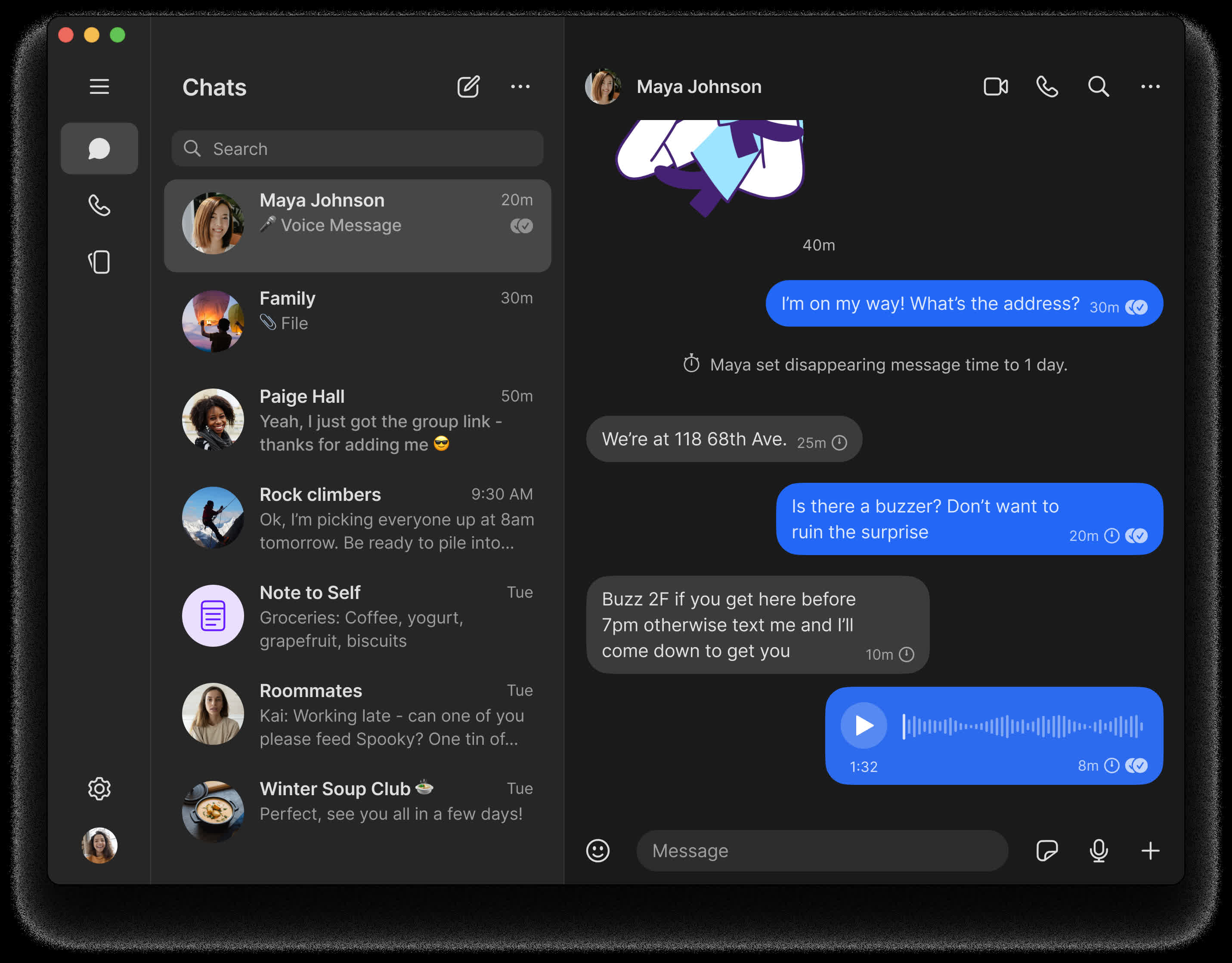
Is Signal secure?
Signal is the gold standard for private messaging apps at the moment. It is free and open source. Using end-to-end encryption by default, Signal keeps all forms of communication on the platform as safe as they can be. These include one-on-one chat, voice, and video calls, as well as group chats.
Is Signal better than WhatsApp?
While Signal and WhatsApp are similar in that they are both messaging platforms, they are built for serving two distinct purposes.
Signal is open source and collects less user data, while WhatsApp purposely links user information to your account. WhatsApp offers cloud backup of your conversations, while Signal only stores message history locally, which means that chats would be lost if you lose your phone. This is all done by design as Signal is meant to be more private.
Both WhatsApp and Signal offer end-to-end encryption, for both messages and calls. Both apps require a mobile phone number for accessing the service and both let you use only one phone and five other devices.
Can Signal do video calls?
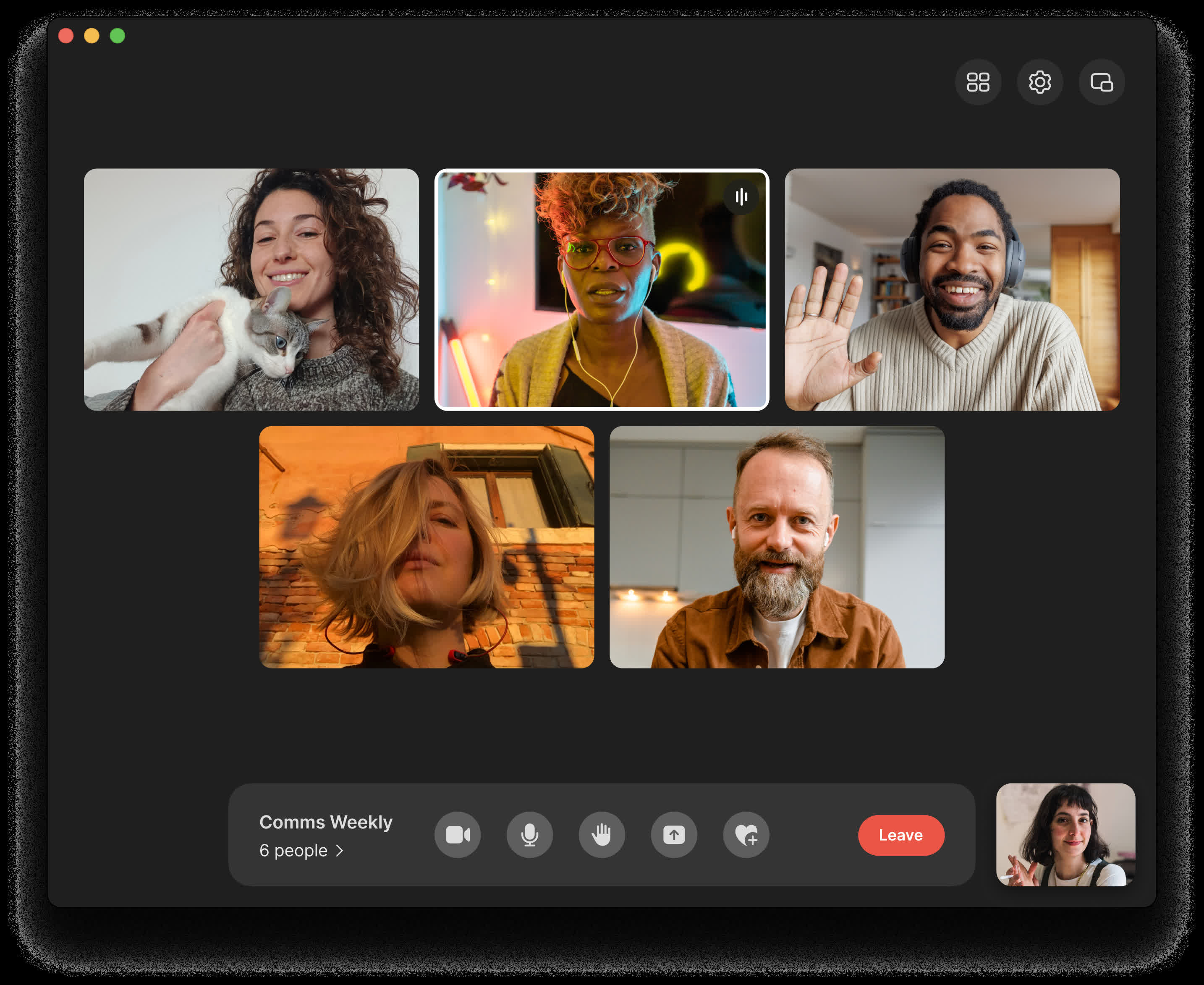
Yes, Signal can make video calls to individuals and group calls for up to 40 participants.
Features
State-of-the-art end-to-end encryption (powered by the open source Signal Protocol) keeps your conversations secure. We can't read your messages or listen to your calls, and no one else can either. Privacy isn't an optional mode --- it's just the way that Signal works. Every message, every call, every time.
- Say anything - State-of-the-art end-to-end encryption (powered by the open source Signal Protocol) keeps your conversations secure. Privacy isn't an optional mode --- it's just the way that Signal works. Every message, every call, every time.
- Go fast - Messages are delivered quickly and reliably, even on slow networks. Signal is optimized to operate in the most constrained environment possible.
- Feel free - Signal is a completely independent 501c3 nonprofit. Development is supported by users like you. No advertisements. No trackers. No kidding.
- Be yourself - You can use your existing phone number and address book to securely communicate with your friends.
- Speak up - Whether they live across town or across the ocean, Signal's enhanced audio and video quality will make your friends and family feel closer.
- Whisper in the shadows - Switch to the dark theme if you refuse to see the light.
- Sound familiar - Choose custom alerts for each contact, or disable noises completely. Simon & Garfunkel wrote a hit song about it in 1964, and you can experience the sound of silence whenever you want by choosing "None" as your notification ringtone.
- Picture this - Use the built-in image editing features to sketch, crop, and flip your outgoing photos. There's even a text tool so that you can add more words to the 1,000 that your picture is already worth.
No ads. No trackers. No kidding.
There are no ads, no affiliate marketers, and no creepy tracking in Signal. So focus on sharing the moments that matter with the people who matter to you.
Note: To use the Signal desktop app, Signal must first be installed on your phone.
What's New
In the past, if you broke or lost your phone, your Signal message history was gone. This has been a challenge for people whose most important conversations happen on Signal. Think family photos, sweet messages, important documents, or anything else you don't want to lose forever. This explains why the most common feature request has been backups; a way for people to get Signal messages back even if their phone is lost or damaged.
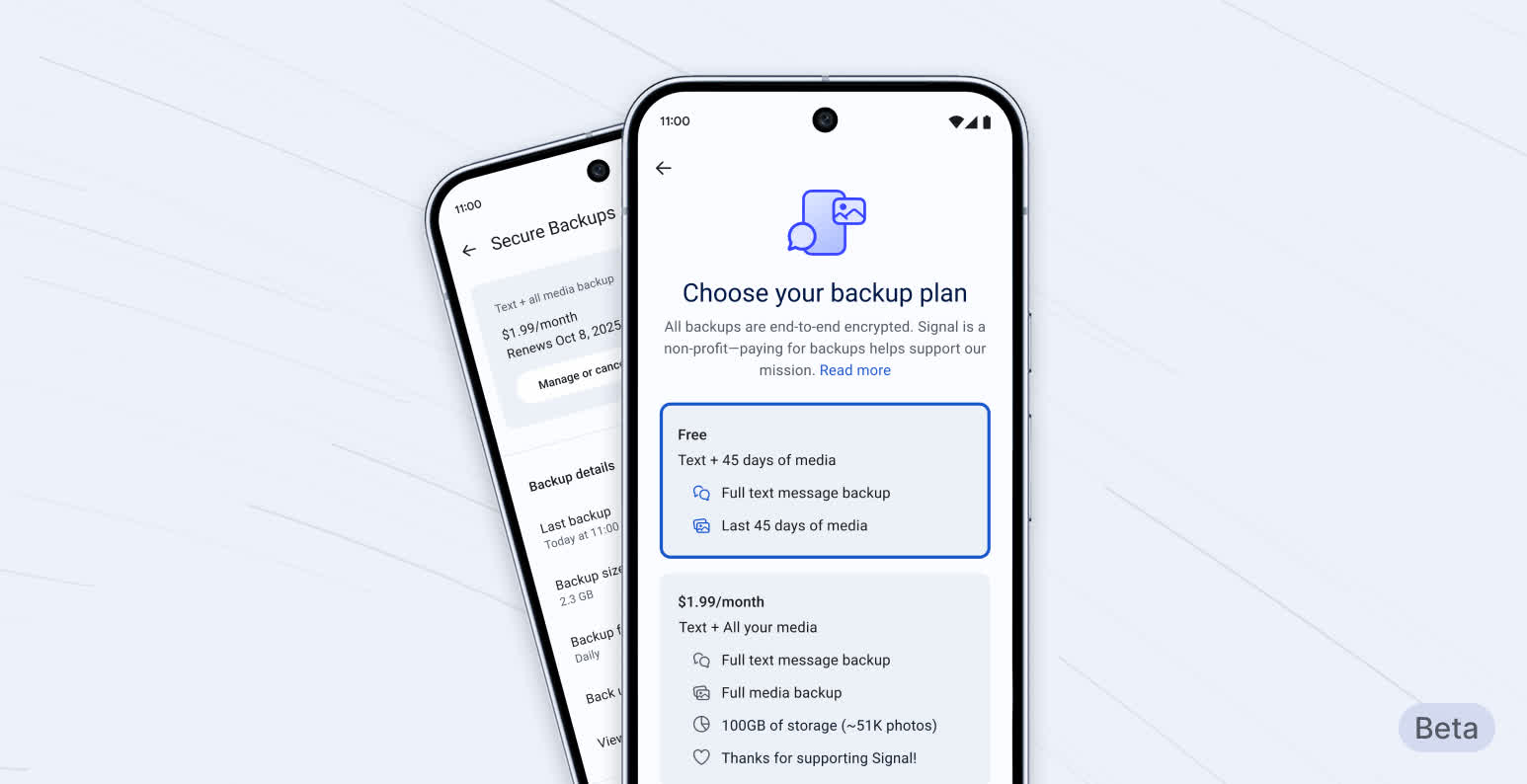
After careful design and development, we are now starting to roll out secure backups, an opt-in feature. This first phase is available in the latest beta release for Android. This will let us further test this feature in a limited setting, before it rolls out to iOS and Desktop in the near future.
Here, we'll outline the basics of secure backups and provide a high-level overview about how they work and how we built a system that allows you to recover your Signal conversations while maintaining the highest bar for privacy and security.
Secure Backups 101
Secure backups let you save an archive of your Signal conversations in a privacy-preserving form, refreshed every day; giving you the ability to restore your chats even if you lose access to your phone. Signal's secure backups are opt-in and, of course, end-to-end encrypted. So if you don't want to create a secure backup archive of your Signal messages and media, you never have to use the feature.
If you do decide to opt in to secure backups, you'll be able to securely back up all of your text messages and the last 45 days' worth of media for free.
If you want to back up your media history beyond 45 days, as well as your message history, we also offer a paid subscription plan for US$1.99 per month.
This is the first time we've offered a paid feature. The reason we're doing this is simple: media requires a lot of storage, and storing and transferring large amounts of data is expensive. As a nonprofit that refuses to collect or sell your data, Signal needs to cover those costs differently than other tech organizations that offer similar products but support themselves by selling ads and monetizing data.
Anatomy of Secure Backups: Privacy First, Always
At Signal, our commitment to privacy informs which features we build and the ways that we build them.
Using the same zero-knowledge technology that enables Signal groups to work without revealing intimate metadata, backup archives are stored without a direct link to a specific backup payment or Signal user account.
At the core of secure backups is a 64-character recovery key that is generated on your device. This key is yours and yours alone; it is never shared with Signal's servers. Your recovery key is the only way to "unlock" your backup when you need to restore access to your messages. Losing it means losing access to your backup permanently, and Signal cannot help you recover it. You can generate a new key if you choose. We recommend storing this key securely (writing it down in a notebook or a secure password manager, for example).
These choices are part and parcel of Signal's guiding mission to collect as close to no data as possible, and to make sure that any information that is required to make Signal robust and usable cannot be tied back to the people who depend on Signal. This is why wherever there's a choice between security and any other objective, we've prioritized security.
Enabling Secure Backups
If you want to opt in to secure backups, you can do so from your Signal Settings menu. For now, only people running the latest beta version of Signal on Android will be able to opt in. But soon, we'll be rolling this feature out across all platforms.
Once you've enabled secure backups, your device will automatically create a fresh secure backup archive every day, replacing the previous day's archive. Only you can decrypt your backup archive, which will allow you to restore your message database (excluding view-once messages and messages scheduled to disappear within the next 24 hours). Because your secure backup archive is refreshed daily, anything you deleted in the past 24 hours, or any messages set to disappear are removed from the latest daily secure backup archive, as you intended.
Backing up, moving forward
We're excited to introduce secure backups, making sure you can retain access to your Signal messages even when your phone is lost or destroyed. But secure backups aren't the end of the road.
The technology that underpins this initial version of secure backups will also serve as the foundation for more secure backup options in the near future. Our future plans include letting you save a secure backup archive to the location of your choosing, alongside features that let you transfer your encrypted message history between Android, iOS, and Desktop devices.
Secure backups are available in today's Android beta release. A full public release, along with iOS and Desktop support, is coming soon.
Previous release notes
This update introduces support for new processors on Windows like the Snapdragon X Elite, so you don't need to twist your Arm into emulating x86 anymore.
We also fixed a bug that broke the dark theme in Signal when your operating system settings were configured to use a light theme. Signal Desktop can now properly handle your thematically split personality.
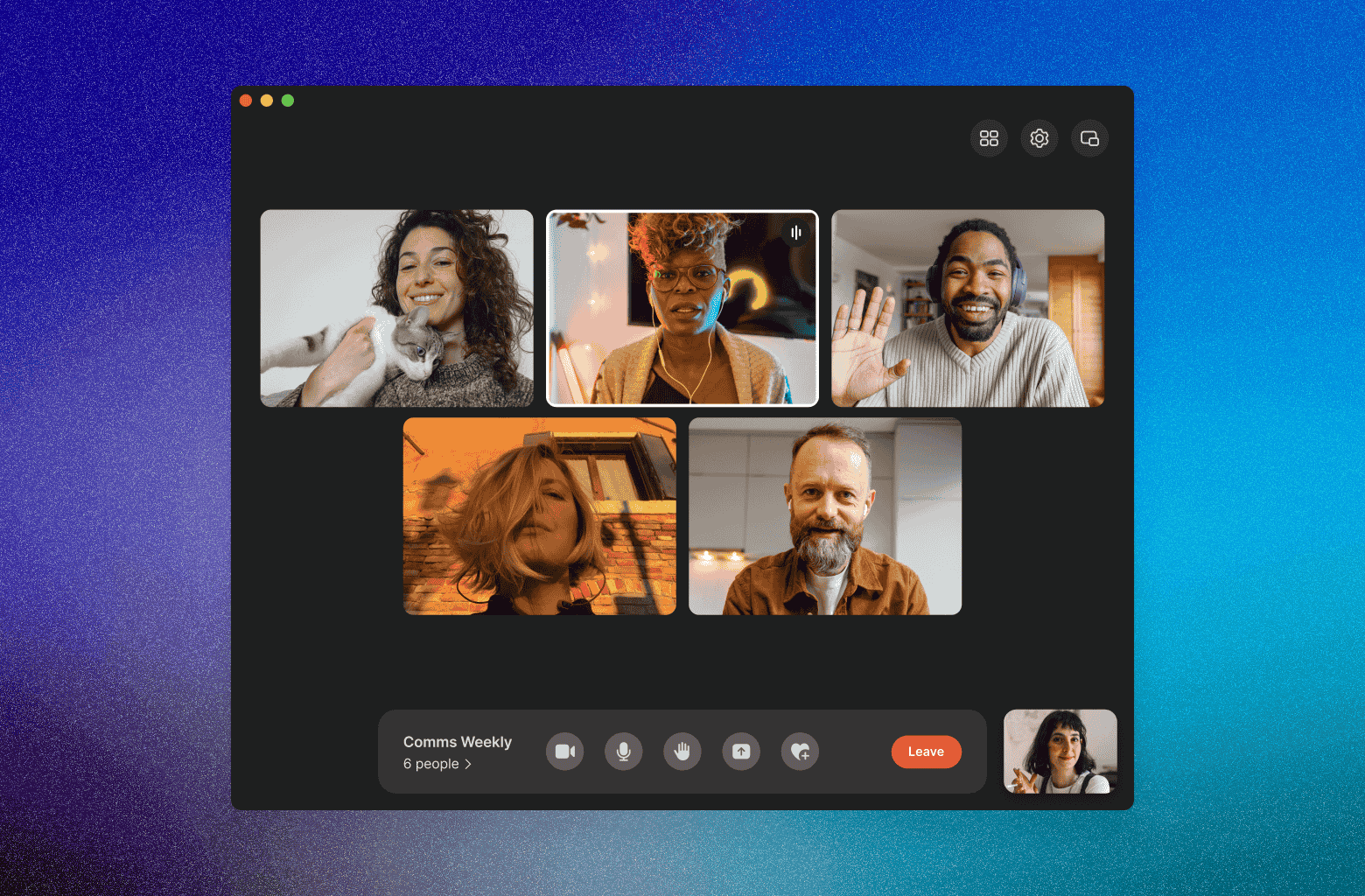
If you love group calls on Signal, but don't want to create a group chat for every combination of your friends or colleagues, you're in luck. Today we're launching call links: Share a link with anyone on Signal and in just a tap or click they can join the call. No group chat required.
Call links join a suite of other features to improve Signal calling including a raise hand button, emoji reactions, a dedicated calls tab, and a number of improvements to the look and feel of Signal calls.
We believe that however you want to communicate – a text, a call, a voice message, a GIF, a video call, a story – you should be able to do it privately. We first introduced private, end-to-end encrypted voice calls in Signal calling back in 2014. Keeping with the times, we added video calls in 2017 and group video calls in 2020.
Today, Signal as an organization runs all of our meetings using Signal calls, treating them as a substitute for the surveillance-heavy video meeting services that grew in popularity after COVID hit.
We know we're not alone here. Video calls have become a new normal meeting place for organizations, workplaces, and groups of friends all over the world. As communication norms change, Signal's promise of a private place to communicate stays the same.
To make Signal calling better overall, we've spent the last few months building some welcome improvements. All of these features are available in the latest versions of Signal for Android, iOS, and Desktop. Update Signal to try them out!
Here's what's new:
- Call links: Instead of having to create a Signal group chat before starting a group call, you can create a link to let anyone on Signal quickly join a call. No group chat needed!
- Raise hand button: Let people know that you have a question, a comment, or a joke to make without interrupting the flow of conversation
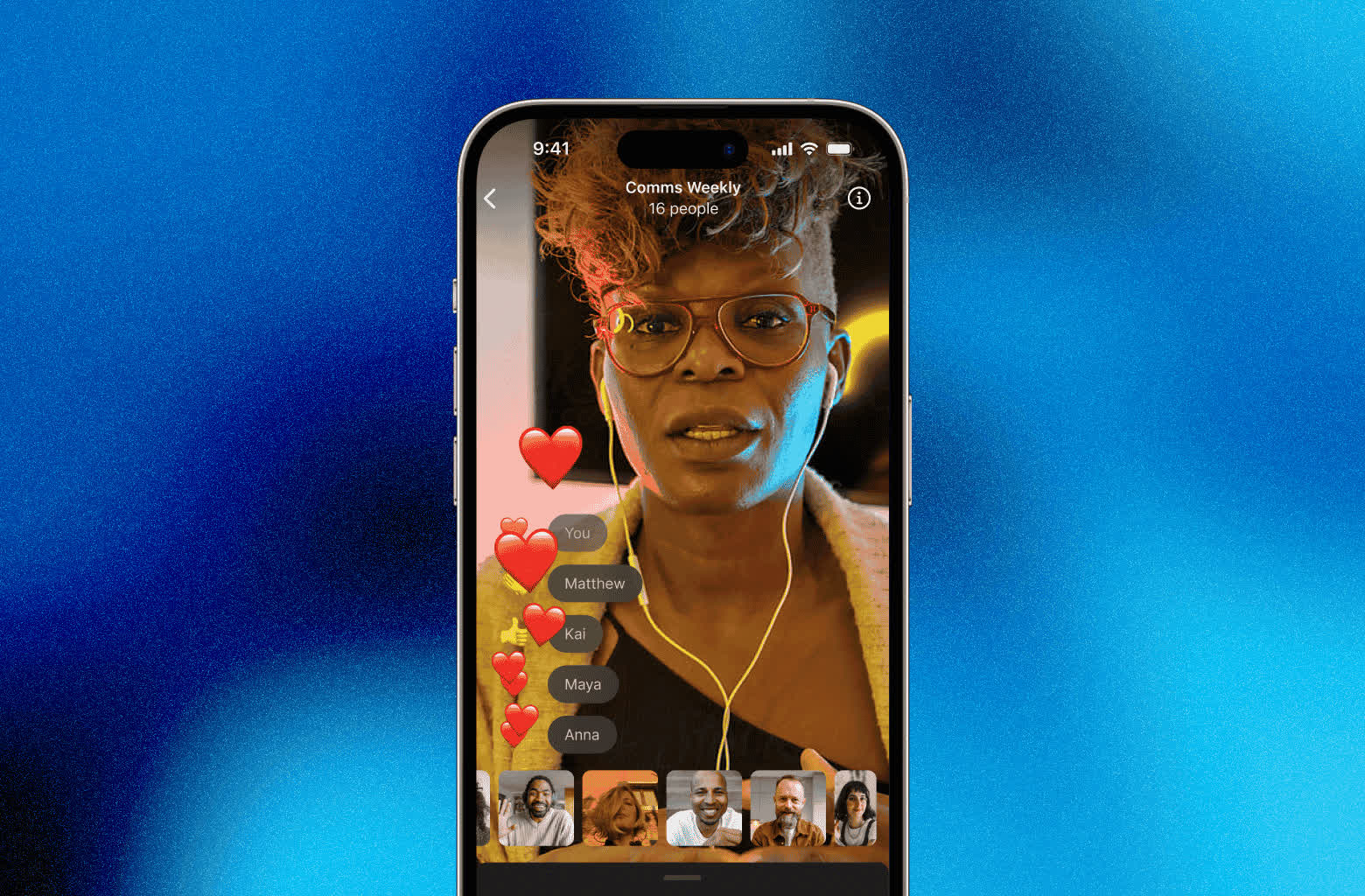
- Emoji reactions in calls to make for a more dynamic conversation
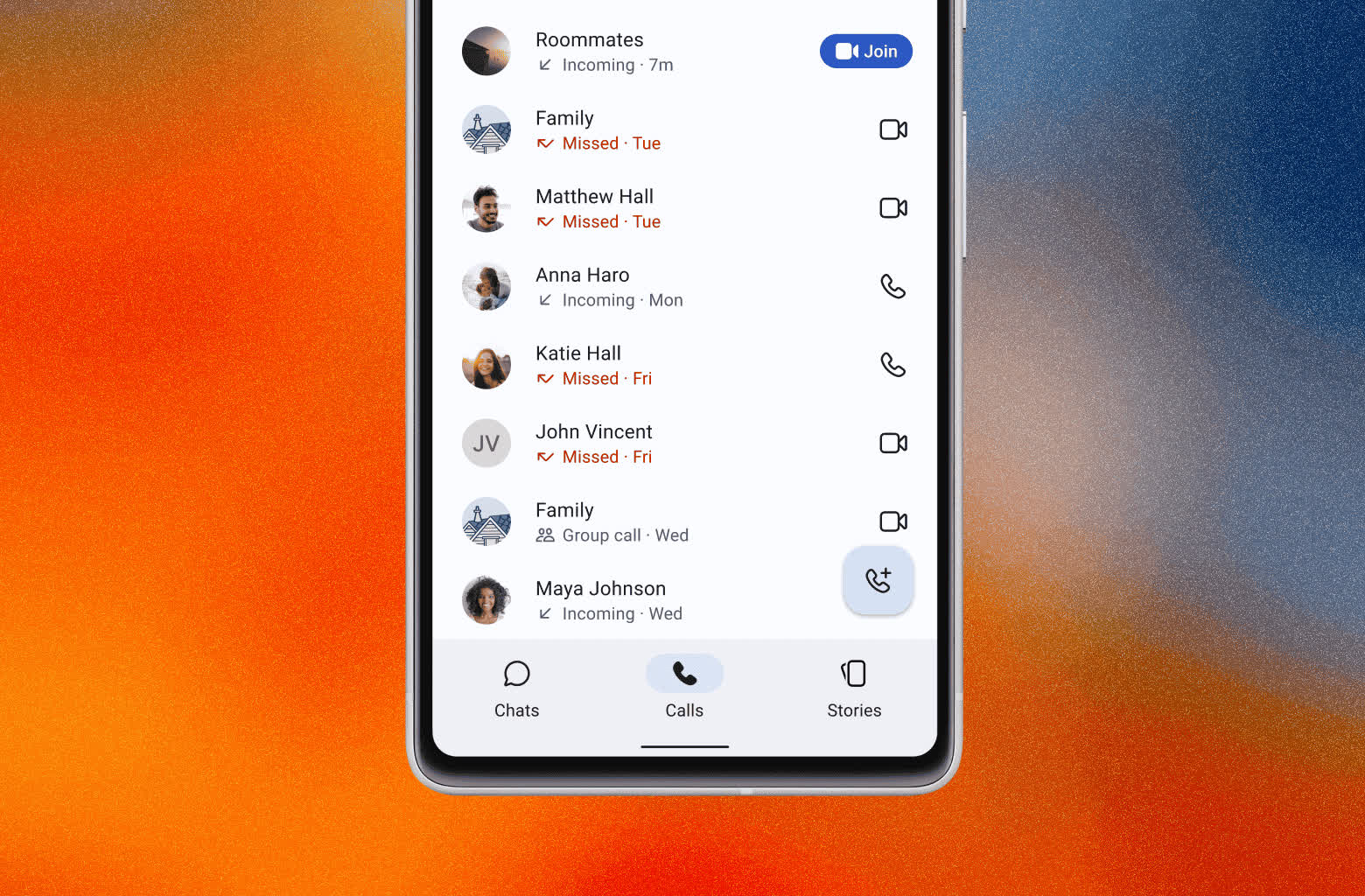
- Dedicated calls tab on your Signal home screen to see all of your call history in one place
- More options to view speakers and participants when using Signal Desktop
- Updated call settings to more easily turn your camera and mic on or off
Call links
In the past, to start a group call in Signal you needed to first create a Signal group chat, then add people, and only then could you start a group call. Not anymore! Now, you can create a quick and easy link that anyone on Signal can use to join a call without having to join a Signal group chat first.
To create a call link, open Signal on your phone or Desktop and navigate to the calls tab. Tap or click to create a call link. You can decide if you want to name your link and whether you want to have control over approving people who want to join or if anyone can join without approval. By default, you'll have to approve people before they can join a call.
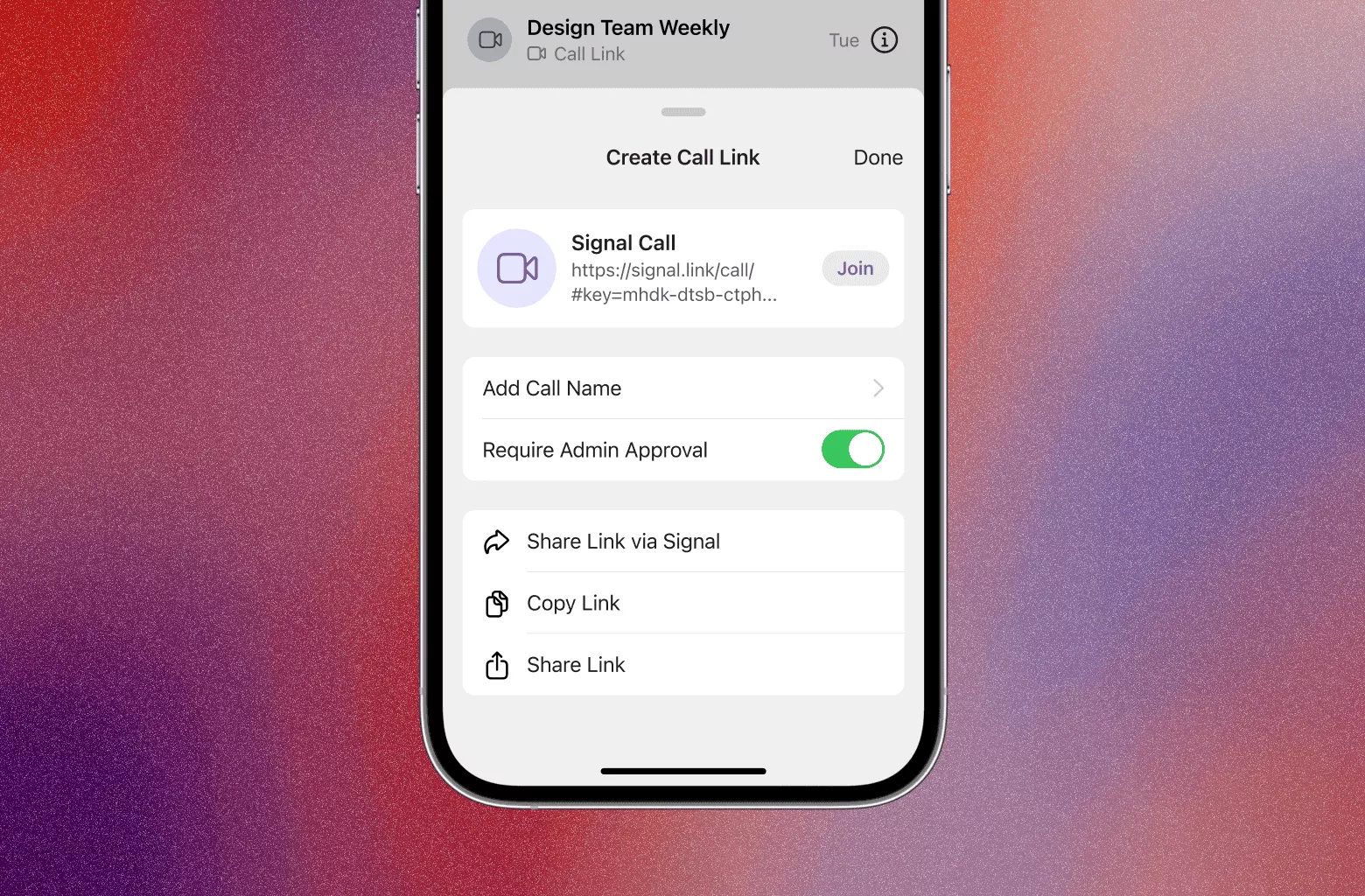
Once it's created, you can share your call link however you like.
If you've chosen to require admin approval before people can join a call, you'll see requests to join the call which you can approve or decline. You can also remove people from calls and optionally block them from the call so they can't join again.
Call links are reusable, so if you have a recurring phone date with your best friends or a weekly check-in with your coworkers, there's no need to make a new call link every time.
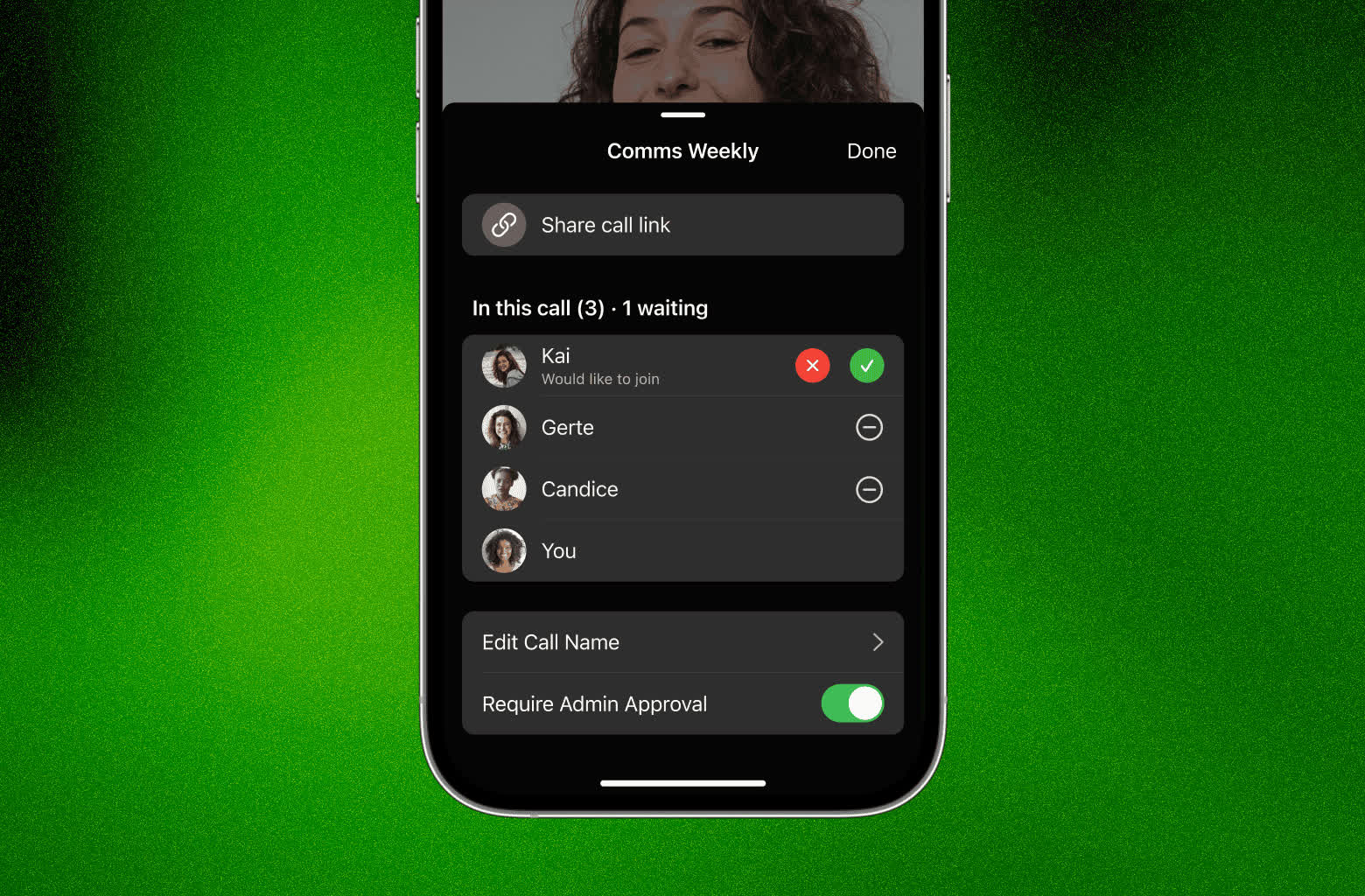
Group calls are supported for up to 50 people.
For more details about how call links work, check out additional information in our support center.
Raise hand button and emoji reactions
To make for a richer calling experience without disrupting the pace of conversation, you can use the new raise hand button or share emoji reactions.
When multiple people raise their hands in a call, anyone in the call will be able to see the list of raised hands so that everyone can keep track of whose turn it is to speak. This way, everyone can weigh in without talking over each other when you ask all your friends for their opinion.
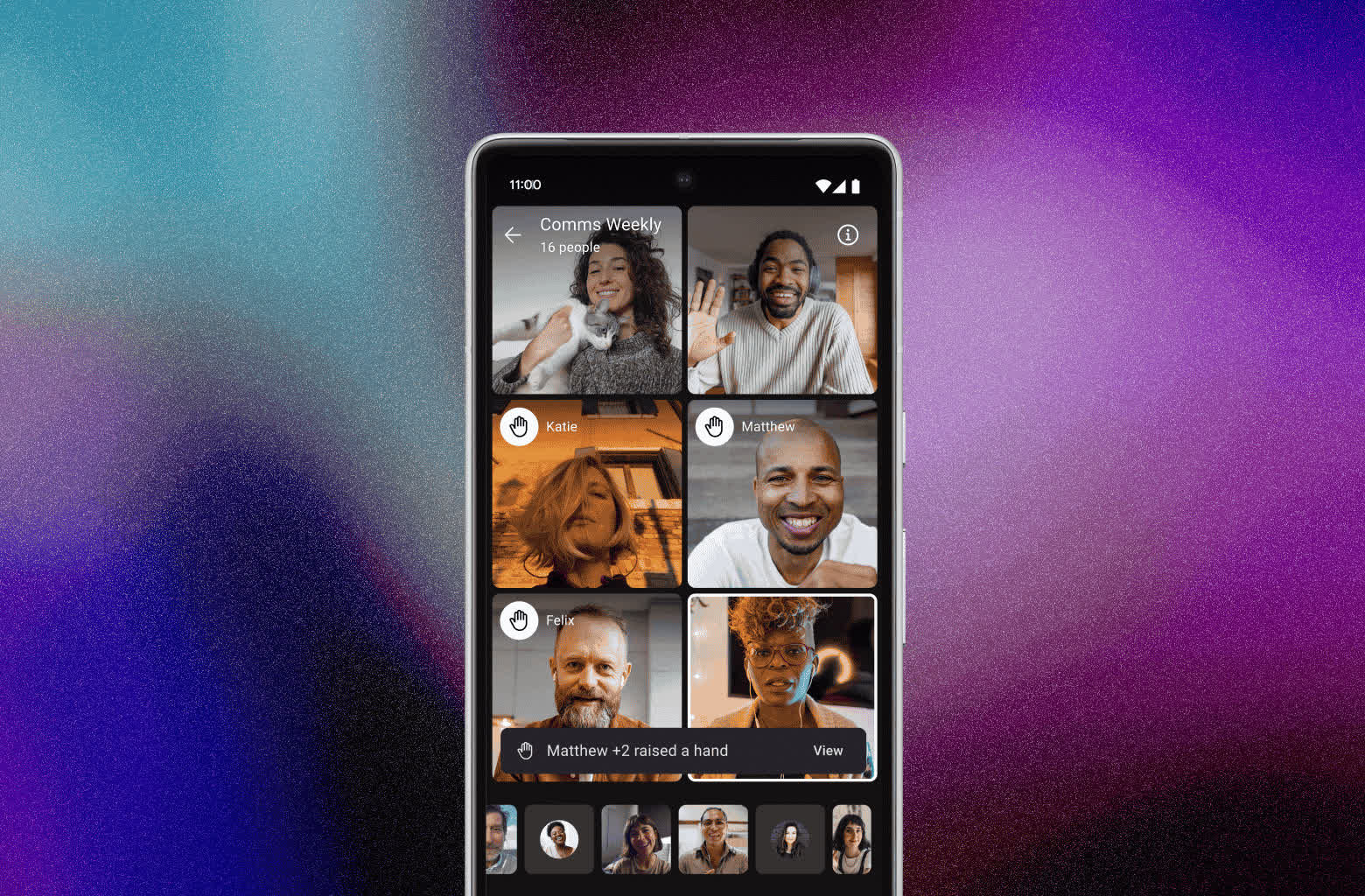
Emoji reactions let you give some quick feedback to whatever is being said – celebrate someone's good news, send some love, or tell everyone that your mind is blown without having to interrupt the speaker. And if enough people share the same emoji reaction in a short amount of time, you'll see a fun emoji burst.
Further calling improvements
We've improved calls in Signal with several other changes.
You'll now see a dedicated tab at the bottom of your phone screen or at the left-hand side of your Desktop app screen for all of your calls. You can much more easily see your call history, call people back, and manage your call links.
You now also have more options for how you view call participants when calling via the Desktop app. You can now choose if you want to see them in Grid view, Sidebar view, or Speaker view.
We've updated the call control buttons, making it easier to turn your camera and microphone on or off, manage your speaker source, and see who else is in a call.
Try out these new features on the latest version of Signal for Android, Desktop, and iOS. We'll keep on improving for Signal everyone who needs to connect with each other securely all over the world. To try out the latest features and offer crucial early feedback, join our beta!