
The DDR5 nightmare hasn't eased yet, but today we're checking out an option that might be viable for anyone who needs to get their hands on some memory.
As we're all painfully aware by now, the cost of DDR memory shot up rapidly late last year. This hit consumer-grade DDR5 especially hard, with prices tripling in just a few short months. The trigger behind this surge was OpenAI, which through its AI-powered ambitions struck deals with Samsung and SK hynix to buy up a significant portion of their capacity for producing HBM, or high-bandwidth memory.

As a result, Samsung and SK hynix shifted production lines away from standard PC and smartphone memory toward HBM and server-grade products. After seeing OpenAI make this move, other major players such as Google and Meta didn't want to risk missing out. They followed suit, striking deals with Samsung, SK hynix, and Micron to absorb the remaining capacity – and it truly was the remaining capacity.
There are only a handful of companies worldwide that manufacture DRAM. Just three account for the vast majority of global supply: SK hynix at around 34%, Samsung at roughly 33%, and Micron at about 26%. That leaves the remaining 7% split among smaller players fighting over what's left.
CXMT Enters the Picture

With the big three fully locked into producing HBM to fuel the AI race – motivated by far higher margins – the supply of products like DDR5 memory effectively stopped overnight. As a result, the memory we use, for example, to test AMD Zen 5 processors, G.Skill's Trident Z Neo DDR5-6000 CL30 32 GB kit used to cost $115 back in October 2025.
Thanks to its price-to-performance ratio, it was widely considered the sweet spot. Today, that same kit costs $490, representing a 4.3x price increase in just three months.

This situation has pushed many of you planning a new gaming PC to consider DDR4 instead, either through AMD's older AM4 platform or Intel's LGA 1700 platform, both of which support DDR4. Unfortunately, it didn't take long to realize that DDR4 production has also been phased out, driving up prices for budget PCs and older systems and making DDR4 a poor alternative. That's genuinely bad news.
So, PC gamers in need of a new build or an upgrade are in a rough spot. You either bite the bullet and pay more than four times what DDR5 cost just months ago, or you don't upgrade at all. Those are essentially the options, for now.

We say "for now" because there is another DRAM maker within that 7% minority: CXMT, a China-based company pushing hard to become a relevant player. Earlier headlines suggested CXMT was selling DRAM at around $138, while average prices elsewhere ranged from $300 to $400. That prompted us to source a memory kit using CXMT ICs.
This was a few weeks ago, and at the time, RAM maker Kingbank was offering the cheapest 32 GB DDR5 kits in Australia – using CXMT ICs. The kit in question was the Kingbank KFRW DDR5-6000 CL36 32 GB kit. The main reason for us buying this Chinese RAM was to see how it compares with our G.Skill kit using SK hynix ICs.

Admittedly, KFRW isn't the most memorable name, and we've been told this specific kit is exclusive to Australia. It's based on the broader Sawblade series that Kingbank sells elsewhere, with the only real difference being the heatsink design.
We were excited to test this memory not only because it's our first experience with Chinese DRAM, but also because it comes from a manufacturer that isn't locked into an AI contract. CXMT was never going to solve the entire memory crisis, given it accounts for roughly 5% of global DRAM market share. Still, recent developments could allow CXMT to close the gap on the big three, reducing consumer reliance on Samsung, SK hynix, and Micron – companies that currently have little incentive to sell us memory.

As CXMT looks to expand production, we wanted to know: is its memory actually any good? To find out, we paired the Aussie Sawblade with the Ryzen 7 9800X3D and Ryzen 7 9700X, comparing results against G.Skill's premium DDR5-6000 CL26 kit and an entry-level Kingston DDR5-5200 kit.
Benchmarks
One advantage of AMD's 3D V-Cache technology is that it's far less reliant on memory performance. You can pair almost any DDR5 kit with these CPUs and see similar results. That makes X3D processors less ideal for memory testing, which is why we've also included the 9700X. Still, this testing clearly shows that pairing Kingbank's CXMT-based memory with an X3D processor delivers optimal results.
Rainbow Six Siege X
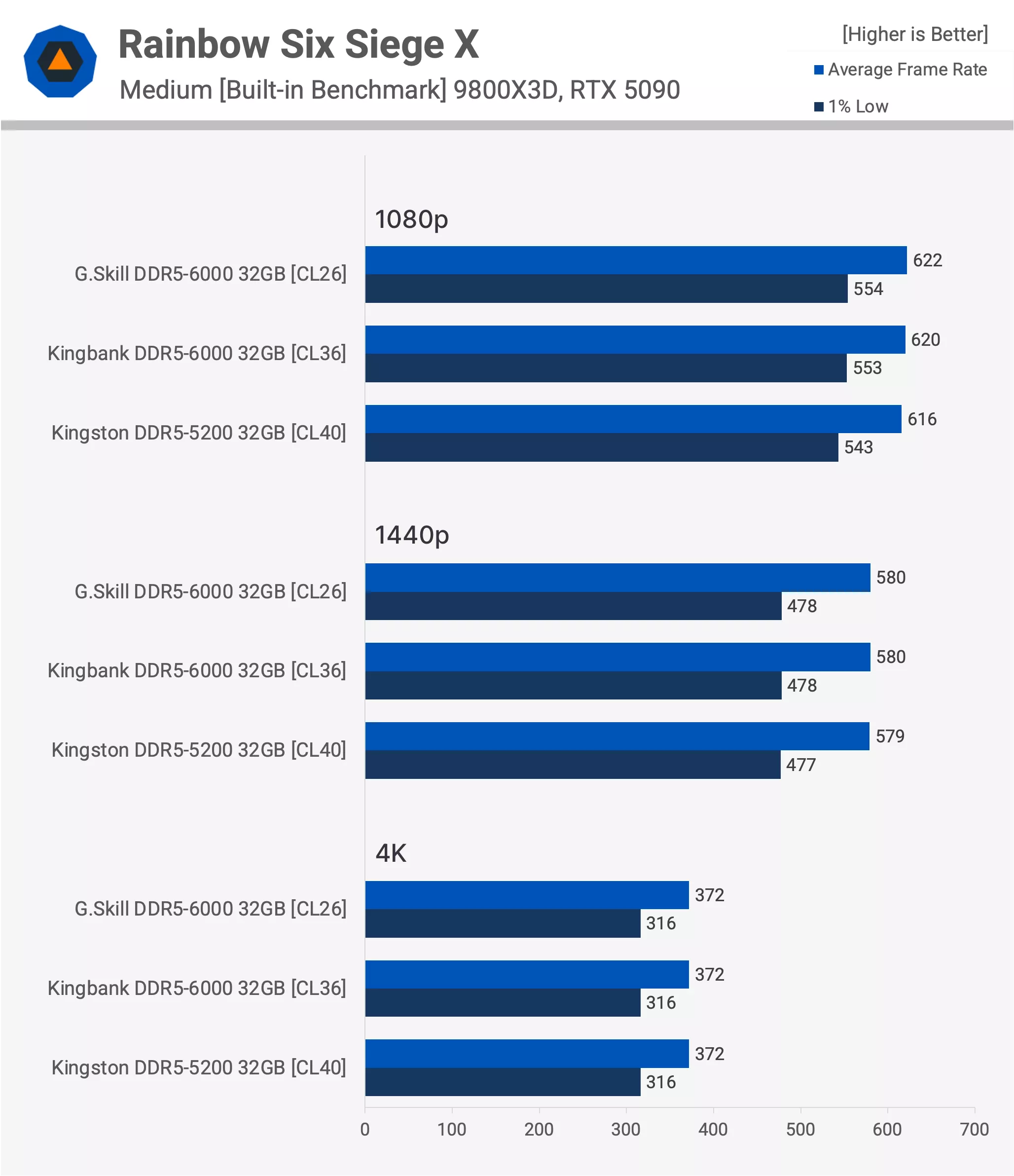
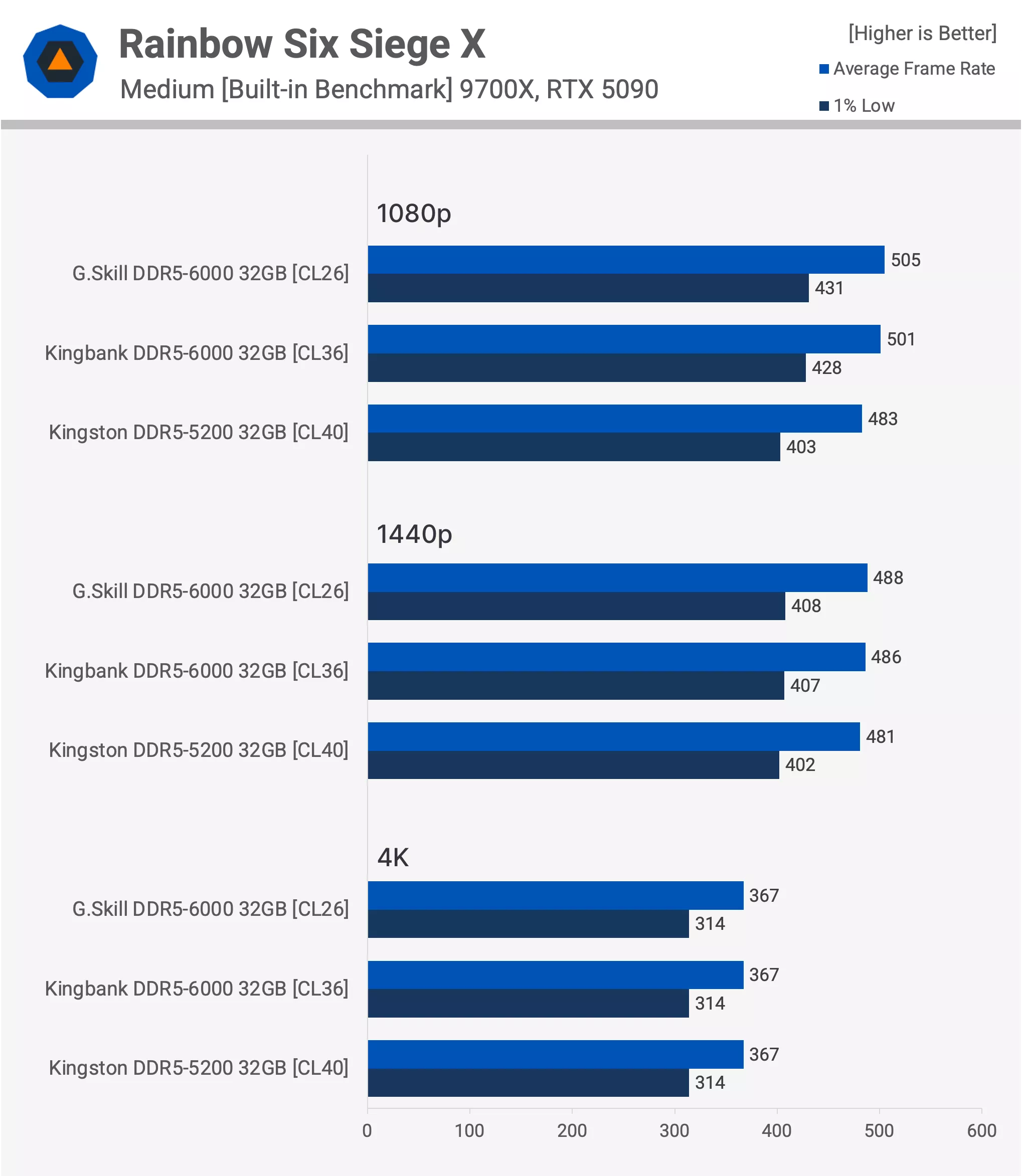
In Rainbow Six Siege, tested at extremely high frame rates, the Kingbank kit matches the performance of G.Skill's ultra-premium low-latency DDR5. The same is true for Kingston's entry-level kit. Even with the 9700X, results remain similar – the Kingston kit drops a few frames, but memory performance isn't a limiting factor in this title.
Marvel Rivals
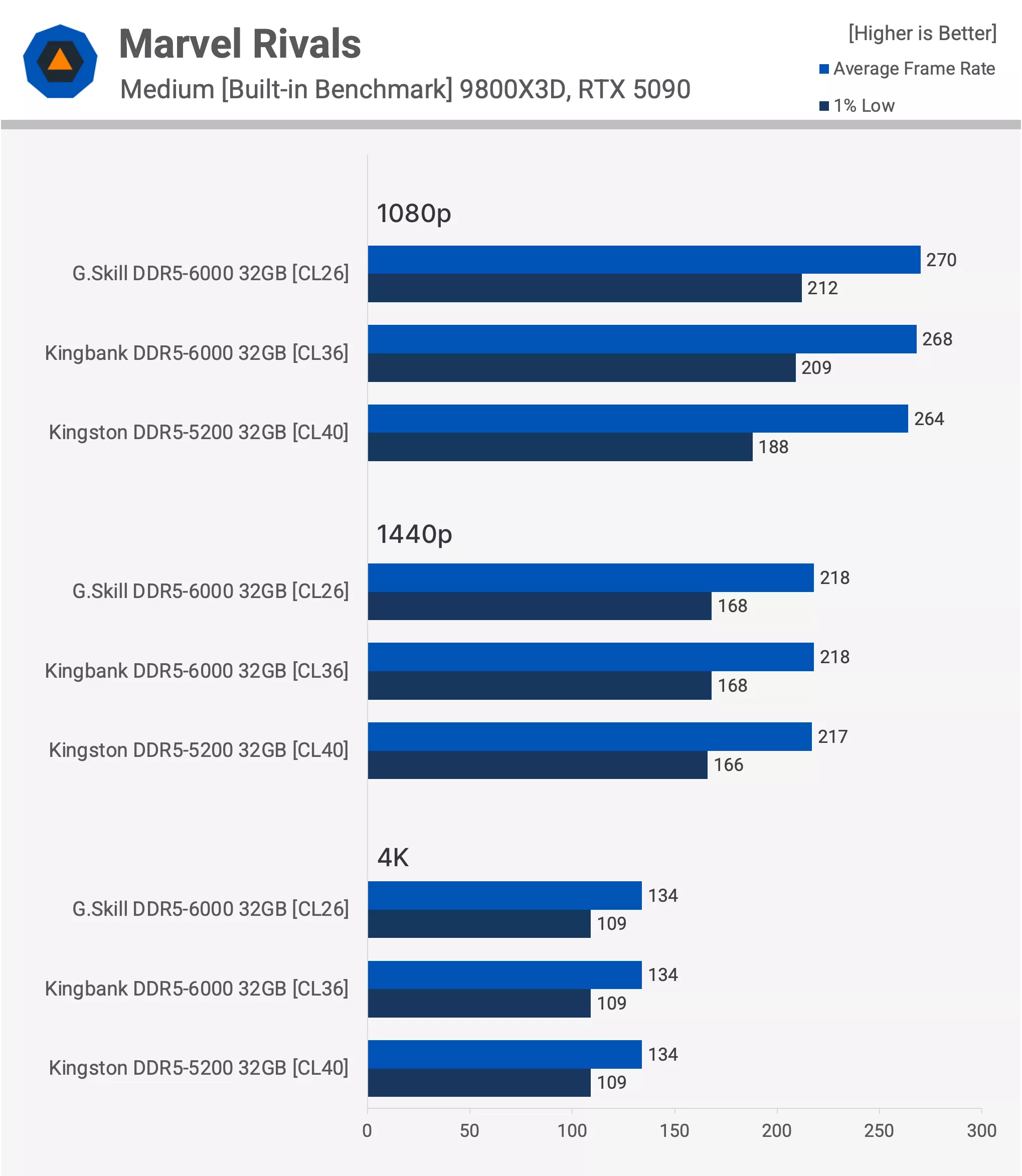
In Marvel Rivals, we again see excellent performance from the Kingbank memory, matching the G.Skill kit. The Kingston memory performs well too, only reducing 1% lows at 1080p.
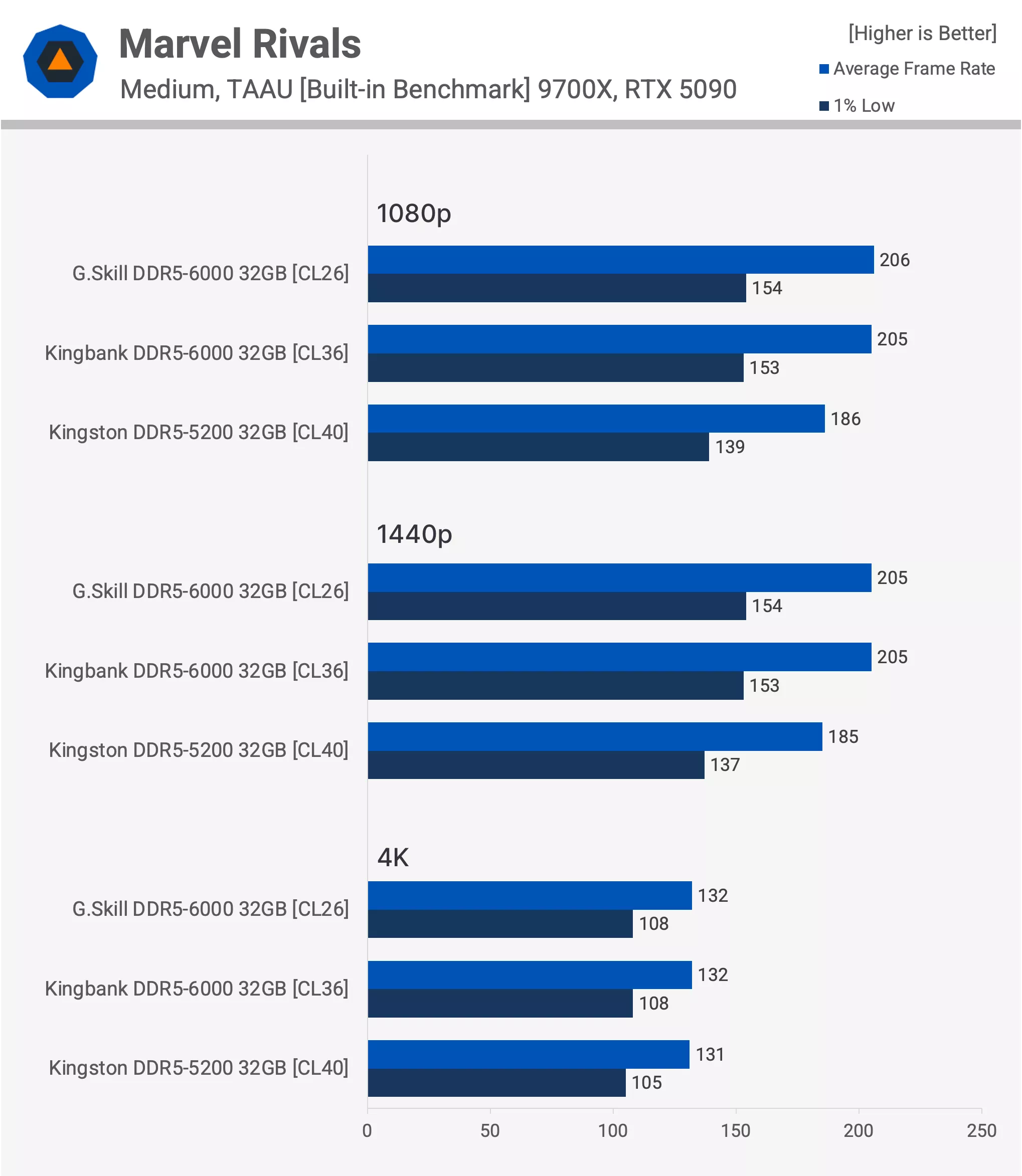
With the Ryzen 7 9700X, the Kingbank kit continues to deliver maximum performance, matching G.Skill across all tested resolutions and landing about 10% ahead of the entry-level Kingston kit.
Horizon Zero Dawn Remastered
Horizon Zero Dawn Remastered tells a similar story. With the 9800X3D, the Kingbank kit drops a few frames, while the Kingston kit is up to 7% slower. With the 9700X, Kingbank and G.Skill deliver nearly identical performance – less than a 2% difference – while Kingston trails by roughly 8 – 10%, which isn't shocking given it's DDR5-5200 CL40.


Cyberpunk 2077
Finally, in Cyberpunk 2077, performance is again nearly identical when comparing DDR5-5200 and DDR5-6000. The Kingbank kit essentially matches G.Skill, even with the 9700X, and delivers up to 17% higher performance than entry-level DDR5.


What We Learned
So there you have it: Kingbank's CXMT-based memory. It may not boast the best specs on paper, but for gaming performance, it's right up there – and in this market, that's more than good enough.

Unfortunately, while CXMT initially appeared aggressive on pricing, that has changed in recent weeks. The company is now operating more like a typical for-profit entity, which was probably inevitable given its limited capacity. The most affordable 32 GB Kingbank kit in Australia is listed at $600 AUD, but it's out of stock. The cheapest in-stock option is $650, which is still lower than most competing kits priced at $700 or more – a $50 saving, but not a huge one. It's worth noting that all of these more affordable kits use CXMT memory.
The question of whether you should buy DDR5 memory using CXMT chips is now easier to answer – and the answer is yes. The Kingbank modules also appear reasonably well made. After an hour under load with Prime95, the modules peaked at 60°, relying solely on case airflow. In the same system, the G.Skill kit peaked at 55°. That's cooler, but not a major difference given the cost disparity.

We should note that these readings come from onboard sensors, so accuracy can't be guaranteed without K-type thermocouples, which aren't practical here.
Given current DDR5 pricing, we recommend installing a monitoring tool like HWiNFO to keep an eye on memory temperatures. We'd also suggest keeping temperatures at or below 60° where possible, which may require direct airflow over the modules. While JEDEC specifications allow for operation up to 95°, our experience shows that higher-speed DDR5 can run into stability issues above 70°.
The good news is that inexpensive airflow solutions exist. Using a cheap dual-fan cooler from Amazon, we reduced peak temperatures on the Kingbank kit from 60° down to just 41°, with no noticeable increase in noise. That's a solid option for extra peace of mind. Normally, this isn't something we'd worry much about, but given DDR5 availability and pricing today, a cheap memory cooler could be a worthwhile investment.
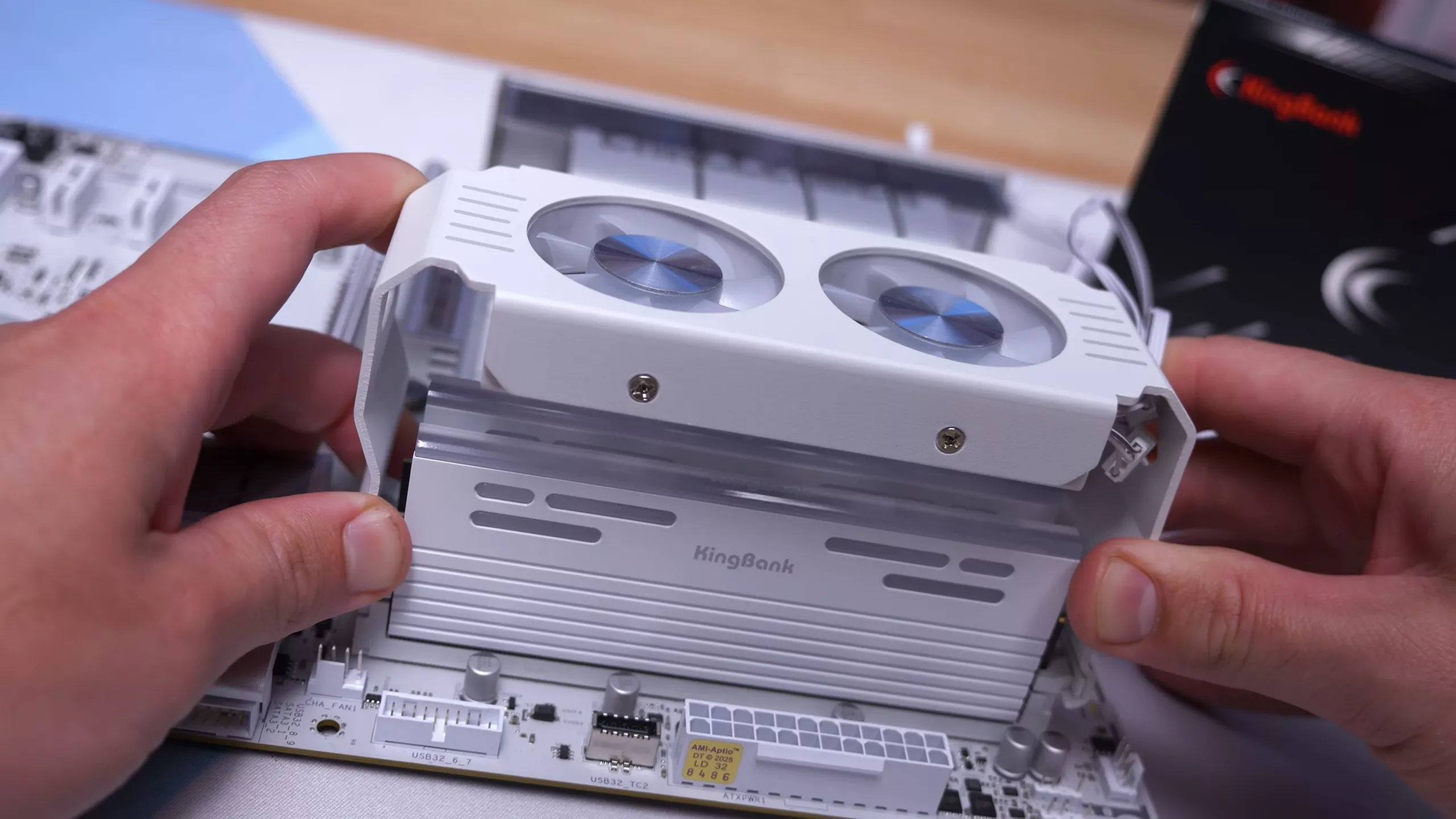
It's disappointing that memory modules using Chinese chips aren't more competitive on price. However, given CXMT's capacity constraints, aggressive pricing wouldn't make much sense. Doing so would instantly deplete inventory and lead to immediate price hikes, without providing the financial runway CXMT needs to expand production and help prevent issues like this in the future.