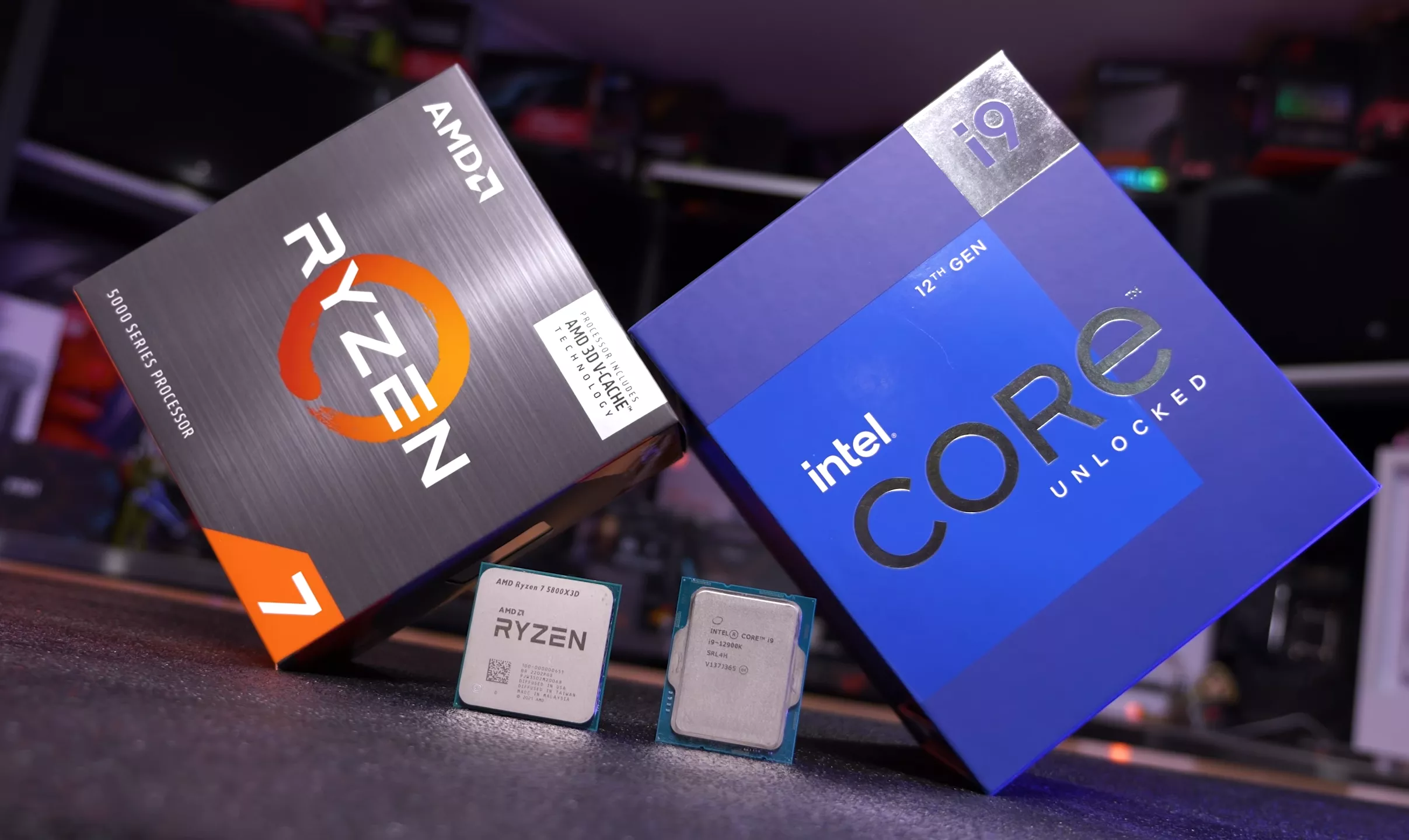
You knew it wouldn't be long before we revisited the Ryzen 7 5800X3D with another round of CPU benchmarks. Frankly, we should apologize that this is only our second such article of 2026 – that's less than one per month. In truth, this isn't even a dedicated 5800X3D piece, as we ended up doing more testing with the Intel Core i9-12900K this time around.
Many of you have been asking for this rematch for months, and we finally put it together. Coincidence or not, fresh rumors suggest AMD may relaunch the 5800X3D to mark AM4's 10th anniversary later this year, which adds a bit of timely context.
For some reason, there's been strong interest in revisiting this matchup in modern games, with the Core i9 tested using DDR4 memory. To do that properly, we ran the 12900K with both DDR4-3600 and high-speed DDR5-7200, allowing for a direct comparison against the 5800X3D running DDR4-3600.

Do note the 5800X3D is no longer available for purchase, and that's been the case for quite some time. Even the binned AMD Ryzen 7 5700X3D has disappeared, which is a tough break for AM4 owners. We just reviewed the Ryzen 5 5500X3D, a part aimed at Latin America that is now starting to surface in regions like China, potentially offering one last upgrade path for aging AM4 systems. That said, it's not the focus of this review.
On Intel's side, most 12th-gen parts remain widely available, including the 12900K. It's currently selling for around $390 on Newegg, while closer to $500 in Australia. At those prices, it's a harder sell given that options like the AMD Ryzen 7 9700X can be found for similar money, or less.

Which brings us back to the point of this revisit. In 2022, we tested 40 games and found the 5800X3D to be just 1% faster on average, a result that depended on the 12900K being paired with fast DDR5 memory.
This time, we're repeating that comparison under a broader set of conditions, testing the Core i9 with both DDR4-3600 and DDR5-7200. The goal is simple: see how this matchup holds up today, and what difference memory now makes.
Test System
| CPU Motherboard Memory |
AMD Ryzen 9000 Series | Gigabyte X670E Aorus Master [BIOS F41] G.Skill Trident Z5 RGB 32GB DDR5-6000 CL30-38-38-96 |
| AMD Ryzen 5000 Series | MSI MPG X570S Carbon MAX WiFi [BIOS 7D52v1D1] G.Skill Ripjaws V Series 32GB DDR4-3600 CL14-15-15-35 |
|
| Intel Core Ultra 200S [Intel Default Profile] |
MSI Z890 Tomahawk WiFi II [BIOS 7E32v1B12] G.Skill Trident Z5 CK 32GB DDR5-8200 CL40-52-52-131 CUDIMM |
|
| Intel Core Series DDR5 [Intel Default Profile] |
MSI MPG Z790 Carbon WiFi [BIOS 7D89v1H] G.Skill Trident Z5 RGB 32GB DDR5-7200 CL34-45-45-115 |
|
| Intel Core Series DDR4 [Intel Default Profile] |
MSI MAG Z790 Tomahawk WiFi DDR4 [BIOS 7D91v11] G.Skill Ripjaws V Series 32GB DDR4-3600 CL14-15-15-35 |
|
| Graphics Card | Asus ROG Astral GeForce RTX 5090 32GB OC Edition | |
| Power Supply | Kolink Regulator Gold ATX 3.0 1200W | |
| Storage | TeamGroup T-Force GE PRO M.2 PCIe Gen5 NVMe SSD 4TB | |
| Display Driver | GeForce Game Ready Driver 595.97 WHQL | |
Benchmarks
Rainbow Six Siege X
Starting with Rainbow Six Siege, we'll focus on the medium quality data here. As you can see, the Intel Core i9-12900K armed with DDR5 memory is good for 417 fps, making it 4% faster than the AMD Ryzen 7 5800X3D. However, when using DDR4 memory, the Core i9 ends up slower, and now the 5800X3D is 10% faster.

We're essentially looking at 5800X-like performance from the 12900K when both CPUs are using DDR4-3600, meaning the Core i9 is up to 15% faster in this example when paired with DDR5.
Battlefield 6
Moving on to Battlefield 6, this is another game where the 12900K is just ahead of the 5800X3D – at least when looking at the average frame rate, where it's 3% faster. That said, we're seeing a far more substantial 18% increase for the 1% lows. But once again, if we limit the Core i9 with DDR4 memory, performance drops off considerably, and now it's only slightly faster than the 5800X.

This means the 5800X3D was 23% faster than the DDR4-equipped Core i9 using medium settings, and 21% faster with the Overkill preset. It also means the 12900K was almost 30% faster in both examples when using DDR5 memory as opposed to DDR4.
Arc Raiders
AMD's 3D V-Cache technology has proven to work very well in Arc Raiders, and we're seeing another strong example of that here. The 5800X3D was 22% faster than the 12900K – and that's with the Core i9 using DDR5 memory. If we drop back to DDR4, the 5800X3D ends up 35% faster, delivering performance comparable to much newer parts like the AMD Ryzen 7 9700X and Intel Core Ultra 9 285K.

Interestingly, DDR5 doesn't help the 12900K all that much in this title, offering just an 11% performance uplift over DDR4.
Borderlands 4
Borderlands 4 is more of a GPU-limited title, so we'll stick to the medium quality data. In this example, the 12900K was up to 8% faster than the 5800X3D when using DDR5 memory, then slightly slower with DDR4. So we're looking at comparable performance between these two CPUs regardless of the configuration used, and this applies even more so with the Badass preset.

Marvel Rivals
Moving on to Marvel Rivals, the 12900K was slightly faster than the 5800X3D, delivering 3% greater performance with the medium preset and 6% with ultra. Those results were achieved with DDR5 memory, and when switching to DDR4 the tables turn – now it's the 5800X3D that's 11 – 17% faster depending on quality settings. That means the 12900K was 18 – 21% faster using DDR5 memory compared to DDR4 in this title.

Baldur's Gate 3
Baldur's Gate 3 is another game known to really benefit from AMD's 3D V-Cache technology, and that's demonstrated best by the AMD Ryzen 7 9800X3D. However, the 5800X3D is also extremely nippy here, matching and even beating the Intel Core i9-14900K in average frame rates, though it does fall behind for the 1% lows.

It is, however, able to match the 1% lows of the DDR5-equipped 12900K while delivering substantially greater average frame rates – 27% higher using medium settings and 13% higher using ultra.
If we limit the 12900K to DDR4 memory, performance drops further, and now the 5800X3D is 61% faster with medium settings and 39% faster with ultra. This also means the 12900K was 23 – 27% faster using DDR5 memory as opposed to DDR4.
Cyberpunk 2077: Phantom Liberty
Next up is Cyberpunk 2077: Phantom Liberty, another title where the AMD Ryzen 7 5800X3D really shines, particularly at lower quality settings. Looking at the medium preset, the 5800X3D is even slightly ahead of the AMD Ryzen 7 9700X, making it 7% faster than the DDR5-equipped Intel Core i9-12900K and 25% faster when the Core i9 is limited to DDR4 memory.

Switching to the ray tracing ultra preset makes the game far more GPU demanding while still leaning on the CPU. It's a balancing act, though typically you will hit GPU limits first. In this case, using the Nvidia GeForce RTX 5090, the 5800X3D is only able to match the DDR5-equipped 12900K, though it remains 19% faster than the DDR4 configuration.
Counter-Strike 2
Counter-Strike 2 isn't particularly memory sensitive, though 3D V-Cache still helps boost performance. As a result, the 12900K performs much the same with either DDR4 or DDR5, and this is the first example where we're seeing that behavior. It also means the 5800X3D is considerably faster, delivering around 26% greater performance and in this example it's comparable to the Intel Core i9-14900K.

Space Marine 2
Space Marine 2 is a heavily CPU-limited title, at relatively modest frame rates compared to other games. That makes any CPU performance uplift especially valuable. Here, the 12900K benefits from DDR5, becoming up to 22% faster, and in this configuration it is able to match the 5800X3D.

Mafia: The Old Country
Moving on to Mafia: The Old Country, we see quite a spread in the results. With DDR5 memory, the 12900K is very impressive, averaging 124 fps at medium settings, making it 15% faster than the 5800X3D and 11% faster using the Epic preset. However, when limited to DDR4, the 5800X3D pulls ahead, becoming 14% faster at medium and 10% faster at Epic. This also means the 12900K is up to 31% faster with DDR5 compared to DDR4.

Assetto Corsa Competizione
Assetto Corsa Competizione is another title where AMD's 3D V-Cache works wonders. The 5800X3D is able to match the 14900K here while being massively faster than the 12900K, even when the Core i9 is using DDR5 memory. For example, the 5800X3D was 27% faster at medium settings and 25% faster at Epic. Compared to the DDR4 configuration of the 12900K, the margin grows to an almost absurd 61 – 67%.

Spider-Man 2
Spider-Man 2 is highly memory sensitive, especially with ray tracing enabled, and we see that clearly here. The 12900K is almost 30% faster using DDR5 compared to DDR4. The results are also quite interesting. The 5800X3D nearly matches the DDR5-equipped 12900K at medium settings, trailing by just 6%, while being 14% faster than the DDR4 configuration.

Switching to the ultimate ray tracing preset changes things. The 5800X3D, like all DDR4-based configurations, really struggles, averaging just 72 fps. That is the same level of performance seen from the 12900K using DDR4, making the DDR5 configuration roughly 31% faster than the 5800X3D in this scenario.
Horizon Zero Dawn Remastered
The second-to-last game tested is Horizon Zero Dawn Remastered. Here, the 5800X3D edges out the DDR5-equipped 12900K by 6% using the medium preset, while matching it with the very high preset. Compared to the 12900K using DDR4 memory, the 5800X3D is 23% faster at medium and 25% faster at very high.

The Last of Us Part II Remastered
Finally, we have The Last of Us Part II Remastered. In this example, the 12900K is slightly ahead of the 5800X3D when using DDR5 memory, by 5% at medium settings and 9% at very high. However, when using DDR4 memory, the 12900K is again noticeably slower, allowing the 5800X3D to lead by 12% at medium and 7% at very high.

14 Game Average
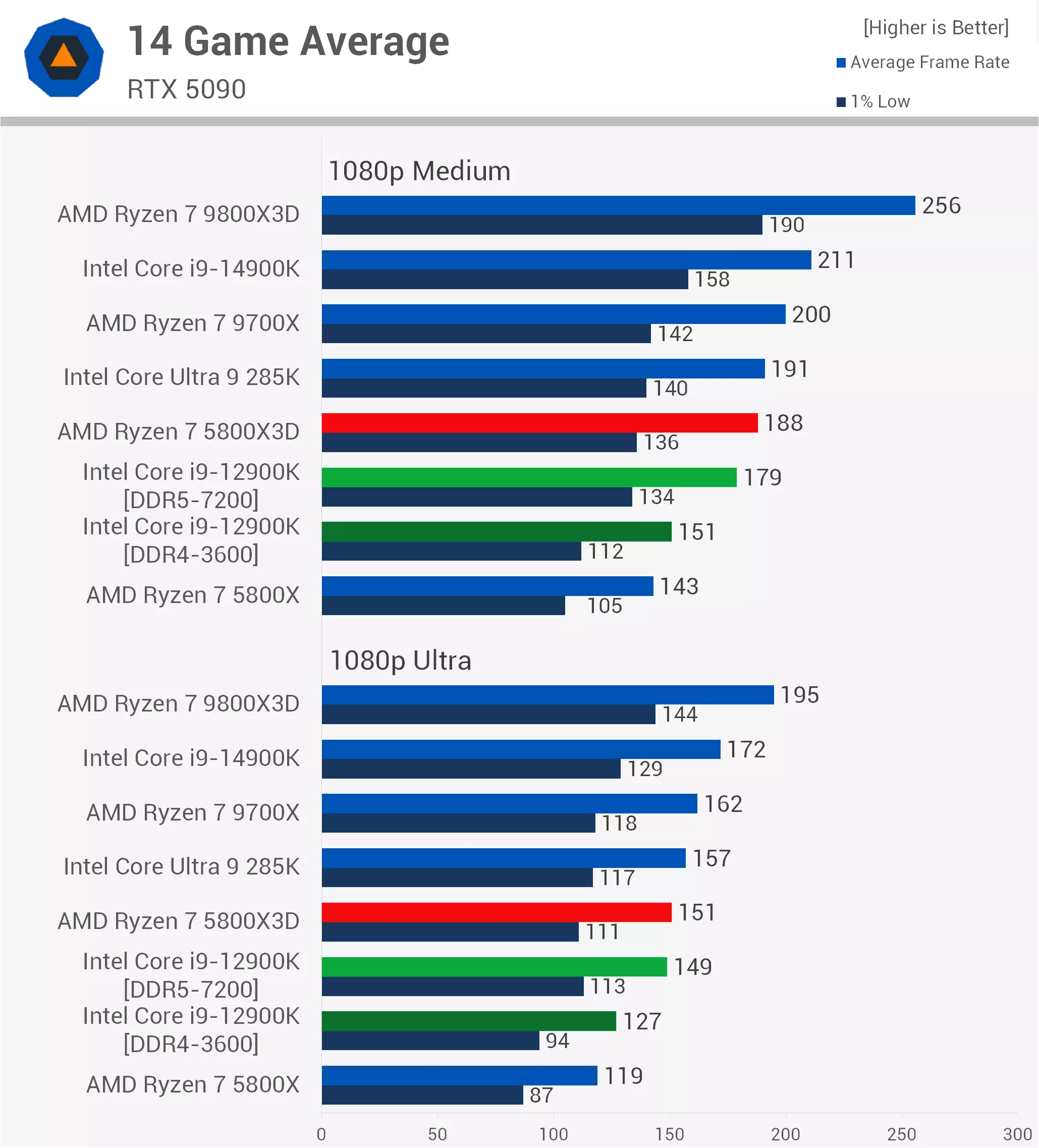
Looking at the 14 game average data, the AMD Ryzen 7 5800X3D does come out on top, beating the DDR5-equipped Intel Core i9-12900K by a mere 5% using medium settings, and by just 1% at ultra. Overall performance is very similar. However, when the 12900K is paired with DDR4 memory, the 5800X3D pulls ahead more clearly, leading by 25% at medium settings and 19% at ultra.
The GOAT Argument, Revisited
Before wrapping up, we went back and reviewed our conclusion from four years ago, when we compared these two CPUs across 40 games. In our day-one review featuring 8 games, the 12900K using high-speed DDR5 memory was just 2.5% faster than the 5800X3D. Expanding that to a 40-game benchmark flipped the result, giving the 5800X3D a slight edge. In short, they were extremely close.
Fast forward to today, and using the same ultra-quality settings in much newer games, the 5800X3D and a DDR5-equipped 12900K remain neck and neck. The Ryzen 7 processor is just 1% faster on average, or 5% faster when looking at medium-quality data. Either way, the margin is very small.
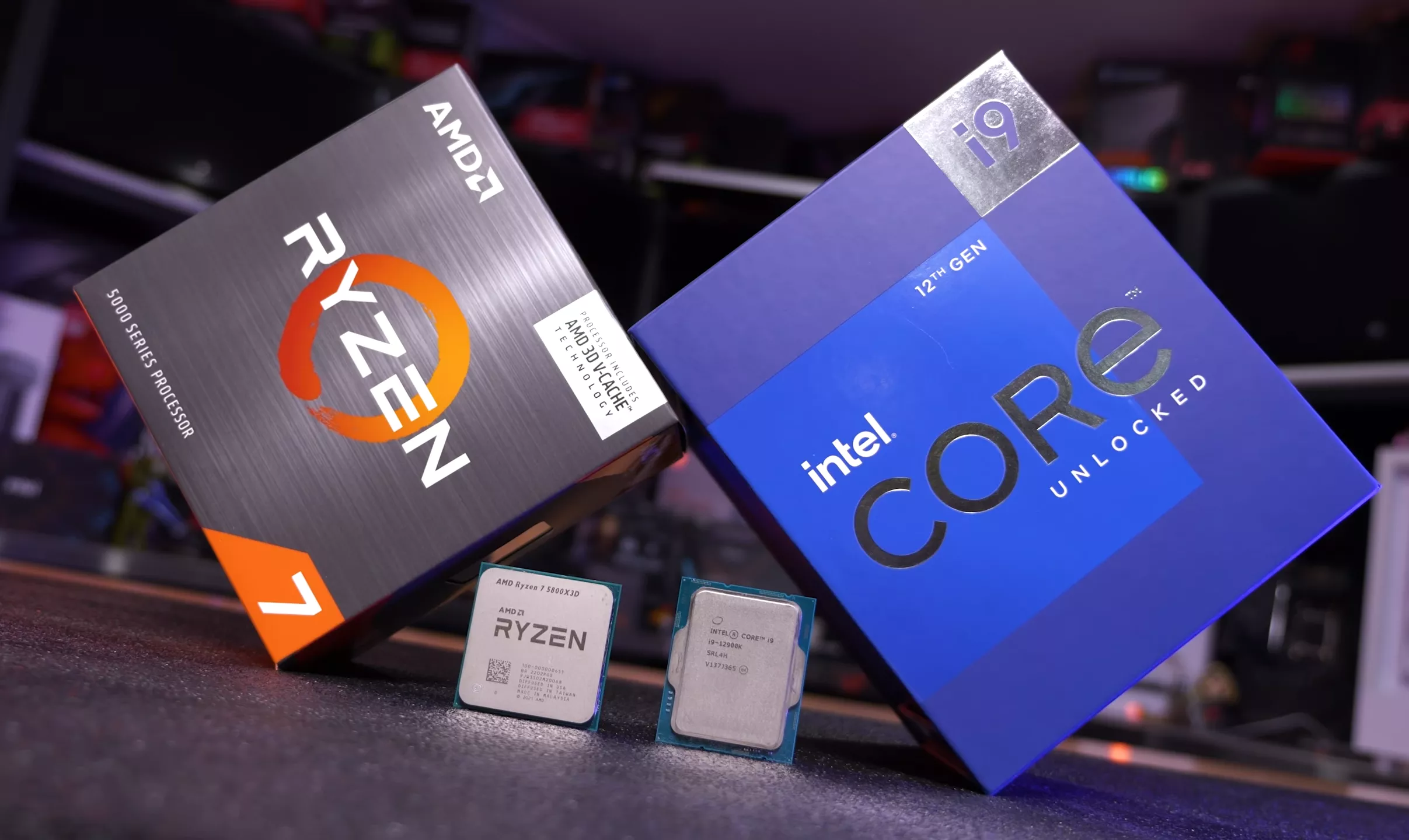
Four years ago, we estimated that if the 12900K had been paired with DDR4 memory, the 5800X3D would be around 8% faster. That was accurate at the time. Back then, most games could not take advantage of DDR5's additional bandwidth, similar to what we still see in titles like Counter-Strike 2. This made sense, as those games were built around the bandwidth constraints of the hardware available at the time.
Today, however, games are far more demanding. As a result, DDR5 now offers a clear advantage over DDR4. On average, we're seeing a 17 - 19% performance uplift for the 12900K when moving from DDR4 to DDR5 memory. Consequently, the 5800X3D is no longer just marginally faster than the 12900K when both use DDR4-3600. Its much larger L3 cache helps mitigate the bandwidth limitations of DDR4, giving it a more meaningful lead.

This is further supported by how the 5800X3D's performance compares to the standard AMD Ryzen 7 5800X. At launch, it was roughly 23% faster with identical memory in our original testing. In this updated round, that advantage has grown to around 27-31%.
Our conclusion four years ago was fairly straightforward. We recommended the 5800X3D for gamers looking for a no-fuss option that maximizes gaming performance without pushing pricing or power consumption too far. We also noted that the 12900K had an advantage in platform longevity, as LGA1700 was expected to support at least one more CPU generation, while AM4 had effectively reached the end of the line.
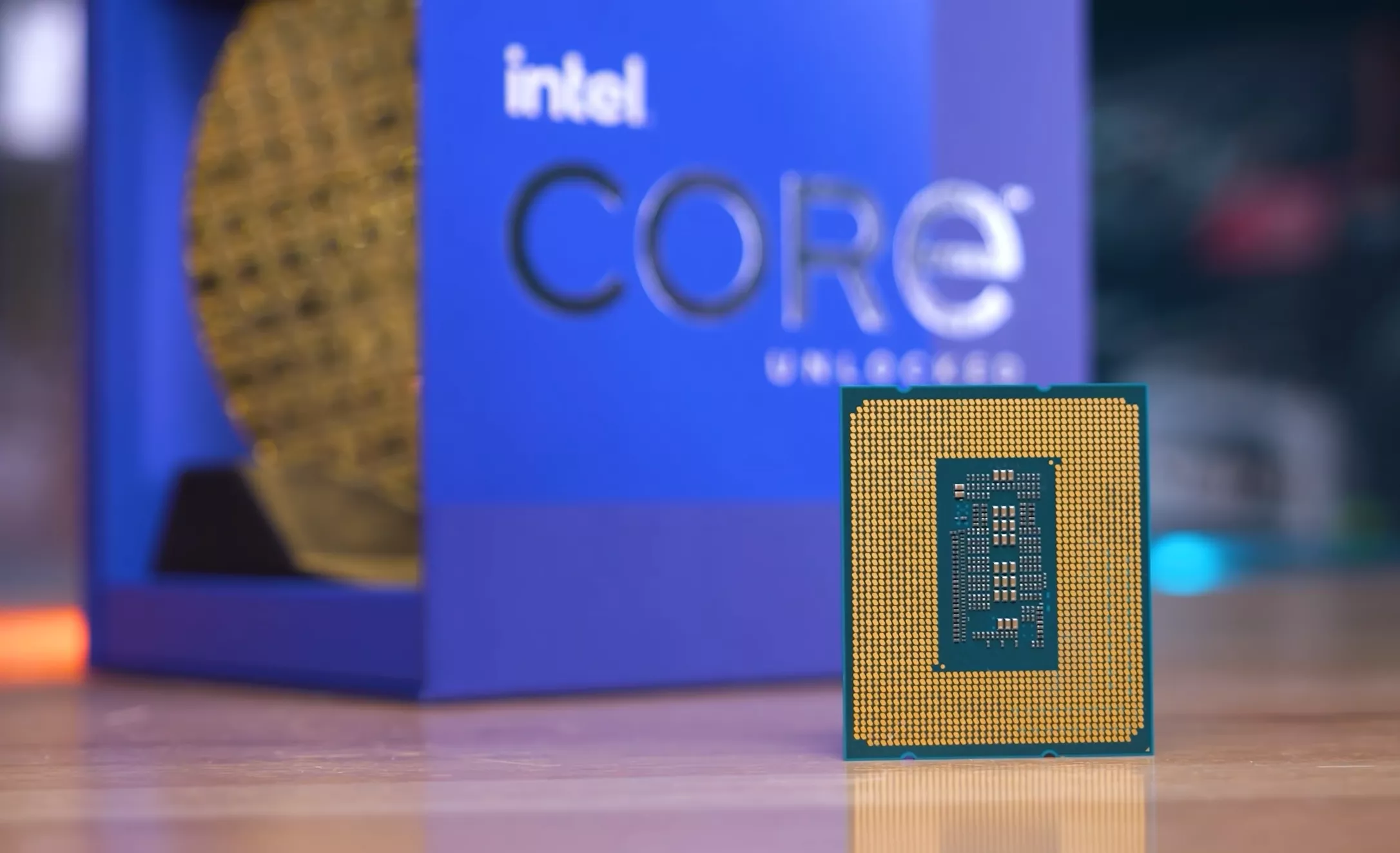
Of course, Intel's Core i9 and Core i7 processors held a clear advantage in productivity workloads. The 5800X3D was never intended as a productivity CPU, as AMD positioned its Ryzen 9 lineup for that role, making it a different discussion altogether.
For gaming, the 5800X3D has held up remarkably well, though the 12900K has also aged gracefully when paired with DDR5 memory. This updated data reinforces that there was no wrong choice here. The one questionable configuration, at least for gaming, was pairing the expensive Core i9 with DDR4 memory.

With DDR5, the platform has held up very well. That said, DDR5 pricing was extremely high in 2021 and remained there through much of 2022, especially leading up to the launch of AMD's Zen 4 processors.
The fact that the 5800X3D has aged this well, using DDR4 memory on the AM4 platform, and provided so many enthusiast PC builders and gamers with a golden upgrade path, is why many consider it to be the GOAT.