Recap: Users with older AMD graphics hardware have waited more than a year for the company to bring its FSR 4 upscaler beyond the hard-to-acquire Radeon RX 9000 series. While modders spent months experimenting with leaked code, AMD has gradually retooled its machine learning upscaling for most of its modern hardware stack, leaving only a few popular devices still waiting.
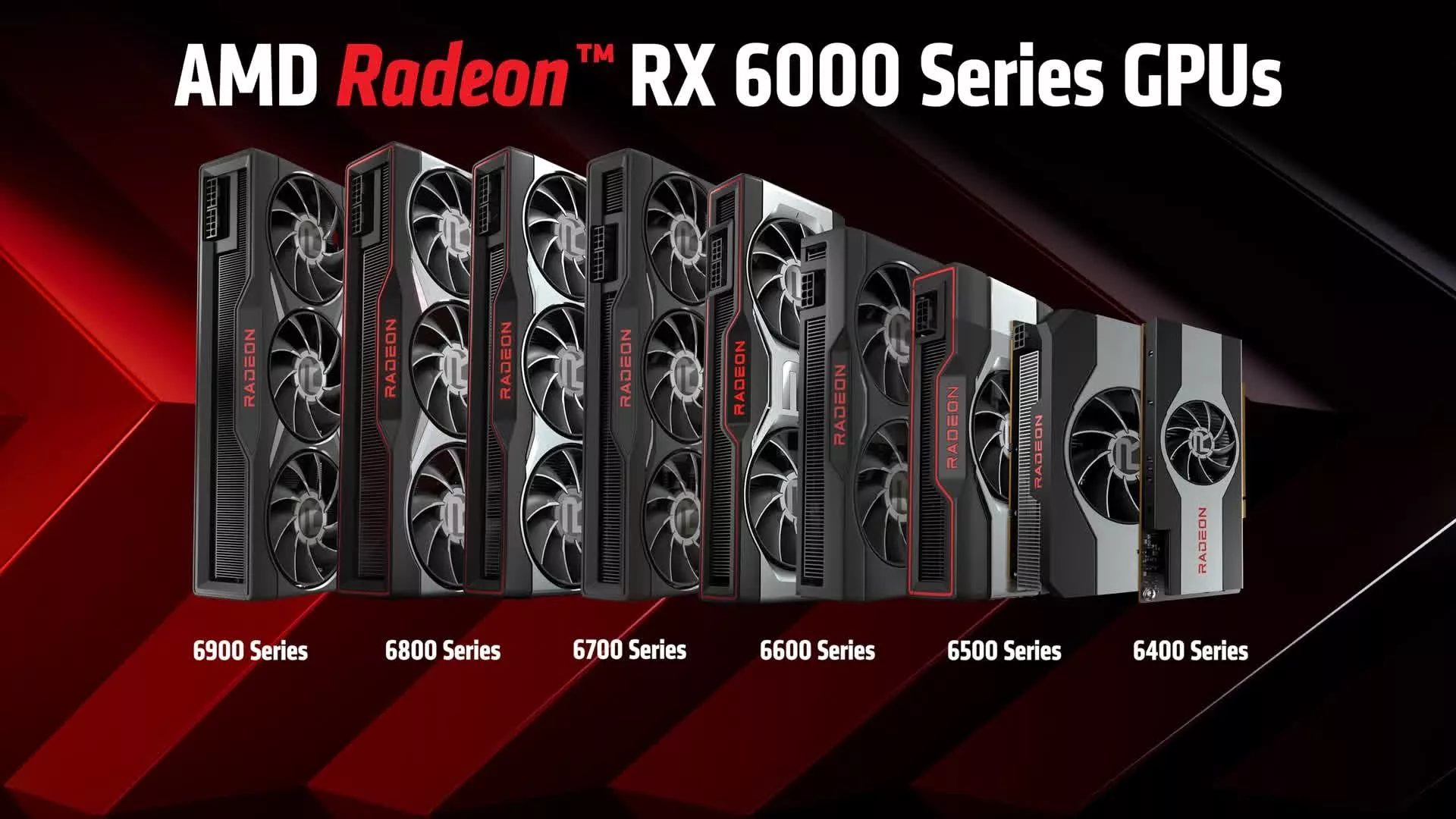
Owners of Radeon RX 6000 series GPUs and most of AMD's recent SoCs can now enable FSR 4.1 upscaling without mods like Optiscaler. The update, included in version 26.10.1 of AMD's graphics driver, aims to bring upscaling image quality closer to Nvidia's DLSS.
FSR 4 supported only RX 9000 cards when it launched last year, but AMD extended support to the RX 7000 series in June 2026. This week's update brings the feature to all RX 6000 desktop GPUs, Ryzen AI Max APUs, and laptops with Ryzen AI 9 chips.
Handhelds with Ryzen Z2 Extreme, Ryzen AI Z2 Extreme, and Z2 A APUs are also covered, but they depend on manufacturer-supplied drivers, so owners will have to wait for updates from their device makers.
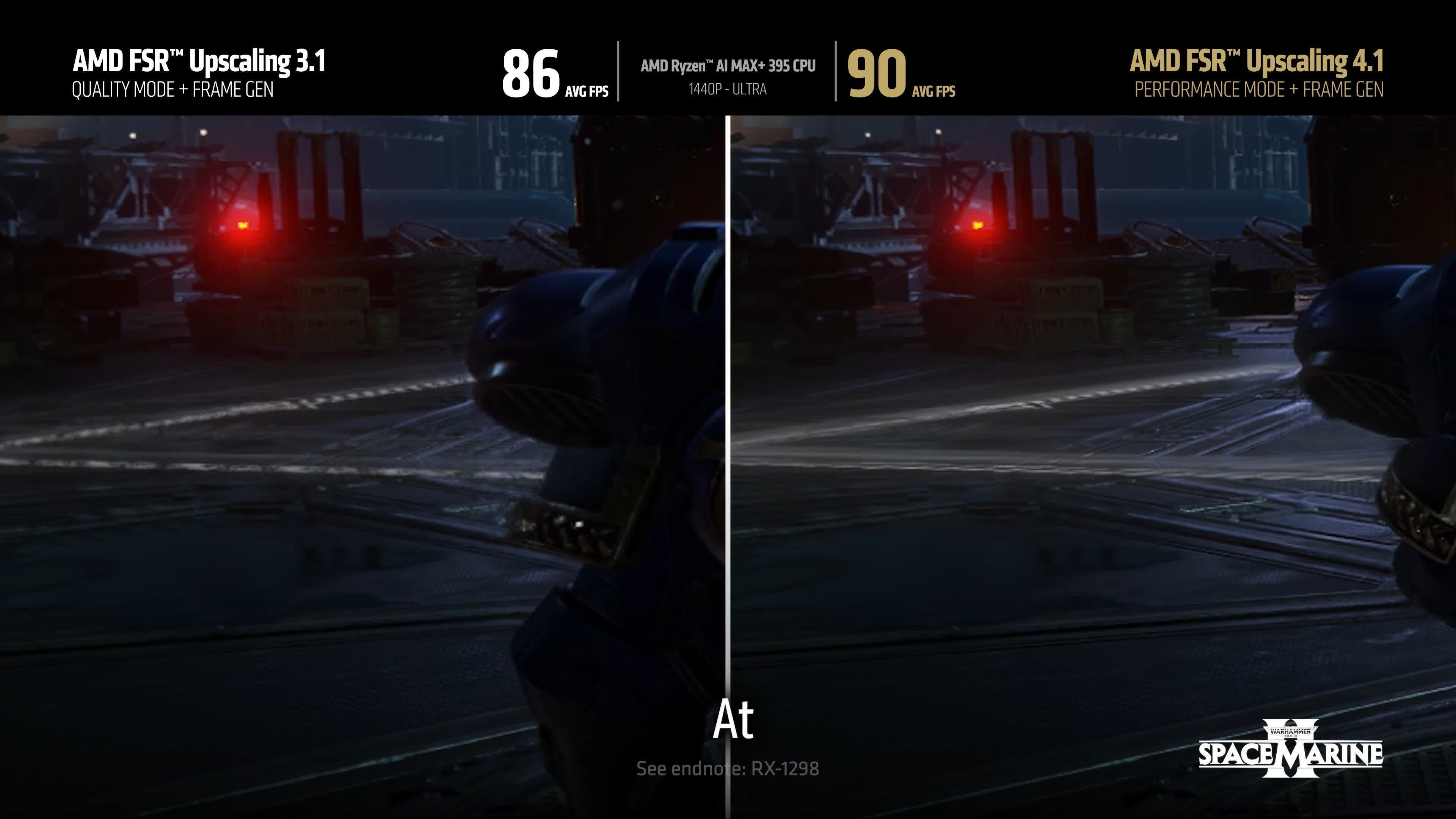
AMD reworked FSR 4.1's computation around these older and lower-end chips. AMD's comparison screenshots show the new upscaler resolving more detail and delivering more temporally stable motion than FSR 3.1, even from lower internal rendering resolutions.
The company confirmed that support for Xbox Series consoles is coming soon, without offering further details. Machine learning-based upscaling has given consoles like Sony's PlayStation 5 Pro and Nintendo's Switch 2 superior image quality at lower internal resolutions than the standard PlayStation 5 and Xbox consoles. FSR 4.1, together with the PS5's recently introduced QSSR, could level the playing field, especially for the Xbox Series S.
Also read: Testing AMD Radeon's Biggest-Ever Software Upgrade: FSR 4.1 on RDNA 3
However, AMD's announcement did not mention the Steam Deck, which uses the same RDNA 2 architecture as several of the devices covered this week. FSR 4.1 support for Vulkan, which reaches developers in the coming weeks, could remove one of the last obstacles to Steam Deck support.
Valve has already added FSR 4.1 for its RDNA 3-based Steam Machine through Proton Experimental, but the Steam Deck likely requires more work on Proton, the company's Linux translation layer.
AMD's announcement also arrived ahead of the schedule suggested by the company's comments to South Korean media earlier this month. It was initially believed that RDNA 2 support would have to wait until next year, when AMD is expected to introduce the Ryzen Z3 and Z3 Extreme, which reportedly combine RDNA 4's ML hardware with RDNA 3.5's architecture.