"We know what you're thinking. Is this even legal?"
A hot potato: For almost as long as we've had smartphones, there has been the belief that they surreptitiously listen to our spoken conversations to serve us targeted ads; most people have experienced seeing an ad on Facebook for something they were recently talking about. It's always been claimed that this type of privacy invasion doesn't happen. However, a marketing agency, whose clients included Facebook and Google, has admitted to using an "Active Listening" feature that eavesdrops on conversations via phone mics to gather data.
What just happened? Elon Musk's conflict with advertisers took a shocking new turn yesterday when he announced his platform X, formerly Twitter, is suing a group of ad companies, along with individual firms, over an alleged coordinated boycott of the site. The suit claims this broke federal antitrust laws and caused X to lose revenue.
Critics say the new platform is focused on benefitting advertisers
The big picture: Google claims that the new version of its Chrome extension platform will mean a safer and more efficient browser experience for users. While there are some features in Manifest V3 that will facilitate this, critics claim that the new controls are more helpful to advertisers. This has raised questions about Google's motivations, given that a significant portion of its revenue comes from advertising.
Facepalm: The latest release of the Firefox web browser brought a new feature designed to please both privacy-conscious users and advertisers. However, it is bound to do the opposite, pinning one more controversy onto Mozilla's stated mission to take back the web from Big Tech.
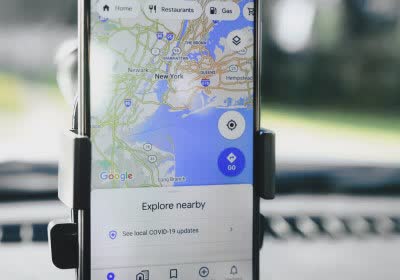
The good old days: When I was a young whipper-snapper driving off into unfamiliar territory, I had to buy a paper map. Yes, maps used to be printed on large sheets of folded paper that you could never refold. I would plan out my route in advance, and turn-by-turn directions were obtained by memorizing a list or by my navigator (aka wife, friend, brother) reading from my notes. Then, the internet ruined everything.
The Year of Firefox: Google initially announced the Manifest V3 API in 2018, but the new extension technology was delayed several times because of the intrinsic limitations it imposed on ad blockers and security add-ons. Now that it is ready for release, Mountain View will begin phasing out Manifest V2 extensions in Chrome next month.