The Best SSDs and Storage - Late 2025 Update
The storage market is in flux: PCIe 4.0 prices are climbing, PCIe 5.0 and USB4 are getting cheaper, and Crucial is gone. Here are the best picks for speed, capacity, and value.

The storage market is in flux: PCIe 4.0 prices are climbing, PCIe 5.0 and USB4 are getting cheaper, and Crucial is gone. Here are the best picks for speed, capacity, and value.
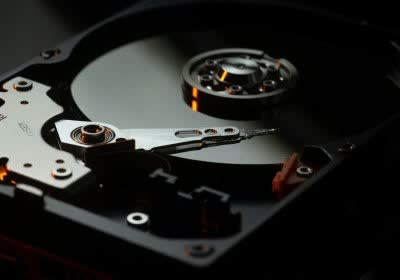
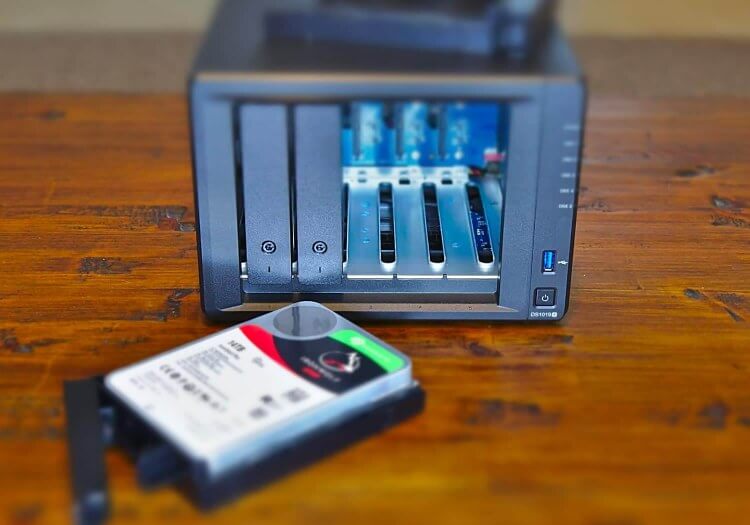
Storage keeps getting faster and more efficient. NVMe SSDs dominate for speed, HDDs remain best for bulk storage, and portable drives offer convenience. Here are the top picks for every need in 2025.

Fast storage has become a commodity, and it is expected to become even bigger and faster in the years ahead. Our storage picks include the best SSDs, HDDs, NAS, portable and external storage.

Fast storage is now a commodity, and hopefully it will only get bigger and faster. Our best storage picks are split into six categories covering SSDs, HDDs, portable and external drives.

Fast storage has become a true commodity, and hopefully it will only get bigger and faster. From latest-gen NVMe SSDs to traditional HDDs, our best storage picks are divided into six categories.

Fast storage has become a true commodity and hopefully it will only get bigger and faster. Today's best choices are differentiated by how extreme you want to go and how willing you are to pay for the very best.

Fast storage has become a true commodity and hopefully it will only get bigger and faster. Today's best choices are differentiated by how extreme you want to go and how willing you are to pay for the very best.
If you have multiple computers, chances are you've wanted to get a file from one system to another at some point. Maybe you have some files on your phone that you want on your laptop, or media on a PC that you want to stream to a smart TV. Maybe you want a secure location to back up all your important files to. In any of these cases, Network Attached Storage (NAS) is a great option.

It's been over a decade but we can finally declare solid state drives are not only mainstream, but they're a commodity. Fast storage will hopefully only get faster but today's best choices are only differentiated by how extreme you want to go and how willing you are to pay for the very best.

The need for a quality router has never been greater. In today's connected world, virtually every household is packed with phones, computers, smart TVs, and many other devices, all fighting for bandwidth. It's a common scenario that the router that's handed out by your ISP is average at best. If you want a router that offers better throughput, range, and features, check out our top picks.

With solid state drives now fully mainstream and hard drives being more affordable than ever, there is a broad a mix of high-performance and high-capacity options to choose from in a range of form factors. Fortunately for you, we have spent dozens of hours testing storage, so we have a pretty clear idea about what devices are worth buying.

The two-bay DiskStation DS216+ is designed to bridge the pricing gap between the DS716+ and DS216. Priced at $300 it's the cheapest Synology device to support the more modern B-tree file system (BTRFS). In this review we'll compare the performance between EXT4 and BTRFS while also checking out the new features offered by Synology's latest DSM 6.0 Beta software.

When it comes to storing data, there is no 'one-size-fits-all' solution. With SSDs becoming much more affordable, consumers have a broad a mix of high-performance and high-capacity options to choose from, whether in the form of internal storage, external or network attached. Here are our top picks for best performance SSD, best budget SSD, best hard drive, best external hard drive, best home/SMB NAS, and best thumb drives.

NAS servers provide a quick, easy and secure means of backing up important data. Compared to a dedicated server, a desktop NAS is considerably more compact, especially two-bay and four-bay models like the QNAP TS-453mini and Synology DS414slim on hand today. The two aren't really direct competitors, so this isn't a straight up Synology vs. QNAP battle, but rather a look at each company's approach to developing compact NAS solutions.

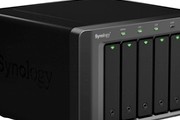
The DiskStation DS1515 is aimed at home users as well as small businesses. Out of the box this NAS can handle five 3.5" hard drives, giving it a maximum capacity of 40TB using the latest 8TB drives, while the addition of two DX513 expansion units boosts capacity to a whopping 120TB.

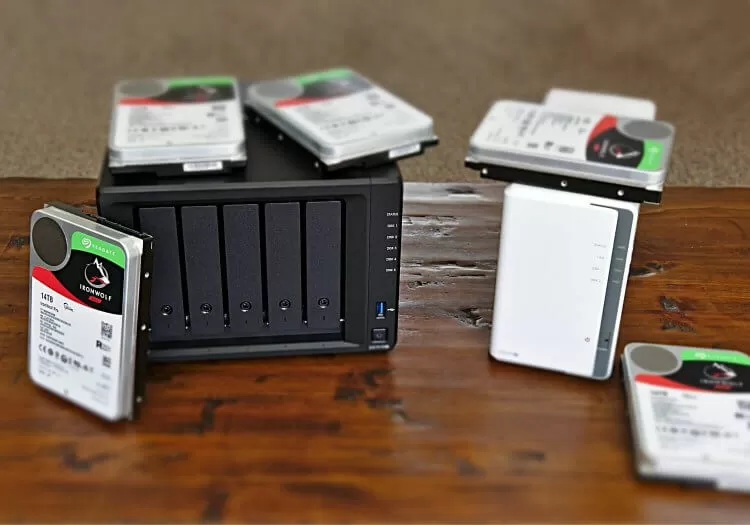
The DS2413+ is Synology's newest twelve-bay DiskStation NAS for small to medium sized businesses who need loads of storage. Along with supporting up to 48TB worth of drives out of the box, the DS2413+ can be paired with the company's DX1211 expansion enclosure that houses an extra 12 drives, doubling the maximum storage capacity of the base unit to a whopping 96TB.
We should also make a quick note before you get to the end and scoff at the price: the DS2413+ isn't for average home users. It's retailing for $1,700 without drives or the 12-bay expansion. With that in mind, let's see what the DS2413+'s upgrades offer.
Hoping to drive small and medium business sales, NAS-makers have been pushing to deliver enterprise features such as cloud storage, virtualization support, automated backup software and iSCSI support. There's also been an effort to include technologies such as Link Aggregation, which can increase network bandwidth when dealing with multiple users and also provides redundancy in case one of the links fails.
First seen over a decade ago, 10GbE is ten times faster than Gigabit Ethernet, but it's been largely reserved for pricey devices. With that in mind, we're checking out two new high-end SMB NAS devices: the QNAP TS-879 Pro and the Synology DS3612xs.
The Synology DS1512+ boasts faster read and write speeds compared to its predecessor and packs an updated dual core 2.13GHz Intel Atom D2700 (32nm Cedar Trail) CPU, which should provide a little more oomph than the dated Atom D525.
These extras come at a reasonable $100 premium over last year's DS1511+, which should position this 5-bay device as a respectable contender in the current NAS market. Let's take a closer look at the hardware and DiskStation Manger 4.0 software before we greet Synology's latest offering with our usual array of benchmarks.