Nvidia RTX 60 GPUs might not arrive until 2027, Jensen says neural rendering is the future

Daniel Sims

Posts: 2,521   +76
Staff
Winners & losers: The absence of new GeForce RTX graphics cards at CES is an unusual break from tradition, fueling speculation that memory shortages driven by AI demand are disrupting Nvidia's usual launch cadence (well, that and an obvious shift in priorities). As the company rolls out its next architecture, a prominent leaker says consumers could be facing one of the longest generation gaps in the history of GeForce.
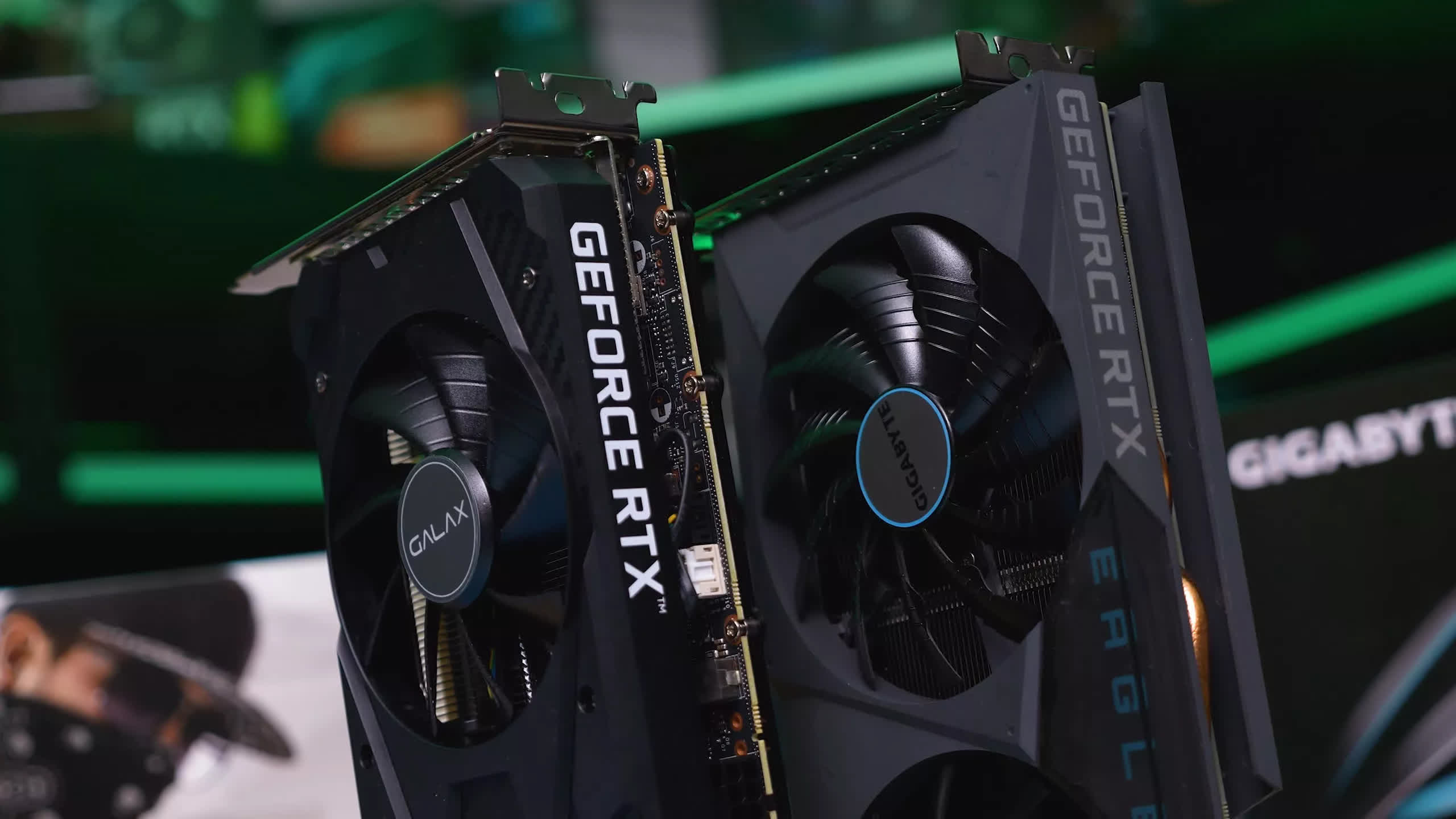
According to well-known tipster @kopite7kimi, Nvidia's next wave of consumer GPUs, tentatively branded RTX 60, won't arrive before the second half of 2027. If accurate, that would mark a striking delay following the debut of the RTX 50 series in early 2025, stretching a product cycle that already appears to be slowing.

Nvidia typically releases new GPU models every one to two years, but recent generations have taken longer. The RTX 20, 30, and 40 series launches were about two years apart, but the RTX 50 series broke that pattern, arriving 28 months after RTX 40. A second-half 2027 release would push the RTX 60 debut to at least 30 months, coming concerningly close to a full three years.

Kopite also points out the obvious, that the RTX 60 series would be built on Nvidia's newly unveiled Vera Rubin architecture, revealed at CES this week. Vera Rubin server systems are scheduled to ship in mid-2026, suggesting a faster timetable on the data center side, even as consumer graphics cards lag behind. The GeForce RTX 60 lineup is expected to use GPUs labeled GR200.

The long wait could feel even more pronounced due to the apparent disappearance of the rumored RTX 50 Super refresh. Sources had suggested Nvidia planned to reveal higher-VRAM variants of the RTX 50 series at CES, but those plans were delayed or scrapped altogether amid difficulties securing enough GDDR7 memory.

Those constraints reflect a broader industry shift. Explosive demand from AI data centers has sent DRAM and NAND prices soaring, driving up costs across nearly every device that relies on advanced memory.

Micron ceased manufacturing consumer memory for the first time in thirty years, and rumors suggest that Nvidia may respond to limited supply by reintroducing the RTX 3060, which launched in 2021.
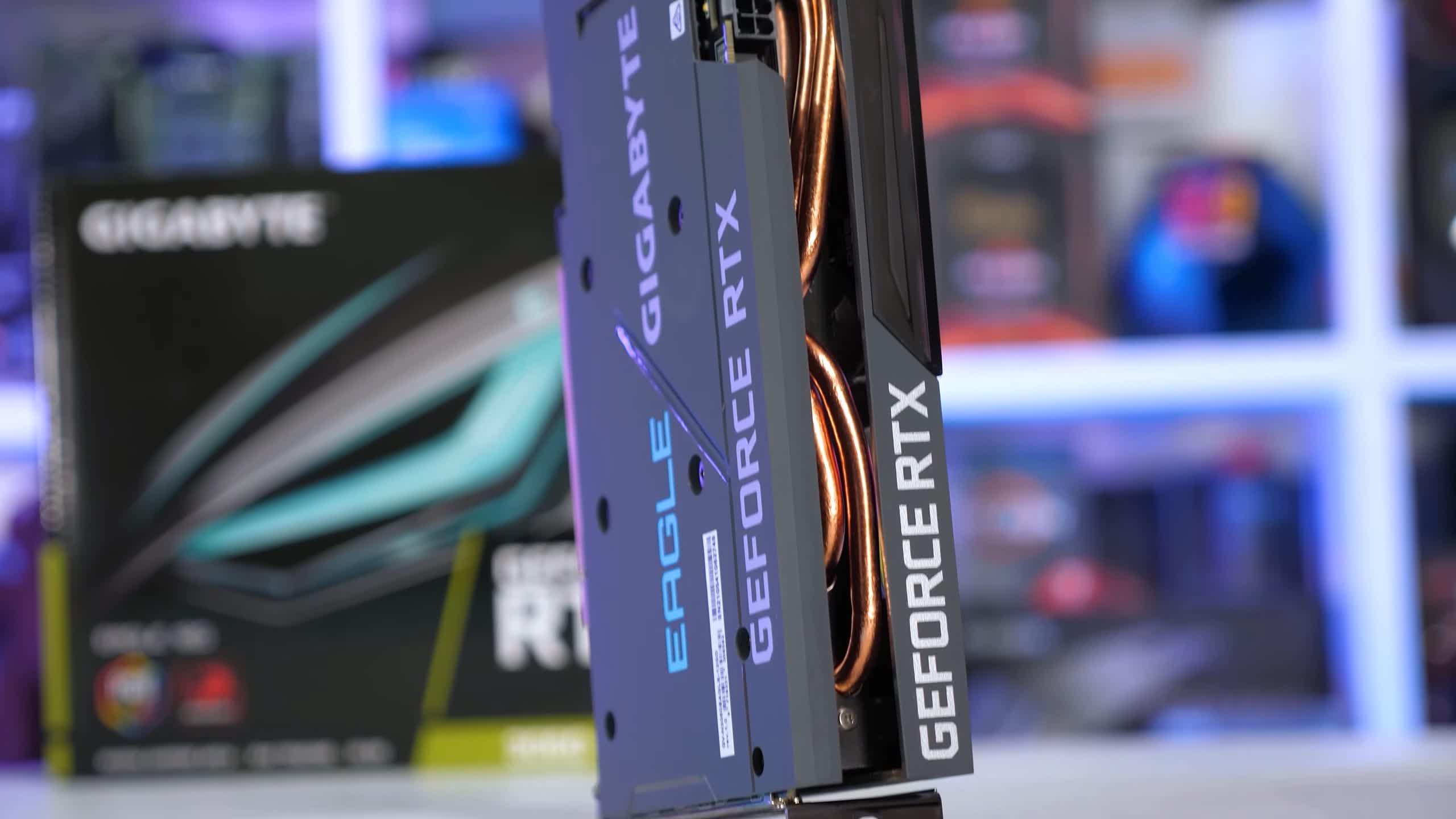
Nvidia has yet to detail how the Rubin architecture will shape future consumer graphics cards, but CEO Jensen Huang has made one thing clear: traditional rasterization is no longer the endgame. When PC World asked whether the RTX 5090 would remain the pinnacle of rasterization rendering, Huang pointed instead to DLSS and neural rendering technologies, arguing they represent the future of gaming and the path to truly photorealistic worlds.

Permalink to story:

 
I could see both AMD and Nvidias next gen gamer GPUs delayed due to RAM crisis and probably both brands will delay lower tier models even further or don't make them at all next generation.

People that want budget cards, can buy current generation later for cheaper or buy second hand.
 
I could see both AMD and Nvidias next gen gamer GPUs delayed due to RAM crisis and probably both brands will delay lower tier models even further or don't make them at all next generation.

People that want budget cards, can buy current generation later for cheaper or buy second hand.
Jensen Haung and Lisa Sunare cousins
 
I could see both AMD and Nvidias next gen gamer GPUs delayed due to RAM crisis and probably both brands will delay lower tier models even further or don't make them at all next generation.

People that want budget cards, can buy current generation later for cheaper or buy second hand.
Why would they do so when we've heard repeatedly that low end cards are profitable and high end cards barely break even? It's more likely the big enthusiast cards would go away in favor of big AI cards with smaller consumer GPUs that have less RAM and smaller dies.
 
Oh nice, maybe game developers will learn to write their own software again and optimize. Either way, indie studios are going to continue eating well into the future. 5000 series is underwhelming anyways.
 
Neural rendering is the future. If they are going to start shifting from raster + RT cores to neural rendering with the next round of GPU, I wouldn't mind a delay. That shift is going to be huge.

In the future, GPUs will have tiered pools of memory and much faster NPU capabilities that allow for a lot of traditional rendering to be done on a neural rendering pipeline instead.
 
2.5 years is not really that close to 3 years.

Seems like a perfectly reasonable period of time between releases imo. If anything I’d push it out further to 3 or even 4 years. PC / gaming does not need a hardware arms race right now when most people are gaming on 3060 or less.

Steamdeck and Steam machines should be min / recommended target specs for games going forward.
 
Oh nice, maybe game developers will learn to write their own software again and optimize. Either way, indie studios are going to continue eating well into the future. 5000 series is underwhelming anyways.

Cross-platform support is inherently an enemy of optimization.
 
Why would they do so when we've heard repeatedly that low end cards are profitable and high end cards barely break even? It's more likely the big enthusiast cards would go away in favor of big AI cards with smaller consumer GPUs that have less RAM and smaller dies.
I think what's usually said if the opposite. Low end barely makes a profit, high end allows for more margin. Even when high end chips are bigger you get so less chips per waffer, they're priced to consumers higher than the proportional manufacturing cost increase.
 
Cross-platform support is inherently an enemy of optimization.
This was true in the 360/PS3 days when everyone had different hardware. Everything has basically been AMD and Radeon chips on consoles for the last 10 years. Xbox has always been a locked down windows PC and the PlayStation is some type of Linux/windows abomination.

The optimization in games(especially unreal 5) is not so much on the shader thing, it's that things are being rendered that can't be seen. You don't need 4k trees that are a mile away or raytracing on a wall hidden behind some rocks.
 
This was true in the 360/PS3 days when everyone had different hardware. Everything has basically been AMD and Radeon chips on consoles for the last 10 years. Xbox has always been a locked down windows PC and the PlayStation is some type of Linux/windows abomination.

The optimization in games(especially unreal 5) is not so much on the shader thing, it's that things are being rendered that can't be seen. You don't need 4k trees that are a mile away or raytracing on a wall hidden behind some rocks.
Please, culling out of visible objects has been a thing since the 90s; its literally the first optimization rendering came up with.
 
I think game development is actually hurting from the constant stream of new tech they need to "adapt to" - we could actually end up getting some games that doesn't run poorly at launch.
 
Official generation cycle at Nvidia moved from 24-28 months to 34-36 months.

It might be the first time in a while that we see AMD launching their next gen of GPUs before Nvidia.
 
Jensen Haung and Lisa Su are cousins
And it changes NOTHING...

Your attempt at trying to create a link of collusion between the two companies is beyond ridiculous. If there was collusion, both companies would have the same level of leverage which is absolutely not the case.
 
The shift away from rasterization is interesting, but it also sounds like a convenient way to justify slower hardware progress.

If Nvidia re-releases the RTX 3060 because memory is too expensive, that’s a wild full-circle moment. The midrange card refuses to die because it’s the last one that makes economic sense.
 
Please Intel don't blow this opportunity to gain a bit more market share with newer, more powerful cards.
 
Please, culling out of visible objects has been a thing since the 90s; its literally the first optimization rendering came up with.
and it is not done automatically in UE5. this is esspecially true when using things like Nanite and Lumen
 
To be frank, this is great! It was absurd to be upgrading every year. At least now when I pay for a card I know it'll be supported for 3 years w/ software AI updates that make it run more efficiently. It might even justify the higher prices they're charging for these cards...wait did I just say that?!
 
I'm just glad I got my 5070Ti when the prices came down to sane levels. It'll do me fine till next upgrade cycle then...
 
Why would they do so when we've heard repeatedly that low end cards are profitable and high end cards barely break even? It's more likely the big enthusiast cards would go away in favor of big AI cards with smaller consumer GPUs that have less RAM and smaller dies.
Low-end cards are not really profitable. Most buy mid-end. Do you mistake low-end for mid-end?

Mid-end is 60-70 series.

Low-end for me is stuff like RTX 5050, Radeon 9050 etc. Waste of silicon and RAM modules for the most part. A last gen mid-end card always beats new-gen low-end stuff. Hence why it is pointless to make next gen low-end stuff, when there's still plenty of mid-end last gen stuff available + used GPUs.

With current RAM prices - Expensive VRAM on cheap low-end cards makes sense how? Drives the price up. Performance per dollar suffers. They might as well use the expensive modules on better cards, meaning mid-end and up, where people are willing to pay more.

And this is exactly what Nvidia has been doing for years. They don't really care for low-end stuff. Low margins. Almost waste of time. They mostly do low-end to fill OEM market needs. It is not what most consumers go out and buy, when they pick up just a single GPU. I work with B2B and see the numbers. We ship millions of GPUs yearly to retailers.


Best selling Nvidia GPUs are almost always 60-70 series. Look at Steam HW Survey. This is mid-end and where you typically get most for your money.

AMD should focus more on low-end than Nvidia, to regrab marketshare but I don't think AMD should spend much time on next gen low-end stuff when they can just keep making Radeon 9060/9070 series to fill that space, for example.
They should keep using GDDR6 + older process node for this, while GDDR7 and 3nm tech should be reserved for mid-end to high-end. Neither Nvidia or AMD should waste GDDR7 modules on low-end stuff in this RAM market and Nvidia prefers not to use 3GB GDDR7 modules on gaming stuff at all, hence 5000 SUPER delay/cancellation. These are needed and used mainly for RTX Pro.

Rumour says 3060 12GB is coming back. GDDR6. Samsung 8nm. Won't affect 4000/5000 production much (slight overlap in low tier GPUs using GDDR6 but these could go EOL), these mostly use GDDR6X or GDDR7 and TSMC only.

No need to do overlaps or atleast limit them.

This is how you dominate on marketshare and sales, instead of being limited to 1 type of memory and 1 fabrication process where making lower-end parts lowers your mid-end and high-end output, which have higher margins.
 
Last edited:
I don't see the problem with waiting almost three years as long as the improvements and performance are there. We might as well get our money's worth. Where it would become worrying is if the RTX 6000 series is just a basic refresh of the 5000 series, replacing the 5000 Super. No performance leap, a wasted generation, just pseudo-DLSS 5.0, MFG x8-10, etc...
 
Back