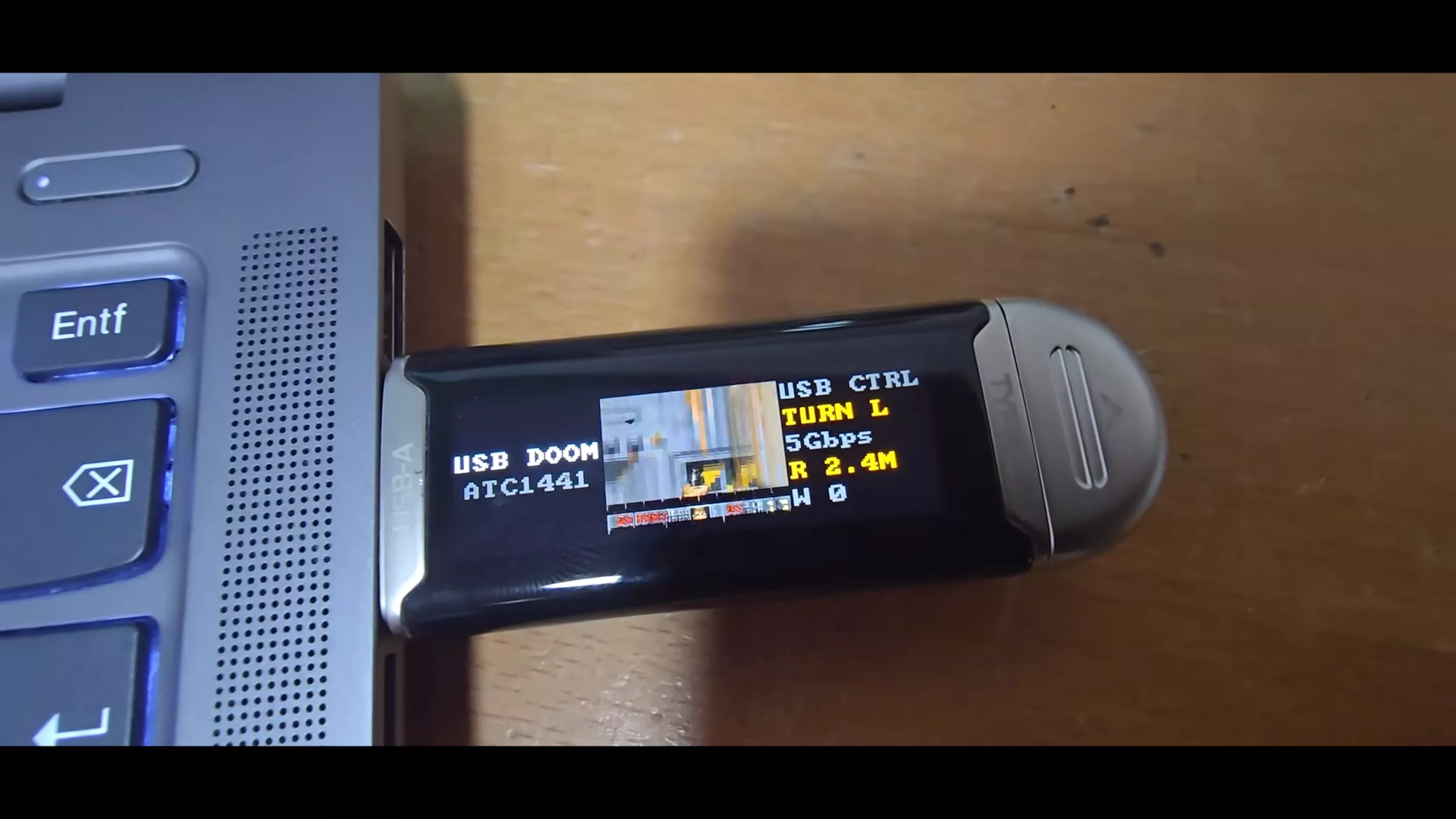
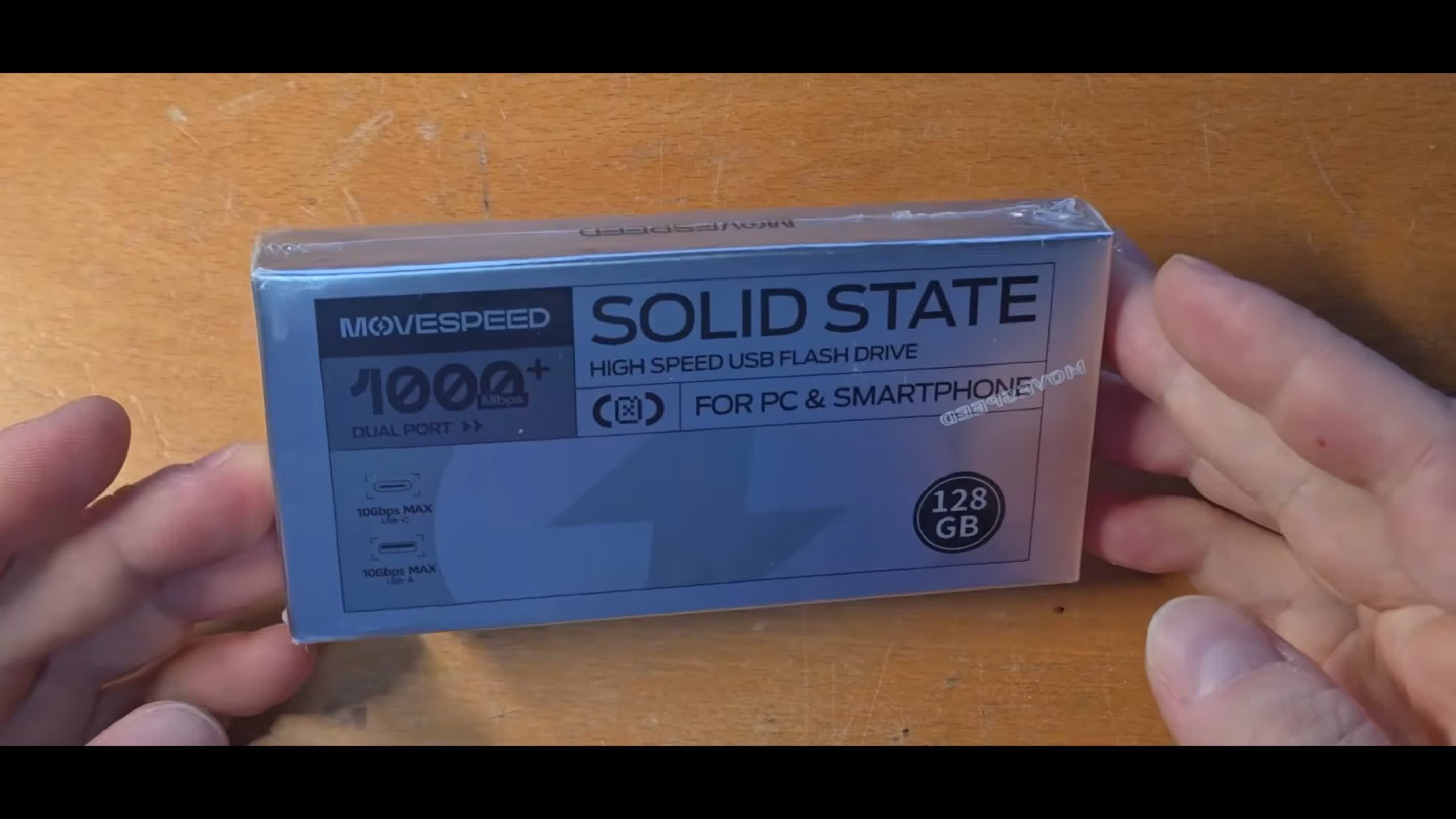
The takeaway: Doom now runs on a 128GB Movespeed USB flash drive with its own built-in screen, and players control the game by copying files to the drive or reading files from it. The port is the work of Aaron Christophel, a German embedded software developer and hardware hacker known online as atc1441, whose earlier Doom ports include an electric toothbrush, a Xiaomi Mi Band 10 and a toy video walkie-talkie. Christophel got the drive's display chip to handle all of the rendering, input, saves and reloads without any help from the computer it's plugged into.
Keeping the whole game on the drive meant working with limited hardware. Christophel said the microcontroller that drives the screen has 128KB of SRAM, 2MB of flash memory, and a measured clock speed of 40MHz. The SRAM is the chip's working memory, where the game has to keep its active state while it runs. The flash has to hold the program code and the game data. With those limits, the original DOS release of Doom was never going to fit.
Instead, Christophel turned to DMC100-DOOM, a stripped-down port by Polish developer Artur Bieniek. Bieniek wrote it for an AC/DC digital clamp meter, a handheld tool electricians use to measure current. The meter's chip has just 32KB of RAM, so Bieniek had the port draw the screen in strips instead of holding a full frame in memory. That focus on squeezing Doom into very little memory made it a natural match for a display controller in a USB stick.
The controls are the strangest part of the project. A flash drive has no buttons, no D-pad and no joystick. To the host computer, it's just storage, so Christophel used the file system as the input. Each transfer becomes a command the game understands, like moving forward or firing. The result is an unusual setup where a file manager works like a gamepad.
In Christophel's YouTube video, the game runs locally at about 13 frames per second. That's technically playable, though probably not much fun. However, the project is meant to show what the hardware can do, not to offer a better way to play a 33-year-old shooter.
The demo also says something about how capable cheap, single-purpose chips have become. When Doom came out in 1993, running it well on a typical home PC wasn't easy. Today, a chip whose job is to show status information on a USB stick's small screen can run the game at a rate that's usable, if barely. Christophel said the drive is a clear case of modern hardware having "too much processing power" for the job it was built to do.
The flash drive is the latest in a run of similar projects for the developer. Just last week, Christophel got Doom running on an Anker power bank.
Doom has been ported to an expanding list of increasingly implausible devices. Thus far, these include:
- A single keyboard key
- The late John McAfee's "unhackable" crypto wallet
- A McDonald's cash register
- A McDonald's self-order kiosk
- The Playdate handheld
- Minecraft
- A captcha
- A $15 Ikea smart lamp
- A motherboard
- A Lego brick
- John Deere combines
- Notepad
- The Atari ST
- A candy bar
- A one-milliwatt neural chip
- The Commodore 64
- Teletext
- A robot lawnmower
- Fortnite
- A self-generating AI model
- Holograms
- Nintendo's Alarmo clock
- A PDF document
- Microsoft Word
- An Anker power bank
- A satellite orbiting hundreds of kilometers above Earth
- The Windows screen saver
- Earbuds
- A computer made of living human neurons
- TypeScript's type system
- A box containing the game
- A QR code
- DNS
- Microsoft Paint
- A DSLR camera