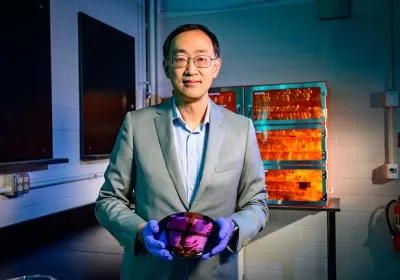
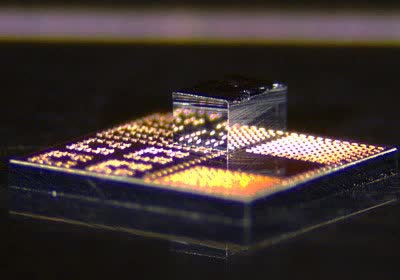
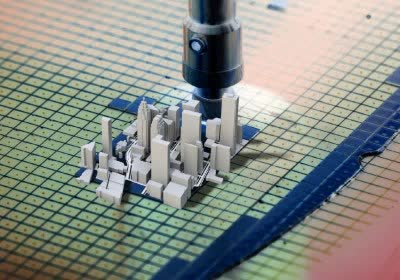
University of Illinois team stacks three active silicon layers on a single chip, achieving 98-100% transistor yield
Forward-looking: For years, the chip industry has chased better performance by shrinking transistors and squeezing more of them onto a flat slice of silicon. That strategy is running into hard limits. A group at the University of Illinois thinks the next gains will come not from going smaller, but from going vertical.
It can't help you think faster, but the medical potential is exciting
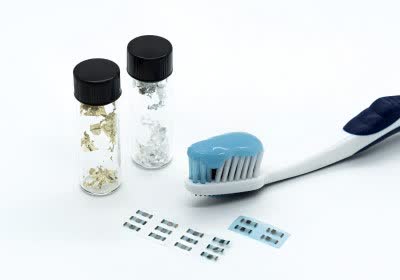
WTF?! A humble toothpaste additive has provided the key to a major breakthrough in the field of edible electronics. Researchers have successfully built the first fully edible transistor using copper phthalocyanine – a crystalline blue pigment commonly employed as a whitening agent in toothpaste formulations.
In a nutshell: Back in 2021, a team from the Massachusetts Institute of Technology made waves by creating an entirely new type of ferroelectric material. Now, those same researchers have one-upped themselves by using that substance to build a transistor that utterly smokes the conventional chips powering today's gadgets – with nanosecond switching speeds and incredible durability.
Forward-looking: An international team of scientists have published research on a novel way to grow 2D materials using a method that could bring 2D transistor-based electronics to market sooner rather than later.