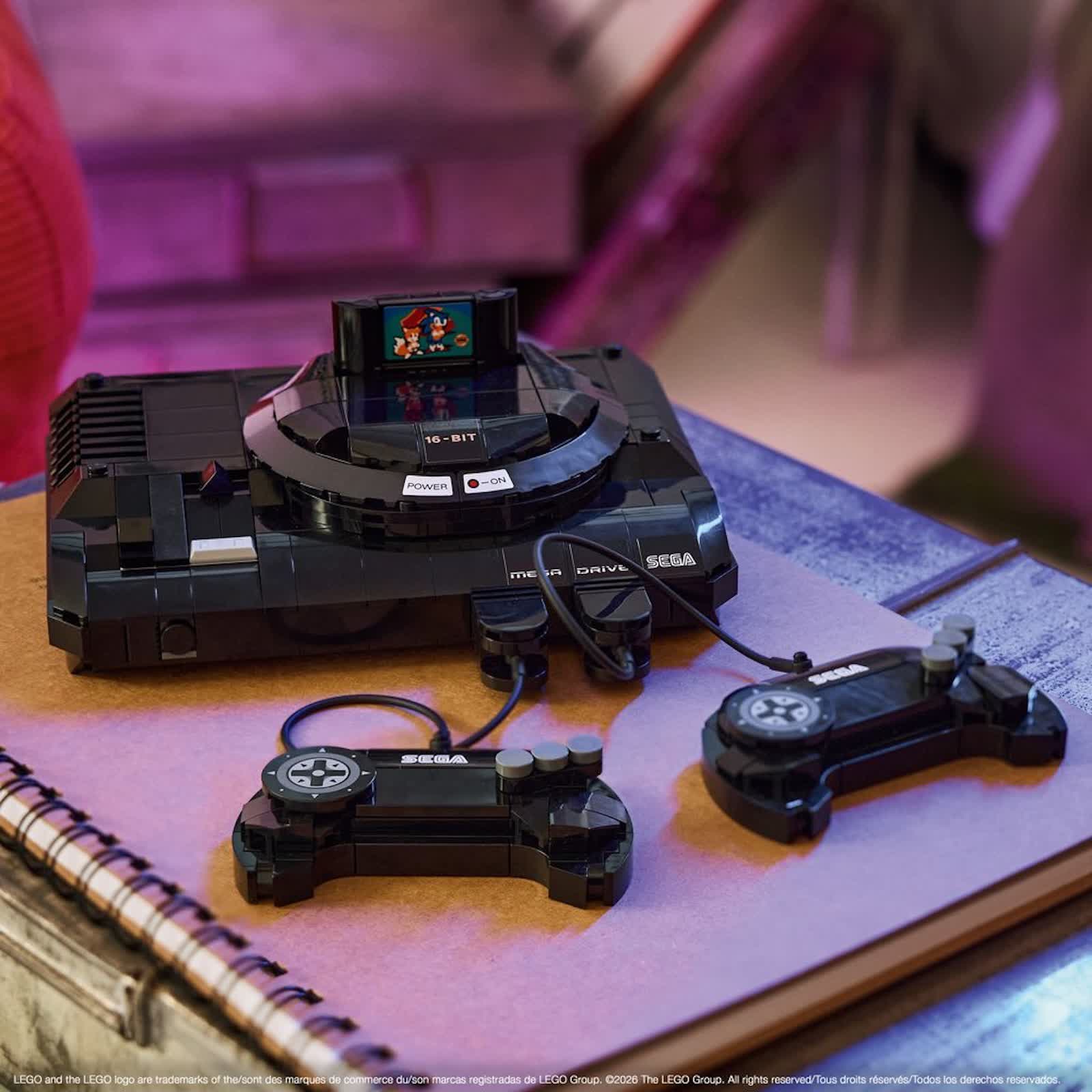
In a nutshell: Lego is expanding its lineup of brick-built consoles with a new addition that should resonate with retro gaming fans: a miniature recreation of the Sega Genesis. Like the sets that came before it, the focus is squarely on the hardware itself, continuing Lego's approach of recreating classic systems as display pieces.
The set launches June 1, priced at $39.99, and comprises 479 pieces. The finished model measures roughly 4.5 inches long and six inches wide, a compact footprint that still leaves room for the details that made the original console recognizable.
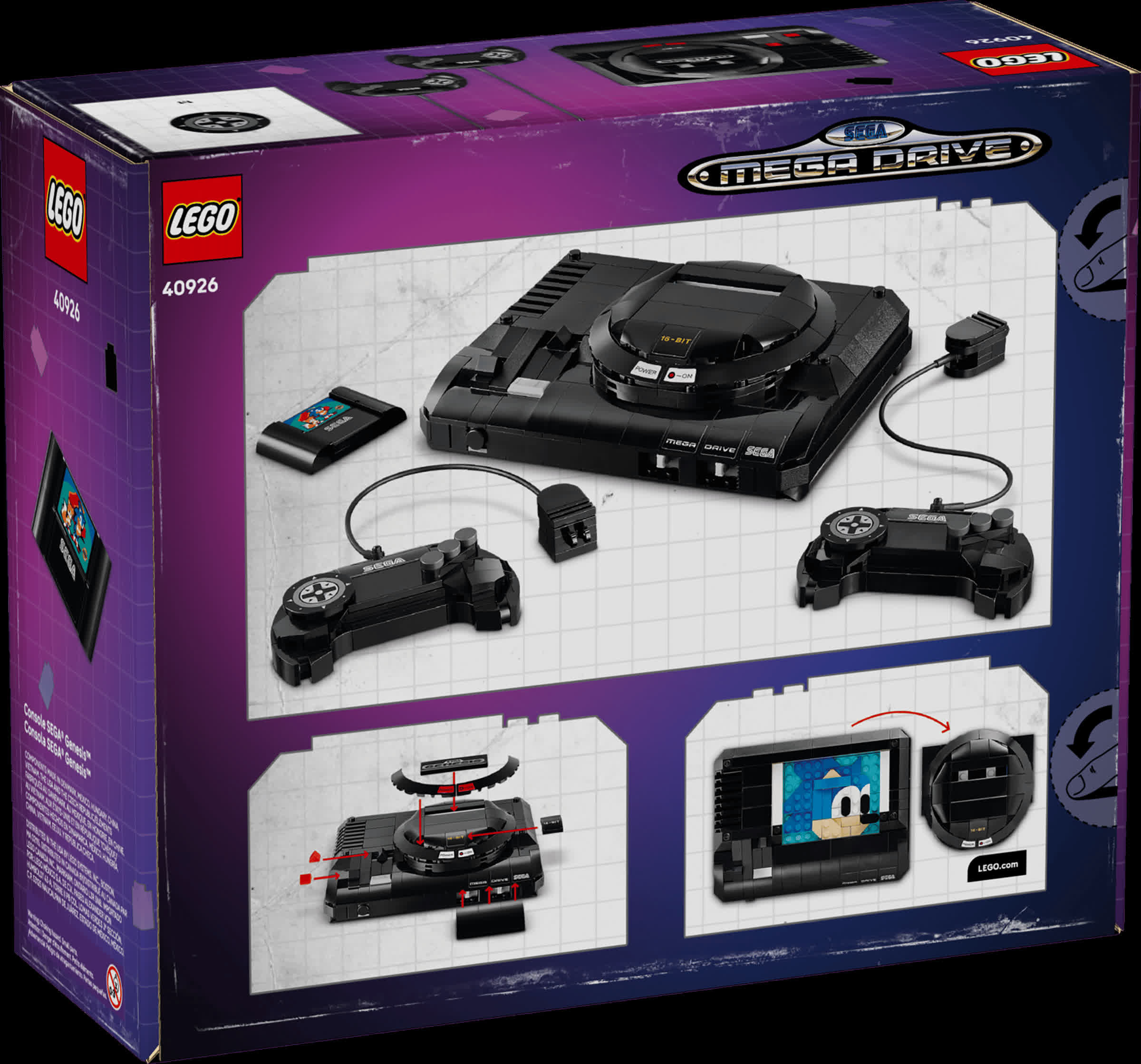
A slot-in cartridge and plug-in controllers mirror the Genesis's real-world functionality, even if no electronics are involved. That trade-off of form over function has become a defining characteristic of Lego's retro console approach.
Also read: The Rise and Fall of Sega: A Legendary Gaming Journey
This marks the first time Sega hardware has made it into the Lego lineup. Previous releases have covered Nintendo and Atari territory, including models of the NES, Game Boy, and Atari 2600, all built around the same core idea: take a piece of iconic consumer electronics and rebuild it as something fans can put together and keep on a shelf.
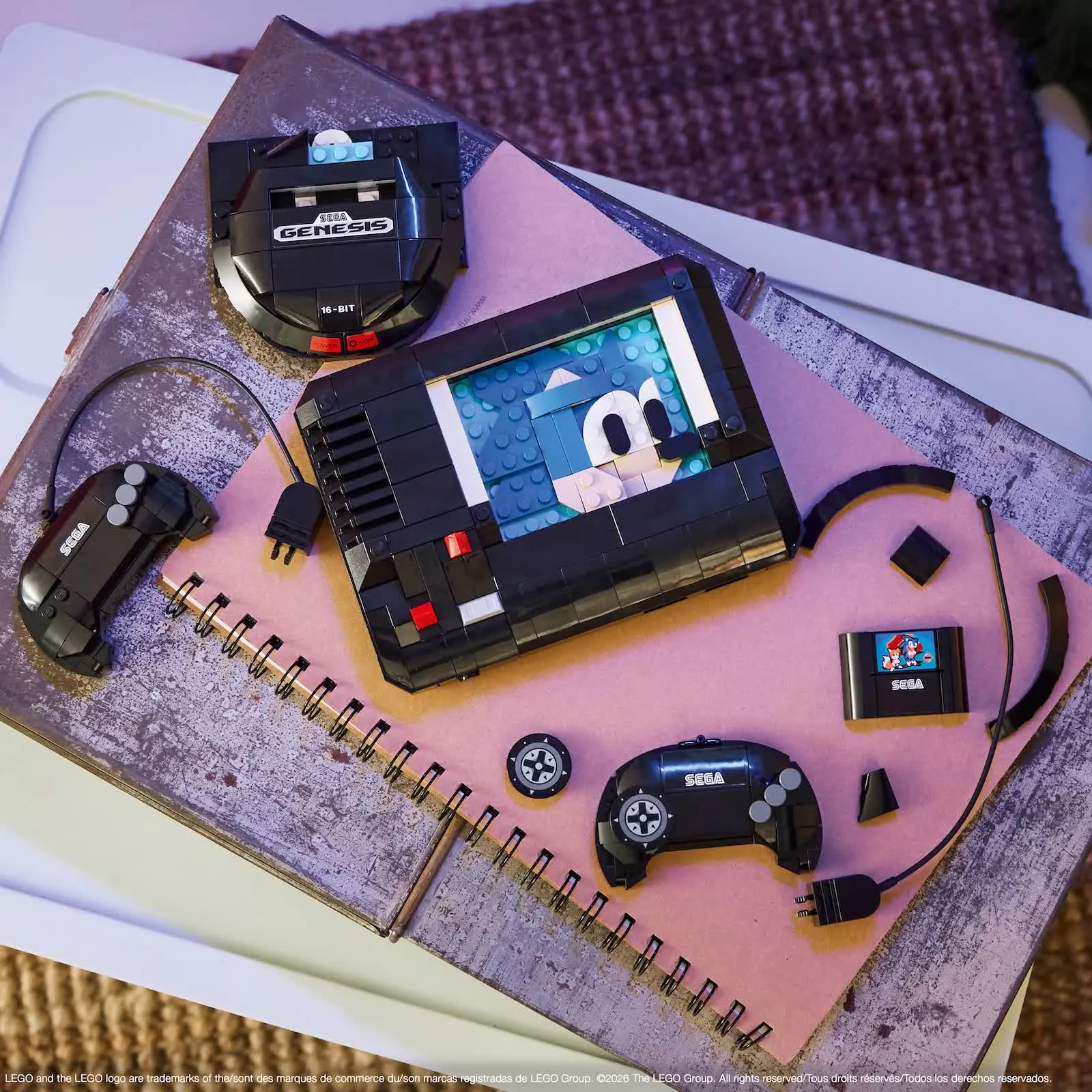
One thoughtful design decision addresses a long-standing geographic quirk of the console's history. Sega's 16-bit machine launched as the Genesis in North America and the Mega Drive everywhere else. Rather than committing to one name, Lego includes stickers for both regional identities, letting builders decide which version their model represents.
The set will be available through Lego's online store and major retailers. At its price point, it reads more like a casual pickup than a collector's centerpiece, which likely expands its audience well beyond devoted Lego enthusiasts to anyone with a soft spot for retro hardware.
The release also fits into a broader pattern. Interest in classic gaming hardware has grown steadily, fueled less by nostalgia for the games themselves than by an appreciation for the machines as objects: their industrial design, their cultural weight, the way they defined a particular moment in consumer technology. Lego's console series seems to understand that distinction, treating each new set not as a toy but as a small monument to hardware history.