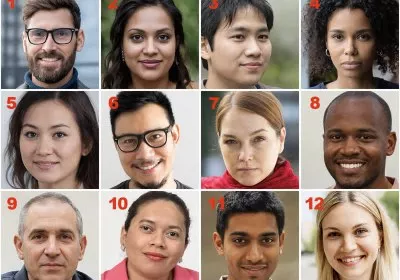
Also: People tend to overestimate their face recognition ability
The takeaway: The ability of AI models to produce convincing, human-like images has gone too far. A new study suggests that detecting AI-generated faces is now too difficult for most people. Even more concerning, so-called "super recognizers" perform only marginally better. The visual clues that once exposed AI-generated images are becoming increasingly difficult to spot, though they have not disappeared entirely.
The assistant can browse the web, handle files, and even use your credit card
In brief: A new local AI assistant first popularized under the name "Clawdbot" is experiencing a surge in popularity because it fulfills many of the promises made by prior smart assistants and AI agents. However, its impressive range of capabilities requires full access to the user's device, files, and login credentials – and security researchers have found gaping vulnerabilities.
Ripple effect: Linus Torvalds, the creator of Linux and Git, has quietly joined the ranks of developers using generative AI to write code – though only as part of a small personal project. His recent experiment with vibe coding shows how even the most traditional programmers are beginning to incorporate AI tools into their workflows, at least for low-stakes development.
First look: Google's latest generative model comes with a ridiculous name, but it's powered by a surprisingly serious engine. Nano Banana Pro recently debuted inside Gemini bringing a major jump in image generation quality – and judging by the last week's worth of community samples, Google's image outputs aren't just competent… they're worryingly impressive, too.