The big picture: American classrooms now run on YouTube. In many districts, it sits at the center of the entire tech stack: Chromebooks or iPads in every backpack, Google accounts for every student, and videos queued for everything from math lessons to indoor recess. Teachers use it to read to a class, teach first graders to draw, or fill the last few minutes before dismissal. But the platform was never designed to be the primary gatekeeper of what children watch during the school day.
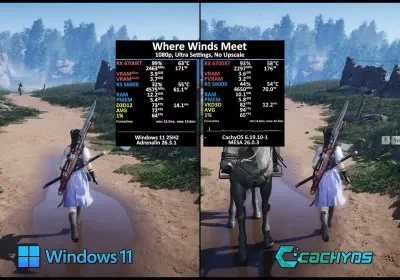
Proton-powered Linux setup delivers higher FPS in several demanding games, though results vary
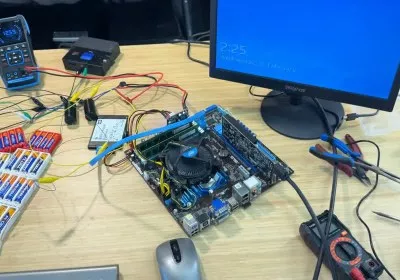
Looking ahead: For years, Linux gaming has lived in the shadow of Windows. But recent benchmarks suggest that balance may be shifting. In a comparison spanning more than 10 blockbuster titles, the Arch-based Linux distribution CachyOS frequently outperformed Windows, even in games without native Linux support.
A YouTuber's optical experiment turns forgotten media into a lesson in photonic engineering
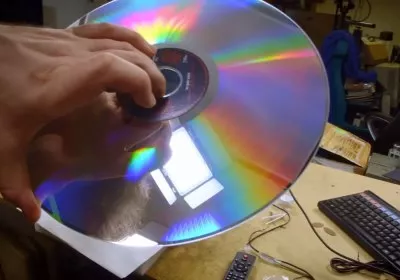
The big picture: When retro tech obsessive Shelby Jueden pointed a low-cost digital microscope at a decades-old LaserDisc, he didn't just see reflections of light – he uncovered the physical trace of analog video itself. His experiment shows how the LaserDisc's 1970s-era analog encoding can still reveal faint traces of recorded video, illustrating how optical media once stored motion pictures before digital formats arrived.