
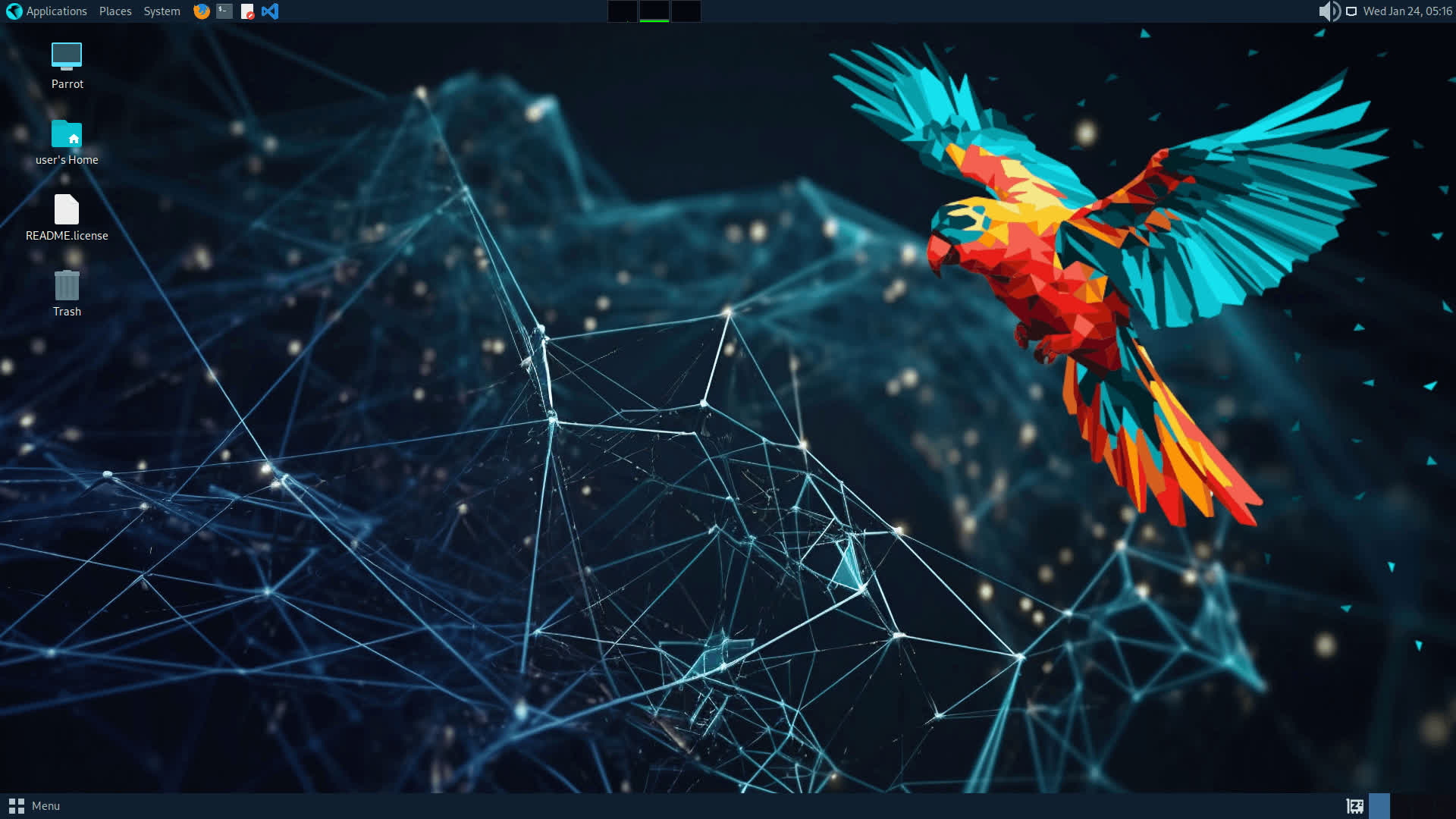
ParrotOS is a versatile operating system that combines ParrotSec's distinctive aesthetics with practical usability. Designed for everyday computing, privacy-conscious workflows, and software development, it caters to a wide range of user needs.
While prioritizing accessibility and ease of use, ParrotOS also lets users customize their setup by selectively integrating Parrot security tools. This flexibility makes it easy to build a personalized, streamlined penetration-testing environment, supporting efficient cybersecurity assessments and operations.
Who develops ParrotOS?
ParrotOS is developed and maintained by the Frozenbox Team, an open community of cybersecurity experts and contributors. ParrotOS ships with AppArmor profiles, sandboxed applications, no root login by default, and a hardened Linux kernel.
What's the difference between Parrot Home and Parrot Security?
Parrot Home is optimized for privacy and general computing without pre-installed security tools. Parrot Security includes a full suite of tools for penetration testing, forensics, and security research. The Home edition is suitable for daily use, while the Security edition is more specialized for penetration testing and may be too heavy for everyday tasks.
How is ParrotOS different from Kali Linux?
Kali Linux and ParrotOS are both very good operating systems, but ParrotOS emphasizes privacy and system hardening in addition to pentesting. It's more lightweight and beginner-friendly in some aspects than Kali Linux.
Features
Easy installation
Follow a customized installation by using Calamares.
Full Office Suite
Pre-installed LibreOffice, and possibility to install other softwares via the Synaptic package manager.
Multimedia Production
VLC, Gimp and a whole repository from which to install other software such as OBS, Blender, Kdenlive, Krita and more!
Privacy & Anonymity
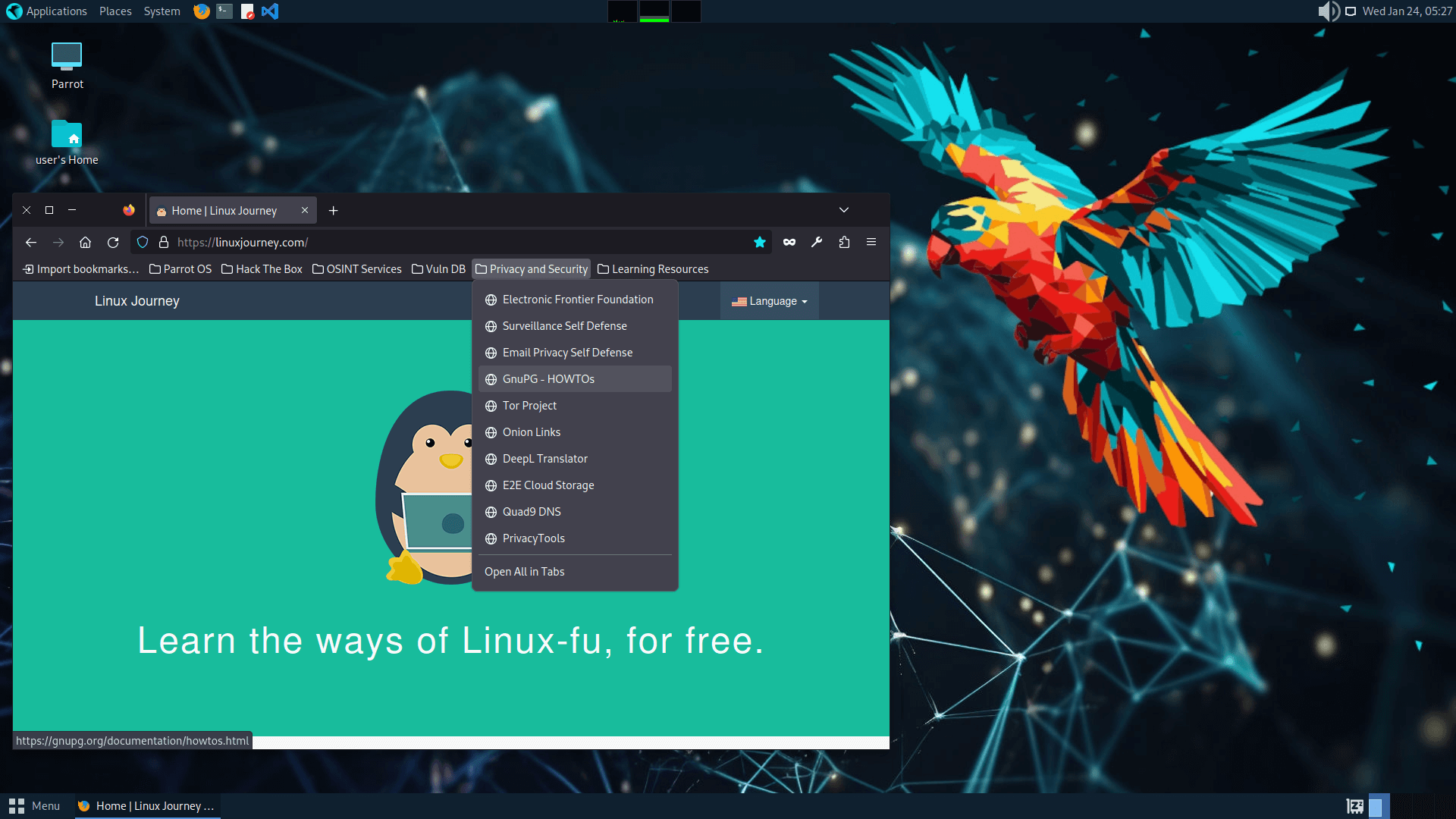
Bundles tools like AnonSurf, Tor Browser, OnionShare, and more to anonymize internet use.
Cryptography
Full disk encryption and all encryption tools including zulucrypt, sirikali at your fingertips.
What's New
Parrot 7.3 is out, and every edition has been rebuilt on it. This release landed only a few months after the previous one, and most of the work went into the system itself rather than the toolset, with two targets in mind: faster execution on recent hardware, and smoother day-to-day use. The build scripts changed little this round, with the effort going into smaller images and into dropping preinstalled tools that the Home and Security editions did not need.
Furthermore, we would like to thank our contributors, whose quick feedback and dedication keep the packaged tools up-to-date. Upgrade with: sudo parrot-upgrade
Highlights
- Optimized builds: an opt-in repository of packages recompiled for newer CPU baselines, with 20% to 50% gains on compute-heavy work.
- A new menu system rewritten in Go (parrot-exec and launcher-updater), with one-click installation of any tool straight from the menu.
- Official Vagrant boxes for the Home and Security editions, amd64.
- A new Firefox start page, built with Vite, that collects no data.
- The Parrot Security Team is pleased to announce the release of ParrotOS 7.
Parrot 7 represents a major milestone for the project. Its development required a complete rewrite of the system and introduced many changes that follow our mission to keep the system modern and innovative. This release has been made possible thanks to the huge influence of the Parrot community, that has never been so active and involved not only in the beta testing phase, but in the higher level planning and decision-making stages as well.
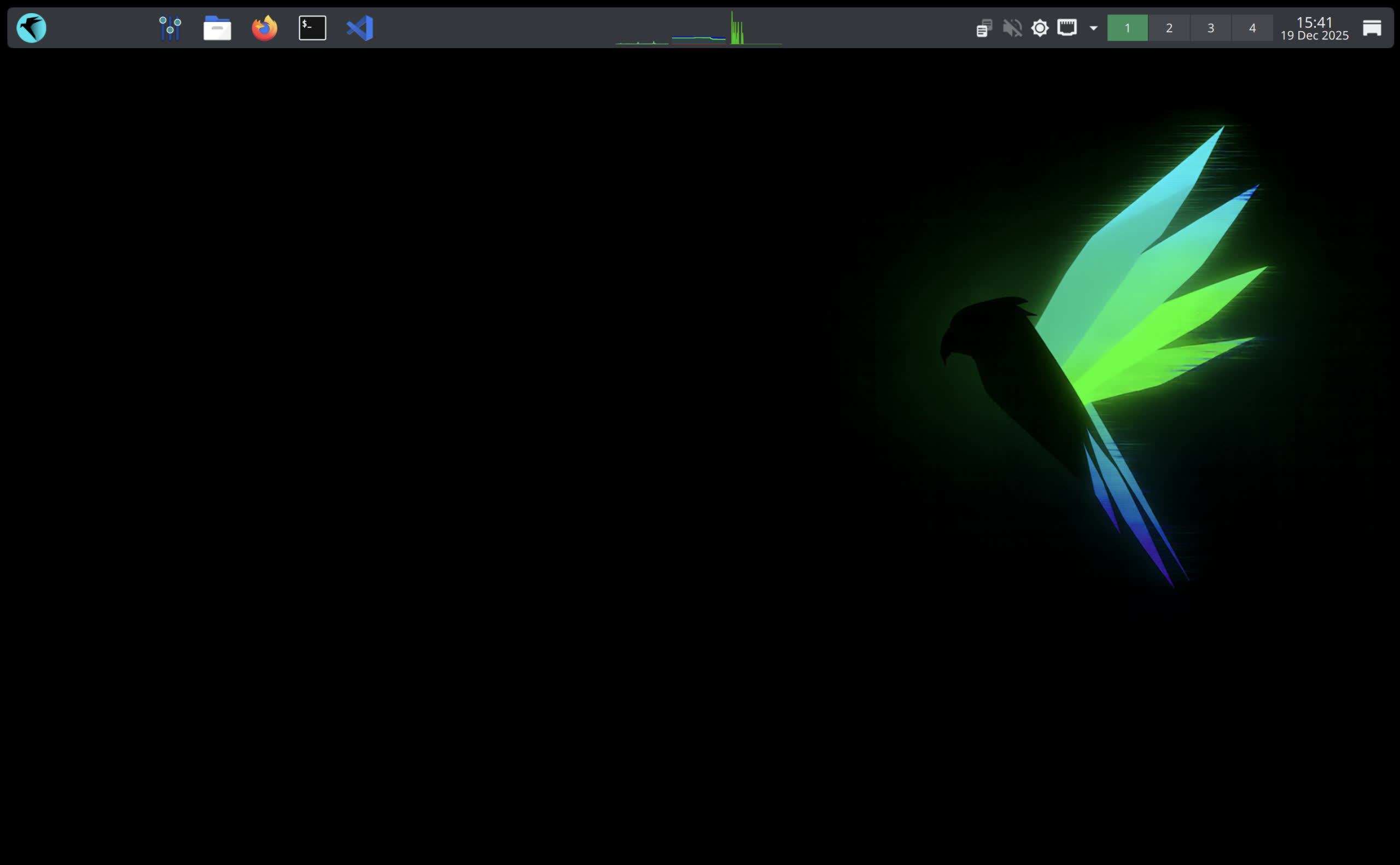
Parrot 7 has switched to KDE Plasma 6, features our own plasma ricing and theming to make it very lightweight, and uses Wayland by default along with the many changes introduced by Debian 13.
The new build scripts now offer easy support to community driven spins, and we plan to offer official support and sponsorship programs to community curated editions featuring more desktop environments and configurations.
Codename: Echo
The improvements in Parrot 7 at first glance include the theme, a change that has always distinguished us in every major release. The new codename of choice is Echo, that comes from the Echo Parakeet, a very intelligent breed of parrots also known as the Mauritius Parakeet. It is represented by the following wallpaper.
You can find it inside your Parrot installation, or in our graphics-dedicated repository.
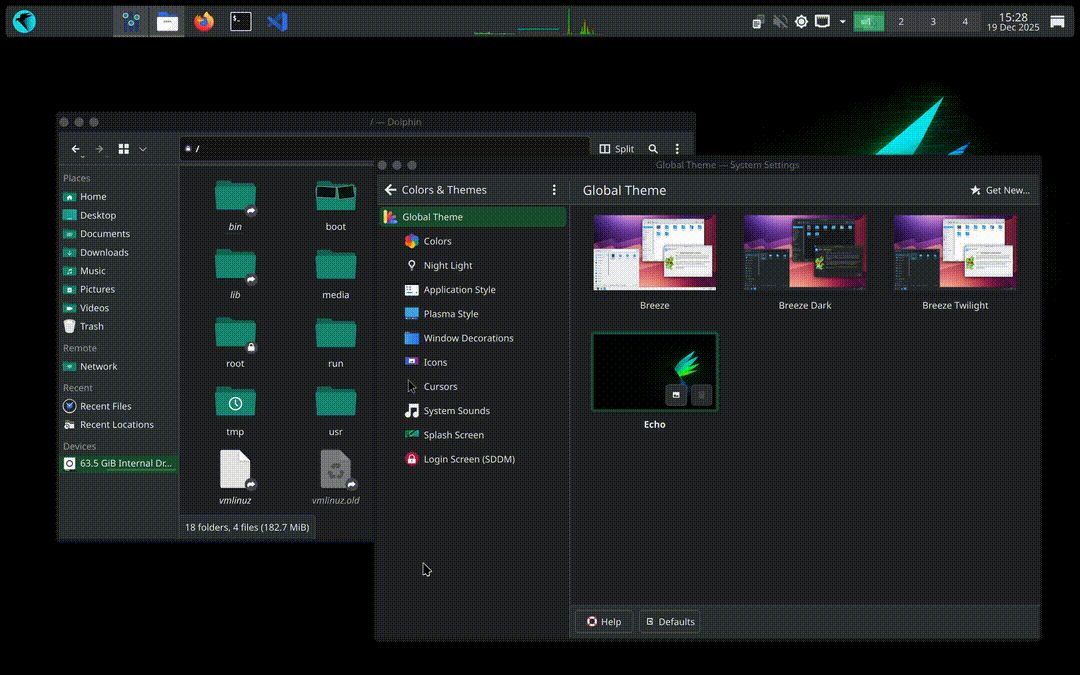
The icons and colors have been revised, adopting a new theme based on Flat Remix and Sweet Mars, currently the best fit for our vision of Parrot 7.
This is part of a new dedicated package, echo-themes.
An overview of the Parrot 7 System Architecture
Many of our scripts were created and assembled through several stages. We use live-build to generate .iso images, while for virtual machines we chose to adopt a custom-built system that allows us to create clean and optimized images for QEMU, VirtualBox and VMware, as well as for UTM: this allows us to provide images in .qcow2, .vmdk, .ova, .vdi and .utm formats.
Our Docker images have also been updated to Parrot 7, and they too were built using dedicated scripts. On DockerHub you will find not only the updated Core and Security Editions, but also Docker images dedicated to specific groups of security tools (nmap, sqlmap, netexec, metasploit, set and more). These served as the foundation for enabling CI/CD. All Parrot 7 builds are automated through our runners and GitLab's CI/CD.
configurations provided by our system packages and metapackages.
- parrot-core [7.0.10]
- parrot-interface [7.0.2]
- parrot-menu [7.0.16]
- base-files [7.0.0]
- calamares-settings-parrot [7.0.7]
- parrot-diplaymanager [7.0.2]
- parrot-desktop-kde [7.0.2]
- parrot-firefox-profiles [7.0.2]
- parrot-tools [7.0.2]
parrot-core is the component that received the most updates. Initially designed to work with MATE and the dconf database, is now refactored to work with the KDE's plain text config files as well.
parrot-menu has taken another substantial step forward. The icons and many desktop entries have been reviewed, fixed, and updated. The launcher-updater, a small tool written in Go that specifically checks desktop entries to prevent duplicates or other issues, has been updated as well, providing improved output in case of errors.
Tools
Parrot 7 brings the latest pentesting tools, features several new ones and introduces a new AI category. A special thank-you goes to the Community Contributors who support us consistently.
[NEW]
- convoC2
- goshs
- evil-winrm-py
- hexstrike-ai
- bpf-linker
- pkinit-tools
- chisel
- bloodhound.py
- autorecon
- trufflehog
[Updates]
- airgeddon [11.60] + fixed hostapd-mana dependency
- burpsuite [2025.10.5], now also on arm64
- sqlsus [0.7.2] + fixed libswitch-perl dependency
- Caido [0.53.1]
- jadx [1.4.7]
- bloodhound.py [1.8.0]
- maltego [4.8.1]
- OpenJDK [2025-10-21 "25.0.1"]
- golang [1.24.4]
- python [3.13.5]
- apparmor [4.1.0]
- glibc [2.41]
Our stake on AI
You asked, we delivered.
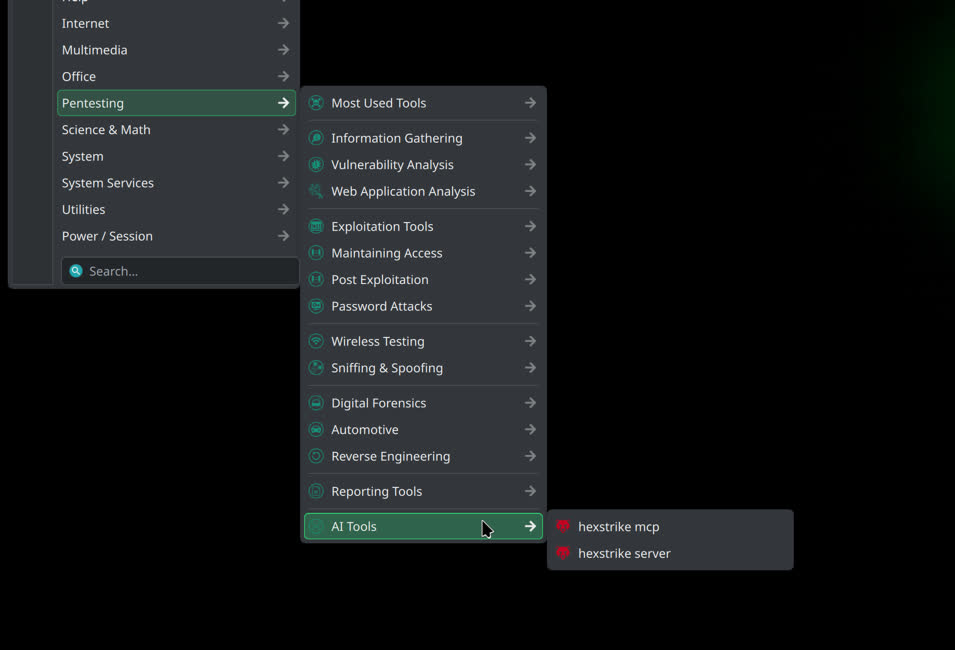
We are known to have very strong opinions on artificial intelligence, machine learning and LLMs, and Parrot 7 represents our chance to define a clear roadmap for AI.
We can not stand idle as this technological leap unfolds, which is why we decided to add this category to our set. The first tool we included is Hexstrike AI, and we plan to continue to integrate MCP powered tools. But our mission remains to include and sponsor the development of tools designed to test the security of LLM prompts and play with prompt engineering techniques.
AI driven automation might seem handy, but the actual "Cybersecurity AI Revolution" will only come from the proper strategies and tools to secure such family of technologies.
parrot-tools
Our parrot-tools metapackage has received updates too. Parrot historically shipped with a small but omnicomprehensive list of tools, with many more available for later installation via our official apt repository. The new parrot-tools metapackage now pre-installs many more tools.
- gdb and cgdb are now part of parrot-meta-devel-tools
- autorecon, patchleaks, goshs, bloodhound, chisel, peass are now part of parrot-tools-infogathering
- bpf-linker is now part of parrot-tools-reversing
- syft, trufflehog are now part of parrot-tools-cloud
- seahorse is now part of parrot-meta-crypto replacing GPA
RISC-V
We are the first pentest distribution to officially embrace RISC-V the first and only revolutionary Open ISA with an actual chance to change the world. Parrot 7 offers a pre-assembled rootfs tarball, and our entire repository offers native support to such architecture for every debian package and Parrot tool that we could compile for such architecture.
Parrot Updater
Among the various updates, we noticed some issues related to parrot-updater, which at times proved inconvenient and unnecessary within the system. Those already familiar with ParrotOS know that they can update their system by choosing to use our wrapper, parrot-upgrade, inside a terminal window. However, we decided to give parrot-updater a second chance and make it more user-friendly.
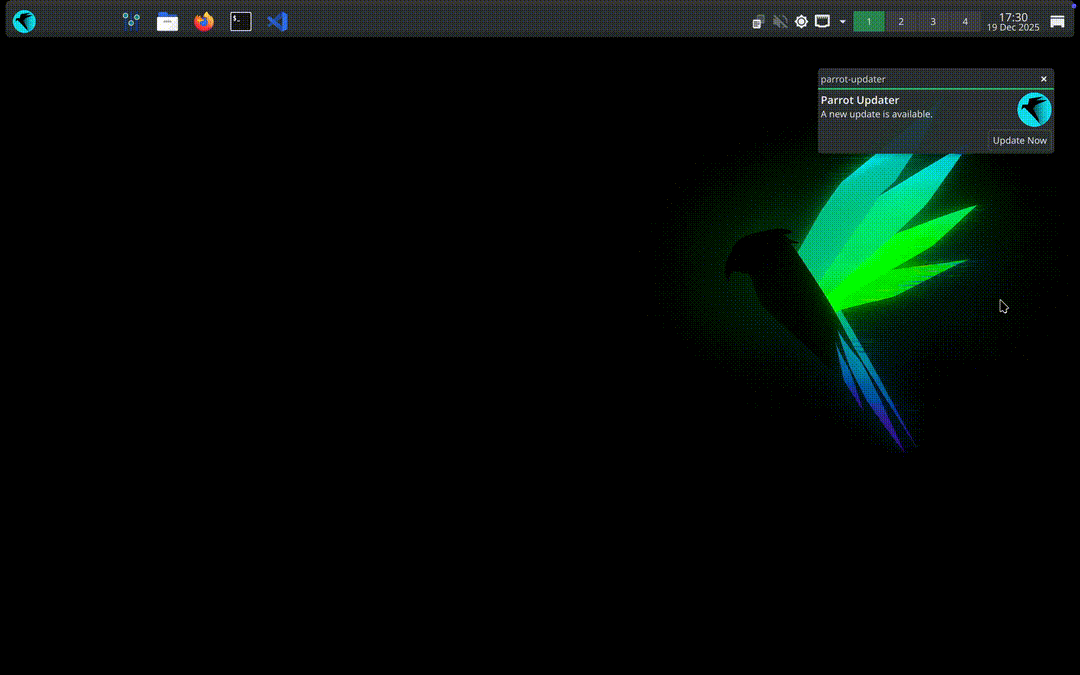
We revisited the underlying idea and rewrote the entire program in Rust, also adding a GUI thanks to the gtk4-rs libraries. parrot-updater performs a check every week, and a notification will appear in the top-right corner whenever an update is available.
This effort gave us the opportunity to deepen our understanding of some aspects of Rust, potentially paving the way for rewrites or create new system utilities developed in this language.
Docker containers, WSL and Rocket
Both Windows Subsystem for Linux (WSL) and the Docker images have been updated to Echo. The CI/CD pipeline has also been updated and fixed, so if any change occurs in our repository, we just need to press a button to restart the build, and the push to DockerHub will happen automatically.
On DockerHub you will mainly find two tags. The 7 tag corresponds to this release, while the latest tag will always be the most up-to-date one.
Check parrot.run for more information.
Rocket has reached version 1.3.0, with new improvements to the application's performance.
Debian Conversion Script
The Parrot 7 repositories have also been included here, making it compatible with Debian 13 (with any DE or WM, including GNOME). Although it is compatible, we always recommend performing a backup before carrying out any similar operation, since this involves adding new repositories and new packages to your system. Given the large number of possible configurations when using Debian, it is therefore advisable to proceed with the installation of the Core Edition and then, if needed, gradually install the Home/Security Edition.
Raspberry Pi
The switch to KDE has also affected the Raspberry Pi editions. Although our support continues, we strongly recommend using the Core Edition for those who want to run Parrot on a Raspberry Pi 3B, while users with a Raspberry Pi with at least 2 GB of RAM can choose any available edition.
We may consider to revert back to MATE or adopt XFCE for future versions.
Website
The restyling didn't involve only the OS; our website has also been revamped and modernized in terms of design. There's still plenty of work to do, but it will keep improving over time. It is still built with React and Next.js, and its dependencies have been updated to the latest stable versions.
Upgrade from Parrot 6 Lorykeet
Given the significant changes in Parrot 7, we recommend performing a clean installation by downloading the new release from our website. Before proceeding, make sure to back up your data.
For those who prefer not to download the new .iso, the 6.x branch will continue to receive support and security updates for as long as necessary. Once the transition to Parrot 7 will be provably perfect, an update to parrot-core exclusive to the 6.x repo will automatically take care of the migration to 7.0.
Previous installations of Parrot 6.4 will keep the MATE desktop environment once migrated to Parrot 7.
Adopting KDE Plasma 6 on an old Parrot 6.4 system upgraded to Parrot 7 requires the new configuration files to be properly migrated from /etc/skel' to the user's home folder, which is a process that can't be done via system update and will require manual intervention by the user. Such operation will receive proper documentation.
Pro Tip: Upgrading will be supported and will happen almost automatically with the aforementioned caveats, but a fresh installation remains the best option for stability and performance, especially if you're coming from an older release.
System Requirements
- Processor: Dual Core CPU
- Graphics: No Graphical Acceleration Required
- Memory: 1 GB RAM
- Storage: 16 GB