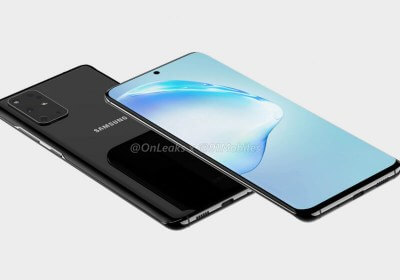
Samsung Galaxy S11 renders reveal new front and rear cameras, more
Yet another big rectangular camera bump
In this second part of our deeper look at 3D game rendering, we'll be focusing what happens to the 3D world after all of the vertex processing has finished. We'll need to dust off our math textbooks again, grapple with the geometry of frustums, and ponder the puzzle of perspectives. We'll also take a quick dive into the physics of ray tracing, lighting and materials – excellent!

In this first part of our deeper look at 3D game rendering, we'll be focusing entirely on the vertex stage of the process. This means dragging out our math textbooks, brushing up on a spot of linear algebra, matrices, and trigonometry – oh yeah!


#ThrowBackThursday Today we're addressing one of the most frequently asked questions we see about PC gaming: how many frames per second do you need? Should you be running at the same refresh rate as your monitor's, say 60 FPS on a 60 Hz display, or is there a benefit to running games at a much higher frame rate than your monitor can display, like say, 500 FPS?