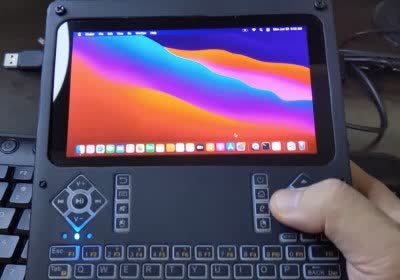
Someone Hackintoshed macOS Big Sur onto a custom-built handheld computer
Ironically, it costs more to build than buying a new M1 Mac Mini outright
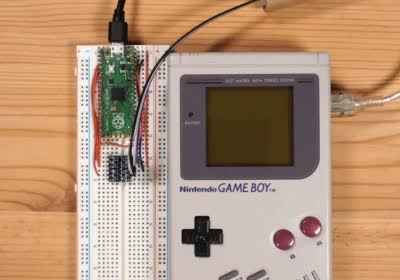
Is this a good time to buy or build a new PC? It depends on what you do and your actual needs. The TechSpot PC Buying Guide offers a comprehensive analysis of today's best desktop PC hardware spanning four budgets and intended uses.


Input devices have a key role in the computing and gaming landscape. Today we'll finish our autopsy of the major input devices by chopping open a classic gamepad: Microsoft's Xbox 360 controller.

When it comes to computing devices, the headlines tend to go to biggest and fastest, but not always. Say hello to Arduino, a project that has inspired millions around the world to get into the vast ocean of electronics and programming.

Take the computer know-how, the love of games, and the interest in components, and mix them all together. It's a perfect recipe for diving into benchmarking. In this article, we'll explain how you can use games to benchmark your PC and what you can do to analyze the results.

Sony's DualShock 4 is a really good controller that can double as your full-time PC gamepad as well. If you have an aging DS4, you may have noticed that it does not hold a charge as long as it once did. In this guide, we'll show you how to save over 70% by replacing your DualShock battery yourself.


I was bitten by the audiophile bug at a relatively young age, however I never got around to exploring the ins and outs of audio equipment as console gaming, computers and photography consumed much of my free time over the past two decades. Recently, however, an opportunity to further tinker with my sound system presented itself and I couldn't pass it up.

When the PlayStation 4 launched in 2013 its 500GB hard drive seemed like more than we could ever use, but the size of games has ballooned exponentially over the years. Upgrading your PS4 storage is not that difficult, so here's a quick guide to help users avoid headaches during the process. Grab your PS4, and let's get started.

What a difference a year makes. It was about this time last year that we discussed why building a gaming PC was a bad idea, but thankfully a lot has changed since. You may recall, DDR4 memory and graphics card prices were through the roof a year ago. GPU availability was quite poor and on top of all that, we were at the end of a few product cycles. Fast forward a year, what's changed?

The TechSpot PC Buying Guide offers a comprehensive analysis of today's best desktop PC hardware spanning five well differentiated budgets. Starting at ~$400 for an affordable PC, followed by two well-balanced enthusiast-oriented machines, a premium high-end build, and finally a dream machine packing the baddest hardware available, period.

Earlier we covered in detail the required components for building your own keyboard and hopefully made the whole project feel a bit less daunting. Today we will go over the assembly process, so you can turn your pile of parts into a functioning board.

In the world of mechanical keyboards, big brand names like Corsair, Razer, HyperX, etc., take the bulk of the limelight. But what if I told you that every part of a keyboard can be customized? This goes far beyond the aesthetics, so if you're not one for making compromises, it may be time to build your own.

There was plenty to be excited about PC hardware in 2017, but there's a lot to be upset about as well. Part one of this series will be dedicated discuss DDR4 memory pricing and why it's so high. RAM pricing is currently a big issue plaguing those wanting to build a new computer or update an old one, more than doubling in price in less than two years.

Repairing a faulty gadget no longer requires a PhD in electrical engineering with sites like iFixit providing tutorials that empower people to repair things on their own. After all, if your device is no longer under warranty and the only option is to buy a replacement, what's the harm in trying? Complexity, that's what.

The TechSpot PC Buying Guide offers a comprehensive analysis of today's best desktop PC hardware spanning five well differentiated budgets. Starting at ~$400 for an affordable PC, followed by two well-balanced enthusiast-oriented machines, a premium high-end build, and finally a dream machine packing the baddest hardware available, period.