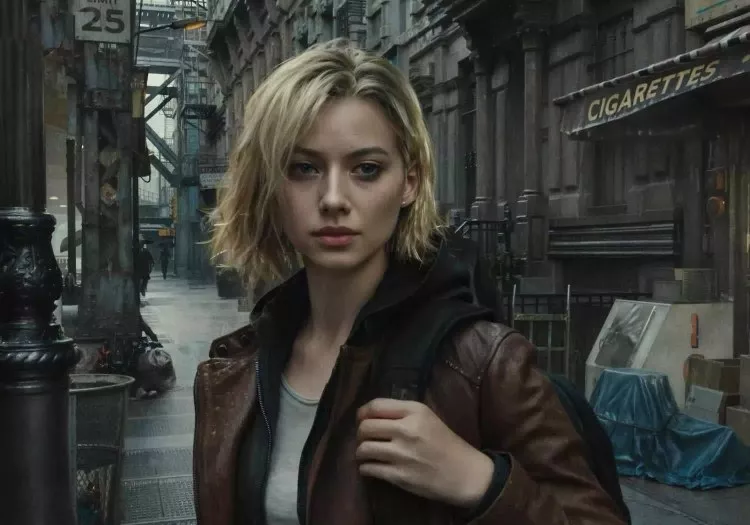
DLSS 4.5 Ray Reconstruction delivers sharper upscaling, cleaner ray-traced effects, and far fewer artifacts, all while maintaining virtually the same performance across every RTX generation.
AMD's new FSR 4.1 INT8 upscaler gives RDNA 3 GPUs a massive image quality upgrade. We examine visual quality, performance, and how closely it matches the RDNA 4 version.
Eight years after Nvidia promised ray tracing would revolutionize gaming, most gamers still disable it. So what happened, and did RTX buyers get sold a fantasy instead of the future?
Lego Batman is advertising 60 FPS, but it's really 15 FPS. Frame generation is supposed to make good performance better, not hide the fact that a game is running poorly. Lego Batman's spec sheet just crossed that line.
Developers at Capcom and Ubisoft found out about DLSS 5 when everyone else did
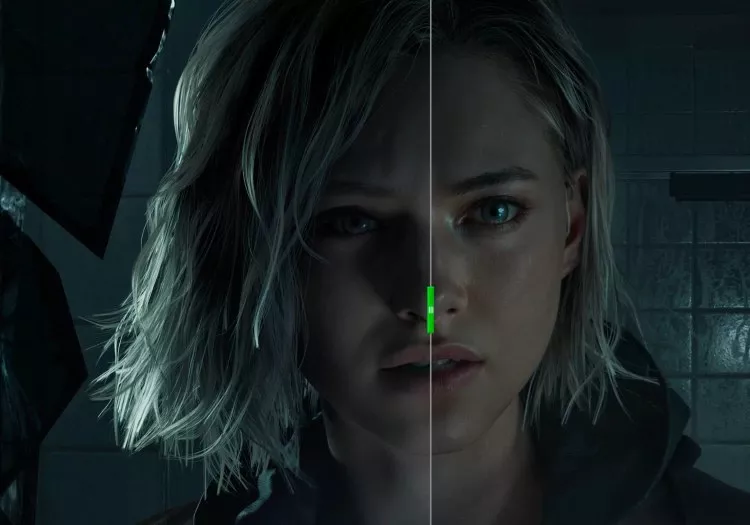
Connecting the dots: Early reactions to Nvidia's DLSS 5 were swift and skeptical, with some observers likening the technology to an Instagram-style filter applied over gameplay footage. Nvidia CEO Jensen Huang refuted the allegations, but subsequent clarifications have helped outline how the system actually works – and where it can fall short.
Huang says developers remain fully in control of DLSS 5's look
A hot potato: Do you think DLSS 5 makes games resemble AI slop? That it's little more than an AI filter inserted into titles that neither wanted nor needed it? If you are one of these many people, Nvidia boss Jensen Huang wants you to know that you're "completely wrong."
Ryan Shrout shares hands-on impressions of DLSS 5 as the internet debates Nvidia's AI graphics overhaul
Sounding off: I went hands-on with Nvidia's DLSS 5 across multiple games at GTC and the "it's just a face filter" isn't the right take. The improvements to shadows, water, foliage, clothing, and even a coffee maker in Starfield are just as impressive as the character enhancements. Here are my full impressions including some details on the dual-GPU demo setup and the developer control story that I think matters quite a bit.
"Photorealistic" AI lighting sparks immediate controversy
First look: Nvidia CEO Jensen Huang used his GTC 2026 keynote to unveil the next stage of machine learning-driven video game graphics, which substantially transforms lighting and the overall visuals of a game using generative AI. Although the company's demonstration showcased dramatic increases in detail in titles such as Resident Evil Requiem and Starfield, it immediately drew sharp reactions from users, many of whom compared the results to AI-generated video footage.
Path tracing comes to 007 First Light, Control Resonant, Quake III... and Mirror's Edge
In brief: Nvidia is using this year's Game Developers Conference to outline the full launch of DLSS 4.5, add five upcoming games to its list of titles supporting path tracing, and offer an early glimpse at RTX Mega Geometry foliage. The company also provided an update on RTX Remix, highlighting this week's launch of a path-traced version of Quake III Arena.
Pushing DLSS 4.5 to absurd extremes reveals how it rebuilds images
The big picture: Nvidia DLSS has been a divisive feature since its introduction almost exactly seven years ago. While some users accuse developers of relying too heavily on upscaling to maintain high frame rates, others praise its ability to reconstruct clear images from fewer pixels. Pushing the latest implementation to its limits helps reveal how it pulls off this feat.
How well does AMD's FSR 4 upscaling perform compared to Nvidia's latest DLSS 4.5? Is AMD still relatively close to Nvidia in image quality, or has FSR fallen further behind? Let's find out.
Nvidia DLSS 4.5 arrives with a new transformer model promising better image quality, but not without performance trade-offs. We test DLSS 4.5 vs DLSS 4 to see where this latest upscaler genuinely improves.
Even RTX 4000 and RTX 5000 cards lose performance versus DLSS 4
The takeaway: One of the many announcements Nvidia made at CES this week was the arrival of DLSS 4.5. The latest version of the upscaling tech can be enabled ahead of its official launch, which many users have done. The good news is that you can expect a higher level of graphical fidelity, as Nvidia promised. The less welcome part is that it comes with a performance hit compared to its predecessor, one that rises to over 20% when using a previous-gen RTX 3000 or RTX 2000 GPU.
AMD's next big move could bring FSR 4 to older GPUs. We test the leaked INT8 build to see how it performs on RDNA 2 and RDNA 3, and whether it can match the image quality of full FSR 4.